


Medical Disclaimer: This content is for educational purposes only. It is not medical advice. Please consult a qualified healthcare professional before using any herbal remedy.
Safety Overview
1.Clethra Alnifolia — Plant Snapshot
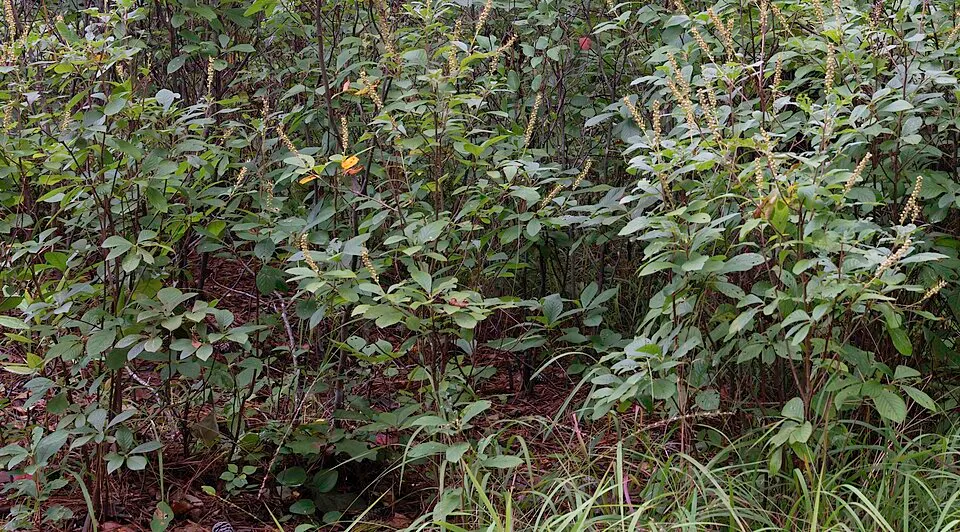
Clethra alnifolia, commonly known as summer sweet or sweet pepperbush, is a resilient deciduous shrub indigenous to the eastern United States, thriving from coastal Maine south to Florida and extending westward into East Texas. This member of the Clethraceae family typically adopts a multi-stemmed, upright to rounded growth habit, reaching heights of 0.9 to 2.4 meters (3 to 8 feet) with a similar spread. Its root system is characteristically shallow and fibrous, allowing it to flourish in consistently moist, acidic soils frequently encountered along stream banks, bog edges, swamp margins, and in the understory of woodlands. The foliage consists of alternate, simple, elliptical leaves, measuring between 5 to 15 centimeters (2 to 6 inches) in length, distinguished by serrated margins and prominent pinnate venation.
These leaves present a vibrant, glossy dark green throughout the growing season, transforming into a striking golden yellow in autumn, adding significant seasonal interest. The bark of young stems is smooth, gradually transitioning to a slightly textured, light brown to gray hue on older branches, often marked with subtle lenticels. The most captivating feature of Clethra alnifolia is its abundant floral display in mid-to-late summer. Fragrant, nectar-rich flowers are densely packed into upright, cylindrical racemes, typically 5 to 10 centimeters (2 to 4 inches) long.
These delicate, five-petaled blooms are predominantly white, though pink-tinged varieties exist, and emit a sweet, spicy fragrance reminiscent of cloves, acting as a powerful attractant for a diverse array of pollinators, including bees, butterflies, and various beneficial insects. Following successful pollination, small, brown, three-valved capsules develop, persisting into winter and providing a food source for birds. Ecologically, Clethra alnifolia plays a vital role in its native habitats, stabilizing soil in wetland areas and offering essential nectar and habitat for wildlife. Its adaptability to moist conditions makes it an excellent candidate for rain gardens and coastal landscapes, demonstrating resistance to salt spray and various common diseases.
Trusted Scientific References
1. Authoritative external sources for Clethra alnifolia
1.1 Wikipedia — Clethra alnifolia
1.2 Kew POWO (Plants of the World Online)
1.3 PubMed — peer-reviewed research
1.4 NCBI Taxonomy Browser
1.5 GBIF — Global Biodiversity
1.1.Clethra Alnifolia — Key Features
- ✓Deciduous shrub native — Deciduous shrub native to Eastern North America.
- ✓Fragrant white to — Fragrant white to pink flowers in cylindrical racemes.
- ✓Blooms mid — to-late summer, providing late-season nectar.
- ✓Attractive glossy dark — Attractive glossy dark green foliage turning golden yellow in autumn.
- ✓Prefers moist, acidic — Prefers moist, acidic soils and tolerates partial shade.
- ✓Important pollinator plant, — Important pollinator plant, attracting bees, butterflies, and hummingbirds.
- ✓Ecologically significant for — Ecologically significant for soil stabilization in wetland areas.
- ✓Relatively low maintenance — Relatively low maintenance and disease resistant.
- ✓Features persistent brown — Features persistent brown seed capsules that feed birds in winter.
- ✓Known for its sweet, clove — like aroma.
1.2.Clethra Alnifolia — Snapshot Summary
- ✓Clethra alnifolia is a fragrant, deciduous shrub native to Eastern North America.
- ✓Known for its late summer blooms and sweet, spicy scent.
- ✓Traditionally valued for its potential anti-inflammatory, antioxidant, and astringent properties.
- ✓Rich in phenolic acids, flavonoids, salicylates, and tannins.
- ✓Thrives in moist, acidic soils and is a vital pollinator plant.
- ✓Requires caution during pregnancy, lactation, and for individuals with salicylate sensitivity.
2.Clethra Alnifolia — Scientific Profile
3.Clethra Alnifolia — Botanical Stats
4.Clethra Alnifolia — Structural Profile
5.Clethra Alnifolia — Where It Grows
6.Clethra Alnifolia — Historical Applications
7.Clethra Alnifolia — Bioactive Constituents
- ✓Phenolic Acids — Includes caffeic acid, gallic acid, and ferulic acid, known for their potent antioxidant and anti-inflammatory properties.
- ✓Flavonoids — Quercetin, kaempferol, and their glycosides are present, contributing to antioxidant activity, capillary strengthening, and anti-allergic effects.
- ✓Salicylates — Derivatives of salicylic acid, similar to those found in willow bark, may confer mild analgesic and anti-inflammatory benefits.
- ✓Tannins — Predominantly hydrolyzable tannins, responsible for the plant's astringent properties and potential antimicrobial actions.
- ✓Volatile Oils — A complex blend of monoterpenes and sesquiterpenes, imparting the characteristic sweet, spicy fragrance and contributing to potential antimicrobial and calming effects.
- ✓Saponins — Triterpenoid saponins might be present, potentially contributing to expectorant or mild adaptogenic properties.
- ✓Coumarins — Simple coumarins like scopoletin may be found, known for their anti-inflammatory and anticoagulant properties.
- ✓Sterols — Phytosterols such as beta-sitosterol are common in plants, offering potential cholesterol-lowering and anti-inflammatory benefits.
- ✓Glycosides — Various glycosidic compounds, including phenolic and flavonoid glycosides, which enhance solubility and bioavailability of active compounds.
- ✓Lignans — A class of phytoestrogens and antioxidants, potentially offering protective effects.
8.Clethra Alnifolia — Modern Studies
- ✓Anti-inflammatory Properties — Compounds such as salicylic acid derivatives and flavonoids may contribute to reducing systemic inflammation, potentially alleviating discomfort associated with inflammatory conditions.
- ✓Antioxidant Activity — Rich in phenolic compounds, Clethra alnifolia extracts can neutralize free radicals, protecting cells from oxidative stress and supporting overall cellular health.
- ✓Antimicrobial Effects — Volatile oils and certain tannins present in the plant may exhibit inhibitory actions against various bacteria and fungi, offering potential support for minor infections.
- ✓Astringent Action — The presence of tannins provides an astringent effect, useful in traditional applications for tightening tissues and reducing minor bleeding or irritation on mucous membranes.
- ✓Digestive Support — Traditional uses suggest a mild carminative effect, potentially aiding in the relief of minor digestive upset and promoting healthy gut function.
- ✓Respiratory Aid — Inhalation of the fragrant floral compounds may offer a soothing effect on the respiratory tract, traditionally used for minor coughs or congestion.
- ✓Diuretic Properties — Certain plant constituents might possess mild diuretic effects, potentially assisting the body in expelling excess fluids and supporting kidney function.
- ✓Skin Soothing — Topically applied preparations could help soothe minor skin irritations, insect bites, or rashes due to its anti-inflammatory and astringent qualities.
- ✓Mild Analgesic Potential — Salicylate-like compounds could offer a mild pain-relieving effect, particularly for localized discomfort.
- ✓Immune Modulatory Effects — Preliminary research indicates that some plant extracts may subtly influence immune responses, contributing to overall wellness.
8.1.Clethra Alnifolia — Reported Uses
9.Clethra Alnifolia — Precautions & Warnings
9.1.Clethra Alnifolia — Reported Side Effects
- ✓Allergic Reactions — Individuals sensitive to salicylates or other plant compounds may experience skin rashes, itching, or respiratory issues.
- ✓Gastrointestinal Upset — High doses of internal preparations might lead to mild nausea, stomach discomfort, or diarrhea due to tannin content.
- ✓Photosensitivity — Rare cases of increased skin sensitivity to sunlight have been reported with certain plant extracts.
- ✓Blood Thinning — Due to potential salicylate content, concurrent use with anticoagulant medications might increase bleeding risk.
- ✓Hypotension — Extremely high doses could theoretically cause a transient drop in blood pressure.
- ✓Uterine Stimulation — Avoid during pregnancy due to lack of safety data and theoretical uterine stimulant properties of some plant compounds.
- ✓Kidney Irritation — Excessive consumption of diuretic compounds could potentially irritate sensitive kidneys.
9.2.Clethra Alnifolia — Safety Overview
- ✓Pregnancy and Lactation — Avoid use during pregnancy and breastfeeding due to insufficient safety data.
- ✓Children — Not recommended for use in infants or young children without professional medical advice.
- ✓Salicylate Sensitivity — Contraindicated for individuals with known allergies to aspirin or other salicylates.
- ✓Anticoagulant Medications — Use with caution and under medical supervision if taking blood-thinning medications.
- ✓Pre-existing Conditions — Individuals with kidney disease, bleeding disorders, or severe allergies should consult a healthcare professional before use.
- ✓Dosage — Adhere strictly to recommended dosages; excessive intake may increase the risk of adverse effects.
- ✓Topical Use — Perform a patch test on a small area of skin before widespread topical application to check for sensitivity.
10.Clethra Alnifolia — Preparation & Dosage
- ✓Herbal Tea Infusion — Dried leaves and flowers can be steeped in hot water to create a fragrant tea, traditionally used for mild digestive or respiratory support.
- ✓Tincture Preparation — Fresh or dried plant material can be macerated in alcohol to create a concentrated liquid extract for internal use.
- ✓Topical Poultice — Crushed fresh leaves can be applied directly to the skin as a poultice for minor irritations, insect bites, or localized swelling.
- ✓Aromatic Compress — Infusions of the flowers can be used as a warm or cool compress to soothe skin or alleviate mild muscle discomfort.
- ✓Essential Oil Distillation — Although not commercially common, the fragrant flowers could potentially yield a volatile oil for aromatherapy, used for its calming scent.
- ✓Herbal Bath — Adding a strong infusion of the plant material to bathwater can provide a soothing and aromatic experience.
- ✓Decoction for External Use — Bark or roots can be simmered to create a decoction, traditionally used as an astringent wash for skin conditions.
- ✓Glycerite Extraction — For alcohol-sensitive individuals, a glycerine-based extract can be prepared from the leaves and flowers.
11.Clethra Alnifolia — Growing Guide
- ✓Soil Preference — Thrives in consistently moist, acidic soils (pH 4.5-6.5) rich in organic matter.
- ✓Light Requirements — Tolerates full sun to partial shade; prefers partial shade in hotter climates to prevent leaf scorch.
- ✓Watering — Requires regular watering, especially during dry periods, as it is naturally found in wetland margins.
- ✓Pruning — Best pruned in late winter or early spring to shape the plant and encourage new growth, as flowers form on new wood.
- ✓Fertilization — Benefits from a slow-release, acid-loving fertilizer in spring or a top-dressing of compost.
- ✓Propagation — Can be propagated by softwood cuttings in early summer or by separating suckers from the base of the plant.
- ✓Pest and Disease — Generally resistant to most pests and diseases, but spider mites can be an issue in very dry conditions.
- ✓Mulching — Apply a thick layer of organic mulch to retain soil moisture and regulate soil temperature.
Reviewed by the Flora Medical Global Botanical Review Panel
Multi-disciplinary editorial group · Botany · Ethnobotany · Herbal-medicine literature
Who reviewed this: This page was checked by the Flora Medical Global Botanical Review Panel — an in-house editorial group of botany graduates, ethnobotany researchers, and horticulture practitioners who collectively maintain our 7,000+ plant encyclopedia. Meet the team.
Our 4-step verification process
1. Taxonomic verification
Scientific names and synonyms cross-checked against Kew POWO, World Flora Online, and The Plant List.
2. Phytochemical & medicinal cross-reference
Active compounds, traditional uses, and reported activities are cross-referenced with PubMed, USDA Dr. Duke's database, and peer-reviewed ethnobotanical literature.
3. Conservation & distribution check
Distribution, ecology, and conservation status confirmed against GBIF occurrence records and the IUCN Red List.
4. Editorial & safety review
Every entry passes an editorial pass for clarity, originality, and safety notices (toxicity, contraindications, dosage caveats) before publication.
Last reviewed:
Important medical disclaimer: This content is for educational and research purposes only. It is not medical advice and is not a substitute for consultation with a licensed healthcare provider. Do not use any herb to self-treat a medical condition without professional guidance.
Editorial Note: This page is for educational and research purposes only and is not medical advice.
Written by: Flora Medical Global Editorial Team
Reviewed by: Flora Medical Global Botanical Review Panel
Last Updated: June 15, 2026





Clethra Alnifolia — Comments & Community Reviews
Rate this plant