

Medical Disclaimer: This content is for educational purposes only. It is not medical advice. Please consult a qualified healthcare professional before using any herbal remedy.
Safety Overview
1.Cloudberry — Introduction & Highlights
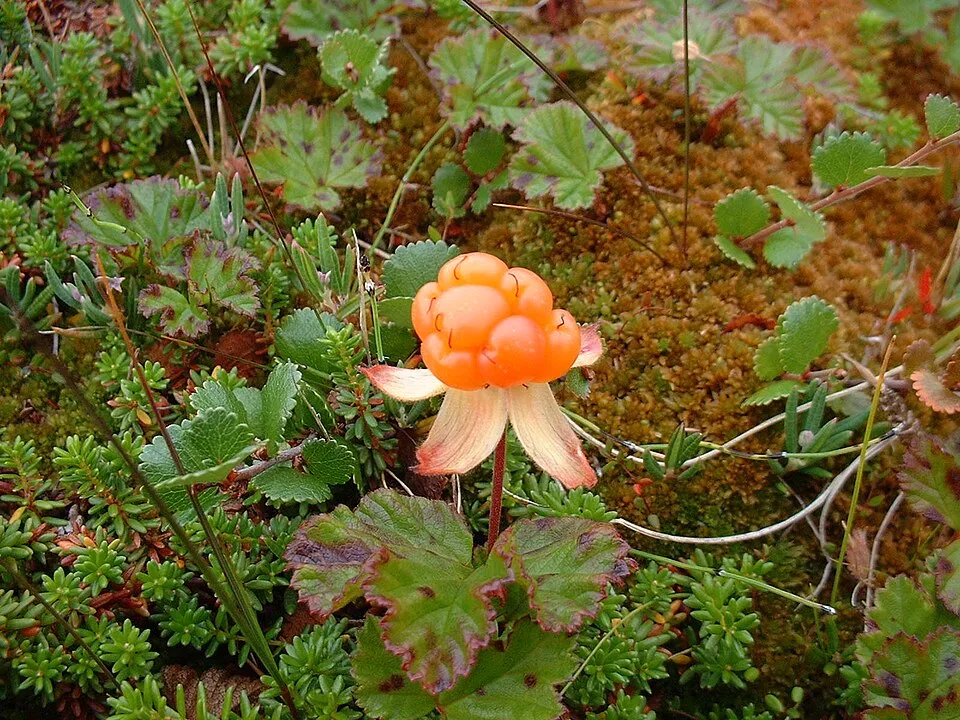
Cloudberry (Rubus chamaemorus), a remarkably resilient and distinctive member of the Rosaceae family, is a low-growing perennial herbaceous plant typically found thriving in the harsh, moist, and acidic soils characteristic of arctic and boreal environments. It usually reaches a modest height of 10 to 30 centimeters. Its most striking feature is its palmate leaves, which are typically 8-20 centimeters across, deeply lobed into 3-5 segments, and adorned with finely serrated margins, forming a dense ground cover. The slender stems, often reddish at the base, are covered with fine, soft hairs.
Rather than 'bark,' the stem's epidermis transitions from smooth green in its younger stages to a slightly brownish hue with age, providing essential structural support. Cloudberry's delicate, solitary flowers emerge in late spring to early summer, presenting as pristine white to pale yellow, measuring approximately 1-2 centimeters in diameter. Each flower is composed of five distinct petals, numerous golden stamens, and several pistils, making them highly attractive to a diverse range of arctic and boreal pollinators. Uniquely, Rubus chamaemorus is dioecious, meaning male and female flowers typically occur on separate plants, necessitating cross-pollination for successful fruit production.
The plant's most prized asset, its fruit, ripens by mid-summer. It evolves from a firm, red drupelet cluster into a soft, succulent aggregate fruit of striking yellow-orange hues, closely resembling a large raspberry. Each ripe fruit, about 1-2 centimeters in diameter, is composed of numerous small, juicy drupelets, each containing a small seed. This species is a true denizen of the northern wilderness, distributed across vast expanses of northern Scandinavia, Russia, Canada, Alaska, and parts of the northern United States, where its robust rhizomatous root system allows it to persist through severe winters.
Trusted Scientific References
1. Authoritative external sources for Rubus chamaemorus
1.1 Wikipedia — Rubus chamaemorus
1.2 Kew POWO (Plants of the World Online)
1.3 PubMed — peer-reviewed research
1.4 NCBI Taxonomy Browser
1.5 GBIF — Global Biodiversity
1.1.Cloudberry — Standout Qualities
- ✓Northern Boreal Native — Thrives in cold, harsh arctic and subarctic climates.
- ✓Dioecious Plant — Requires both male and female plants for fruit production.
- ✓High Vitamin C Content — Exceptional source of ascorbic acid, boosting immunity.
- ✓Potent Antioxidant Profile — Rich in ellagic acid, anthocyanins, and other phenolics.
- ✓Rich in Omega Fatty Acids — Seeds contain beneficial linoleic and alpha-linolenic acids.
- ✓Unique Flavor Profile — Tart, sweet, and aromatic, often described as a blend of raspberry and apricot.
- ✓Resilient Perennial — Adapted to survive severe winters with a robust rhizomatous root system.
- ✓Edible Golden — Orange Fruit — Highly prized, juicy aggregate fruit resembling a large raspberry.
- ✓Traditional Culinary Staple — Widely used in jams, desserts, and liqueurs in Nordic countries.
- ✓Supports Immune Health — Comprehensive nutritional profile aids in bolstering the body's defenses.
1.2.Cloudberry — Quick Summary
- ✓Cloudberry is a golden, antioxidant-rich arctic superfruit.
- ✓High in Vitamin C, ellagic acid, and essential fatty acids.
- ✓Supports immune, skin, and cardiovascular health.
- ✓A resilient, dioecious plant native to northern bogs and tundras.
- ✓Valued culinarily and traditionally for its unique flavor and health benefits.
2.Cloudberry — Scientific Profile
3.Cloudberry — Quick Facts
4.Cloudberry — Morphological Account
5.Cloudberry — Where It Grows
6.Cloudberry — Ethnobotanical Uses
7.Cloudberry — Bioactive Constituents
- ✓Anthocyanins — Primarily cyanidin-based compounds such as cyanidin-3-sophoroside, cyanidin-3-glucosylrutinoside, cyanidin-3-glucoside, and cyanidin-3-rutinoside, responsible for fruit color and potent antioxidant activity.
- ✓Ellagitannins — Complex polyphenols like ellagic acid and its derivatives, known for their strong antioxidant, anti-inflammatory, and potential anticancer properties.
- ✓Phenolic Acids — Includes p-coumaric acid, caffeic acid, ferulic acid, gallic acid, sinapic acid, vanillic acid, p-hydroxybenzoic acid, and cinnamic acid, contributing to antioxidant and antimicrobial actions.
- ✓Flavonols — Such as quercetin-3-glucuronide, kaempferol-glycosides, and isorhamnetin-3-glucuronide, offering additional antioxidant and anti-inflammatory benefits.
- ✓Flavanols — Catechin and epicatechin, compounds with significant antioxidant capacity, contributing to overall health protection.
- ✓Vitamins — Abundant in Vitamin C (ascorbic acid), crucial for immune function and collagen synthesis, and Vitamin E (alpha-tocopherol and tocotrienols), a powerful lipid-soluble antioxidant.
- ✓Essential Fatty Acids — Contains linoleic acid (omega-6) and alpha-linolenic acid (omega-3) in its seeds, vital for cell membrane integrity, brain function, and skin health.
- ✓Dietary Fiber — Both soluble and insoluble fibers are present, supporting digestive health and promoting satiety.
- ✓Carotenoids — Beta-carotene and other carotenoids contribute to the fruit's golden-orange hue and act as precursors to Vitamin A, essential for vision and immune function.
- ✓Minerals — Significant levels of potassium, calcium, and magnesium, important electrolytes and cofactors for numerous bodily functions.
8.Cloudberry — Modern Studies
- ✓Potent Antioxidant Protection — Cloudberry is exceptionally rich in antioxidants like Vitamin C, ellagic acid, and anthocyanins, which combat oxidative stress and protect cells from free radical damage.
- ✓Boosts Immune System Function — Its high Vitamin C content, coupled with other immune-modulating compounds, significantly strengthens the body's natural defenses against infections and illnesses.
- ✓Supports Cardiovascular Health — The array of polyphenols, including ellagitannins, helps to reduce inflammation and oxidative damage to blood vessels, potentially lowering the risk of heart disease.
- ✓Enhances Skin Health and Radiance — Antioxidants and essential fatty acids in cloudberry protect skin from environmental stressors, promote collagen synthesis, and contribute to a healthy, youthful complexion.
- ✓Aids Digestive Health — Cloudberry fruits are a good source of dietary fiber, which supports regular bowel movements, prevents constipation, and fosters a healthy gut microbiome.
- ✓Provides Anti-inflammatory Effects — Specific phenolic compounds present in Rubus chamaemorus have demonstrated properties that may help to reduce systemic inflammation throughout the body.
- ✓Promotes Eye Health — Carotenoids found in cloudberry contribute to ocular health, potentially protecting the eyes from age-related macular degeneration and other vision impairments.
- ✓Offers Neuroprotective Potential — The broad spectrum of antioxidants may help protect neuronal cells from oxidative damage, contributing to cognitive health and potentially reducing the risk of neurodegenerative conditions.
- ✓Contributes to Bone Health — Cloudberry contains minerals like calcium and magnesium, which are essential for maintaining strong bones and preventing osteoporosis.
- ✓Supports Detoxification Processes — Its rich antioxidant profile assists the liver in neutralizing toxins and supporting the body's natural detoxification pathways.
8.1.Cloudberry — Conditions Traditionally Used For
9.Cloudberry — Precautions & Warnings
9.1.Cloudberry — Reported Side Effects
- ✓Allergic Reactions — Though rare, individuals sensitive to other Rubus species may experience mild allergic reactions like skin rash or gastrointestinal discomfort.
- ✓Digestive Upset — High fiber content can lead to bloating, gas, or mild stomach upset in sensitive individuals if consumed in very large quantities.
- ✓Mild Diuretic Effect — Due to its high water content and certain plant compounds, excessive consumption might lead to a mild increase in urination.
- ✓Potential Blood Thinning Interaction — Theoretical concern due to ellagic acid derivatives; individuals on anticoagulant medications should consult a healthcare provider.
- ✓Diabetic Considerations — Natural sugars in the fruit should be considered by individuals managing blood glucose levels, especially in concentrated forms like juice or jam.
- ✓Acidity Sensitivity — The natural acidity of cloudberries might cause discomfort for individuals with severe acid reflux or gastric ulcers.
9.2.Cloudberry — Safety Profile
- ✓Generally Recognized As Safe (GRAS) — Cloudberry fruit is widely consumed as a food item in northern cultures and is generally considered safe for dietary intake.
- ✓Pregnancy and Lactation — While food amounts are generally considered safe, there is insufficient scientific data regarding the safety of medicinal or concentrated doses during pregnancy and breastfeeding.
- ✓Children — Cloudberry fruit is safe for children in food quantities; however, medicinal doses lack specific pediatric research.
- ✓Allergy Caution — Individuals with known allergies to other berries or plants in the Rosaceae family should exercise caution and monitor for adverse reactions.
- ✓Medication Interactions — Consult a healthcare professional before using concentrated cloudberry products if on medication, especially blood thinners or diabetes treatments, due to theoretical interactions.
- ✓Sourcing and Contamination — Ensure that wild-harvested cloudberries or products derived from them are sourced from clean, unpolluted environments to avoid heavy metal or pesticide contamination.
- ✓Moderation in Medicinal Use — As with all herbal remedies, medicinal preparations should be used in moderation and under guidance, not as a replacement for conventional medical treatment.
10.Cloudberry — Preparation & Dosage
- ✓Culinary Consumption — Cloudberries are widely consumed fresh, often with sugar or cream, or incorporated into jams, jellies, sauces, pies, and desserts.
- ✓Traditional Beverages — The fruits are used to make traditional liqueurs, wines, and juices, particularly in Nordic countries, prized for their unique flavor.
- ✓Herbal Infusions and Teas — Dried cloudberry leaves can be steeped to create a healthful tea, traditionally used for its diuretic and mild tonic properties.
- ✓Fruit Extracts and Syrups — Concentrated liquid extracts or syrups from the fruit are prepared for medicinal use or as a flavorful addition to foods and drinks.
- ✓Topical Applications — Cloudberry seed oil or fruit pulp is sometimes used in cosmetics and traditional remedies for skin nourishment and protection due to its antioxidant and fatty acid content.
- ✓Dietary Supplements — Cloudberry fruit powder or standardized extracts are available in capsule form as nutritional supplements, offering a concentrated dose of its beneficial compounds.
- ✓Fresh Juice — Freshly pressed cloudberry juice is consumed for its high vitamin C content and overall nutritional benefits, often diluted or sweetened.
11.Cloudberry — Growth Requirements
- ✓Climate Adaptation — Thrives in cold, northern climates with short growing seasons, tolerating frost and snow well.
- ✓Soil Requirements — Prefers highly acidic soils (pH 3.5-5.0), rich in peat, moist, and well-drained, mimicking its natural bog and tundra habitats.
- ✓Sunlight Exposure — Requires full sun to partial shade for optimal growth and fruit production, especially during the long summer days of its native range.
- ✓Propagation Techniques — Can be propagated by seeds, which require cold stratification, or more commonly by rhizome division for faster establishment and genetic consistency.
- ✓Watering Regime — Needs consistently moist conditions, similar to swampy areas, but without waterlogging that can lead to root rot.
- ✓Pollination Needs — As a dioecious species, both male and female plants must be grown in proximity to ensure successful cross-pollination by insects and subsequent fruit development.
- ✓Pest and Disease Management — Generally robust, but can be susceptible to fungal diseases like botrytis in overly humid conditions or certain insect pests; good air circulation is key.
- ✓Harvesting — Fruits ripen from mid-summer to late summer, changing from red to a soft, golden-orange hue, and should be picked gently to avoid bruising.
Reviewed by the Flora Medical Global Botanical Review Panel
Multi-disciplinary editorial group · Botany · Ethnobotany · Herbal-medicine literature
Who reviewed this: This page was checked by the Flora Medical Global Botanical Review Panel — an in-house editorial group of botany graduates, ethnobotany researchers, and horticulture practitioners who collectively maintain our 7,000+ plant encyclopedia. Meet the team.
Our 4-step verification process
1. Taxonomic verification
Scientific names and synonyms cross-checked against Kew POWO, World Flora Online, and The Plant List.
2. Phytochemical & medicinal cross-reference
Active compounds, traditional uses, and reported activities are cross-referenced with PubMed, USDA Dr. Duke's database, and peer-reviewed ethnobotanical literature.
3. Conservation & distribution check
Distribution, ecology, and conservation status confirmed against GBIF occurrence records and the IUCN Red List.
4. Editorial & safety review
Every entry passes an editorial pass for clarity, originality, and safety notices (toxicity, contraindications, dosage caveats) before publication.
Last reviewed:
Important medical disclaimer: This content is for educational and research purposes only. It is not medical advice and is not a substitute for consultation with a licensed healthcare provider. Do not use any herb to self-treat a medical condition without professional guidance.
Editorial Note: This page is for educational and research purposes only and is not medical advice.
Written by: Flora Medical Global Editorial Team
Reviewed by: Flora Medical Global Botanical Review Panel
Last Updated: June 15, 2026




Cloudberry — Comments & Community Reviews
Rate this plant