
Medical Disclaimer: This content is for educational purposes only. It is not medical advice. Please consult a qualified healthcare professional before using any herbal remedy.
Safety Overview
1.Cobaea Scandens — Botanical Snapshot
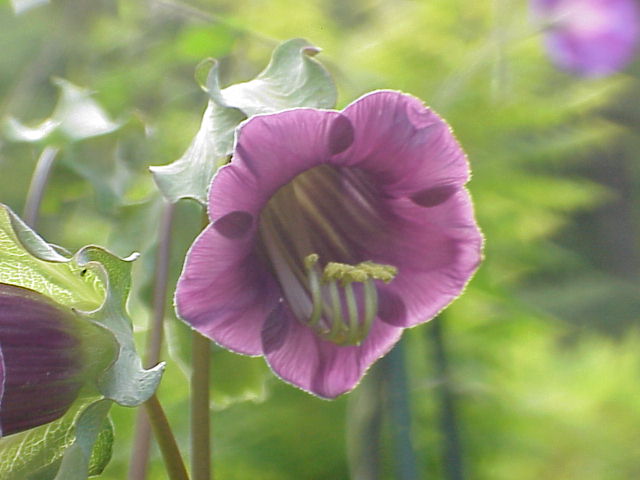
Cobaea scandens, widely recognized as Cathedral Bells or the Cup-and-Saucer Vine, is a captivating perennial climbing vine belonging to the Polemoniaceae family. Native to Central America, specifically Mexico and Guatemala, this plant thrives in tropical and subtropical forested areas and disturbed habitats, where its vigorous stems can ascend impressive heights of up to 20 meters (approximately 65 feet) with adequate support.
The plant exhibits a strong twining growth habit, gracefully wrapping its tendrils around structures as it climbs. Its foliage consists of lush, dark green compound leaves, typically comprising three distinct leaflets, which provide a verdant backdrop for its spectacular blooms.
The most striking feature of Cobaea scandens is its large, bell-shaped flowers, measuring about 5-7 cm (2-3 inches) in length. These exquisite blossoms display a spectrum of colors, ranging from pristine white to various shades of purple and even blue, with the deep purple varieties being the most commonly cultivated. Each flower is characterized by its distinctively protruding stamens and a prominent, saucer-like green calyx that cradles the bell.
Blooming predominantly occurs during the warmer months of summer and fall, attracting a host of pollinators, including buzzing bees and agile hummingbirds. Following successful pollination, the plant produces a capsule-like fruit that matures and bursts open, releasing numerous seeds capable of readily germinating under suitable environmental conditions. Beyond its botanical intrigue, Cobaea scandens is highly prized in horticulture for its rapid growth and exceptional ornamental qualities, making it an ideal choice for adorning trellises, archways, pergolas, and fences, thereby enhancing garden aesthetics and supporting local biodiversity.
Trusted Scientific References
1. Authoritative external sources for Cobaea scandens
1.1 Wikipedia — Cobaea scandens
1.2 Kew POWO (Plants of the World Online)
1.3 PubMed — peer-reviewed research
1.4 NCBI Taxonomy Browser
1.5 GBIF — Global Biodiversity
1.1.Cobaea Scandens — Highlights
- ✓Deciduous to semi — evergreen vigorous climbing vine.
- ✓Distinctive large, bell — shaped flowers with prominent stamens.
- ✓Flower colors range from lavender — purple to white and greenish-cream.
- ✓Features lush, dark — Features lush, dark green compound foliage.
- ✓Rapid growth habit, capable of reaching 10 — 20 feet (3-6 meters) annually.
- ✓Highly valued for — Highly valued for its ornamental appeal on trellises, arbors, and fences.
- ✓Attracts essential pollinators — Attracts essential pollinators such as hummingbirds and bees.
- ✓Bears a unique, — Bears a unique, somewhat musky fragrance, especially from fresh flowers.
- ✓Awarded the Royal — Awarded the Royal Horticultural Society's prestigious Award of Garden Merit.
- ✓Native to tropical — Native to tropical regions of Mexico and Central America.
1.2.Cobaea Scandens — Snapshot Summary
- ✓Vigorous ornamental climbing vine known for its striking bell-shaped flowers.
- ✓Native to Mexico and Central America, thriving in warm, frost-free climates.
- ✓Contains phytochemicals like flavonoids, saponins, and glycosides, yet lacks established traditional medicinal uses.
- ✓Primarily cultivated for aesthetic appeal in gardens, trellises, and archways.
- ✓Prefers full sun to partial shade and moist, well-drained, organically rich soil.
- ✓Propagation is commonly done via seeds or softwood cuttings, showing rapid establishment.
2.Cobaea Scandens — Nomenclature & Classification
3.Cobaea Scandens — Key Data
4.Cobaea Scandens — Botanical Features
5.Cobaea Scandens — Origin & Spread
6.Cobaea Scandens — Folk Medicine Applications
7.Cobaea Scandens — Phytochemistry
- ✓Flavonoids — A diverse class of polyphenolic compounds, such as quercetin and kaempferol derivatives, which are widely recognized for their potent antioxidant, anti-inflammatory, and cardioprotective activities.
- ✓Saponins — Triterpenoid or steroidal glycosides that exhibit surfactant properties, potentially contributing to immune system modulation, expectorant actions, and roles in cholesterol metabolism.
- ✓Glycosides — A broad category of compounds where a sugar molecule is linked to a non-sugar component (aglycone), influencing various biological activities including potential anti-inflammatory or cardiac effects.
- ✓Phenolic Acids — Simple aromatic compounds like caffeic acid and ferulic acid, often found co-occurring with flavonoids, contributing to the plant's overall antioxidant capacity and protective mechanisms.
- ✓Triterpenes — Non-saponin triterpenes are a class of natural products with potential anti-inflammatory, antiviral, and adaptogenic properties, often serving as precursors to other compounds.
- ✓Plant Sterols — Including compounds like beta-sitosterol, which are known for their structural roles in cell membranes and are studied for their potential benefits in cholesterol management and immune function.
- ✓Tannins — Astringent polyphenolic compounds that may offer antimicrobial and antioxidant effects, commonly contributing to tissue toning and protective responses within the plant.
- ✓Volatile Organic Compounds — Trace amounts of aromatic compounds responsible for the plant's characteristic musky fragrance, which may also possess subtle biological activities.
- ✓Sugars and Polysaccharides — Fundamental carbohydrates providing structural integrity and energy storage for the plant, with some polysaccharides exhibiting immunomodulatory properties.
8.Cobaea Scandens — Scientific Evidence
- ✓Antioxidant Support — Flavonoids present in Cobaea scandens may help to neutralize harmful free radicals, thereby protecting cellular structures from oxidative damage and contributing to overall cellular health.
- ✓Anti-inflammatory Properties — Certain glycosides and flavonoids identified in the plant could hypothetically contribute to modulating inflammatory pathways, potentially offering a soothing effect on tissues.
- ✓Immune System Modulation — Saponins are known to interact with the immune system, suggesting a potential role in enhancing or balancing immune responses, though specific effects for this plant are unstudied.
- ✓Cardiovascular Health — Flavonoids are frequently associated with promoting healthy blood circulation and maintaining the integrity of blood vessels, which could contribute to general cardiovascular well-being.
- ✓Expectorant Action — Some saponins possess expectorant qualities, which might theoretically assist in loosening and expelling mucus from the respiratory tract, aiding in clear breathing.
- ✓Antimicrobial Potential — While not specifically researched for Cobaea scandens, various plant-derived flavonoids and saponins often demonstrate broad-spectrum antimicrobial activity against certain bacteria and fungi.
- ✓Detoxification Support — The diverse array of phytochemicals in the plant may provide supportive actions for the body's natural detoxification processes, assisting in the elimination of metabolic byproducts.
- ✓Digestive Comfort — Glycosides can sometimes exert a mild soothing effect on the gastrointestinal lining, potentially alleviating minor digestive discomfort.
- ✓Skin Health — The presence of antioxidant and anti-inflammatory compounds could theoretically contribute to maintaining healthy skin by protecting against environmental stressors and calming minor irritations.
- ✓General Wellness Enhancement — The synergistic actions of its various phytochemical constituents, including flavonoids, saponins, and glycosides, may collectively support an overall sense of vitality and well-being.
8.1.Cobaea Scandens — Reported Uses
9.Cobaea Scandens — Cautions & Contraindications
9.1.Cobaea Scandens — Warnings
- ✓Allergic Reactions — Sensitive individuals may experience allergic reactions, such as skin irritation, contact dermatitis, or respiratory symptoms upon exposure to the plant.
- ✓Gastrointestinal Upset — Ingesting large quantities of plant material, particularly due to the presence of saponins, could potentially lead to symptoms like nausea, vomiting, or diarrhea.
- ✓Skin Irritation — Direct contact with the plant's sap or foliage might cause mild irritation or itching in susceptible individuals, especially those with sensitive skin.
- ✓Photosensitivity — While not specifically documented for Cobaea scandens, some plant compounds can increase skin sensitivity to sunlight, making caution advisable.
- ✓Unknown Systemic Effects — Due to a significant lack of scientific research on internal human consumption, the potential systemic adverse effects remain largely unknown.
- ✓Interaction with Medications — Hypothetically, some constituents like saponins or glycosides could interfere with certain medications, though specific interactions are not established.
9.2.Cobaea Scandens — Safety Overview
- ✓Limited Human Data — There is a notable absence of comprehensive scientific research and historical human use data regarding the internal medicinal application of Cobaea scandens.
- ✓Avoid During Pregnancy and Lactation — Due to insufficient safety data, internal use of Cobaea scandens is strongly contraindicated for pregnant or breastfeeding individuals.
- ✓Pediatric Use Contraindicated — The safety and efficacy of Cobaea scandens in children have not been established; therefore, its use should be strictly avoided in pediatric populations.
- ✓Consult Healthcare Professional — Individuals with pre-existing medical conditions, those on medication, or before considering any internal use, should consult a qualified healthcare professional.
- ✓Patch Test for Topical Use — Prior to widespread topical application, it is advisable to perform a small patch test on the skin to check for any potential allergic reactions or irritation.
- ✓Ornamental Use Primary — Cobaea scandens is primarily cultivated and valued as an ornamental plant; its use as a medicinal herb is not traditionally recognized or clinically validated.
- ✓Potential Toxicity of Constituents — While constituents like saponins and glycosides have known biological activities, their concentration and potential toxicity in Cobaea scandens are not well-characterized for internal human consumption.
10.Cobaea Scandens — Preparations & Uses
- ✓Herbal Infusion — Dried leaves and flowers could theoretically be steeped in hot water to create an infusion, a common method for extracting water-soluble compounds like certain flavonoids.
- ✓Tincture (Hydro-alcoholic Extract) — Fresh or dried plant parts steeped in an alcohol-water solution can produce a tincture, which is effective for extracting a broader range of phytochemicals, including saponins and some glycosides.
- ✓Topical Application (Compress) — A cloth soaked in a strong infusion or diluted tincture could be applied externally as a compress for localized skin soothing, leveraging any potential anti-inflammatory properties.
- ✓Glycerite Extract — For individuals who prefer to avoid alcohol, a glycerite can be prepared by steeping plant material in vegetable glycerin, suitable for both internal and external applications.
- ✓Powdered Herb (Capsules) — Dried and finely ground plant material can be encapsulated, providing a convenient method for ingesting the whole herb, ensuring all constituents are consumed.
- ✓Ointment or Salve Base — An infused oil made from the plant material could be incorporated into an ointment or salve, serving as a topical delivery system for skin applications.
- ✓Decoction (Roots/Stems) — If active compounds are found to be concentrated in the roots or tougher stems, a decoction, involving simmering these parts in water, could be employed for deeper extraction.
11.Cobaea Scandens — Garden Cultivation
- ✓Soil Requirements — Thrives in moist, well-drained soils that are rich in organic matter, which supports its vigorous growth and nutrient uptake.
- ✓Light and Location — Prefers full sun exposure for optimal flowering, but benefits from some afternoon shade in regions with intensely hot summer climates to prevent leaf scorch.
- ✓Planting Time — Best planted in the spring after all danger of frost has definitively passed, allowing the vine ample time to establish itself before the peak growing season.
- ✓Watering Practices — Requires consistent and regular watering, especially crucial during dry periods and throughout its initial year of establishment, to maintain vigorous growth.
- ✓Fertilization — Apply a balanced fertilizer every few weeks during the active growing season to promote abundant blooming; however, avoid excessive fertilization which can favor foliage over flowers.
- ✓Pruning and Maintenance — For evergreen specimens, prune in late winter to shape the plant and remove any diseased or dead growth; regular trimming helps manage its rapid climbing habit.
- ✓Propagation — Can be readily propagated from seeds, which germinate indoors within approximately 14 days when kept warm (68-72°F or 20-22°C), or via softwood cuttings.
- ✓Air Circulation — Ensure adequate air circulation around the plant, particularly in humid environments, to minimize the risk of fungal issues such as powdery mildew.
Reviewed by the Flora Medical Global Botanical Review Panel
Multi-disciplinary editorial group · Botany · Ethnobotany · Herbal-medicine literature
Who reviewed this: This page was checked by the Flora Medical Global Botanical Review Panel — an in-house editorial group of botany graduates, ethnobotany researchers, and horticulture practitioners who collectively maintain our 7,000+ plant encyclopedia. Meet the team.
Our 4-step verification process
1. Taxonomic verification
Scientific names and synonyms cross-checked against Kew POWO, World Flora Online, and The Plant List.
2. Phytochemical & medicinal cross-reference
Active compounds, traditional uses, and reported activities are cross-referenced with PubMed, USDA Dr. Duke's database, and peer-reviewed ethnobotanical literature.
3. Conservation & distribution check
Distribution, ecology, and conservation status confirmed against GBIF occurrence records and the IUCN Red List.
4. Editorial & safety review
Every entry passes an editorial pass for clarity, originality, and safety notices (toxicity, contraindications, dosage caveats) before publication.
Last reviewed:
Important medical disclaimer: This content is for educational and research purposes only. It is not medical advice and is not a substitute for consultation with a licensed healthcare provider. Do not use any herb to self-treat a medical condition without professional guidance.
Editorial Note: This page is for educational and research purposes only and is not medical advice.
Written by: Flora Medical Global Editorial Team
Reviewed by: Flora Medical Global Botanical Review Panel
Last Updated: June 15, 2026





Cobaea Scandens — Comments & Community Reviews
Rate this plant