
Medical Disclaimer: This content is for educational purposes only. It is not medical advice. Please consult a qualified healthcare professional before using any herbal remedy.
Safety Overview
1.Cocoa Plant — At a Glance
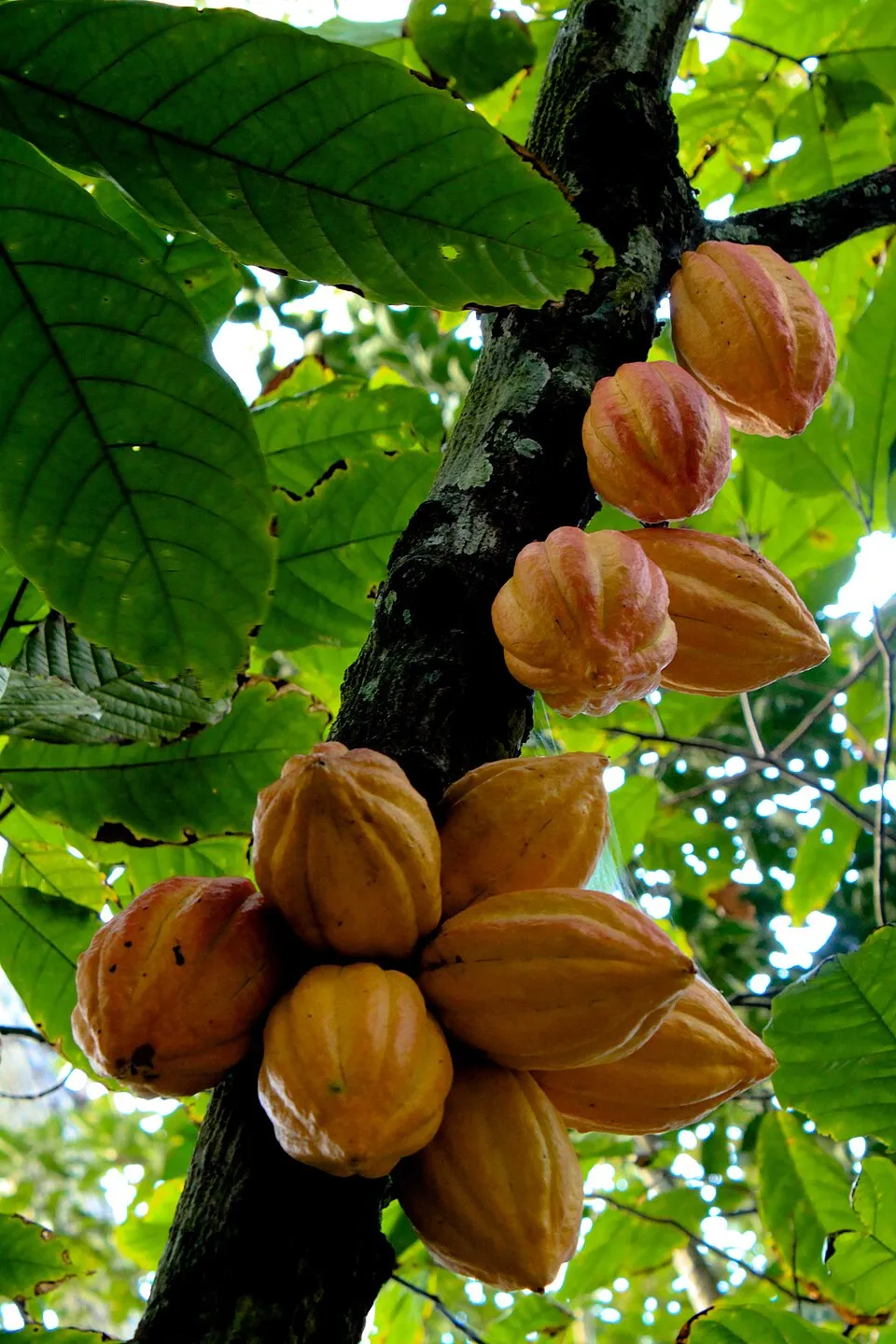
The Cocoa Plant, scientifically known as Theobroma cacao, is a small, evergreen tree revered as the 'food of the gods,' a name bestowed upon it by Carl Linnaeus. Native to the humid tropical understory of the Amazon basin, its cultivation by ancient Olmec, Maya, and Aztec civilizations dates back over 3,000 years, where its beans were brewed into a bitter, spiced beverage and even used as currency. Botanically, T.
cacao is characterized by its unique growth habit, featuring an orthotropic stem and plagiotropic branches that form a tiered canopy. Its large, simple, entire leaves emerge with a reddish hue before maturing to a glossy dark green. The most distinctive feature is cauliflory, where small, waxy, reddish-pink to whitish flowers bloom directly from the trunk and older branches.
These delicate flowers are pollinated by tiny midges, developing into football-shaped pods that ripen to shades of yellow, orange, or reddish-brown. Each pod encases 20-60 cocoa beans, surrounded by a sweet, mucilaginous pulp. These beans are the primary economic product, undergoing a crucial post-harvest process of fermentation, drying, roasting, and grinding to yield cocoa liquor, cocoa butter, and cocoa powder, which form the basis of chocolate and numerous other products globally.
Trusted Scientific References
1. Authoritative external sources for Theobroma cacao
1.1 Wikipedia — Theobroma cacao
1.2 Kew POWO (Plants of the World Online)
1.3 PubMed — peer-reviewed research
1.4 NCBI Taxonomy Browser
1.5 GBIF — Global Biodiversity
1.6Cocoa Plant should be interpreted through verified botanical identity, practical care, and responsible safety language. This recovery note adds the missing context needed for a complete profile: match light to the plant's habit, use well-drained soil, water according to season, and avoid unsupported medicinal or edible claims. For publishing, the plant can be presented as a source-backed indoor plant with clear care guidance, common problem diagnosis, and conservative safety wording.
1.1.Cocoa Plant — Notable Characteristics
- ✓Ancient Mesoamerican origins — Ancient Mesoamerican origins and 'food of the gods' moniker.
- ✓Unique cauliflorous flowering — Unique cauliflorous flowering directly on trunk and branches.
- ✓Rich source of — Rich source of powerful antioxidants, especially flavonoids and polyphenols.
- ✓Contains methylxanthines (theobromine, — Contains methylxanthines (theobromine, caffeine) for gentle stimulation.
- ✓Supports cardiovascular health — Supports cardiovascular health by improving blood flow and reducing blood pressure.
- ✓Known for mood — enhancing and cognitive benefits.
- ✓Economically significant crop, — Economically significant crop, foundation of the global chocolate industry.
- ✓Thrives in tropical, — Thrives in tropical, humid understory environments.
- ✓Beans undergo crucial — Beans undergo crucial fermentation for flavor development.
- ✓Versatile uses from — Versatile uses from food and beverage to cosmetics and herbal medicine.
1.2.Cocoa Plant — Quick Summary
- ✓Theobroma cacao, the 'food of the gods,' originates from Central and South American rainforests.
- ✓Valued for its beans, which are processed into cocoa and chocolate, rich in bioactive compounds.
- ✓Offers significant cardiovascular, cognitive, and mood-enhancing benefits due to flavonoids and methylxanthines.
- ✓Known for its potent antioxidant and anti-inflammatory properties, supporting overall cellular health.
- ✓Requires careful consumption due to caffeine content, potential heavy metals, and specific contraindications.
- ✓A culturally significant plant with a rich history, now a global dietary staple and medicinal ingredient.
2.Cocoa Plant — Botanical Identity
3.Cocoa Plant — Fact Sheet
4.Cocoa Plant — Botanical Features
5.Cocoa Plant — Ecological Habitat
6.Cocoa Plant — Folk Medicine Applications
7.Cocoa Plant — Key Phytochemicals
- ✓Flavonoids — Predominantly epicatechin, catechin, and proanthocyanidins, these powerful antioxidants are responsible for much of cocoa's cardiovascular benefits by improving endothelial function and reducing oxidative stress.
- ✓Methylxanthines — Theobromine (3,7-dimethylxanthine) and caffeine (1,3,7-trimethylxanthine) are key alkaloids providing stimulating effects, with theobromine being more abundant and offering a gentler, sustained energy boost.
- ✓Polyphenols — A broad category including flavonoids and phenolic acids, contributing significantly to cocoa's antioxidant and anti-inflammatory activities.
- ✓Tryptophan — An essential amino acid that serves as a precursor to serotonin, a neurotransmitter crucial for mood regulation and feelings of well-being.
- ✓Anandamide — An endocannabinoid that can bind to cannabinoid receptors, potentially contributing to cocoa's mood-enhancing and pleasure-inducing effects.
- ✓Minerals — Rich in essential minerals such as magnesium, iron, potassium, zinc, copper, and manganese, vital for numerous physiological processes including nerve function, blood formation, and immunity.
- ✓Vitamins — Contains modest amounts of B vitamins (B1, B2, B3, B5, B9) and Vitamin E, supporting metabolism and antioxidant protection.
- ✓Dietary Fiber — Significant amounts of soluble and insoluble fiber, promoting digestive health, satiety, and contributing to gut microbiome balance.
- ✓Saturated and Unsaturated Fatty Acids — Cocoa butter is composed primarily of stearic acid (saturated), palmitic acid (saturated), and oleic acid (monounsaturated), influencing its texture and melting properties.
8.Cocoa Plant — Evidence-Based Benefits
- ✓Cardiovascular Health Support — Cocoa is rich in flavonoids like epicatechin, which promote nitric oxide production, leading to vasodilation and improved blood flow, thereby supporting healthy blood pressure and reducing the risk of heart disease.
- ✓Blood Pressure Regulation — Regular consumption of dark cocoa products can help lower elevated blood pressure by enhancing endothelial function and arterial elasticity.
- ✓Antioxidant Powerhouse — The high concentration of polyphenols and flavonoids in cocoa effectively neutralizes free radicals, mitigating oxidative stress and cellular damage throughout the body.
- ✓Cognitive Function Enhancement — Methylxanthines, particularly theobromine and caffeine, alongside flavonoids, can improve cerebral blood flow, attention, and memory, supporting overall brain health.
- ✓Mood Elevation and Stress Reduction — Cocoa contains compounds like tryptophan, a precursor to serotonin, and phenylethylamine, which may act as natural mood enhancers and contribute to feelings of well-being.
- ✓Anti-inflammatory Properties — Flavonoids and other phytochemicals in cocoa exhibit significant anti-inflammatory effects, potentially reducing chronic inflammation associated with various diseases.
- ✓Digestive Health Improvement — Cocoa powder is a source of dietary fiber, which aids in promoting healthy digestion, regulating bowel movements, and supporting a balanced gut microbiome.
- ✓Skin Health and Protection — The antioxidants in cocoa can help protect the skin from UV-induced damage and improve skin hydration and elasticity, often utilized topically in cocoa butter.
- ✓Energy and Stamina Boost — Theobromine and caffeine provide a sustained, gentle stimulating effect, offering a natural energy lift without the sharp peaks and crashes associated with higher caffeine intake.
- ✓Blood Sugar Metabolism Support — Studies suggest that certain cocoa compounds may improve insulin sensitivity and glucose metabolism, contributing to better blood sugar control, especially in unsweetened forms.
8.1.Cocoa Plant — Conditions Traditionally Used For
9.Cocoa Plant — Cautions & Contraindications
9.1.Cocoa Plant — Possible Adverse Reactions
- ✓Caffeine Sensitivity — Large amounts can cause nervousness, increased urination, restlessness, sleeplessness, and rapid heartbeat due to its caffeine content.
- ✓Digestive Discomfort — May lead to nausea, stomach upset, constipation, or gas in some individuals, particularly with high intake.
- ✓Migraine Trigger — In sensitive individuals, cocoa or chocolate consumption can sometimes trigger migraine headaches.
- ✓Allergic Reactions — Topical application of cocoa butter or ingestion of cocoa products can rarely cause allergic skin reactions like rashes.
- ✓Heavy Metal Exposure — Dark chocolate and cocoa powder can contain varying levels of heavy metals like lead and cadmium, which can be concerning with high, regular consumption.
- ✓Blood Sugar Impact — While complex, cocoa can potentially elevate blood sugar levels in some individuals, especially in sweetened forms, impacting blood sugar control.
- ✓GERD Exacerbation — Cocoa can relax the lower esophageal sphincter, potentially worsening symptoms of gastroesophageal reflux disease (GERD).
9.2.Cocoa Plant — Clinical Safety Notes
- ✓Pregnancy and Breastfeeding — Moderate intake is generally considered safe; however, large amounts are possibly unsafe due to caffeine content (limit <300 mg/day) and potential heavy metal exposure.
- ✓Children — Dark chocolate products, high in cocoa, may be unsafe due to higher levels of lead and cadmium; other chocolate products with lower cocoa content are generally safer in moderation.
- ✓Anxiety Disorders — High caffeine content in large doses of cocoa can exacerbate anxiety symptoms and nervousness in susceptible individuals.
- ✓Bleeding Disorders — Cocoa may slow blood clotting due to its phytochemical content, potentially increasing the risk of bleeding or bruising.
- ✓Heart Conditions — Individuals with heart conditions should use cocoa cautiously due to its caffeine content, which may trigger irregular heartbeats in some.
- ✓Diabetes Management — Cocoa may influence blood sugar levels; diabetics should monitor intake and consider unsweetened forms to avoid interference with glucose control.
- ✓Gastroesophageal Reflux Disease (GERD) — Cocoa can relax the esophageal sphincter, potentially worsening GERD symptoms, and should be consumed with caution.
10.Cocoa Plant — Usage Guide
- ✓Cocoa Powder — Used extensively in baking, hot beverages, smoothies, and desserts; typically unsweetened for maximum health benefits.
- ✓Dark Chocolate — Consumed directly as a confectionery item, particularly varieties with high cocoa content (70% or more) for concentrated benefits.
- ✓Cocoa Nibs — Raw or roasted crushed cocoa beans, offering a crunchy texture and intense chocolate flavor, often added to cereals, yogurt, or baked goods.
- ✓Cocoa Butter — Used in confectionery to make chocolate, and widely in cosmetics and skincare products for its moisturizing and emollient properties.
- ✓Traditional Beverages — Prepared as a bitter, spiced drink, often with chili and other herbs, similar to ancient Mesoamerican 'xocolatl.'
- ✓Herbal Supplements — Available as concentrated extracts or capsules, providing standardized doses of cocoa's active compounds for targeted health support.
- ✓Cooking Ingredient — Incorporated into savory dishes, sauces, and marinades in various cuisines to add depth and complexity of flavor.
- ✓Topical Applications — Cocoa butter and cocoa extracts are found in lotions, creams, and balms for skin hydration and antioxidant protection.
11.Cocoa Plant — Garden Cultivation
- ✓Climate — Requires a hot, humid tropical climate with consistent rainfall (1500-2500 mm annually) and temperatures between 21-32°C.
- ✓Shade Requirement — Traditionally grown in the understory of larger trees, requiring 25-50% shade, especially during early growth stages, to protect from direct sun and maintain humidity.
- ✓Soil — Thrives in deep, well-drained, fertile soils with a pH between 6.0-7.0, rich in organic matter.
- ✓Propagation — Primarily propagated from seeds (for genetic diversity) or vegetatively through cuttings or budding (for clonal uniformity and faster maturation).
- ✓Pest and Disease Management — Susceptible to various fungal diseases (e.g., Black Pod, Witches' Broom, Frosty Pod Rot) and pests (e.g., mirids, cocoa pod borer), requiring integrated pest management strategies.
- ✓Harvesting — Pods are hand-harvested when fully ripe, typically indicated by a change in color, and removed carefully to avoid damaging the cauliflorous cushions.
- ✓Post-Harvest Processing — Beans are extracted from pods, fermented for 2-8 days (crucial for flavor development), dried to reduce moisture, and then roasted.
Reviewed by the Flora Medical Global Botanical Review Panel
Multi-disciplinary editorial group · Botany · Ethnobotany · Herbal-medicine literature
Who reviewed this: This page was checked by the Flora Medical Global Botanical Review Panel — an in-house editorial group of botany graduates, ethnobotany researchers, and horticulture practitioners who collectively maintain our 7,000+ plant encyclopedia. Meet the team.
Our 4-step verification process
1. Taxonomic verification
Scientific names and synonyms cross-checked against Kew POWO, World Flora Online, and The Plant List.
2. Phytochemical & medicinal cross-reference
Active compounds, traditional uses, and reported activities are cross-referenced with PubMed, USDA Dr. Duke's database, and peer-reviewed ethnobotanical literature.
3. Conservation & distribution check
Distribution, ecology, and conservation status confirmed against GBIF occurrence records and the IUCN Red List.
4. Editorial & safety review
Every entry passes an editorial pass for clarity, originality, and safety notices (toxicity, contraindications, dosage caveats) before publication.
Last reviewed:
Important medical disclaimer: This content is for educational and research purposes only. It is not medical advice and is not a substitute for consultation with a licensed healthcare provider. Do not use any herb to self-treat a medical condition without professional guidance.
Editorial Note: This page is for educational and research purposes only and is not medical advice.
Written by: Flora Medical Global Editorial Team
Reviewed by: Flora Medical Global Botanical Review Panel
Last Updated: June 15, 2026





Cocoa Plant — Comments & Community Reviews
Rate this plant