


Medical Disclaimer: This content is for educational purposes only. It is not medical advice. Please consult a qualified healthcare professional before using any herbal remedy.
Safety Overview
1.Coleus Garden — Introduction & Highlights
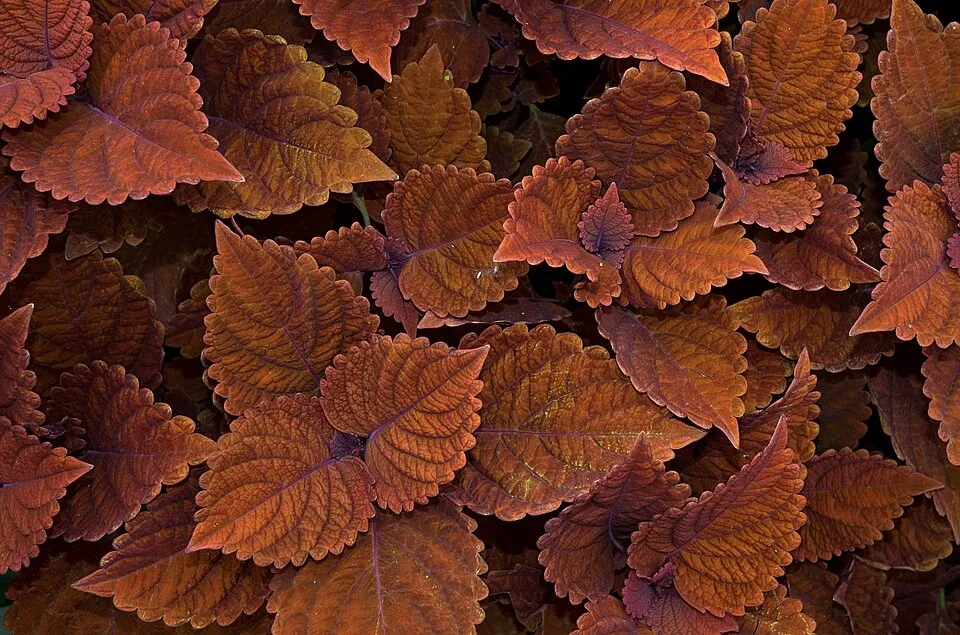
Solenostemon scutellarioides, widely recognized as Coleus, is a captivating perennial herbaceous plant belonging to the Lamiaceae family, the mint family. Native to the tropical and subtropical regions of Southeast Asia, particularly Malaysia, Indonesia, and India, it thrives in warm, humid environments.
This species is predominantly cultivated for its extraordinarily vibrant and diverse foliage, which presents an array of colors including deep greens, bright yellows, fiery oranges, rich reds, and deep purples, often with intricate patterns and variegations. The leaves are typically ovate to lanceolate with distinct serrated margins, contributing significantly to its ornamental appeal.
Growing as a bushy plant, Coleus generally reaches a height of 30 to 90 cm (1 to 3 feet). Its stems are characteristically square, a hallmark of the Lamiaceae family, and can exhibit coloration that complements the leaves. While its flowers are small, often white to purple, and appear in whorled clusters during summer, they are usually considered secondary to the dramatic foliage and are sometimes removed to promote leaf growth.
In its natural habitat, Solenostemon scutellarioides flourishes in the understory of tropical forests, preferring rich, moist, and well-drained soils. Its ability to tolerate partial shade makes it a versatile choice for gardeners seeking to add a splash of color to shaded areas, where its leaf pigmentation often intensifies.
Trusted Scientific References
1. Authoritative external sources for Solenostemon scutellarioides
1.1 Wikipedia — Solenostemon scutellarioides
1.2 Kew POWO (Plants of the World Online)
1.3 PubMed — peer-reviewed research
1.4 NCBI Taxonomy Browser
1.5 GBIF — Global Biodiversity
1.6Coleus Garden should be interpreted through verified botanical identity, practical care, and responsible safety language. This recovery note adds the missing context needed for a complete profile: match light to the plant's habit, use well-drained soil, water according to season, and avoid unsupported medicinal or edible claims. For publishing, the plant can be presented as a source-backed garden plant with clear care guidance, common problem diagnosis, and conservative safety wording.
1.1.Coleus Garden — Key Features
- ✓Lamiaceae family member — Lamiaceae family member with square stems.
- ✓Native to tropical — Native to tropical Southeast Asia.
- ✓Renowned for its — Renowned for its strikingly colorful and variegated foliage.
- ✓Contains the potent — Contains the potent diterpenoid forskolin in its roots.
- ✓Possesses traditional Ayurvedic — Possesses traditional Ayurvedic medicinal uses.
- ✓Exhibits vasodilatory and — Exhibits vasodilatory and bronchodilatory properties.
- ✓Potential to reduce — Potential to reduce intraocular pressure (e.g., in glaucoma).
- ✓May influence fat — May influence fat metabolism and support weight management.
- ✓Requires warm, humid — Requires warm, humid climates and partial shade for optimal growth.
- ✓Easy to propagate — Easy to propagate from cuttings, making it popular for cultivation.
1.2.Coleus Garden — Concise Overview
- ✓Solenostemon scutellarioides, or Coleus, is a vibrant ornamental plant from the Lamiaceae family.
- ✓Its roots contain forskolin, a key compound known for activating adenylate cyclase.
- ✓Traditionally used in Ayurveda for respiratory, cardiovascular, and digestive health.
- ✓Modern research supports its potential in lowering blood pressure and intraocular pressure.
- ✓Caution is advised for individuals with bleeding disorders, low blood pressure, and during pregnancy due to potential risks.
2.Coleus Garden — Taxonomic Classification
3.Coleus Garden — Quick Facts
4.Coleus Garden — Plant Morphology
5.Coleus Garden — Where It Grows
6.Coleus Garden — Historical Applications
7.Coleus Garden — Active Compounds
- ✓Diterpenoids — The most prominent constituent is forskolin (also known as colforsin), a labdane diterpene, which is a potent activator of adenylate cyclase, crucial for its vasodilation, bronchodilation, and intraocular pressure-lowering effects.
- ✓Phenolic Acids — Rosmarinic acid is present, a well-known antioxidant and anti-inflammatory compound that contributes to the plant's protective properties.
- ✓Triterpenoids — Ursolic acid is found in Coleus, recognized for its anti-inflammatory, antimicrobial, and potential anticarcinogenic activities.
- ✓Flavonoids — Various flavonoids, such as luteolin and apigenin, are present, acting as powerful antioxidants and contributing to the plant's anti-inflammatory and overall health-protective benefits.
- ✓Essential Oils — Volatile compounds that contribute to the plant's characteristic aroma and may possess antimicrobial and insecticidal properties, though in varying concentrations.
- ✓Saponins — These glycosides are known for their foaming properties and may contribute to adaptogenic or immune-modulating effects.
- ✓Sterols — Plant sterols are present, which can have beneficial effects on cholesterol metabolism.
- ✓Alkaloids — While not primary active compounds, trace amounts of nitrogen-containing compounds may be found, contributing to the plant's complex chemical profile.
8.Coleus Garden — Modern Studies
- ✓Cardiovascular Health Support — Forskolin, a key compound in Coleus, is known for its ability to activate adenylate cyclase, leading to vasodilation and a potential reduction in blood pressure, which can benefit individuals with hypertension.
- ✓Respiratory System Relief — Forskolin exhibits bronchodilatory effects, making Coleus traditionally utilized to alleviate symptoms associated with asthma and other respiratory conditions by relaxing airway smooth muscles.
- ✓Anti-inflammatory Action — The presence of compounds like rosmarinic acid and ursolic acid contributes to Coleus’s anti-inflammatory properties, potentially helping to reduce inflammation throughout the body.
- ✓Metabolic Regulation — Forskolin has been studied for its role in fat metabolism, suggesting a potential benefit in supporting weight management strategies and addressing obesity.
- ✓Digestive Comfort — In traditional Ayurvedic practices, Coleus has been used to support digestive health, potentially aiding in the modulation of gastrointestinal functions, though high doses can cause adverse effects.
- ✓Ocular Pressure Management — Specific formulations of forskolin have demonstrated an ability to lower intraocular pressure, offering a potential therapeutic avenue for conditions like glaucoma.
- ✓Cognitive Enhancement — Traditional medicinal systems, particularly Ayurveda, associate Coleus with promoting mental clarity and supporting cognitive functions.
- ✓Skin Health — Historically, Coleus has been applied topically for certain skin conditions like eczema, attributed to its anti-inflammatory and soothing properties.
- ✓Platelet Aggregation Modulation — Research indicates that forskolin may influence platelet aggregation, potentially offering benefits in conditions where blood clot formation needs to be managed.
- ✓Antioxidant Protection — Flavonoids and phenolic acids within Coleus provide antioxidant activity, helping to neutralize free radicals and protect cells from oxidative damage.
8.1.Coleus Garden — Therapeutic Indications
9.Coleus Garden — Adverse Effects
9.1.Coleus Garden — Side Effects & Warnings
- ✓Gastrointestinal Discomfort — Higher oral doses of Coleus extract may lead to side effects such as diarrhea, constipation, or vomiting.
- ✓Increased Bleeding Risk — Forskolin can slow blood clotting, increasing the risk of bruising and bleeding, especially in individuals with bleeding disorders or on anticoagulant medications.
- ✓Hypotension — Due to its vasodilatory effects, Coleus can significantly lower blood pressure, which can be dangerous for individuals already experiencing low blood pressure.
- ✓Respiratory Irritation — Inhaled forskolin powder may cause throat irritation, coughing, tremor, and restlessness.
- ✓Ocular Stinging — When applied as eye drops, forskolin may cause temporary stinging or discomfort in the eyes.
- ✓Cardiac Interference — For individuals with certain heart conditions, Coleus may interfere with existing treatments or worsen the condition due to its impact on blood pressure and heart function.
9.2.Coleus Garden — Clinical Safety Notes
- ✓Pregnancy and Breastfeeding — Coleus is possibly unsafe during pregnancy as it might slow or stop fetal growth; avoid use. Insufficient data exists for breastfeeding safety, so avoidance is recommended.
- ✓Bleeding Disorders — Individuals with bleeding disorders should avoid Coleus due to forskolin's potential to increase the risk of bleeding.
- ✓Hypotension Risk — People with naturally low blood pressure (hypotension) should not use Coleus, as it can cause blood pressure to drop excessively.
- ✓Cardiac Conditions — Use with caution and under medical supervision for individuals with heart conditions, as it may interfere with medications or exacerbate existing issues due to its blood pressure-lowering effects.
- ✓Surgical Procedures — Discontinue Coleus use at least two weeks before any scheduled surgery to minimize the risk of increased bleeding during and after the procedure.
- ✓Drug Interactions — Coleus can interact with antihypertensive drugs, anticoagulants, nitrates, and medications metabolized by the liver (CYP2C9, CYP3A4 substrates), potentially leading to adverse effects.
- ✓Dosage Sensitivity — Adhere strictly to recommended dosages, as larger oral doses are associated with a higher incidence of gastrointestinal side effects.
10.Coleus Garden — Preparation & Dosage
- ✓Standardized Extracts — Oral supplements containing standardized forskolin extract are commonly used for systemic effects, such as cardiovascular support and weight management.
- ✓Herbal Tinctures — Alcohol-based tinctures prepared from Coleus root or leaves are used for internal consumption, offering a concentrated form of the plant's compounds.
- ✓Traditional Decoctions — In Ayurvedic medicine, root decoctions are prepared by simmering the plant material in water to extract medicinal compounds for various ailments.
- ✓Topical Applications — Crushed leaves or poultices can be applied externally for skin conditions, leveraging its anti-inflammatory properties.
- ✓Inhalation Therapy — Forskolin powder, under strict medical supervision, has been explored for inhalation to achieve bronchodilatory effects in respiratory conditions.
- ✓Ophthalmic Solutions — Specific, medically formulated eye drops containing forskolin derivatives are prescribed for managing intraocular pressure.
- ✓Herbal Teas/Infusions — Dried leaves can be steeped in hot water to create a mild tea for general wellness support, though efficacy for specific conditions may be lower than extracts.
11.Coleus Garden — Growth Requirements
- ✓Climate Preference — Thrives in warm, humid climates, typical of tropical and subtropical regions.
- ✓Light Requirements — Prefers partial shade, which often intensifies the vibrant coloration of its foliage; direct, intense sun can scorch leaves.
- ✓Soil Composition — Requires rich, well-draining soil with consistent moisture, ideally slightly acidic to neutral (pH 6.0-7.0).
- ✓Watering Schedule — Maintain consistently moist soil; avoid both waterlogging and allowing the soil to dry out completely.
- ✓Propagation Techniques — Easily propagated from stem cuttings in water or moist soil, and also by seed.
- ✓Pruning Practices — Pinching back growing tips encourages bushier growth and fuller foliage; removing flower spikes redirects energy to leaf production.
- ✓Fertilization Regime — Benefits from a balanced liquid fertilizer application every 2-4 weeks during the active growing season.
Reviewed by the Flora Medical Global Botanical Review Panel
Multi-disciplinary editorial group · Botany · Ethnobotany · Herbal-medicine literature
Who reviewed this: This page was checked by the Flora Medical Global Botanical Review Panel — an in-house editorial group of botany graduates, ethnobotany researchers, and horticulture practitioners who collectively maintain our 7,000+ plant encyclopedia. Meet the team.
Our 4-step verification process
1. Taxonomic verification
Scientific names and synonyms cross-checked against Kew POWO, World Flora Online, and The Plant List.
2. Phytochemical & medicinal cross-reference
Active compounds, traditional uses, and reported activities are cross-referenced with PubMed, USDA Dr. Duke's database, and peer-reviewed ethnobotanical literature.
3. Conservation & distribution check
Distribution, ecology, and conservation status confirmed against GBIF occurrence records and the IUCN Red List.
4. Editorial & safety review
Every entry passes an editorial pass for clarity, originality, and safety notices (toxicity, contraindications, dosage caveats) before publication.
Last reviewed:
Important medical disclaimer: This content is for educational and research purposes only. It is not medical advice and is not a substitute for consultation with a licensed healthcare provider. Do not use any herb to self-treat a medical condition without professional guidance.
Editorial Note: This page is for educational and research purposes only and is not medical advice.
Written by: Flora Medical Global Editorial Team
Reviewed by: Flora Medical Global Botanical Review Panel
Last Updated: June 15, 2026





Coleus Garden — Comments & Community Reviews
Rate this plant