
Medical Disclaimer: This content is for educational purposes only. It is not medical advice. Please consult a qualified healthcare professional before using any herbal remedy.
Safety Overview
1.Colocasia Black Magic — Introduction & Highlights
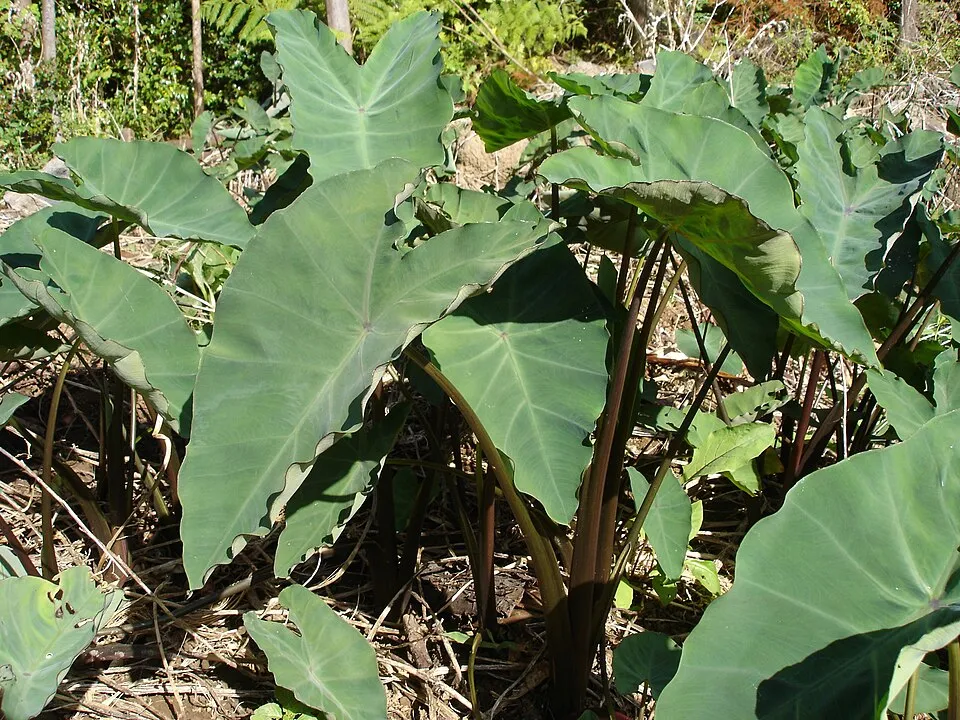
Colocasia 'Black Magic' (Colocasia esculenta 'Black Magic') is a visually striking cultivar of the common taro, Colocasia esculenta, celebrated primarily for its dramatic, deep purple-black foliage. This ornamental aroid stands out from its typically green-leaved parent species due to a significantly higher concentration of anthocyanin pigments, which imbue its large leaves with their characteristic dark hue.
While the broader species, Colocasia esculenta, boasts an extensive history as a vital food crop and traditional medicinal plant across tropical and subtropical regions, 'Black Magic' is a more recent horticultural selection, cultivated predominantly for its aesthetic appeal in gardens and landscapes.
Originating from Southeast Asia, the cradle of taro domestication, 'Black Magic' inherits the robust growth patterns of its ancestors. It typically forms impressive clumps, reaching heights of 90-150 cm (3-5 feet) with a similar spread, thriving in consistently damp, fertile environments.
Its distinctive large, heart-shaped or sagittate leaves can grow up to 60 cm (2 feet) in length, emerging on equally dark, contrasting petioles. This striking visual dynamic makes it a favored choice for water gardens, bog gardens, and as an impactful container plant.
Unlike many culinary taro varieties, the corms of 'Black Magic' are not typically harvested for food due to their substantial content of calcium oxalate crystals, which impart a strong acrid taste and can cause severe irritation if not meticulously processed. Although primarily ornamental, it retains the fundamental botanical and phytochemical profile of Colocasia esculenta.
Ethnobotanically, various parts of the parent species have been employed in traditional healing systems such as Ayurveda, where it's considered 'ruksha' and 'tikshna' for Vata and Kapha imbalances, and in Traditional Chinese Medicine (TCM), where taro is valued for its sweet and pungent properties that influence the spleen and stomach meridians. Unani medicine also recognizes the nutritional and therapeutic attributes of taro.
Trusted Scientific References
1. Authoritative external sources for Colocasia esculenta Black Magic
1.1 Wikipedia — Colocasia esculenta Black Magic
1.2 Kew POWO (Plants of the World Online)
1.3 PubMed — peer-reviewed research
1.4 NCBI Taxonomy Browser
1.5 GBIF — Global Biodiversity
1.1.Colocasia Black Magic — Standout Qualities
- ✓Striking Dark Foliage — Deep purple-black leaves provide dramatic visual contrast.
- ✓Large Sagittate Leaves — Heart-shaped leaves can grow up to 60 cm (2 feet) long.
- ✓Ornamental Cultivar — Prized for aesthetic value in gardens and landscapes.
- ✓High Anthocyanin Content — Responsible for the distinctive dark pigmentation.
- ✓Tropical Bog Plant — Thrives in wet, fertile soil and warm, humid conditions.
- ✓Fast — Growing — Can quickly form large, impressive clumps.
- ✓Container Friendly — Excellent for dramatic accents in pots, especially in cooler zones.
- ✓Parent Species Medicinal Legacy — Inherits the botanical profile of Colocasia esculenta.
- ✓Low Culinary Value — Corms of this specific cultivar are generally not consumed due to high oxalate levels.
- ✓Frost Sensitive — Requires protection or overwintering in non-tropical climates.
1.2.Colocasia Black Magic — In Brief
- ✓Colocasia 'Black Magic' is an ornamental taro cultivar known for its dramatic dark purple-black foliage.
- ✓It contains calcium oxalate crystals, making all raw parts toxic and requiring extensive cooking for the parent species' culinary use.
- ✓The parent species, Colocasia esculenta, has a rich history as a staple food and medicinal plant in traditional systems.
- ✓Its dark color is due to high anthocyanin content, offering potential antioxidant benefits.
- ✓Primarily grown for aesthetic appeal, 'Black Magic' corms are generally not consumed.
- ✓Offers potential traditional health benefits through its parent species, but always with caution and proper preparation.
2.Colocasia Black Magic — Scientific Profile
3.Colocasia Black Magic — Reference Facts
4.Colocasia Black Magic — Morphological Account
5.Colocasia Black Magic — Habitat & Distribution
6.Colocasia Black Magic — Ethnobotanical Uses
7.Colocasia Black Magic — Active Compounds
- ✓Anthocyanins — Specifically cyanidin-3-glucoside and other related glycosides, responsible for the deep purple-black coloration of 'Black Magic' leaves, acting as potent antioxidants and radical scavengers.
- ✓Calcium Oxalate — Present as insoluble crystals (raphides, druses) throughout the plant, especially concentrated in raw corms and leaves, causing irritation and acridity.
- ✓Complex Carbohydrates — Primarily starch, constituting the bulk of the corm's nutritional content, providing a significant energy source and promoting satiety.
- ✓Dietary Fiber — Both soluble and insoluble fibers are abundant in the corms and leaves, supporting digestive health and contributing to blood sugar regulation.
- ✓Phenolic Acids — Including caffeic acid and ferulic acid, these compounds contribute to the plant's antioxidant capacity and may possess anti-inflammatory properties.
- ✓Flavonoids — Quercetin, kaempferol, and other flavonoid glycosides are found, known for their antioxidant, anti-inflammatory, and potentially anticarcinogenic activities.
- ✓Vitamins — Rich in Vitamin C (ascorbic acid), Vitamin E (tocopherols), and various B-complex vitamins (thiamine, riboflavin, niacin, pyridoxine, folate), crucial for metabolic functions.
- ✓Minerals — Significant levels of potassium, magnesium, phosphorus, iron, zinc, and manganese, vital electrolytes and cofactors for numerous physiological processes.
- ✓Saponins — Some varieties of Colocasia esculenta contain triterpenoid saponins, which can contribute to the plant's traditional medicinal uses and have emulsifying properties.
- ✓Glycosides — Various other glycosidic compounds are present, contributing to the plant's overall phytochemical profile and potential biological activities.
8.Colocasia Black Magic — Modern Studies
- ✓Antioxidant Support — The high anthocyanin content in Colocasia 'Black Magic', a characteristic shared with its parent species, offers robust antioxidant protection against cellular damage from free radicals.
- ✓Digestive Health Enhancement — The corms of Colocasia esculenta are rich in dietary fiber, which aids in promoting healthy digestion, preventing constipation, and supporting a balanced gut microbiome.
- ✓Anti-inflammatory Action — Certain phytochemicals present in Colocasia esculenta, including flavonoids and phenolic acids, may exert mild anti-inflammatory effects, potentially reducing systemic inflammation.
- ✓Blood Sugar Regulation — The complex carbohydrates and fiber found in taro corms contribute to a slower release of glucose into the bloodstream, which can assist in stabilizing blood sugar levels.
- ✓Cardiovascular Health — Potassium, a prominent mineral in Colocasia esculenta, is essential for maintaining healthy blood pressure and supporting overall heart function.
- ✓Immune System Boost — Rich in Vitamin C and other micronutrients, Colocasia esculenta contributes to the strengthening of the immune system, enhancing the body's defense mechanisms.
- ✓Nutritional Fortification — As a nutrient-dense plant, particularly its corms and leaves (when properly prepared), Colocasia esculenta provides essential vitamins (B-complex, E) and minerals (magnesium, iron).
- ✓Skin Health Support — The antioxidant properties may extend to skin health, protecting against environmental damage and promoting a healthy complexion, traditionally used in poultices.
- ✓Traditional Ayurvedic Balance — In Ayurveda, parts of Colocasia esculenta are used to balance Vata and Kapha doshas, recognized for their 'ruksha' (dry) and 'tikshna' (sharp) qualities.
- ✓TCM Spleen and Stomach Support — Traditional Chinese Medicine attributes sweet and pungent properties to taro, using it to nourish the Spleen and Stomach meridians, aiding digestion and energy.
8.1.Colocasia Black Magic — Health Applications
9.Colocasia Black Magic — Risk Profile
9.1.Colocasia Black Magic — Possible Adverse Reactions
- ✓Oral and Throat Irritation — Ingestion of raw or improperly cooked Colocasia 'Black Magic' can cause severe burning, itching, swelling, and numbness in the mouth and throat due to calcium oxalate crystals.
- ✓Digestive Upset — Raw plant material can lead to nausea, vomiting, abdominal pain, and diarrhea if consumed, necessitating immediate medical attention.
- ✓Skin Irritation — Direct contact with the sap or raw plant parts can cause dermatitis, itching, and redness in sensitive individuals.
- ✓Allergic Reactions — Although rare, some individuals may experience allergic responses, including skin rashes or respiratory symptoms, upon exposure or ingestion.
- ✓Kidney Stone Risk (Long-term) — While less of a concern for this ornamental cultivar, chronic, high intake of oxalate-rich foods from the parent species Colocasia esculenta can contribute to kidney stone formation in susceptible individuals.
- ✓Swelling of Airways — In severe cases of raw ingestion, swelling of the tongue and throat can be significant enough to impede breathing, requiring emergency care.
9.2.Colocasia Black Magic — Safety Profile
- ✓NEVER Consume Raw — All parts of Colocasia 'Black Magic' (and its parent species Colocasia esculenta) contain calcium oxalate crystals and must be thoroughly cooked before any consumption.
- ✓Proper Preparation is Crucial — If using the parent species for culinary purposes, corms and leaves must be boiled extensively, often with multiple water changes, to neutralize irritants.
- ✓Avoid Direct Skin Contact — Handle raw plant parts with gloves, especially if you have sensitive skin, to prevent contact dermatitis and irritation from the sap.
- ✓Keep Out of Reach of Children and Pets — The plant's attractive appearance might tempt children or pets; ensure they cannot access or chew on any part of it.
- ✓Pregnancy and Lactation — Pregnant or nursing individuals should avoid consuming any part of Colocasia esculenta, even cooked, unless specifically advised by a healthcare professional.
- ✓Individuals with Kidney Issues — Those with a history of kidney stones or kidney disease should exercise extreme caution with Colocasia esculenta due to its oxalate content, even when cooked.
- ✓Consult a Healthcare Professional — Before considering any internal use of Colocasia esculenta for medicinal purposes, particularly if on medication or with underlying health conditions, consult a qualified medical herbalist or physician.
10.Colocasia Black Magic — Preparation & Dosage
- ✓Ornamental Display — Primarily cultivated for its striking dark foliage, used in water gardens, bog gardens, large containers, or as a dramatic landscape accent.
- ✓Culinary Use (Parent Species) — Corms of the parent species, Colocasia esculenta, are extensively boiled, steamed, roasted, or fried after thorough cooking to neutralize calcium oxalates.
- ✓Leafy Green Preparation (Parent Species) — Leaves of Colocasia esculenta are cooked like spinach, often requiring multiple changes of water or prolonged cooking to remove irritants.
- ✓Traditional External Poultices — Historically, processed leaves or corms of Colocasia esculenta have been used topically for skin conditions, though this requires extreme caution due to oxalate content.
- ✓Herbal Decoctions (Traditional) — In some traditional systems, decoctions of specific parts of the parent species are prepared for internal use, always with careful processing to mitigate toxicity.
- ✓Juice Extraction (Highly Cautioned) — Raw juice of Colocasia esculenta is highly irritating and is NOT recommended; any traditional juice use would involve specific detoxification methods.
- ✓Flavoring Agent (Cooked) — Cooked taro corms can be mashed and incorporated into various dishes, desserts, or flours, providing a mild, nutty flavor and starchy texture.
11.Colocasia Black Magic — Propagation & Care
- ✓Soil Preference — Thrives in rich, fertile, consistently moist to wet soil, often performing well in boggy conditions or shallow standing water.
- ✓Light Requirements — Prefers full sun to partial shade; more sun generally enhances the dark coloration of 'Black Magic' leaves.
- ✓Temperature Sensitivity — A tropical plant, it is highly sensitive to frost and cold temperatures, requiring protection or overwintering in cooler climates.
- ✓Watering — Demands abundant and consistent watering, especially during warm growing periods, to prevent wilting and maintain vigor.
- ✓Propagation — Primarily propagated from corms or cormels (offsets) planted in spring after the last frost danger has passed.
- ✓Fertilization — Benefits from regular feeding with a balanced liquid fertilizer during the growing season to support its vigorous growth and large foliage.
- ✓Container Growing — Excellent choice for containers, especially in cooler zones, allowing for easy relocation indoors for winter protection.
- ✓Pest and Disease Management — Generally robust, but watch for common garden pests like aphids or spider mites, and ensure good air circulation to prevent fungal issues.
Reviewed by the Flora Medical Global Botanical Review Panel
Multi-disciplinary editorial group · Botany · Ethnobotany · Herbal-medicine literature
Who reviewed this: This page was checked by the Flora Medical Global Botanical Review Panel — an in-house editorial group of botany graduates, ethnobotany researchers, and horticulture practitioners who collectively maintain our 7,000+ plant encyclopedia. Meet the team.
Our 4-step verification process
1. Taxonomic verification
Scientific names and synonyms cross-checked against Kew POWO, World Flora Online, and The Plant List.
2. Phytochemical & medicinal cross-reference
Active compounds, traditional uses, and reported activities are cross-referenced with PubMed, USDA Dr. Duke's database, and peer-reviewed ethnobotanical literature.
3. Conservation & distribution check
Distribution, ecology, and conservation status confirmed against GBIF occurrence records and the IUCN Red List.
4. Editorial & safety review
Every entry passes an editorial pass for clarity, originality, and safety notices (toxicity, contraindications, dosage caveats) before publication.
Last reviewed:
Important medical disclaimer: This content is for educational and research purposes only. It is not medical advice and is not a substitute for consultation with a licensed healthcare provider. Do not use any herb to self-treat a medical condition without professional guidance.
Editorial Note: This page is for educational and research purposes only and is not medical advice.
Written by: Flora Medical Global Editorial Team
Reviewed by: Flora Medical Global Botanical Review Panel
Last Updated: June 15, 2026





Colocasia Black Magic — Comments & Community Reviews
Rate this plant