
Medical Disclaimer: This content is for educational purposes only. It is not medical advice. Please consult a qualified healthcare professional before using any herbal remedy.
Safety Overview
1.Columnea Goldfish — At a Glance
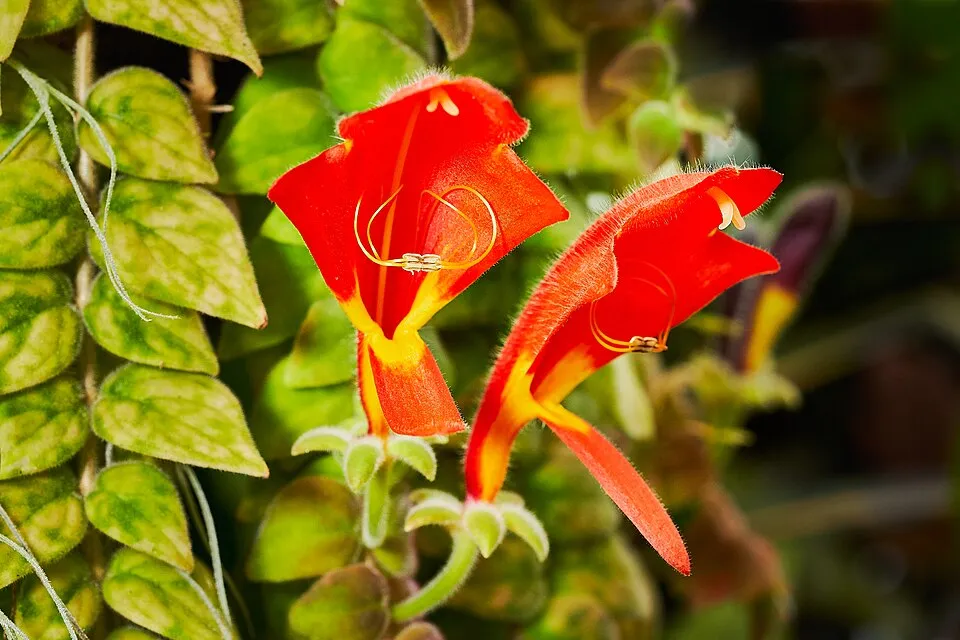
Columnea gloriosa, affectionately known as the Goldfish Plant, is a striking epiphytic perennial native to the humid tropical rainforests of Central and South America, particularly found thriving in the understory canopy. This captivating member of the Gesneriaceae family is renowned for its unique, pouch-shaped, vibrant orange-red flowers that bear a remarkable resemblance to miniature goldfish, giving the plant its popular moniker. Historically, while European botanists first formally documented Columnea species in the 18th century, indigenous communities in its native range undoubtedly possessed extensive traditional knowledge and appreciation for these plants long before. Morphologically, Columnea gloriosa is characterized by its long, slender, trailing stems, which can extend up to 0.9 to 1.2 meters (3 to 4 feet) when cultivated indoors, making it an excellent choice for hanging baskets.
These cascading stems are adorned with small, ovate, dark green leaves that are somewhat succulent, often presenting a reddish or purplish tint on their undersides, especially when exposed to brighter light conditions. The foliage provides an attractive backdrop to the profuse blooms, which typically emerge in late winter and spring, though sporadic flowering can occur throughout the year under ideal environmental conditions. In its natural habitat, C. gloriosa exhibits its epiphytic nature by attaching itself to trees, drawing essential moisture and nutrients from the ambient air and decaying organic matter accumulated in bark crevices, rather than rooting in soil.
This evolutionary adaptation necessitates a well-drained, airy growing medium when cultivated, mimicking its natural arboreal perch. The distinct botanical features of C. gloriosa include its prominent, scarlet to orange corolla, uniquely shaped like a fish's body with a constricted opening and a small 'mouth' at the apex, distinguishing it within its genus.
Trusted Scientific References
1. Authoritative external sources for Columnea gloriosa
1.1 Wikipedia — Columnea gloriosa
1.2 Kew POWO (Plants of the World Online)
1.3 PubMed — peer-reviewed research
1.4 NCBI Taxonomy Browser
1.5 GBIF — Global Biodiversity
1.1.Columnea Goldfish — Distinguishing Points
- ✓Unique Goldfish — Shaped Flowers — Iconic orange-red blooms resembling miniature goldfish, giving the plant its common name.
- ✓Epiphytic Growth Habit — Naturally grows on trees, deriving nutrients from air and organic matter, requiring specialized well-draining media in cultivation.
- ✓Trailing/Cascading Stems — Long, slender stems make it an excellent choice for hanging baskets or elevated displays, reaching up to 1.2 meters.
- ✓Evergreen Foliage — Small, ovate, dark green leaves, often with a reddish underside, providing year-round visual appeal.
- ✓Tropical Origin — Native to the humid rainforests of Central and South America, requiring specific environmental conditions for optimal growth.
- ✓Gesneriaceae Family Member — Part of a diverse botanical family known for its ornamental and sometimes ethnobotanical species.
- ✓Potential Phytochemical Richness — Likely contains flavonoids, phenolic acids, and anthocyanins, suggesting antioxidant and anti-inflammatory potential.
- ✓Ornamental Value — Primarily cultivated for its striking aesthetic appeal and ease of indoor care under proper conditions.
- ✓Low Maintenance (with proper care) — Relatively easy to grow indoors once its specific light, humidity, and watering needs are met.
- ✓Adaptable to Indoors — Thrives as a houseplant, bringing a touch of tropical vibrancy to interior spaces.
1.2.Columnea Goldfish — Concise Overview
- ✓Columnea gloriosa, the Goldfish Plant, is a vibrant epiphytic perennial from Central/South American rainforests.
- ✓Known for its distinctive orange-red, fish-shaped flowers and trailing habit, ideal for hanging baskets.
- ✓While not extensively documented in traditional medicine, related species suggest potential anti-inflammatory and wound-healing properties.
- ✓Thrives in bright, indirect light, high humidity, warm temperatures, and well-draining epiphytic soil mixes.
- ✓Phytochemicals likely include flavonoids, phenolic acids, and anthocyanins, contributing to antioxidant activity.
- ✓Primarily used ornamentally; any medicinal application should be external and approached with caution due to limited research.
2.Columnea Goldfish — Botanical Identity
3.Columnea Goldfish — Fact Sheet
4.Columnea Goldfish — Physical Description
5.Columnea Goldfish — Native Range & Habitat
6.Columnea Goldfish — Heritage Uses
7.Columnea Goldfish — Chemical Profile
- ✓Flavonoids — Key compounds like quercetin, kaempferol, and their glycosides are anticipated, known for their potent antioxidant, anti-inflammatory, and potentially cardioprotective activities.
- ✓Phenolic Acids — Gallic acid, caffeic acid, and chlorogenic acid derivatives are likely present, contributing to the plant's antioxidant capacity and offering protective effects against cellular damage.
- ✓Triterpenes — Saponin-like triterpenes could be present, which often exhibit anti-inflammatory, adaptogenic, and sometimes antimicrobial properties, influencing cellular signaling pathways.
- ✓Anthocyanins — Responsible for the vibrant red-orange coloration of the flowers, these pigments act as strong antioxidants and may offer photoprotective and cardiovascular benefits.
- ✓Iridoids — A class of monoterpenoids that can possess anti-inflammatory, immunomodulatory, and hepatoprotective effects, common in various plant families for defense mechanisms.
- ✓Steroids/Phytosterols — Compounds such as beta-sitosterol may be found, known for their anti-inflammatory and cholesterol-lowering properties, supporting cellular membrane integrity.
- ✓Volatile Oils — While not dominant, trace amounts of terpenoids and other volatile compounds might contribute to the plant's subtle aroma and possess minor antimicrobial or insect-repellent qualities.
- ✓Polysaccharides — Complex carbohydrates could be present in the plant matrix, contributing to mucilaginous properties, offering soothing effects, and potentially modulating immune responses.
- ✓Alkaloids — Although less common in Gesneriaceae, some species may contain trace alkaloids with diverse pharmacological activities, requiring careful toxicological assessment.
8.Columnea Goldfish — Evidence-Based Benefits
- ✓Anti-inflammatory Properties — Preliminary phytochemical analysis suggests the presence of compounds that may modulate inflammatory pathways, potentially offering relief for minor localized inflammation.
- ✓Antioxidant Activity — Rich in phenolic compounds, Columnea gloriosa may help neutralize free radicals, thereby protecting cells from oxidative stress and supporting overall cellular health.
- ✓Antimicrobial Potential — Extracts from related Gesneriaceae species indicate potential against certain bacteria and fungi, suggesting C. gloriosa might possess similar defensive properties, particularly for topical applications.
- ✓Wound Healing Support — Traditional use of some Gesneriads for skin ailments, coupled with potential anti-inflammatory and antimicrobial actions, suggests a role in supporting the natural wound healing process.
- ✓Skin Soothing Effects — The plant's compounds might offer emollient and anti-irritant effects, making it potentially useful in formulations aimed at calming irritated or sensitive skin.
- ✓Minor Analgesic Qualities — While not extensively studied, some plant-derived compounds with anti-inflammatory properties can also contribute to localized pain relief, especially when applied topically.
- ✓Immunomodulatory Effects — Certain plant constituents are known to interact with immune system components, potentially helping to balance immune responses, though specific research on C. gloriosa is lacking.
- ✓Respiratory Comfort — In traditional practices involving related species, infusions were sometimes used for respiratory complaints, suggesting a potential for soothing irritated airways, possibly through expectorant or anti-spasmodic actions.
- ✓Digestive Aid (Topical) — Although internal use is not recommended, some traditional systems utilized poultices of related plants to externally address digestive discomfort, potentially via anti-spasmodic properties.
- ✓Cardiovascular Health Support (Theoretical) — Flavonoids and other antioxidants could theoretically contribute to cardiovascular well-being by reducing oxidative stress, a key factor in heart disease progression.
8.1.Columnea Goldfish — Conditions Traditionally Used For
9.Columnea Goldfish — Safety & Side Effects
9.1.Columnea Goldfish — Caution Notes
- ✓Allergic Contact Dermatitis — Individuals sensitive to plants in the Gesneriaceae family may experience skin irritation, redness, or itching upon direct contact with Columnea gloriosa.
- ✓Gastrointestinal Upset — Ingestion, though not recommended, could potentially lead to mild digestive disturbances such as nausea, vomiting, or diarrhea due to unknown compounds.
- ✓Photosensitivity — Some plant constituents can increase skin sensitivity to sunlight, potentially leading to sunburn-like reactions, especially after topical application.
- ✓Drug Interactions (Theoretical) — Without specific research, there's a theoretical risk of interaction with medications, particularly if consumed internally, influencing metabolism or efficacy.
- ✓Toxicity Concerns — As with many ornamental plants, specific toxicity data for C. gloriosa ingestion is limited; therefore, it should be considered potentially toxic if consumed in large quantities.
- ✓Eye Irritation — Contact with plant sap or extracts near the eyes could cause irritation, redness, or discomfort.
- ✓Respiratory Irritation — Inhaling fine particles from dried plant material could potentially irritate sensitive respiratory passages.
9.2.Columnea Goldfish — Safety Profile
- ✓External Use Only — Due to a lack of comprehensive safety data and documented internal traditional use, Columnea gloriosa should be strictly reserved for external applications.
- ✓Patch Test Recommended — Before widespread topical application, perform a small patch test on an inconspicuous area of skin to check for allergic reactions or sensitivities.
- ✓Not for Internal Consumption — Avoid any form of internal ingestion of Columnea gloriosa, as its safety and potential toxicity when consumed are not established.
- ✓Pregnancy and Lactation — Pregnant or breastfeeding individuals should avoid any use of Columnea gloriosa due to insufficient safety data and potential unknown effects.
- ✓Keep Out of Reach of Children and Pets — Ensure the plant is inaccessible to young children and household pets to prevent accidental ingestion or contact.
- ✓Consult a Healthcare Professional — Always consult with a qualified medical herbalist or healthcare provider before using Columnea gloriosa for any medicinal purpose, especially if pregnant, nursing, or on medication.
- ✓Avoid Broken Skin — Do not apply plant material or extracts to open wounds or severely broken skin, as this may increase absorption and potential adverse reactions.
10.Columnea Goldfish — Preparations & Uses
- ✓Topical Poultice — Fresh, crushed leaves could theoretically be applied directly to minor skin irritations or wounds to leverage potential anti-inflammatory and soothing properties, though specific research is absent.
- ✓Herbal Infusion (Topical) — Dried leaves and flowers might be steeped in hot water to create an infusion for use as a skin wash or compress for localized relief, emphasizing external application.
- ✓Tincture (External) — An alcoholic extract of the aerial parts could be prepared for external application, potentially concentrating beneficial compounds for anti-inflammatory or antimicrobial effects on the skin.
- ✓Infused Oil/Salve — Aerial parts could be infused into a carrier oil (e.g., olive oil) and then combined with beeswax to create a soothing salve for minor skin complaints or muscle aches.
- ✓Herbal Compress — Soaked cloth in a strong infusion of the plant material can be applied to affected areas, providing targeted relief for swelling or discomfort.
- ✓Aromatic Diffusion (Hypothetical) — If volatile compounds are present in sufficient quantities, a very dilute essential oil (if extracted) could theoretically be diffused for atmospheric benefits, though this is speculative.
- ✓Glycerite (External) — A non-alcoholic extract using vegetable glycerin could be made for external skin applications, offering a gentler alternative for sensitive skin.
11.Columnea Goldfish — How to Grow
- ✓Bright, Indirect Light — Place in an east-facing window or a spot with filtered light; protect from harsh afternoon sun to prevent leaf scorch.
- ✓Consistent Moisture — Keep soil consistently moist but never waterlogged; allow the top inch of soil to dry out between waterings, reducing frequency slightly in winter.
- ✓High Humidity — Maintain humidity levels between 60-80% using a pebble tray, humidifier, or by grouping plants; misting can supplement but is not a primary solution.
- ✓Warm Temperatures — Ideal range is 18-24°C (65-75°F) during the day, with a slight drop at night; avoid temperatures below 10°C (50°F) and cold drafts.
- ✓Well-Draining Epiphytic Mix — Use a potting medium of equal parts peat moss, perlite, and orchid bark (pH 6.0-6.5) to mimic its natural arboreal habitat and ensure excellent drainage.
- ✓Regular Fertilization — Feed with a balanced, water-soluble fertilizer (e.g., 10-10-10) diluted to half strength every 2-3 weeks during active growth (spring-fall), reducing or stopping in winter.
- ✓Pruning for Shape — Pinch back leggy stems to encourage bushier growth and more abundant flowering, promoting a fuller, more attractive plant habit.
- ✓Repotting — Repot every 2-3 years in fresh potting mix to refresh nutrients and prevent compaction, ensuring the plant doesn't become root-bound.
Reviewed by the Flora Medical Global Botanical Review Panel
Multi-disciplinary editorial group · Botany · Ethnobotany · Herbal-medicine literature
Who reviewed this: This page was checked by the Flora Medical Global Botanical Review Panel — an in-house editorial group of botany graduates, ethnobotany researchers, and horticulture practitioners who collectively maintain our 7,000+ plant encyclopedia. Meet the team.
Our 4-step verification process
1. Taxonomic verification
Scientific names and synonyms cross-checked against Kew POWO, World Flora Online, and The Plant List.
2. Phytochemical & medicinal cross-reference
Active compounds, traditional uses, and reported activities are cross-referenced with PubMed, USDA Dr. Duke's database, and peer-reviewed ethnobotanical literature.
3. Conservation & distribution check
Distribution, ecology, and conservation status confirmed against GBIF occurrence records and the IUCN Red List.
4. Editorial & safety review
Every entry passes an editorial pass for clarity, originality, and safety notices (toxicity, contraindications, dosage caveats) before publication.
Last reviewed:
Important medical disclaimer: This content is for educational and research purposes only. It is not medical advice and is not a substitute for consultation with a licensed healthcare provider. Do not use any herb to self-treat a medical condition without professional guidance.
Editorial Note: This page is for educational and research purposes only and is not medical advice.
Written by: Flora Medical Global Editorial Team
Reviewed by: Flora Medical Global Botanical Review Panel
Last Updated: June 15, 2026





Columnea Goldfish — Comments & Community Reviews
Rate this plant