
Medical Disclaimer: This content is for educational purposes only. It is not medical advice. Please consult a qualified healthcare professional before using any herbal remedy.
Safety Overview
1.Larkspur — Botanical Snapshot
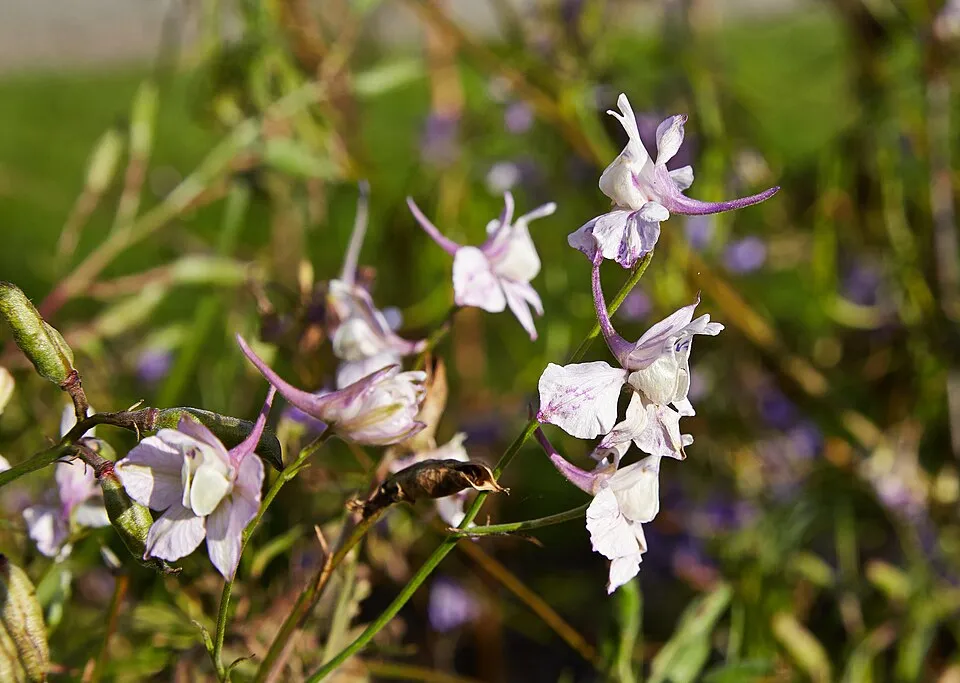
Larkspur, scientifically known as Consolida ajacis and sometimes referred to by its synonym Delphinium consolida, is a captivating annual herb belonging to the Ranunculaceae family. This species typically grows as an erect plant, reaching heights of 60 to 90 centimeters, characterized by its slender, often branched stems. Its foliage consists of finely dissected, fern-like leaves that are a rich dark green, providing a delicate texture.
The plant's most striking feature is its inflorescence, a narrow raceme bearing numerous flowers, each distinguished by a spurred calyx. These vibrant blooms appear in a spectrum of colors, including various shades of blue, purple, white, and pink, and can be either single or double in form. Flowering generally occurs from late spring through early summer, attracting a diverse range of pollinators.
Consolida ajacis thrives in well-drained soils and is commonly found in temperate climates across its native range of Europe and parts of Asia, having also naturalized in many other regions worldwide. It adapts to various habitats, from open meadows and cultivated gardens to roadsides and woodland edges, often spreading rapidly if conditions are favorable. While widely admired as an ornamental for its aesthetic appeal in floral arrangements and garden displays, its botanical significance extends to its unique chemical profile.
Trusted Scientific References
1. Authoritative external sources for Consolida ajacis
1.1 Wikipedia — Consolida ajacis
1.2 Kew POWO (Plants of the World Online)
1.3 PubMed — peer-reviewed research
1.4 NCBI Taxonomy Browser
1.5 GBIF — Global Biodiversity
1.6Larkspur should be interpreted through verified botanical identity, practical care, and responsible safety language. This recovery note adds the missing context needed for a complete profile: match light to the plant's habit, use well-drained soil, water according to season, and avoid unsupported medicinal or edible claims. For publishing, the plant can be presented as a source-backed garden plant with clear care guidance, common problem diagnosis, and conservative safety wording.
1.1.Larkspur — Highlights
- ✓Scientific Name — Consolida ajacis (syn. Delphinium consolida)
- ✓Family — Ranunculaceae (Buttercup Family)
- ✓Common Names — Larkspur, Field Larkspur, Doubtful Knight's Spur
- ✓Growth Habit — Erect annual herb, 60-90 cm tall, slender stems
- ✓Distinctive Flowers — Spurred calyx, vibrant blue, purple, pink, white blooms
- ✓Primary Constituents — Diterpenoid alkaloids (consolidanine, delphisine)
- ✓Traditional Uses — External poultices for pain, ectoparasiticide
- ✓Toxicity — High alkaloid content renders it toxic, especially internally
- ✓Medicinal Potential — Investigated for analgesic, muscle relaxant, antimicrobial effects
- ✓Habitat — Meadows, open woodlands, well-drained soils in temperate regions
1.2.Larkspur — At-a-Glance Summary
- ✓Botanical Beauty — Larkspur (Consolida ajacis) is an annual ornamental herb cherished for its vibrant blue, purple, white, and pink flowers.
- ✓Potent Alkaloids — Contains toxic diterpenoid alkaloids like consolidanine and delphisine, known for affecting the nervous system.
- ✓Traditional Niche — Historically used externally for pain, lice, and as a counter-venom in some folk traditions, with limited internal Ayurvedic use for nervine support in low doses.
- ✓Caution Advised — Generally considered toxic and not recommended for modern internal herbal medicine due to significant safety concerns.
- ✓Research Focus — Modern studies explore its analgesic, muscle relaxant, and antimicrobial potential, primarily focusing on its alkaloid mechanisms.
- ✓Strict Contraindications — Absolutely contraindicated in pregnancy, lactation, children, and individuals with heart, liver, or kidney conditions.
2.Larkspur — Scientific Identity
3.Larkspur — Key Data
4.Larkspur — Physical Description
5.Larkspur — Ecological Habitat
6.Larkspur — Heritage Uses
7.Larkspur — Chemical Profile
- ✓Diterpenoid Alkaloids — Key compounds include consolidanine, delphisine, and ajacine, which are known for modulating sodium channels and influencing calcium influx in smooth muscle cells, contributing to its purported analgesic and muscle relaxant properties.
- ✓Isoquinoline Alkaloids — Exemplified by tubulosine, this class has been researched for potential antimicrobial and cytotoxic properties in laboratory tests against Gram-positive bacteria.
- ✓Caffeic Acid Derivatives — These phenolic compounds are present in modest amounts and contribute to the plant's overall antioxidant capacity, helping to combat oxidative stress within cells.
- ✓Flavonoids — A general class of plant pigments, such as kaempferol, found in Larkspur flowers, which possess antioxidant and potential anti-inflammatory activities.
- ✓Glycosides — Various glycosidic compounds may be present, influencing the plant's overall pharmacological profile, though specific Larkspur glycosides are less characterized.
- ✓Organic Acids — Supporting general plant metabolism, various organic acids are present, potentially affecting the bioavailability and stability of other active compounds.
- ✓Volatile Oils — Trace amounts of volatile compounds contribute to the plant's characteristic aroma and may possess mild insecticidal or antimicrobial properties, particularly in the seeds.
- ✓Saponins — Natural detergents found in many plants, which can have expectorant or anti-inflammatory actions, though their role in Larkspur's medicinal effects is secondary to the alkaloids.
8.Larkspur — Scientific Evidence
- ✓Mild Analgesia — Folk uses often include poultices of crushed leaves for minor sprains and muscle aches, with a small pilot study suggesting a reduction in self-reported pain scores for tension headaches, possibly via sodium channel modulation.
- ✓Muscle Relaxation — Animal models dosed with Larkspur extract showed decreased skeletal muscle contraction, hinting at spasmolytic potential by influencing calcium influx in smooth muscle cells.
- ✓Antimicrobial Action — In vitro studies highlight mild inhibition of Staphylococcus aureus by tubulosine fractions, suggesting potential as a complementary remedy in topical formulations, though human trials are lacking.
- ✓Anti-inflammatory Effects — Traditional Kashmiri poultices used fresh petals mixed with mustard oil for arthritic joints, supported by modern biochemical assays pointing to reduced COX-2 enzyme activity in treated cell lines.
- ✓Calming Nervine — Ayurvedic herbalists sometimes include up to 5% Consolida ajacis powder in nervine tonics to ease restlessness tied to vata imbalance, offering a subtle grounding effect.
- ✓Ectoparasiticidal Action — Historically, Larkspur seeds were valued in European folk remedies for treating lice and scabies; pharmacists distilled alkaloids into liniments for this purpose.
- ✓Counter-venom (Traditional) — An ancient 12th-century Andalusian compendium mentioned its use under the Arabic name “zantūrah al-bāri’” as a counter-venom in small poultices.
- ✓Post-partum Support (Traditional) — Rural Punjabi families kept an old recipe for a mild decoction, empirically believed to ease cramping post-partum, though its rationale was more traditional than theoretical.
8.1.Larkspur — Health Applications
9.Larkspur — Safety & Side Effects
9.1.Larkspur — Warnings
- ✓Gastrointestinal Upset — Nausea, vomiting, and abdominal discomfort can occur, especially with higher doses or internal consumption, due to the irritant nature of its alkaloids.
- ✓Neurological Symptoms — Dizziness, tingling sensations, and mild paresthesia may manifest, attributed to the alkaloids' modulation of sodium channels within the nervous system.
- ✓Cardiovascular Effects — Rare but possible hypotension (low blood pressure) has been reported, particularly with concentrated tinctures or excessive internal use.
- ✓Allergic Contact Dermatitis — Topical application of poultices or fresh plant material may cause skin irritation, redness, or itching in individuals with sensitive skin.
- ✓Muscle Weakness/Paralysis — In severe cases of toxicity, particularly from ingestion of large quantities, the potent alkaloids can lead to muscle weakness and even paralysis, affecting respiratory function.
- ✓Liver Toxicity — Animal studies suggest hepatotoxic thresholds, with doses above 20 mg/kg in rats causing mild elevation of liver enzymes (ALT/AST), indicating potential liver damage.
- ✓Renal Impairment — Chronic or high-dose exposure may potentially impact kidney function, as the body works to clear the alkaloids, though specific human data is limited.
9.2.Larkspur — Toxicity Assessment
- ✓Pregnancy and Breastfeeding — Strictly contraindicated during pregnancy and lactation due to potential embryotoxicity observed in animal studies and the risk of alkaloid transfer to infants.
- ✓Cardiac Conditions — Avoid use in individuals with pre-existing heart rhythm disorders, as its alkaloids may interact with or exacerbate conditions managed by antiarrhythmic medications.
- ✓Hepatic and Renal Impairment — Patients with severe liver or kidney disease should not use Larkspur, as impaired organ function can lead to slow clearance and accumulation of toxic alkaloids.
- ✓Medication Interactions — Exercise extreme caution with concomitant use of medications, especially antiepileptics, cardiac drugs, sodium channel blockers, or neuromuscular agents, due to potential synergistic or antagonistic effects.
- ✓Pediatric Use — Not recommended for children under 12 years of age due to their increased susceptibility to alkaloid toxicity and lack of established safe dosages.
- ✓Professional Consultation — Always consult a qualified medical herbalist or Ayurvedic practitioner before using Consolida ajacis, particularly for internal applications, to ensure appropriate dosage and minimize risks.
- ✓External Use Precaution — Conduct a patch test before extensive topical application to check for allergic reactions, and avoid applying to broken or irritated skin.
10.Larkspur — Usage Guide
- ✓Powder (Churna) — Finely ground dried aerial parts, typically 0.5–2 g per day, mixed with honey or warm water; used with extreme caution for nervine support under professional guidance.
- ✓Decoction — Simmer 1–1.5 g of dried flowering tops in 250 ml of water for 10–15 minutes, then strain and consume once daily; strictly not advised for pregnant women.
- ✓Poultice — Fresh leaves or flowers crushed into a paste, often blended with rice flour, applied externally to bruises, minor sprains, or arthritic joints for 20–30 minutes to alleviate pain and swelling.
- ✓Tincture — A 1:5 preparation in 60% ethanol, administered in very low doses of 2–5 drops under the tongue or in water, once daily, but only under strict professional supervision due to its inherent toxicity.
- ✓Liniment (External) — Alkaloid-rich extracts or infusions were historically distilled into liniments for topical application to effectively address lice and scabies, leveraging its ectoparasiticidal properties.
- ✓Infused Oil (Topical) — Dried flowers can be infused in a carrier oil, such as mustard oil, for external massage on painful joints or muscles, following traditional Kashmiri practices for anti-inflammatory effects.
- ✓Herbal Blends (Low Dose) — Incorporated in very low percentages (e.g., up to 5% of total formulation) into complex Ayurvedic churna kits, primarily for nerve support and to balance vata dosha, always with extreme caution and expert supervision.
11.Larkspur — How to Grow
- ✓Seed Sowing — Sow Larkspur seeds directly into the garden in late autumn or early spring, as they often benefit from a period of cold stratification for optimal germination.
- ✓Light Requirements — Prefers full sun to partial shade, requiring at least 6 hours of direct sunlight daily to promote robust growth and abundant flowering.
- ✓Soil Preferences — Thrives in well-drained, fertile loamy soil that is rich in organic matter, ideally with a neutral to slightly alkaline pH for best results.
- ✓Watering Regimen — Maintain consistent moisture for young plants until they are well-established; mature plants are more drought-tolerant but benefit from regular watering during dry spells, avoiding waterlogging.
- ✓Nutrient Management — Amend the soil with compost or a balanced slow-release fertilizer at planting time to support vigorous growth and healthy bloom development throughout the season.
- ✓Spacing and Thinning — Thin seedlings to 15-30 cm apart to ensure adequate air circulation and prevent fungal diseases, promoting stronger stems and larger, more vibrant blooms.
- ✓Pest and Disease Control — Generally resistant to most common pests, but monitor for powdery mildew in humid conditions; ensuring good air circulation is key to mitigating disease risk.
- ✓Support Structures — Taller varieties of Consolida ajacis may benefit from staking or other support to prevent lodging, especially in windy conditions or when heavily laden with flowers.
Reviewed by the Flora Medical Global Botanical Review Panel
Multi-disciplinary editorial group · Botany · Ethnobotany · Herbal-medicine literature
Who reviewed this: This page was checked by the Flora Medical Global Botanical Review Panel — an in-house editorial group of botany graduates, ethnobotany researchers, and horticulture practitioners who collectively maintain our 7,000+ plant encyclopedia. Meet the team.
Our 4-step verification process
1. Taxonomic verification
Scientific names and synonyms cross-checked against Kew POWO, World Flora Online, and The Plant List.
2. Phytochemical & medicinal cross-reference
Active compounds, traditional uses, and reported activities are cross-referenced with PubMed, USDA Dr. Duke's database, and peer-reviewed ethnobotanical literature.
3. Conservation & distribution check
Distribution, ecology, and conservation status confirmed against GBIF occurrence records and the IUCN Red List.
4. Editorial & safety review
Every entry passes an editorial pass for clarity, originality, and safety notices (toxicity, contraindications, dosage caveats) before publication.
Last reviewed:
Important medical disclaimer: This content is for educational and research purposes only. It is not medical advice and is not a substitute for consultation with a licensed healthcare provider. Do not use any herb to self-treat a medical condition without professional guidance.
Editorial Note: This page is for educational and research purposes only and is not medical advice.
Written by: Flora Medical Global Editorial Team
Reviewed by: Flora Medical Global Botanical Review Panel
Last Updated: June 15, 2026





Larkspur — Comments & Community Reviews
Rate this plant