


Medical Disclaimer: This content is for educational purposes only. It is not medical advice. Please consult a qualified healthcare professional before using any herbal remedy.
Safety Overview
1.Cordyline Red Sister — Introduction & Highlights
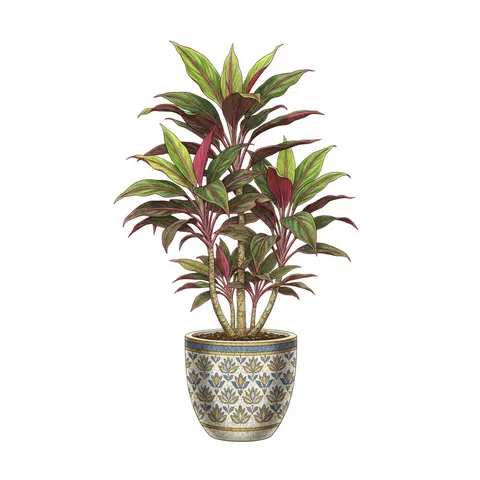
Cordyline Red Sister, scientifically known as Cordyline fruticosa 'Red', is a visually stunning evergreen shrub primarily admired for its vibrant foliage. This striking cultivar of the Ti plant is characterized by its elongated, lanceolate leaves, which can reach lengths of up to 60 cm (24 inches) and widths of 4-5 cm (1.5-2 inches). The leaves exhibit a glossy texture and a captivating blend of deep red with brilliant pink and green streaks, creating a dramatic aesthetic that enhances its ornamental value in both home and office settings.
Mature plants typically achieve a height of 1 to 2 meters (3 to 6 feet), featuring a slender, upright stem that contributes to its graceful architectural form. Native to the tropical regions of Southeast Asia and the Pacific Islands, Cordyline fruticosa thrives in humid environments with well-drained, fertile soil and bright, filtered light, though it can tolerate partial shade. Taxonomically, it belongs to the Asparagaceae family, which encompasses a diverse array of ornamental species, sometimes leading to confusion with Dracaena due to similar appearances.
While primarily cultivated for its leaves, 'Red Sister' can produce small, tubular flowers in creamy-white to pale pink clusters on stalks, though this is a rare occurrence in indoor conditions. Beyond its beauty, Cordyline Red Sister also contributes to indoor air quality by aiding in the filtration of common airborne pollutants.
Trusted Scientific References
1. Authoritative external sources for Cordyline fruticosa Red
1.1 Wikipedia — Cordyline fruticosa Red
1.2 Kew POWO (Plants of the World Online)
1.3 PubMed — peer-reviewed research
1.4 NCBI Taxonomy Browser
1.5 GBIF — Global Biodiversity
1.6Cordyline Red Sister should be interpreted through verified botanical identity, practical care, and responsible safety language. This recovery note adds the missing context needed for a complete profile: match light to the plant's habit, use well-drained soil, water according to season, and avoid unsupported medicinal or edible claims. For publishing, the plant can be presented as a source-backed indoor plant with clear care guidance, common problem diagnosis, and conservative safety wording.
1.1.Cordyline Red Sister — Standout Qualities
- ✓Vibrant Red and Pink Foliage — Distinctive, eye-catching coloration that makes it a popular ornamental plant.
- ✓Lanceolate, Glossy Leaves — Elongated, pointed leaves with a smooth, shiny surface.
- ✓Tropical Evergreen Shrub — Maintains its foliage year-round in warm climates.
- ✓Air Purifying Qualities — Known to help filter indoor air pollutants, enhancing environmental quality.
- ✓Traditional Medicinal Uses — Historically employed in folk medicine for various ailments, including digestive and inflammatory issues.
- ✓Low Maintenance Indoor Plant — Relatively easy to care for when provided with suitable light, water, and humidity.
- ✓Cultural 'Good Luck' Symbol — Revered in some cultures, particularly Hawaiian, for bringing prosperity and protection.
- ✓Adaptable to Bright, Indirect Light — Thrives in well-lit conditions without direct sun exposure.
- ✓Rhizomatous Root System — Features underground stems that aid in nutrient storage and propagation.
- ✓Member of Asparagaceae Family — Belonging to a diverse family that includes many popular ornamental and edible plants.
1.2.Cordyline Red Sister — Snapshot Summary
- ✓Cordyline Red Sister is a visually striking tropical evergreen shrub known for its vibrant red and pink variegated foliage.
- ✓Native to Southeast Asia and the Pacific Islands, it thrives in warm, humid conditions with bright, indirect light.
- ✓Traditionally, Cordyline fruticosa has been used for digestive issues, wound healing, reducing inflammation, and fever.
- ✓The plant contains beneficial phytochemicals such as anthocyanins, flavonoids, and saponins, contributing to its antioxidant properties.
- ✓While low in toxicity for humans, it can cause mild gastrointestinal upset if ingested and is toxic to pets; handle with gloves.
- ✓Valued culturally as a 'Good Luck Plant' and appreciated for its air-purifying qualities as an indoor ornamental.
2.Cordyline Red Sister — Scientific Profile
3.Cordyline Red Sister — Botanical Stats
4.Cordyline Red Sister — Structural Profile
5.Cordyline Red Sister — Geographic Distribution
6.Cordyline Red Sister — Ethnobotanical Uses
7.Cordyline Red Sister — Bioactive Constituents
- ✓Anthocyanins — These pigments are responsible for the vibrant red and pink coloration in 'Red Sister' leaves and act as powerful antioxidants, protecting cells from oxidative stress.
- ✓Flavonoids — Compounds like quercetin and kaempferol derivatives are present, contributing significantly to the plant's antioxidant and anti-inflammatory activities.
- ✓Saponins — Steroidal saponins are found in the plant, potentially offering anti-inflammatory, antimicrobial, and adaptogenic properties.
- ✓Phenolic Acids — Caffeic acid and ferulic acid are examples of phenolic acids that provide antioxidant and radical-scavenging benefits.
- ✓Polysaccharides — Complex carbohydrates that may contribute to immunomodulatory effects and provide a soothing action, particularly when used internally or topically.
- ✓Phytosterols — Compounds such as beta-sitosterol are present, known for their potential anti-inflammatory effects and role in cellular health.
- ✓Glycosides — Various glycosidic compounds are found, which are often responsible for diverse pharmacological activities and therapeutic effects.
- ✓Terpenoids — A range of volatile organic compounds that can contribute to the plant's defense mechanisms and sometimes exhibit antimicrobial or anti-inflammatory properties.
- ✓Tannins — Possess astringent properties, traditionally useful in wound healing and as a mild anti-diarrheal agent in certain traditional preparations.
8.Cordyline Red Sister — Research Insights
- ✓Anti-inflammatory Support — Traditionally, leaves of Cordyline fruticosa have been applied as poultices to reduce swelling and alleviate pain associated with various inflammatory conditions.
- ✓Digestive Aid — In some indigenous cultures, extracts from Cordyline fruticosa are consumed to soothe digestive discomfort and promote gastrointestinal health.
- ✓Wound Healing Acceleration — The plant's leaves are traditionally used topically on minor skin wounds and abrasions, believed to support the natural healing process.
- ✓Antipyretic Properties — Folk medicine suggests that the leaves possess cooling properties, making them suitable for traditional remedies aimed at reducing fevers.
- ✓Antioxidant Activity — Phytochemical analysis indicates the presence of flavonoids and anthocyanins, which are potent antioxidants capable of neutralizing free radicals and protecting cellular integrity.
- ✓Antimicrobial Potential — Certain compounds within Cordyline fruticosa may exhibit mild antimicrobial effects, contributing to its traditional use in topical wound care.
- ✓Pain Relief — Historically, various preparations have been used to address general body aches and localized pain, leveraging its purported analgesic properties.
- ✓Detoxification Support — Some traditional practices associate the plant with mild diuretic effects, potentially assisting the body's natural elimination processes.
- ✓Air Purification — As an indoor plant, Cordyline Red Sister effectively helps remove common indoor air toxins, contributing to a healthier living environment.
- ✓Cultural Significance — Beyond its physical benefits, it is revered as a 'Good Luck Plant' in Hawaiian culture, symbolizing protection and good fortune.
8.1.Cordyline Red Sister — Therapeutic Indications
9.Cordyline Red Sister — Risk Profile
9.1.Cordyline Red Sister — Side Effects & Warnings
- ✓Gastrointestinal Discomfort — Ingestion of Cordyline fruticosa by humans can cause mild gastrointestinal upset, including nausea and vomiting, due to low toxicity.
- ✓Skin Irritation — Direct contact with plant sap can cause contact dermatitis or skin irritation in sensitive individuals; wearing gloves during handling is recommended.
- ✓Pet Toxicity — Cordyline fruticosa is toxic to dogs, cats, and horses, leading to symptoms like vomiting, diarrhea, and depression if ingested.
- ✓Allergic Reactions — Although rare, individuals may experience allergic reactions to the plant, presenting as skin rashes or respiratory issues.
- ✓Drug Interactions — There is limited research on potential drug interactions, thus caution is advised for individuals on medication when considering internal use.
- ✓Over-consumption Risks — Excessive internal use, particularly of concentrated extracts, may heighten the risk of adverse gastrointestinal symptoms.
9.2.Cordyline Red Sister — Clinical Safety Notes
- ✓Human Ingestion — Considered to have low toxicity for humans, but ingestion can lead to mild gastrointestinal discomfort; not recommended for internal consumption without expert guidance.
- ✓Pet Safety — Cordyline Red Sister is toxic to domestic animals including dogs, cats, and horses; keep the plant out of reach of pets to prevent ingestion.
- ✓Skin Contact — Direct handling of the plant, especially if sap is released, may cause skin irritation or contact dermatitis in susceptible individuals; use gloves as a precaution.
- ✓Pregnancy and Lactation — Internal use is not recommended for pregnant or nursing women due to insufficient safety data.
- ✓Children's Safety — Supervise young children around the plant to prevent accidental ingestion or contact with sap.
- ✓Medical Consultation — Always consult a healthcare professional or qualified herbalist before using Cordyline fruticosa for medicinal purposes, especially if on medication or with pre-existing conditions.
- ✓Ornamental Use — Primarily intended for ornamental display; any traditional medicinal applications should be approached with caution and knowledge of proper preparation and dosage.
10.Cordyline Red Sister — How to Use
- ✓Topical Poultice — Crush fresh Cordyline fruticosa leaves and apply directly to minor skin wounds, inflammations, or insect bites for traditional soothing and healing.
- ✓Herbal Infusion (Tea) — Steep dried Cordyline leaves in hot water to create an herbal tea, traditionally used for internal digestive issues or as a general tonic.
- ✓Decoction — For tougher plant parts like roots or thick stems, boil in water to extract more potent compounds, often used in stronger traditional remedies.
- ✓Tincture Preparation — Macerate chopped leaves or roots in alcohol to create a concentrated liquid extract, suitable for modern herbal internal use under expert guidance.
- ✓Air Purifier Placement — Utilize Cordyline Red Sister as an ornamental indoor plant to naturally filter common airborne pollutants, improving indoor air quality.
- ✓Cultural and Ritualistic Use — Employ the plant in traditional Hawaiian ceremonies and for decorative purposes, embodying its 'Good Luck Plant' symbolism.
- ✓Culinary (Limited) — In some traditional cultures, young Cordyline fruticosa shoots and leaves are cooked and consumed, though 'Red Sister' is primarily ornamental and not typically eaten.
11.Cordyline Red Sister — Growing Guide
- ✓Light Requirements — Provide bright, indirect light to maintain the vibrant coloration of the Cordyline Red Sister's foliage; direct sun can scorch leaves.
- ✓Soil Preference — Plant in a well-draining, fertile, peat-based potting mix or loamy soil with a slightly acidic to neutral pH.
- ✓Watering Schedule — Water regularly, allowing the top inch or two of soil to dry out between waterings. Reduce watering frequency during the cooler fall and winter months.
- ✓Humidity Levels — This tropical plant thrives in high humidity; consider using a humidifier or placing the pot on a pebble tray with water, especially indoors.
- ✓Temperature Range — Maintain temperatures between 65-95°F (18-35°C); avoid temperatures below 50°F (10°C) to prevent cold damage.
- ✓Fertilization — Fertilize several times a year during the growing season (spring and summer) with a balanced liquid fertilizer to support vigorous growth and color.
- ✓Propagation Techniques — Easily propagated by dividing the rhizomatous root system or by rooting stem sections (often called 'Ti logs') in water or moist soil.
- ✓Pest and Disease Management — Monitor for common indoor pests like spider mites, mealybugs, and scale insects; ensure good air circulation to prevent fungal issues like leaf spot.
Reviewed by the Flora Medical Global Botanical Review Panel
Multi-disciplinary editorial group · Botany · Ethnobotany · Herbal-medicine literature
Who reviewed this: This page was checked by the Flora Medical Global Botanical Review Panel — an in-house editorial group of botany graduates, ethnobotany researchers, and horticulture practitioners who collectively maintain our 7,000+ plant encyclopedia. Meet the team.
Our 4-step verification process
1. Taxonomic verification
Scientific names and synonyms cross-checked against Kew POWO, World Flora Online, and The Plant List.
2. Phytochemical & medicinal cross-reference
Active compounds, traditional uses, and reported activities are cross-referenced with PubMed, USDA Dr. Duke's database, and peer-reviewed ethnobotanical literature.
3. Conservation & distribution check
Distribution, ecology, and conservation status confirmed against GBIF occurrence records and the IUCN Red List.
4. Editorial & safety review
Every entry passes an editorial pass for clarity, originality, and safety notices (toxicity, contraindications, dosage caveats) before publication.
Last reviewed:
Important medical disclaimer: This content is for educational and research purposes only. It is not medical advice and is not a substitute for consultation with a licensed healthcare provider. Do not use any herb to self-treat a medical condition without professional guidance.
Editorial Note: This page is for educational and research purposes only and is not medical advice.
Written by: Flora Medical Global Editorial Team
Reviewed by: Flora Medical Global Botanical Review Panel
Last Updated: June 15, 2026





Cordyline Red Sister — Comments & Community Reviews
Rate this plant