
Medical Disclaimer: This content is for educational purposes only. It is not medical advice. Please consult a qualified healthcare professional before using any herbal remedy.
Safety Overview
1.Coreopsis Grandiflora — Botanical Snapshot
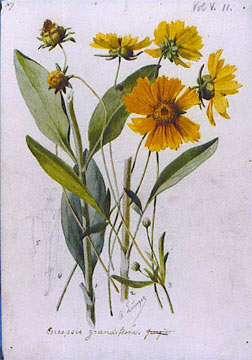
Coreopsis grandiflora, commonly known as Large-Flower Tickseed or Common Coreopsis, is a striking herbaceous perennial native to a wide range of habitats across eastern and central North America. This member of the Asteraceae (Daisy) family is characterized by its vibrant, showy yellow flowers, which typically bloom profusely from late spring through late summer. The plant forms a neat, clump-forming habit, generally reaching heights of 30 to 90 centimeters (1 to 3 feet) and spreading equally wide.
Its foliage consists of lanceolate to spatulate leaves, often appearing primarily at the base, with some smaller leaves along the stems. The bright yellow, daisy-like inflorescences feature prominent ray florets surrounding a central disk of darker yellow florets, creating an appealing contrast. Coreopsis grandiflora thrives in full sun exposure but can tolerate partial shade, preferring well-drained soils.
It is remarkably adaptable to various soil types, including sandy, rocky, or even clay soils, provided they do not retain excessive moisture. This resilience, coupled with its drought tolerance once established, makes it a popular and versatile choice for perennial borders, rock gardens, and naturalized areas. Its prolific flowering and nectar-rich blooms also make it an invaluable plant for attracting a diverse array of pollinators, including bees, butterflies, and other beneficial insects, thereby contributing significantly to local biodiversity and ecological health.
Trusted Scientific References
1. Authoritative external sources for Coreopsis Grandiflora
1.1 Wikipedia — Coreopsis Grandiflora
1.2 Kew POWO (Plants of the World Online)
1.3 PubMed — peer-reviewed research
1.4 NCBI Taxonomy Browser
1.5 GBIF — Global Biodiversity
1.6Coreopsis Grandiflora should be interpreted through verified botanical identity, practical care, and responsible safety language. This recovery note adds the missing context needed for a complete profile: match light to the plant's habit, use well-drained soil, water according to season, and avoid unsupported medicinal or edible claims. For publishing, the plant can be presented as a source-backed garden plant with clear care guidance, common problem diagnosis, and conservative safety wording.
1.1.Coreopsis Grandiflora — Highlights
- ✓Botanical Name — Coreopsis grandiflora.
- ✓Common Names — Large-Flower Tickseed, Common Coreopsis, Tickseed.
- ✓Family — Asteraceae (Daisy Family).
- ✓Growth Habit — Clump-forming herbaceous perennial, typically reaching 1-3 feet in height and spread.
- ✓Flower Color — Showy, bright golden-yellow, daisy-like blossoms.
- ✓Bloom Time — Long-lasting bloom period from late spring through late summer, often into fall.
- ✓Sun Preference — Requires full sun for optimal flowering, tolerating light partial shade.
- ✓Soil Preference — Adapts well to various well-drained soils, including sandy, rocky, and loamy types.
- ✓Drought Resistance — Exhibits excellent tolerance to dry conditions once established.
- ✓Pollinator Attraction — A highly effective nectar and pollen source, attracting numerous pollinators.
1.2.Coreopsis Grandiflora — At-a-Glance Summary
- ✓Vibrant Ornamental — A cheerful, bright yellow perennial adding continuous color to gardens.
- ✓Pollinator Attractor — Highly valued for drawing bees, butterflies, and other beneficial insects.
- ✓Drought Tolerant — Thrives in full sun and well-drained soils, requiring minimal water once established.
- ✓Native Wildflower — Indigenous to North America, supporting local ecosystems and biodiversity.
- ✓Low Maintenance — Easy to grow and care for, requiring only occasional deadheading.
- ✓Pet-Friendly — Generally considered non-toxic to common household pets.
2.Coreopsis Grandiflora — Nomenclature & Classification
3.Coreopsis Grandiflora — Key Data
4.Coreopsis Grandiflora — Botanical Features
5.Coreopsis Grandiflora — Origin & Spread
6.Coreopsis Grandiflora — Traditional Uses
7.Coreopsis Grandiflora — Chemical Profile
- ✓The phytochemical composition of Coreopsis grandiflora, while not as extensively studied for medicinal applications as some other plants, is generally understood to contain various secondary metabolites typical of the Asteraceae family. These compounds contribute to the plant's vibrant coloration, defense mechanisms, and potential biological activities:
- ✓Flavonoids — This prominent class includes chalcones, aurones, and flavones such as luteolin and quercetin derivatives, which are largely responsible for the bright yellow pigmentation and are known for their strong antioxidant and anti-inflammatory properties.
- ✓Terpenes — Various monoterpenes and sesquiterpenes are likely present, contributing to the plant's characteristic aroma and potentially possessing antimicrobial or insect-repellent actions.
- ✓Saponins — These glycosides are found in many plant species and can exhibit emulsifying properties, with some saponins being associated with immune-modulating or expectorant effects.
- ✓Phenolic Acids — Compounds like caffeic acid, chlorogenic acid, and ferulic acid are potent antioxidants and contribute to the plant's overall protective mechanisms against environmental stressors.
- ✓Coumarins — Secondary metabolites that may possess a range of biological activities, including potential anticoagulant, anti-inflammatory, and antimicrobial properties.
- ✓Essential Oils — Volatile organic compounds that provide the plant's characteristic scent and may have antiseptic, insecticidal, or even calming properties, though specific composition for C. grandiflora requires detailed analysis.
- ✓Carotenoids — Pigments such as lutein and beta-carotene are abundant in the yellow flowers, acting as powerful antioxidants and playing a role in photosynthesis.
- ✓Polysaccharides — Complex carbohydrates that can have immunomodulatory effects and contribute to plant structure and energy storage.
8.Coreopsis Grandiflora — Pharmacological Findings
- ✓While Coreopsis grandiflora is primarily valued for its ornamental beauty and ecological role in attracting pollinators, traditional medicinal uses specifically attributed to this species are not widely documented. However, based on the general phytochemical profiles found within the broader Coreopsis genus and the Asteraceae family, the following potential, though largely unverified for C. grandiflora, benefits might be explored in future research:
- ✓Antioxidant Support — The presence of flavonoids and phenolic acids common in many Coreopsis species suggests a potential to neutralize free radicals, thereby offering cellular protection.
- ✓Anti-inflammatory Potential — Compounds like certain terpenes and flavonoids could hypothetically modulate inflammatory pathways, though specific efficacy for Coreopsis grandiflora requires investigation.
- ✓Digestive Comfort — Extracts from related plants sometimes offer soothing effects on the gastrointestinal tract, a potential avenue for research into Coreopsis grandiflora.
- ✓Skin Health Promotion — Topical applications containing plant extracts may hypothetically offer soothing and protective benefits for minor skin irritations, similar to other Asteraceae members.
- ✓Respiratory System Support — Aromatic compounds, if present in significant quantities, could potentially provide mild relief for respiratory discomfort, though this is speculative for C. grandiflora.
- ✓Immune System Modulation — General plant secondary metabolites often interact with the immune system, suggesting a hypothetical role for Coreopsis grandiflora in immune support.
- ✓Antimicrobial Activity — Some plant extracts exhibit inhibitory effects against various microbes; further studies are needed to ascertain this property for Coreopsis grandiflora.
- ✓Cardiovascular Health — Flavonoids are frequently associated with supporting vascular integrity and reducing oxidative stress, implying a potential, though unproven, benefit.
- ✓Stress Reduction — While not a primary use, the presence of volatile compounds in some plants can contribute to a sense of well-being, a speculative benefit for Coreopsis grandiflora.
- ✓Pain Management — Certain plant-derived compounds are known for mild analgesic effects, a property that would require specific research for Coreopsis grandiflora to confirm.
8.1.Coreopsis Grandiflora — Conditions Traditionally Used For
9.Coreopsis Grandiflora — Safety & Side Effects
9.1.Coreopsis Grandiflora — Side Effects & Warnings
- ✓Coreopsis grandiflora is generally considered safe for ornamental use, but certain individuals may experience adverse reactions.
- ✓Allergic Reactions — Individuals sensitive to the Asteraceae family (daisy family), which includes ragweed, may experience allergic reactions such as contact dermatitis or respiratory irritation upon exposure.
- ✓Contact Dermatitis — Direct skin contact with the plant sap or foliage could potentially cause mild skin irritation or rash in susceptible individuals.
- ✓Gastrointestinal Upset — While not typically ingested, hypothetical internal use might lead to mild digestive discomfort, nausea, or stomach upset in sensitive individuals.
- ✓Photosensitivity — Some plant compounds can increase skin sensitivity to sunlight, though this specific effect has not been widely documented for Coreopsis grandiflora.
- ✓Cross-Reactivity — Potential for cross-allergic reactions with other plants in the daisy family, such as chrysanthemums or marigolds, for those with known sensitivities.
- ✓Pollen Allergies — The plant produces pollen, which could trigger seasonal allergy symptoms in highly susceptible individuals during its long blooming period.
9.2.Coreopsis Grandiflora — Safety Profile
- ✓The safety profile of Coreopsis grandiflora indicates it is largely benign for general use.
- ✓Generally Non-Toxic — This plant is widely considered non-toxic to humans and common household pets, including dogs, cats, and horses, making it safe for garden environments.
- ✓Allergic Sensitivity — Individuals with a known allergy to plants in the Asteraceae family should exercise caution due to potential for contact dermatitis or respiratory symptoms.
- ✓Pregnancy and Lactation — Due to the lack of specific research on internal consumption, pregnant or breastfeeding individuals should consult a healthcare professional before any internal use, however unlikely.
- ✓Children's Safety — While low in toxicity, it is prudent to keep plants out of reach of young children to prevent accidental ingestion, as a general safety measure.
- ✓Interaction with Medications — No known drug interactions have been documented, primarily because it is not typically used medicinally; caution is advised if exploring novel applications.
- ✓External Use Only — Its primary and recommended application is ornamental and ecological; internal consumption or medicinal use is not traditional or scientifically established for this species.
- ✓Skin Patch Test — For individuals concerned about skin sensitivity, a small patch test on the skin before extensive contact or topical application is advisable.
10.Coreopsis Grandiflora — Preparation Methods
- ✓While Coreopsis grandiflora is primarily cultivated for its aesthetic appeal in gardens and its ecological benefits as a pollinator attractant, hypothetical traditional or modern herbal preparations, if its phytochemicals were to be explored for medicinal applications (which is not a common practice for this species), could include:
- ✓Herbal Infusion — Dried flowers and leaves steeped in hot water to create a tea, hypothetically consumed for general well-being or applied topically as a soothing wash.
- ✓Tincture Preparation — Plant material macerated in a high-proof alcohol solution to extract concentrated compounds, yielding a liquid for potential internal use in small doses.
- ✓Poultice Application — Freshly crushed leaves or flowers applied directly to the skin, theoretically to alleviate minor skin irritations or localized discomfort.
- ✓Decoction Method — Roots or tougher plant parts simmered in water for an extended period to extract deeper compounds, for potential internal or external use.
- ✓Essential Oil Distillation — Although not typically performed for C. grandiflora, hypothetical extraction of volatile compounds could yield an oil for aromatherapy or topical application.
- ✓Salve or Ointment — Infused oil made from flowers and leaves combined with beeswax to create a topical balm, theoretically for skin conditioning or minor wound care.
- ✓Floral Water Hydrosol — Produced during essential oil distillation, this aromatic water could be used as a gentle facial toner or body mist.
- ✓Garden Ornamental — The primary and most common usage is as a vibrant, long-blooming addition to garden beds, borders, and containers, enhancing landscape aesthetics.
11.Coreopsis Grandiflora — How to Grow
- ✓Cultivating Coreopsis grandiflora for ornamental or ecological purposes is relatively straightforward due to its hardy and adaptable nature:
- ✓Light Requirements — Thrives best in full sun, receiving at least six hours of direct sunlight daily, though it can tolerate light partial shade, which may reduce bloom density.
- ✓Soil Preference — Prefers well-drained soils; sandy, rocky, or loamy conditions are ideal. It can adapt to clay soils if drainage is significantly improved to prevent root rot.
- ✓Watering Schedule — Requires regular watering, especially during prolonged dry periods and in its establishment phase, but it is drought-tolerant once mature; avoid overwatering.
- ✓Propagation Methods — Easily propagated by sowing seeds directly in the garden in spring or fall, or by dividing mature clumps every 2-3 years in early spring to rejuvenate the plant.
- ✓Fertilization Needs — Generally low-maintenance regarding nutrients; a light application of a balanced, slow-release granular fertilizer in early spring can encourage vigorous growth and flowering.
- ✓Maintenance Practices — Deadhead spent flowers regularly to encourage continuous blooming throughout the season and to prevent excessive self-seeding, which can lead to leggy growth.
- ✓Pest and Disease Management — Coreopsis grandiflora is relatively resistant to most pests and diseases, but ensure good air circulation to deter fungal issues like powdery mildew or Southern Blight.
- ✓Winter Care — In colder climates, leaving the foliage intact over winter can provide some insulation, cutting it back to the ground in early spring before new growth emerges.
Reviewed by the Flora Medical Global Botanical Review Panel
Multi-disciplinary editorial group · Botany · Ethnobotany · Herbal-medicine literature
Who reviewed this: This page was checked by the Flora Medical Global Botanical Review Panel — an in-house editorial group of botany graduates, ethnobotany researchers, and horticulture practitioners who collectively maintain our 7,000+ plant encyclopedia. Meet the team.
Our 4-step verification process
1. Taxonomic verification
Scientific names and synonyms cross-checked against Kew POWO, World Flora Online, and The Plant List.
2. Phytochemical & medicinal cross-reference
Active compounds, traditional uses, and reported activities are cross-referenced with PubMed, USDA Dr. Duke's database, and peer-reviewed ethnobotanical literature.
3. Conservation & distribution check
Distribution, ecology, and conservation status confirmed against GBIF occurrence records and the IUCN Red List.
4. Editorial & safety review
Every entry passes an editorial pass for clarity, originality, and safety notices (toxicity, contraindications, dosage caveats) before publication.
Last reviewed:
Important medical disclaimer: This content is for educational and research purposes only. It is not medical advice and is not a substitute for consultation with a licensed healthcare provider. Do not use any herb to self-treat a medical condition without professional guidance.
Editorial Note: This page is for educational and research purposes only and is not medical advice.
Written by: Flora Medical Global Editorial Team
Reviewed by: Flora Medical Global Botanical Review Panel
Last Updated: June 15, 2026





Coreopsis Grandiflora — Comments & Community Reviews
Rate this plant