
Medical Disclaimer: This content is for educational purposes only. It is not medical advice. Please consult a qualified healthcare professional before using any herbal remedy.
Safety Overview
1.Cornus Sericea — Essential Profile
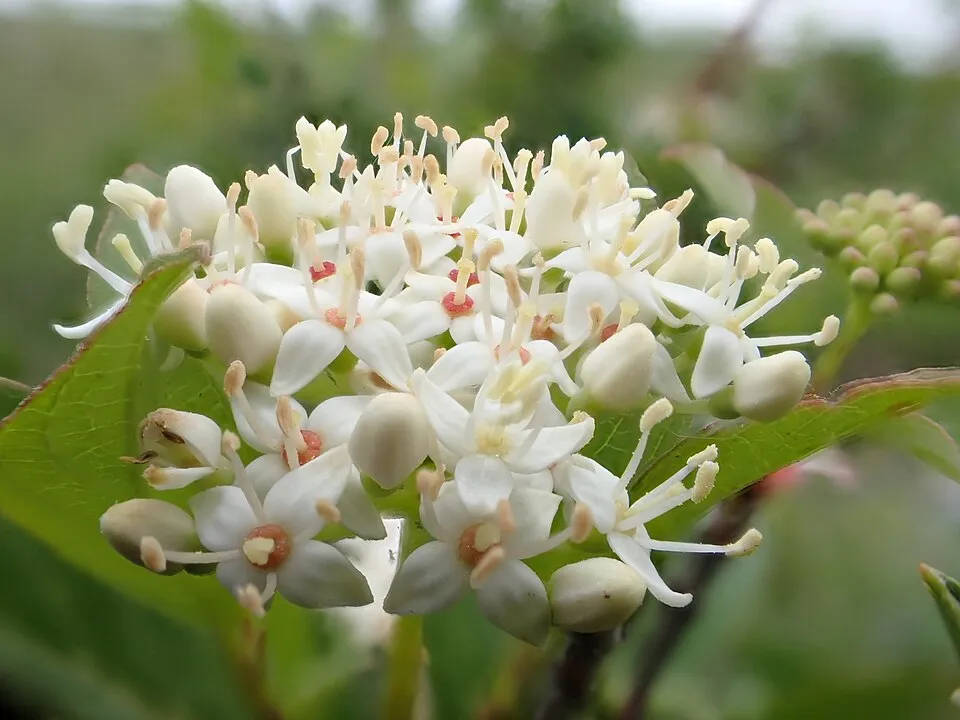
Cornus sericea, commonly known as red-osier dogwood, is a resilient deciduous shrub native to a broad expanse of North America, ranging from Alaska and northern Canada down to Virginia, southern California, and even Chihuahua, Mexico. This adaptable plant typically reaches heights of 1.5 to 4.5 meters (5 to 15 feet) with a spread of up to 3 meters (10 feet), forming a bushy habit with multiple arching stems. Its most striking feature is the vibrant red to yellow bark, which intensifies in color during winter, offering significant ornamental value. The leaves are simple, opposite, ovate, and measure 5 to 12 cm in length, turning attractive shades in autumn.
In late spring, clusters of small, creamy-white flowers emerge, giving way to small white to blue drupes that serve as a valuable food source for birds. Cornus sericea thrives in moist to wet environments such as riparian zones, wetlands, floodplains, and stream banks, often indicating nitrogen-rich soils. While it prefers these damp locales, it exhibits notable adaptability to various soil types, making it a crucial species for ecological restoration, particularly in areas susceptible to erosion. Two recognized subspecies, Cornus sericea subsp.
occidentalis and Cornus sericea subsp. sericea, contribute to its wide distribution across the continent.
Trusted Scientific References
1. Authoritative external sources for Cornus sericea
1.1 Wikipedia — Cornus sericea
1.2 Kew POWO (Plants of the World Online)
1.3 PubMed — peer-reviewed research
1.4 NCBI Taxonomy Browser
1.5 GBIF — Global Biodiversity
1.6Cornus Sericea should be interpreted through verified botanical identity, practical care, and responsible safety language. This recovery note adds the missing context needed for a complete profile: match light to the plant's habit, use well-drained soil, water according to season, and avoid unsupported medicinal or edible claims. For publishing, the plant can be presented as a source-backed garden plant with clear care guidance, common problem diagnosis, and conservative safety wording.
1.1.Cornus Sericea — Highlights
- ✓Striking Red Winter Bark — Provides exceptional year-round aesthetic appeal, especially prominent in colder months.
- ✓Native North American Species — Widely distributed across a vast geographical range, from Alaska to Mexico.
- ✓Adaptable to Wet Environments — Thrives in moist to wet soils, making it ideal for riparian zones and wetland restoration.
- ✓Traditional Medicinal Plant — Historically utilized by indigenous peoples for fever reduction and astringent applications.
- ✓Rich in Bioactive Compounds — Contains flavonoids, tannins, and phenolic acids with potential therapeutic benefits.
- ✓Wildlife Attractor — Produces white to blue drupes that are a food source for various bird species.
- ✓Easy to Cultivate — Relatively low maintenance, tolerant of diverse conditions, and easily propagated.
- ✓Erosion Control — Its extensive root system makes it valuable for stabilizing banks and preventing soil erosion.
- ✓Deciduous Shrub — Loses its leaves in winter, revealing the vibrant stem color that is its signature.
- ✓Indicator Species — Often indicates moist, nitrogen-rich soils in its natural habitats.
1.2.Cornus Sericea — Concise Overview
- ✓Red-osier dogwood is a North American native shrub known for its striking red winter bark.
- ✓Traditionally used as an antipyretic (fever remedy) and for its astringent properties.
- ✓Rich in flavonoids, tannins, and phenolic acids, contributing to its anti-inflammatory and antioxidant potential.
- ✓Thrives in moist, wet soils and is crucial for riparian restoration and wildlife habitat.
- ✓Requires careful dosing and professional consultation due to potential side effects and drug interactions.
- ✓Offers significant ornamental value with its vibrant stems and bird-attracting berries.
2.Cornus Sericea — Scientific Identity
3.Cornus Sericea — Fact Sheet
4.Cornus Sericea — Botanical Features
5.Cornus Sericea — Ecological Habitat
6.Cornus Sericea — Folk Medicine Applications
7.Cornus Sericea — Chemical Profile
- ✓Flavonoids — Key compounds include quercetin, rutin, and various anthocyanins, which contribute to the plant's antioxidant and anti-inflammatory activities.
- ✓Tannins — Predominantly proanthocyanidins and ellagitannins, these compounds are responsible for the plant's potent astringent properties and contribute to its antimicrobial effects.
- ✓Phenolic Acids — Gallic acid, caffeic acid, and salicylic acid derivatives are present, offering analgesic, anti-inflammatory, and antioxidant benefits.
- ✓Iridoids — Compounds such as loganin and its derivatives may be found, known for their anti-inflammatory and hepatoprotective potential.
- ✓Triterpenoids — Ursolic acid and oleanolic acid are examples of triterpenoids that can contribute to anti-inflammatory, antimicrobial, and antitumor activities.
- ✓Saponins — These glycosides may have expectorant, anti-inflammatory, and cholesterol-lowering properties, though caution is advised due to potential toxicity in higher doses.
- ✓Glycosides — Various other glycosides are present, influencing diverse pharmacological actions including cardiac and immune responses.
- ✓Volatile Oils — Trace amounts of essential oils contribute to the plant's characteristic aroma and may possess mild antiseptic qualities.
- ✓Sugars — Simple sugars and complex carbohydrates are present, providing basic metabolic energy for the plant and influencing extract properties.
- ✓Minerals — Essential mineral elements like potassium, calcium, and magnesium are found, contributing to the plant's nutritional profile.
8.Cornus Sericea — Scientific Evidence
- ✓Antipyretic Action — Traditionally used as a fever remedy, red-osier dogwood bark preparations are believed to help reduce elevated body temperatures through mechanisms that may involve modulating inflammatory responses.
- ✓Anti-inflammatory Properties — The presence of phenolic compounds and flavonoids suggests potential to alleviate inflammation, which can be beneficial in conditions like arthritis or general bodily aches.
- ✓Astringent Effects — High tannin content makes the bark an effective astringent, useful for tightening tissues, reducing secretions, and aiding in the healing of minor wounds or skin irritations.
- ✓Antimicrobial Support — Extracts from Cornus sericea may possess mild antimicrobial properties, contributing to its traditional use in preventing infection in cuts and scrapes.
- ✓Pain Relief — Historically, poultices and decoctions have been applied topically or consumed to mitigate pain, likely due to compounds that interact with pain pathways.
- ✓Wound Healing — The astringent and potentially antiseptic qualities of the bark can support the natural healing process of minor cuts, abrasions, and sores when applied externally.
- ✓Immune System Modulation — Certain plant constituents might help support or modulate the immune system, contributing to overall well-being and resistance against common ailments.
- ✓Digestive Aid — In some traditional practices, the bark was used in small doses to support digestive health, likely due to its astringent properties helping to tone the gastrointestinal tract.
- ✓Circulatory Support — While less documented, some historical accounts suggest its use in remedies aimed at supporting general vascular health, possibly through its antioxidant components.
- ✓Antioxidant Protection — Flavonoids and other phenolic compounds provide antioxidant activity, helping to neutralize free radicals and protect cells from oxidative damage.
8.1.Cornus Sericea — Conditions Traditionally Used For
9.Cornus Sericea — Safety Considerations
9.1.Cornus Sericea — Possible Adverse Reactions
- ✓Gastrointestinal Upset — High tannin content can cause stomach upset, nausea, or constipation in sensitive individuals or with excessive internal consumption.
- ✓Allergic Reactions — Skin irritation or allergic dermatitis may occur from topical application in individuals sensitive to dogwood constituents.
- ✓Liver Toxicity (Potential) — While not definitively proven for Cornus sericea, some tannins in high doses can be hepatotoxic; monitor for liver discomfort.
- ✓Blood Thinning — Compounds like salicylic acid derivatives might have mild anticoagulant effects; caution with blood-thinning medications.
- ✓Kidney Strain — Excessive intake of certain herbal constituents can potentially strain kidney function; monitor fluid intake.
- ✓Drug Interactions — May interact with medications, especially those affecting blood clotting, stomach acidity, or liver metabolism.
- ✓Photosensitivity — Some plant compounds can increase skin sensitivity to sunlight in rare cases, leading to sunburn.
9.2.Cornus Sericea — Safety Overview
- ✓Pregnancy and Lactation — Avoid use during pregnancy and breastfeeding due to insufficient safety data and potential effects on uterine contractions or infant health.
- ✓Children — Not recommended for use in children due due to lack of specific dosage guidelines and safety studies in pediatric populations.
- ✓Pre-existing Conditions — Individuals with gastrointestinal disorders, liver disease, kidney issues, or bleeding disorders should exercise extreme caution or avoid use.
- ✓Medication Interactions — Consult a healthcare professional if taking prescription medications, especially anticoagulants, antacids, or drugs metabolized by the liver.
- ✓Dosage — Adhere strictly to recommended dosages; excessive internal use can lead to adverse effects, particularly gastrointestinal distress.
- ✓External Use — Perform a patch test before extensive topical application to check for skin sensitivity or allergic reactions.
- ✓Professional Guidance — Always consult a qualified medical herbalist or healthcare provider before using Cornus sericea for medicinal purposes.
10.Cornus Sericea — Preparations & Uses
- ✓Bark Decoction — Prepare a decoction by simmering 1-2 teaspoons of dried bark in 1 cup of water for 10-15 minutes, then strain; traditionally used for fevers.
- ✓Leaf Infusion — Infuse 1-2 teaspoons of dried leaves in hot water for 5-10 minutes to create a tea, often used for milder ailments or as a general tonic.
- ✓Topical Poultice — Crush fresh leaves or bark and apply directly to minor wounds, insect bites, or inflamed areas to leverage astringent and anti-inflammatory effects.
- ✓Skin Wash/Compress — Use a cooled decoction or strong infusion as a topical wash for skin irritations, minor burns, or as a compress for swelling.
- ✓Tincture — Create an alcohol-based tincture from dried bark or leaves for a concentrated extract, following standard herbal tincture preparation guidelines.
- ✓Herbal Bath — Add a strong decoction of bark and leaves to bathwater for a soothing and astringent effect on the skin, beneficial for generalized skin discomfort.
- ✓Smoking Mixture (Traditional) — Historically, indigenous peoples occasionally blended dried bark with other herbs for ceremonial smoking, though this is not a recommended modern medicinal use.
11.Cornus Sericea — Garden Cultivation
- ✓Site Selection — Cornus sericea thrives in full sun to partial shade, with more sun enhancing the vibrant bark color, especially in cooler climates.
- ✓Soil Requirements — Prefers moist, rich, well-drained soils but is highly adaptable to a wide range, including wet and clayey soils; tolerates various pH levels.
- ✓Watering — Requires consistent moisture, particularly when establishing and during dry spells; ideal for planting in naturally damp areas or near water features.
- ✓Propagation — Easily propagated from hardwood cuttings taken in late fall or early spring, or by division of suckers from the base of mature plants.
- ✓Pruning — Annual pruning in late winter or early spring is recommended to encourage the growth of new, brightly colored stems; cut back older stems to the ground.
- ✓Fertilization — Generally not required in rich soils; a light application of balanced slow-release fertilizer in spring can benefit plants in poor soils.
- ✓Pest and Disease Resistance — Relatively resistant to most pests and diseases, though occasional issues with dogwood borer or powdery mildew may occur in stressed plants.
- ✓Landscape Use — Excellent for riparian restoration, wetland plantings, erosion control, and adding winter interest to gardens with its striking red stems.
Reviewed by the Flora Medical Global Botanical Review Panel
Multi-disciplinary editorial group · Botany · Ethnobotany · Herbal-medicine literature
Who reviewed this: This page was checked by the Flora Medical Global Botanical Review Panel — an in-house editorial group of botany graduates, ethnobotany researchers, and horticulture practitioners who collectively maintain our 7,000+ plant encyclopedia. Meet the team.
Our 4-step verification process
1. Taxonomic verification
Scientific names and synonyms cross-checked against Kew POWO, World Flora Online, and The Plant List.
2. Phytochemical & medicinal cross-reference
Active compounds, traditional uses, and reported activities are cross-referenced with PubMed, USDA Dr. Duke's database, and peer-reviewed ethnobotanical literature.
3. Conservation & distribution check
Distribution, ecology, and conservation status confirmed against GBIF occurrence records and the IUCN Red List.
4. Editorial & safety review
Every entry passes an editorial pass for clarity, originality, and safety notices (toxicity, contraindications, dosage caveats) before publication.
Last reviewed:
Important medical disclaimer: This content is for educational and research purposes only. It is not medical advice and is not a substitute for consultation with a licensed healthcare provider. Do not use any herb to self-treat a medical condition without professional guidance.
Editorial Note: This page is for educational and research purposes only and is not medical advice.
Written by: Flora Medical Global Editorial Team
Reviewed by: Flora Medical Global Botanical Review Panel
Last Updated: June 15, 2026





Cornus Sericea — Comments & Community Reviews
Rate this plant