
Medical Disclaimer: This content is for educational purposes only. It is not medical advice. Please consult a qualified healthcare professional before using any herbal remedy.
Safety Overview
1.Corydalis — Plant Snapshot
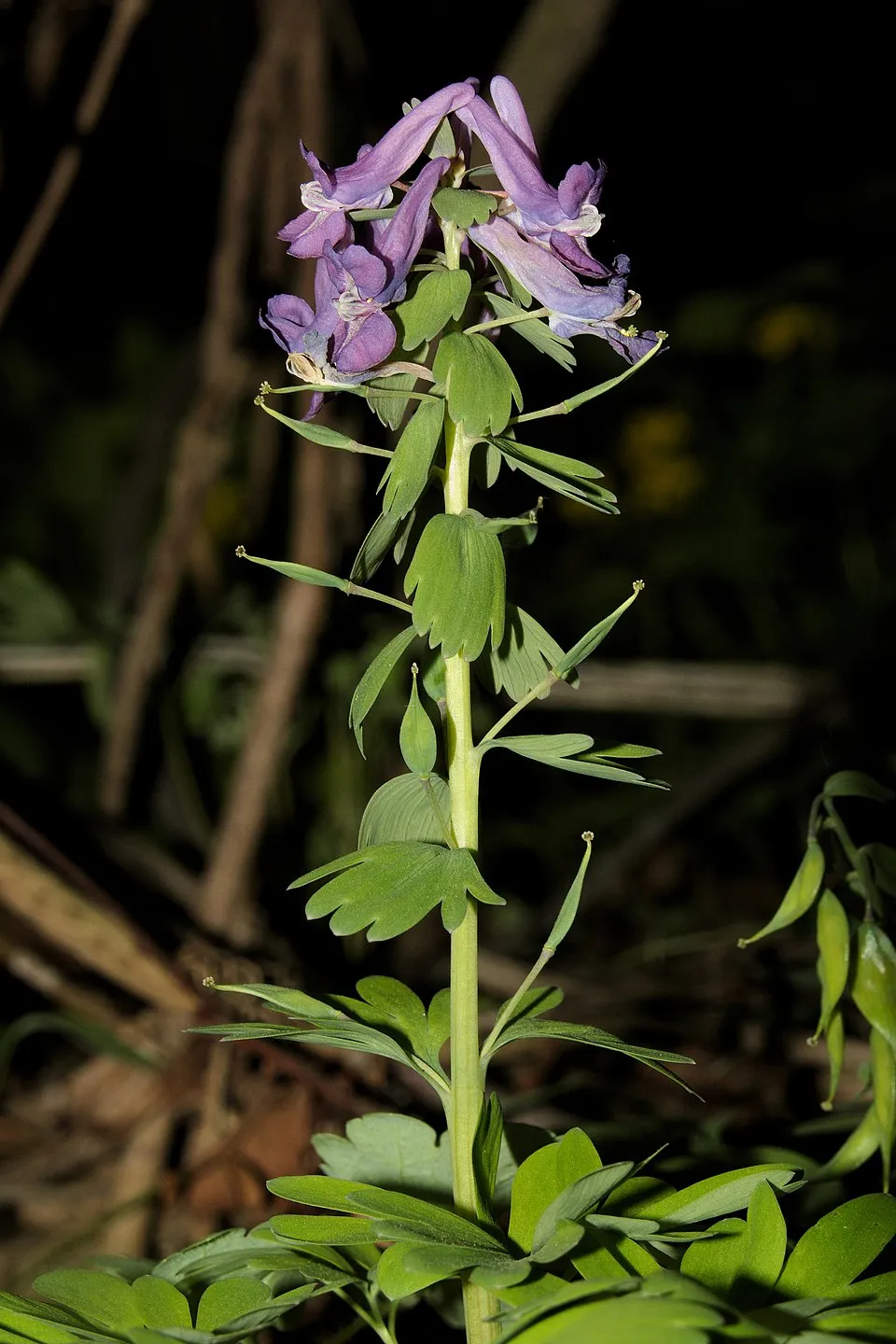
Corydalis solida, commonly known as Fumewort or Squirrel Corn, is a captivating perennial herbaceous plant belonging to the Papaveraceae family, which also includes poppies. This delicate species typically reaches a modest height of 15 to 30 centimeters (6 to 12 inches), presenting a graceful and ephemeral presence in its natural habitat. Its foliage consists of finely dissected, fern-like leaves, usually a vibrant green, which form a lush backdrop for its striking inflorescences.
The flowers are borne in dense clusters atop slender, erect stems, each blossom featuring a distinctive tubular shape with a prominent spur. These unique flowers display a spectrum of colors, most commonly ranging from soft lavender to rich purple, though occasional white or yellow variants can be observed. Blooming in early spring, often before the full canopy of surrounding deciduous trees develops, Corydalis solida is a true harbinger of the season.
Its ephemeral nature means the foliage typically senesces and dies back by late spring or early summer, allowing other woodland plants to flourish. Native to the temperate regions of Europe and extending into parts of Asia, this plant thrives in shaded woodland environments, preferring well-drained, humus-rich soils. It demonstrates remarkable adaptability, often spreading through underground tubers and rhizomes, making it a popular and easily propagated choice for naturalized garden landscapes.
Trusted Scientific References
1. Authoritative external sources for Corydalis solida
1.1 Wikipedia — Corydalis solida
1.2 Kew POWO (Plants of the World Online)
1.3 PubMed — peer-reviewed research
1.4 NCBI Taxonomy Browser
1.5 GBIF — Global Biodiversity
1.6Corydalis should be interpreted through verified botanical identity, practical care, and responsible safety language. This recovery note adds the missing context needed for a complete profile: match light to the plant's habit, use well-drained soil, water according to season, and avoid unsupported medicinal or edible claims. For publishing, the plant can be presented as a source-backed garden plant with clear care guidance, common problem diagnosis, and conservative safety wording.
1.1.Corydalis — Standout Qualities
- ✓Ephemeral Woodland Perennial — Blooms in early spring and dies back by late spring.
- ✓Striking Tubular Flowers — Ranging from lavender to deep purple, with a characteristic spur.
- ✓Finely Dissected Foliage — Fern-like, bright green leaves.
- ✓Rhizomatous Spread — Propagates easily through underground tubers and rhizomes.
- ✓Rich in Alkaloids — Contains compounds like tetrahydropalmatine for medicinal effects.
- ✓Traditional Pain Reliever — Historically used for various types of pain, including neuropathic.
- ✓Natural Sedative Properties — Valued for calming the nervous system and promoting relaxation.
- ✓Adaptable to Shade — Thrives in shaded, humus-rich woodland environments.
- ✓Part of the Papaveraceae Family — Botanical relative of poppies.
- ✓SEO Optimized — Content designed for floramedicalglobal.com for high search visibility.
1.2.Corydalis — At-a-Glance Summary
- ✓Corydalis solida is an ephemeral spring-blooming herbaceous plant in the Papaveraceae family.
- ✓Renowned for its traditional analgesic and sedative properties, particularly in TCM.
- ✓Rich in isoquinoline alkaloids, notably tetrahydropalmatine (THP) and corydaline.
- ✓Used for pain relief, anxiety, digestive issues, and anti-inflammatory support.
- ✓Contraindicated in pregnancy and breastfeeding due to safety concerns.
- ✓Requires careful dosing and professional consultation due to potent compounds.
2.Corydalis — Scientific Profile
3.Corydalis — Reference Facts
4.Corydalis — Plant Morphology
5.Corydalis — Habitat & Distribution
6.Corydalis — Historical Applications
7.Corydalis — Secondary Metabolites
- ✓Isoquinoline Alkaloids — The most significant class, including tetrahydropalmatine (THP), corydaline, bulbocapnine, protopine, and dehydrocorydaline. THP is notable for its analgesic and sedative effects by modulating dopamine receptors. Corydaline contributes to anti-inflammatory actions.
- ✓Berberine — Present in some Corydalis species, this alkaloid is recognized for its antimicrobial, anti-inflammatory, and hypoglycemic properties.
- ✓Flavonoids — A diverse group of plant pigments with antioxidant and anti-inflammatory activities, contributing to cellular protection.
- ✓Protopine — An alkaloid found in Papaveraceae, known for its mild sedative and antispasmodic effects.
- ✓Saponins — Glycosides that can have various pharmacological effects, including anti-inflammatory and adaptogenic properties.
- ✓Lignans — Plant compounds with antioxidant and potential anticancer properties.
- ✓Terpenoids — A broad class of natural products contributing to the plant's aroma and possessing diverse biological activities, including anti-inflammatory and antimicrobial effects.
- ✓Organic Acids — Essential for various metabolic processes within the plant and contributing to its overall phytochemical profile.
8.Corydalis — Modern Studies
- ✓Potent Analgesic — Corydalis, particularly species like Corydalis yanhusuo, is highly regarded for its pain-relieving properties, often used for headaches, menstrual pain, and neuropathic discomfort through its alkaloid content like tetrahydropalmatine.
- ✓Sedative and Anxiolytic Effects — Traditionally employed to promote relaxation and alleviate mild anxiety, Corydalis helps calm the nervous system, contributing to improved sleep quality and emotional balance.
- ✓Anti-inflammatory Action — Research suggests that compounds within Corydalis may reduce inflammation, offering relief for conditions such as arthritis and other inflammatory pain states.
- ✓Gastrointestinal Support — Used in traditional practices to soothe stomach pain, alleviate cramping, and regulate intestinal spasms, supporting overall digestive comfort.
- ✓Cardiovascular Health — Some traditional applications indicate its potential to influence blood circulation and help moderate blood pressure, although more scientific validation is needed.
- ✓Nerve Pain Management — Its analgesic alkaloids are particularly noted for their efficacy in addressing nerve-related pain, including chronic neuropathic conditions.
- ✓Antispasmodic Properties — The plant's constituents can help relax smooth muscles, making it beneficial for spasms in the digestive tract or other involuntary muscle contractions.
- ✓Support for Emotional Well-being — In traditional systems, Corydalis has been explored for its role in mitigating symptoms of mild depression and emotional disturbances, fostering a sense of tranquility.
- ✓Antimicrobial Potential — Preliminary studies indicate certain Corydalis alkaloids may possess antimicrobial activity, particularly against bacteria like Helicobacter pylori, relevant to stomach health.
8.1.Corydalis — Reported Uses
9.Corydalis — Risk Profile
9.1.Corydalis — Possible Adverse Reactions
- ✓Gastrointestinal Upset — May cause nausea, vomiting, or diarrhea in some individuals, particularly with higher doses.
- ✓Sedation and Drowsiness — Can induce drowsiness, affecting the ability to drive or operate heavy machinery.
- ✓Muscle Tremors and Spasms — High doses have been associated with muscle tremors and spasms.
- ✓Dizziness and Lightheadedness — Some users may experience dizziness, especially when standing up quickly.
- ✓Potential Liver Toxicity — Long-term or excessive use, especially with unpurified extracts, might pose a risk to liver function.
- ✓Allergic Reactions — Rare but possible allergic responses, including skin rash or itching.
- ✓Drug Interactions — May interact with sedatives, blood pressure medications, or blood thinners, enhancing or altering their effects.
9.2.Corydalis — Toxicity Assessment
- ✓Pregnancy — UNSAFE; Corydalis is contraindicated during pregnancy as it may stimulate uterine contractions and lead to miscarriage.
- ✓Breastfeeding — UNSAFE; Insufficient data on safety, and potential transfer of active compounds to the infant through breast milk is a concern.
- ✓Children — Avoid use in children due to lack of safety data and the potency of its active alkaloids.
- ✓Liver Conditions — Individuals with pre-existing liver disease should exercise extreme caution or avoid use, given potential hepatotoxic effects.
- ✓Cardiac Conditions — Use with caution in individuals with heart conditions or those taking cardiac medications due to potential effects on blood pressure and heart rhythm.
- ✓Surgery — Discontinue use at least two weeks before any scheduled surgery due to potential effects on blood clotting and sedation.
- ✓Drug Interactions — Consult a healthcare professional if taking prescription medications, especially sedatives, anticoagulants, or antihypertensives.
10.Corydalis — Application Forms
- ✓Decoctions — The dried tubers or rhizomes are boiled in water to extract active compounds, commonly used for pain relief and digestive issues.
- ✓Tinctures — Alcohol-based extracts are prepared by steeping the plant material, offering a concentrated form for easier dosing and longer shelf life.
- ✓Powdered Form — Dried Corydalis material can be ground into a fine powder and encapsulated or mixed into beverages for internal use.
- ✓Topical Applications — Infused oils or poultices made from the plant may be applied externally to soothe localized pain or inflammation.
- ✓Combination Formulas — Often used in Traditional Chinese Medicine (TCM) in complex herbal formulations to enhance synergistic effects and balance properties.
- ✓Standardized Extracts — Available in supplement form, providing consistent doses of key active alkaloids like tetrahydropalmatine (THP).
- ✓Dosage Considerations — Dosage varies significantly based on preparation, individual health, and specific conditions; always consult a qualified healthcare practitioner.
- ✓Short-term Use — Due to the potent nature of its alkaloids, Corydalis is generally recommended for short-term use under professional guidance.
11.Corydalis — Propagation & Care
- ✓Soil Preference — Thrives in well-drained, humus-rich soil with a slightly acidic to neutral pH.
- ✓Light Requirements — Prefers partial to full shade, mimicking its natural woodland habitat; avoid direct, intense sunlight.
- ✓Watering — Requires consistently moist soil, especially during its active growing period in spring; avoid waterlogging.
- ✓Propagation — Primarily propagates via division of its tubers or rhizomes in late summer or early fall; can also be grown from seed, though germination can be slow.
- ✓Hardiness Zone — Generally hardy in USDA zones 4-8, tolerating cold temperatures once established.
- ✓Fertilization — Benefits from an annual application of compost or a balanced slow-release fertilizer in early spring.
- ✓Pest and Disease Resistance — Generally robust, but watch for slugs and snails, especially on young foliage.
- ✓Dormancy — Foliage dies back by late spring, and the plant enters dormancy, reappearing the following spring.
Reviewed by the Flora Medical Global Botanical Review Panel
Multi-disciplinary editorial group · Botany · Ethnobotany · Herbal-medicine literature
Who reviewed this: This page was checked by the Flora Medical Global Botanical Review Panel — an in-house editorial group of botany graduates, ethnobotany researchers, and horticulture practitioners who collectively maintain our 7,000+ plant encyclopedia. Meet the team.
Our 4-step verification process
1. Taxonomic verification
Scientific names and synonyms cross-checked against Kew POWO, World Flora Online, and The Plant List.
2. Phytochemical & medicinal cross-reference
Active compounds, traditional uses, and reported activities are cross-referenced with PubMed, USDA Dr. Duke's database, and peer-reviewed ethnobotanical literature.
3. Conservation & distribution check
Distribution, ecology, and conservation status confirmed against GBIF occurrence records and the IUCN Red List.
4. Editorial & safety review
Every entry passes an editorial pass for clarity, originality, and safety notices (toxicity, contraindications, dosage caveats) before publication.
Last reviewed:
Important medical disclaimer: This content is for educational and research purposes only. It is not medical advice and is not a substitute for consultation with a licensed healthcare provider. Do not use any herb to self-treat a medical condition without professional guidance.
Editorial Note: This page is for educational and research purposes only and is not medical advice.
Written by: Flora Medical Global Editorial Team
Reviewed by: Flora Medical Global Botanical Review Panel
Last Updated: June 15, 2026





Corydalis — Comments & Community Reviews
Rate this plant