
Medical Disclaimer: This content is for educational purposes only. It is not medical advice. Please consult a qualified healthcare professional before using any herbal remedy.
Safety Overview
1.Cotoneaster — Botanical Snapshot
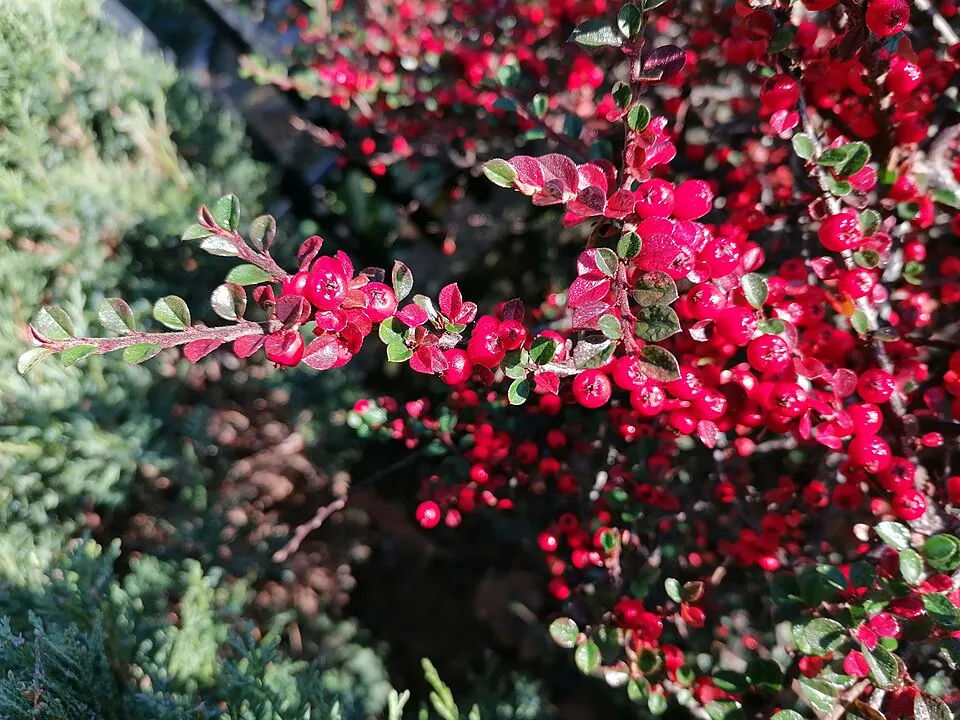
Cotoneaster (Cotoneaster horizontalis), a captivating member of the Rosaceae family, is widely recognized as a versatile, low-growing shrub. This deciduous or semi-evergreen species typically forms a dense, spreading mat, reaching a modest height of 1 to 2 feet (30 to 60 cm) while extending its branches up to 6 feet (180 cm) in width. Its distinctive herringbone branching pattern provides year-round structural interest.
The small, ovate to elliptic leaves, measuring 1 to 2 inches (2.5 to 5 cm) long, present a glossy dark green on their upper surface, offering a striking contrast to their paler, often slightly pubescent undersides. In late spring to early summer, Cotoneaster horizontalis adorns itself with small, delicate white to pink flowers, approximately 0.5 inches (1.25 cm) in diameter, which typically appear singly or in small clusters. These subtle blossoms mature into an abundance of vibrant, glossy red to orange pome-like berries by late summer, persisting through winter and serving as a crucial food source for various bird species.
The bark is characteristically thin and greyish-brown, developing a slightly rough texture with age. Native to the mountainous regions of northern and western China, this resilient plant thrives in a range of environments, preferring well-drained soil and exhibiting remarkable drought tolerance once established. It is well-suited for USDA hardiness zones 5 to 7, making it an excellent choice for rock gardens, erosion control, ground cover, or cascading over walls due to its distinctive horizontal growth habit and seasonal appeal.
Trusted Scientific References
1. Authoritative external sources for Cotoneaster horizontalis
1.1 Wikipedia — Cotoneaster horizontalis
1.2 Kew POWO (Plants of the World Online)
1.3 PubMed — peer-reviewed research
1.4 NCBI Taxonomy Browser
1.5 GBIF — Global Biodiversity
1.6Cotoneaster should be interpreted through verified botanical identity, practical care, and responsible safety language. This recovery note adds the missing context needed for a complete profile: match light to the plant's habit, use well-drained soil, water according to season, and avoid unsupported medicinal or edible claims. For publishing, the plant can be presented as a source-backed garden plant with clear care guidance, common problem diagnosis, and conservative safety wording.
1.1.Cotoneaster — Distinguishing Points
- ✓Distinctive Herringbone Branching — Distinctive Herringbone Branching Pattern
- ✓Glossy Dark Green — Glossy Dark Green Leaves with Paler Underside
- ✓Abundant Bright Red — Abundant Bright Red to Orange Berries in Autumn and Winter
- ✓Low — Growing, Spreading Ground Cover Habit
- ✓Drought — Tolerant and Adaptable to Various Soils
- ✓Attracts Birds, Providing — Attracts Birds, Providing Winter Food Source
- ✓Traditional Use in — Traditional Use in Chinese Medicine for Diuretic and Digestive Support
- ✓Rich in Antioxidant — Rich in Antioxidant Flavonoids and Astringent Tannins
- ✓Excellent for Rock — Excellent for Rock Gardens, Slopes, and Wall Plantings
- ✓Resilient and Generally Pest — Resistant Ornamental Shrub
1.2.Cotoneaster — In Brief
- ✓Cotoneaster horizontalis is a low-growing, ornamental shrub in the Rosaceae family.
- ✓Known for its distinctive herringbone branching, glossy leaves, and bright red berries.
- ✓Traditionally used in TCM for mild diuretic and digestive support.
- ✓Contains flavonoids, phenolic acids, and tannins with antioxidant and astringent properties.
- ✓Berries are mildly toxic if consumed in large quantities, causing digestive upset.
- ✓Primarily valued for its aesthetic appeal and ecological role as a bird food source.
2.Cotoneaster — Scientific Identity
3.Cotoneaster — Key Data
4.Cotoneaster — Physical Description
5.Cotoneaster — Native Range & Habitat
6.Cotoneaster — Folk Medicine Applications
7.Cotoneaster — Phytochemistry
- ✓Flavonoids — Key compounds like quercetin, kaempferol, and their glycosides are present, contributing to antioxidant and anti-inflammatory activities.
- ✓Phenolic Acids — Chlorogenic acid, caffeic acid, and ferulic acid derivatives are found, offering significant antioxidant and potentially protective cellular effects.
- ✓Tannins — Predominantly condensed tannins (proanthocyanidins) are responsible for the plant's astringent properties and may offer antioxidant and antimicrobial benefits.
- ✓Triterpenoids — Compounds such as ursolic acid and oleanolic acid derivatives may be present, known for their anti-inflammatory and hepatoprotective potential.
- ✓Organic Acids — Malic acid and citric acid contribute to the plant's metabolism and fruit acidity, potentially influencing its traditional digestive uses.
- ✓Sugars — Various monosaccharides and polysaccharides are found, particularly in the berries, providing energy and acting as structural components.
- ✓Carotenoids — Present in the vibrant red berries, these pigments like beta-carotene are powerful antioxidants and precursors to Vitamin A.
- ✓Mineral Elements — Essential minerals such as potassium, calcium, and magnesium are present, vital for various physiological functions.
8.Cotoneaster — Scientific Evidence
- ✓Diuretic Support — Cotoneaster horizontalis has traditionally been employed to encourage urine flow, assisting the body in expelling excess fluids and supporting healthy kidney function, particularly in mild urinary discomfort.
- ✓Astringent Properties — The plant's leaves and bark contain tannins, which impart astringent qualities, useful in traditional remedies for toning tissues and potentially alleviating minor gastrointestinal irritations.
- ✓Digestive Aid — An infusion prepared from the leaves of Cotoneaster horizontalis has been historically utilized in traditional Chinese medicine (TCM) to promote healthy digestion and soothe minor digestive upset.
- ✓Anti-inflammatory Potential — Some traditional herbalists value Cotoneaster for its perceived anti-inflammatory effects, which may contribute to general wellness and help manage mild inflammatory responses in the body.
- ✓Antioxidant Activity — The presence of flavonoids and phenolic acids suggests potential antioxidant benefits, helping to neutralize free radicals and protect cellular integrity against oxidative stress.
- ✓Kidney Health Enhancement — Beyond its diuretic action, traditional uses indicate a role in supporting overall kidney vitality, though scientific documentation on this specific mechanism remains limited.
- ✓Cardiovascular Support (Traditional) — While not a primary use, some traditional systems might associate plants with astringent properties with aspects of cardiovascular tonicity, albeit with limited modern evidence for Cotoneaster.
- ✓Wound Healing (Topical) — The astringent nature of tannins could theoretically contribute to minor wound healing by constricting tissues and forming a protective layer, though this is primarily an inferred traditional application.
8.1.Cotoneaster — Therapeutic Indications
9.Cotoneaster — Safety & Side Effects
9.1.Cotoneaster — Caution Notes
- ✓Digestive Upset — Ingestion of raw berries, especially in large quantities, can cause stomach upset, nausea, vomiting, or diarrhea due to cyanogenic glycosides.
- ✓Allergic Reactions — Sensitive individuals may experience skin irritation upon contact with the plant or allergic responses if consumed.
- ✓Tannin-related Issues — High tannin content in leaves and bark can potentially interfere with nutrient absorption if consumed excessively or over prolonged periods.
- ✓Kidney Irritation — While traditionally used for kidney support, excessive or improper use, particularly of concentrated extracts, could theoretically irritate sensitive kidneys.
- ✓Drug Interactions — Potential for interaction with medications, especially diuretics or those affecting gastrointestinal function, due to its active compounds.
- ✓Children and Pets — Berries are particularly attractive to children and pets; consumption should be strictly prevented due to potential toxicity.
- ✓Pregnancy and Lactation — Lack of safety data necessitates avoidance during pregnancy and breastfeeding.
9.2.Cotoneaster — Toxicity Assessment
- ✓Expert Consultation — Always consult a qualified healthcare professional or medical herbalist before using Cotoneaster for medicinal purposes.
- ✓Berry Toxicity — The berries contain cyanogenic glycosides; while not highly toxic, large quantities can cause digestive discomfort and should not be consumed.
- ✓Internal Use Caution — Internal use of leaves or bark should be approached with extreme caution and only under professional guidance due to limited human safety data.
- ✓Pregnancy & Breastfeeding — Avoid use during pregnancy and lactation due to insufficient safety research.
- ✓Children & Pets — Keep plant parts, especially berries, out of reach of children and pets to prevent accidental ingestion.
- ✓Allergic Sensitivity — Individuals with known allergies to plants in the Rosaceae family should exercise caution.
- ✓Dosage — Adhere strictly to recommended dosages from a qualified practitioner if medicinal use is pursued.
10.Cotoneaster — Preparation Methods
- ✓Leaf Infusion — Dried leaves can be steeped in hot water to create an herbal tea, traditionally used for mild diuretic effects and digestive support.
- ✓Decoction (Berries) — While caution is advised, some traditional practices might involve boiling a small quantity of berries to extract compounds for external use or specific internal preparations, always under expert guidance.
- ✓Topical Poultice — Crushed fresh leaves or a paste from dried leaves might be applied externally as a poultice for minor skin irritations or to leverage astringent properties.
- ✓Tincture — An alcohol-based extraction of the leaves or bark can be prepared, allowing for concentrated medicinal use, dosed in drops.
- ✓Berry Extract — Extracts from the berries, when processed safely, could be explored for their antioxidant content, but internal consumption requires extreme caution due to potential toxicity.
- ✓Environmental Use — Primarily valued ornamentally as a ground cover, hedge, or for erosion control, contributing to ecological diversity and aesthetic appeal.
- ✓Landscape Design — Utilized in rock gardens, along slopes, or cascading over walls to provide evergreen interest and wildlife habitat.
11.Cotoneaster — How to Grow
- ✓Sun Exposure — Thrives in full sun to partial shade, with best flowering and fruiting in brighter conditions.
- ✓Soil Requirements — Prefers well-drained loamy or sandy soil; tolerant of a wide range of soil pH, from acidic to slightly alkaline.
- ✓Watering — Drought-tolerant once established, but benefits from moderate watering during prolonged dry spells, especially when young.
- ✓Propagation — Easily propagated by softwood cuttings in early summer, semi-hardwood cuttings in late summer, or by seed after stratification.
- ✓Pruning — Requires minimal pruning, primarily for shaping, removing dead or damaged branches, or to control spread; best done after flowering.
- ✓Hardiness — Hardy in USDA Zones 5 to 7, capable of withstanding cold temperatures and adapting to various temperate climates.
- ✓Pest and Disease — Generally resistant to most pests and diseases, though susceptible to issues like fire blight and spider mites in stressed conditions.
Reviewed by the Flora Medical Global Botanical Review Panel
Multi-disciplinary editorial group · Botany · Ethnobotany · Herbal-medicine literature
Who reviewed this: This page was checked by the Flora Medical Global Botanical Review Panel — an in-house editorial group of botany graduates, ethnobotany researchers, and horticulture practitioners who collectively maintain our 7,000+ plant encyclopedia. Meet the team.
Our 4-step verification process
1. Taxonomic verification
Scientific names and synonyms cross-checked against Kew POWO, World Flora Online, and The Plant List.
2. Phytochemical & medicinal cross-reference
Active compounds, traditional uses, and reported activities are cross-referenced with PubMed, USDA Dr. Duke's database, and peer-reviewed ethnobotanical literature.
3. Conservation & distribution check
Distribution, ecology, and conservation status confirmed against GBIF occurrence records and the IUCN Red List.
4. Editorial & safety review
Every entry passes an editorial pass for clarity, originality, and safety notices (toxicity, contraindications, dosage caveats) before publication.
Last reviewed:
Important medical disclaimer: This content is for educational and research purposes only. It is not medical advice and is not a substitute for consultation with a licensed healthcare provider. Do not use any herb to self-treat a medical condition without professional guidance.
Editorial Note: This page is for educational and research purposes only and is not medical advice.
Written by: Flora Medical Global Editorial Team
Reviewed by: Flora Medical Global Botanical Review Panel
Last Updated: June 15, 2026





Cotoneaster — Comments & Community Reviews
Rate this plant