
Medical Disclaimer: This content is for educational purposes only. It is not medical advice. Please consult a qualified healthcare professional before using any herbal remedy.
Safety Overview
1.Cotyledon Orbiculata — Overview
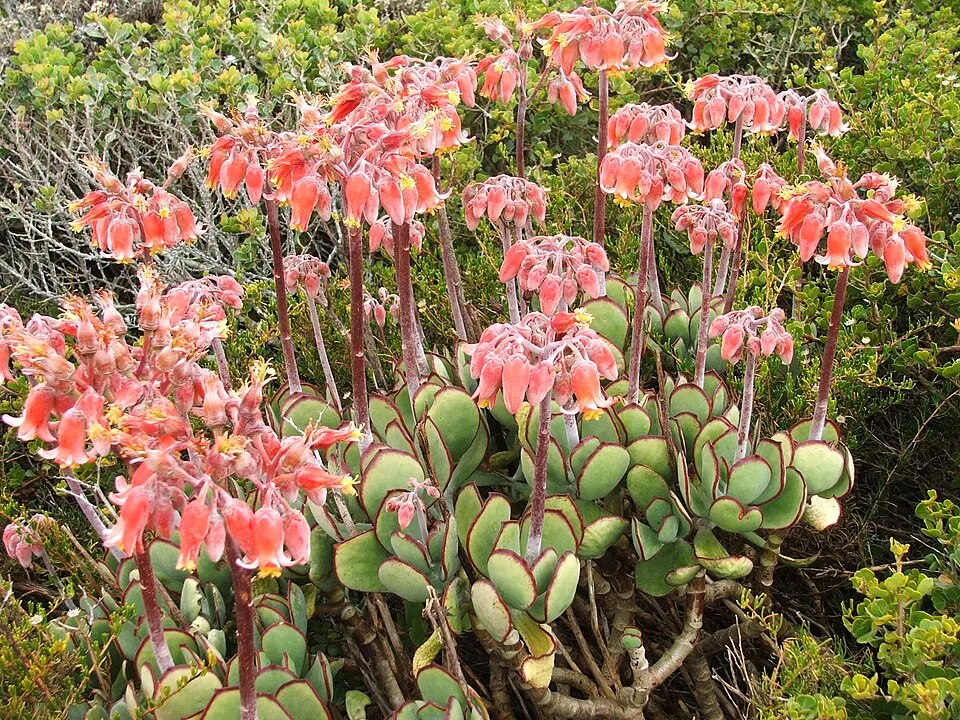
Cotyledon orbiculata, commonly known as Pig’s Ear or Round-leaf Cotyledon, is a remarkably resilient and ornamental succulent shrublet belonging to the Crassulaceae family. Native to South Africa, its name 'Cotyledon' originates from the Greek 'kotyle' (cup), referencing its seedling leaves, while 'orbiculata' is Latin for 'round,' aptly describing its characteristic foliage.
This robust plant thrives in arid and semi-arid environments, frequently found on rocky slopes, sandy flats, and in open vegetation across the Western Cape, Eastern Cape, Northern Cape, Free State, KwaZulu-Natal, Mpumalanga, Limpopo, Swaziland, Lesotho, and Mozambique. It exhibits significant morphological variability, with five recognized varieties differing in leaf arrangement, shape, and flower characteristics.
The plant typically grows up to 1 meter in height, especially when in flower, and is distinguished by its thick, fleshy, obovate to narrowly linear leaves. These leaves often display a glaucous-grey to bluish-green hue, attributed to a fine, powdery waxy bloom (pruina) that conserves water and reflects intense sunlight. Many populations feature a deep red, often undulate, cuticularized margin.
During late winter to early summer (September to January), Cotyledon orbiculata produces tall, stout peduncles (20-80 cm long) bearing cymose inflorescences of pendulous, bell-shaped flowers. These pentamerous blooms, typically 8-30 mm long, range in color from vibrant orange-red to pink, sometimes yellow, and are a magnet for sunbirds, enhancing its ecological value.
Trusted Scientific References
1. Authoritative external sources for Cotyledon orbiculata
1.1 Wikipedia — Cotyledon orbiculata
1.2 Kew POWO (Plants of the World Online)
1.3 PubMed — peer-reviewed research
1.4 NCBI Taxonomy Browser
1.5 GBIF — Global Biodiversity
1.6Cotyledon Orbiculata should be interpreted through verified botanical identity, practical care, and responsible safety language. This recovery note adds the missing context needed for a complete profile: match light to the plant's habit, use well-drained soil, water according to season, and avoid unsupported medicinal or edible claims. For publishing, the plant can be presented as a source-backed indoor plant with clear care guidance, common problem diagnosis, and conservative safety wording.
1.1.Cotyledon Orbiculata — Standout Qualities
- ✓Crassulaceae family succulent, — Crassulaceae family succulent, native to South Africa.
- ✓Characterized by thick, — Characterized by thick, fleshy, orbicular to obovate leaves with a waxy bloom.
- ✓Produces tall stalks of pendulous, bell — shaped, orange-red to yellow flowers.
- ✓Historically used by — Historically used by indigenous communities for various ailments.
- ✓Contains toxic bufadienolide — Contains toxic bufadienolide glucosides (e.g., orbicusides A-C).
- ✓Traditional external applications — Traditional external applications for skin conditions, earache, and toothache.
- ✓Internal use is — Internal use is highly dangerous and not recommended due to cardiotoxicity.
- ✓Highly drought — tolerant and valued for xeriscaping and ornamental purposes.
- ✓Exhibits significant variability — Exhibits significant variability with five recognized botanical varieties.
- ✓Flowers attract sunbirds, — Flowers attract sunbirds, contributing to local biodiversity.
1.2.Cotyledon Orbiculata — Concise Overview
- ✓Cotyledon orbiculata is a South African succulent with traditional medicinal uses, primarily external.
- ✓It contains highly toxic bufadienolide cardiac glycosides, posing significant risks if ingested.
- ✓Traditionally used topically for warts, boils, skin eruptions, and for ear/toothache relief.
- ✓Internal use (oral or enema) is strongly cautioned against due to potential cardiac toxicity.
- ✓An ornamental, drought-tolerant plant, it requires careful handling due to its potent compounds.
2.Cotyledon Orbiculata — Systematic Position
3.Cotyledon Orbiculata — Botanical Stats
4.Cotyledon Orbiculata — Morphological Account
5.Cotyledon Orbiculata — Where It Grows
6.Cotyledon Orbiculata — Cultural & Traditional Roles
7.Cotyledon Orbiculata — Active Compounds
- ✓Bufadienolide Glucosides — This is the primary class of active compounds, including novel orbicusides A-C and tyledoside D, known for their potent digitalis-like cardiac activity and toxicity.
- ✓Cardiac Glycosides — These compounds, specifically the bufadienolides, are responsible for the plant's effects on the heart and its toxic potential, particularly when ingested internally.
- ✓Plant Waxes (Pruina) — A protective, powdery waxy bloom on the leaf surface, composed of cuticular waxes, helps reduce water loss and offers UV protection.
- ✓Calcium Oxalate — Present as crystal sand within the mesophyll cells, this compound can contribute to mechanical irritation, especially if plant material is ingested or applied without proper preparation.
- ✓Organic Acids — Succulent plants often contain various organic acids, which contribute to the initially acidic nature of the leaf extract, potentially causing local irritation.
- ✓Flavonoids and Phenolics — While not explicitly identified as major active compounds in the provided source for C. orbiculata, these are common secondary metabolites in plants, often contributing to antioxidant properties.
8.Cotyledon Orbiculata — Modern Studies
- ✓Wound Healing — Traditionally, peeled leaves are applied as a poultice to soften hard tissues like warts, corns, and plantar warts, facilitating their removal and promoting skin regeneration.
- ✓Anti-inflammatory Action — Used topically for boils, abscesses, and skin eruptions, the plant's compounds are believed to reduce inflammation and aid in the healing process.
- ✓Pain Relief for Earache — Fresh leaf juice, warmed slightly, is traditionally instilled into the ear to alleviate pain and discomfort associated with earaches.
- ✓Toothache Management — Local application of fresh leaf juice to a painful tooth or gum area is a historical remedy for temporary toothache relief.
- ✓Acne Treatment — Leaf juice prepared as a lotion has been applied to the skin to help manage acne and other minor skin blemishes.
- ✓Emetic Properties (Traditional) — Historically, leaf preparations were used to induce vomiting, though this practice is highly cautioned due to toxicity.
- ✓Syphilis Treatment (Traditional) — A leaf decoction was traditionally administered as an enema for syphilis, but this internal use is strongly discouraged due to severe health risks.
- ✓Softening Skin Growths — The succulence and certain compounds in the leaf help to break down keratinized tissue, making it effective for topical applications on various skin growths.
- ✓Local Irritation Reduction — When extracts are neutralized, they show less local irritation on skin and mucous membranes, improving their topical tolerability.
8.1.Cotyledon Orbiculata — Therapeutic Indications
9.Cotyledon Orbiculata — Risk Profile
9.1.Cotyledon Orbiculata — Reported Side Effects
- ✓Cardiac Toxicity — Internal use, including enemas, can lead to severe cardiac effects due to bufadienolide glucosides, mimicking digitalis poisoning.
- ✓Gastrointestinal Distress — Oral ingestion may cause nausea, vomiting, and other gastrointestinal disturbances due to its emetic properties and toxicity.
- ✓Skin Irritation — Applying fresh, unneutralized leaf extract topically can cause local irritation or allergic reactions due to its acidic nature.
- ✓Krimpsiekte in Livestock — Ingestion of the plant by grazing animals can cause 'krimpsiekte,' a neurological and cardiac poisoning leading to significant stock losses.
- ✓Systemic Poisoning — High doses or prolonged internal use can lead to systemic poisoning affecting multiple organ systems.
- ✓Variability in Activity — The concentration of active compounds can vary seasonally, geographically, and between different plant parts, making dosage unpredictable and risky.
9.2.Cotyledon Orbiculata — Risk Assessment
- ✓Internal Use Contraindicated — Due to the presence of potent bufadienolide cardiac glycosides, internal consumption (including oral intake and enemas) is strongly not recommended.
- ✓Cardiac Conditions Precaution — Individuals with known or suspected cardiac issues must absolutely avoid any internal preparations of Cotyledon orbiculata.
- ✓External Application with Caution — While generally safer, external preparations should ideally be neutralized to prevent skin irritation.
- ✓Avoid During Pregnancy and Lactation — The plant's toxicity poses significant risks to pregnant or nursing individuals and their infants.
- ✓Keep Away from Children — All parts of the plant should be kept out of reach of children due to the risk of accidental poisoning.
- ✓Livestock Hazard — Ensure grazing animals do not consume the plant to prevent 'krimpsiekte' and other forms of poisoning.
- ✓Professional Consultation — Always consult a qualified healthcare professional or medical herbalist before considering any medicinal use of this plant.
10.Cotyledon Orbiculata — Application Forms
- ✓Topical Poultice — Peeled, fresh leaf is applied directly to warts, corns, boils, or abscesses and secured, often warmed to enhance efficacy.
- ✓Fresh Leaf Juice Application — Juice extracted from fresh leaves can be applied topically to skin eruptions, acne, or as a lotion.
- ✓Ear Instillation — Warm, fresh leaf juice is traditionally instilled into the ear for the symptomatic relief of earache.
- ✓Toothache Relief — A small amount of fresh leaf juice can be applied locally to a painful tooth or gum for temporary alleviation of discomfort.
- ✓Neutralized Preparations — For external applications, neutralizing the initially acidic leaf extract is recommended to minimize local skin irritation.
- ✓Traditional Enema (Cautioned) — Historically, a leaf decoction was used as an enema for certain conditions, but this internal route is strongly advised against due to toxicity.
- ✓Traditional Oral Intake (Cautioned) — Fresh leaf juice was traditionally taken orally for conditions like epilepsy, a practice now considered unsafe due to severe cardiac risks.
11.Cotyledon Orbiculata — Growing Guide
- ✓Well-Draining Soil — Requires sandy or rocky, well-draining soil to prevent root rot, typical of its arid native habitat.
- ✓Full Sun Exposure — Thrives in bright, direct sunlight for most of the day; insufficient light can lead to leggy growth.
- ✓Minimal Watering — Water sparingly, allowing the soil to dry out completely between waterings, especially during dormant periods.
- ✓Frost Protection — Sensitive to frost; in colder climates, it should be grown in containers that can be moved indoors or protected.
- ✓Propagation — Easily propagated from stem or leaf cuttings, which should be allowed to callus before planting, or from seeds.
- ✓Low Maintenance — Generally pest-resistant and requires little fertilization, making it an excellent choice for xeriscaping.
- ✓Container Growth — Adapts well to container gardening, which allows for easy movement to protect from adverse weather conditions.
Reviewed by the Flora Medical Global Botanical Review Panel
Multi-disciplinary editorial group · Botany · Ethnobotany · Herbal-medicine literature
Who reviewed this: This page was checked by the Flora Medical Global Botanical Review Panel — an in-house editorial group of botany graduates, ethnobotany researchers, and horticulture practitioners who collectively maintain our 7,000+ plant encyclopedia. Meet the team.
Our 4-step verification process
1. Taxonomic verification
Scientific names and synonyms cross-checked against Kew POWO, World Flora Online, and The Plant List.
2. Phytochemical & medicinal cross-reference
Active compounds, traditional uses, and reported activities are cross-referenced with PubMed, USDA Dr. Duke's database, and peer-reviewed ethnobotanical literature.
3. Conservation & distribution check
Distribution, ecology, and conservation status confirmed against GBIF occurrence records and the IUCN Red List.
4. Editorial & safety review
Every entry passes an editorial pass for clarity, originality, and safety notices (toxicity, contraindications, dosage caveats) before publication.
Last reviewed:
Important medical disclaimer: This content is for educational and research purposes only. It is not medical advice and is not a substitute for consultation with a licensed healthcare provider. Do not use any herb to self-treat a medical condition without professional guidance.
Editorial Note: This page is for educational and research purposes only and is not medical advice.
Written by: Flora Medical Global Editorial Team
Reviewed by: Flora Medical Global Botanical Review Panel
Last Updated: June 15, 2026





Cotyledon Orbiculata — Comments & Community Reviews
Rate this plant