
Medical Disclaimer: This content is for educational purposes only. It is not medical advice. Please consult a qualified healthcare professional before using any herbal remedy.
Safety Overview
1.Creeping Fig — At a Glance
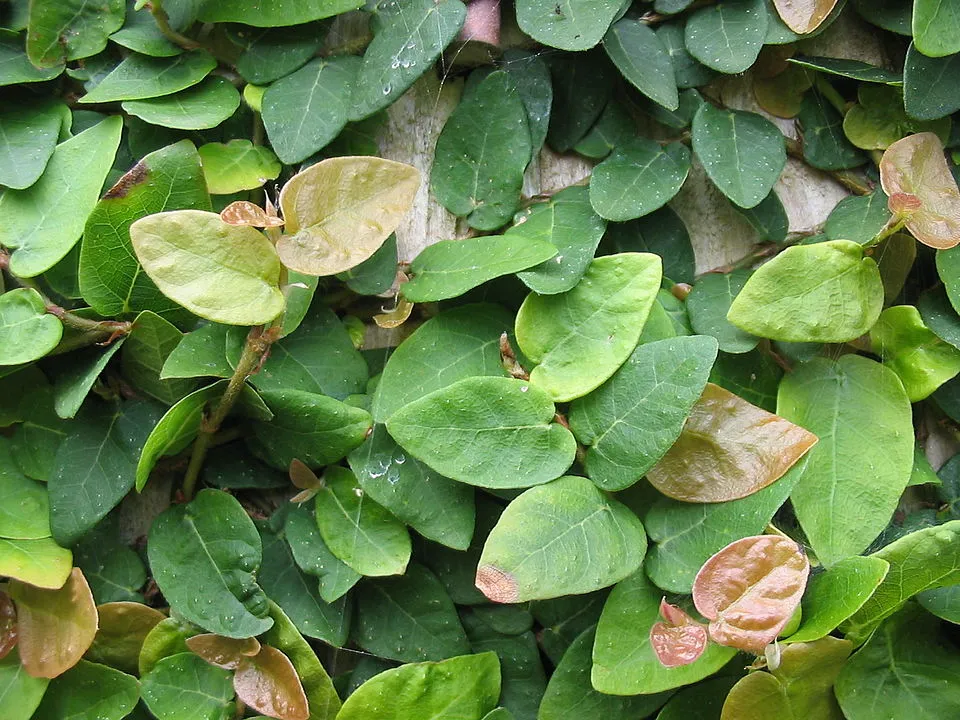
Ficus pumila, commonly known as Creeping Fig or Climbing Fig, is a tenacious, evergreen woody vine belonging to the Moraceae family, which also includes mulberries and other fig species. Native to East Asia, specifically regions of China, Japan, and Vietnam, this plant thrives in temperate and subtropical climates. Its botanical name 'pumila' translates to 'small,' a characteristic referring to its diminutive, heart-shaped leaves in its juvenile stage, which stand in stark contrast to the plant's vigorous climbing habit.
These juvenile leaves are typically small, thin, and closely appressed to surfaces, enabling the vine to cling using specialized aerial roots that secrete a natural adhesive. As the plant matures, particularly on non-clinging, reproductive branches, the foliage transforms into larger, thicker, and more oblong leaves. Creeping Fig is widely recognized for its ornamental value, capable of rapidly covering walls, trellises, and ground, providing effective insulation and contributing to urban greening.
Beyond its aesthetic appeal, Ficus pumila holds a significant, albeit less mainstream, place in traditional medicinal systems, particularly Traditional Chinese Medicine (TCM), where its roots and stems are known as ‘Bijian Teng’ (薜荔藤). Its robust growth and adaptability to various conditions, including drought and moderate salt, have led to its global cultivation, though it may not be reliably winter hardy in colder regions and is often grown as a houseplant or annual.
Trusted Scientific References
1. Authoritative external sources for Ficus pumila
1.1 Wikipedia — Ficus pumila
1.2 Kew POWO (Plants of the World Online)
1.3 PubMed — peer-reviewed research
1.4 NCBI Taxonomy Browser
1.5 GBIF — Global Biodiversity
1.6Creeping Fig should be interpreted through verified botanical identity, practical care, and responsible safety language. This recovery note adds the missing context needed for a complete profile: match light to the plant's habit, use well-drained soil, water according to season, and avoid unsupported medicinal or edible claims. For publishing, the plant can be presented as a source-backed indoor plant with clear care guidance, common problem diagnosis, and conservative safety wording.
1.1.Creeping Fig — Notable Characteristics
- ✓Vigorous climbing and — Vigorous climbing and clinging habit using aerial roots.
- ✓Dimorphic foliage with distinct juvenile (small, heart — shaped) and mature (larger, oblong) leaves.
- ✓Native to East — Native to East Asia, particularly China, Japan, and Vietnam.
- ✓Historically recognized in — Historically recognized in Traditional Chinese Medicine as ‘Bijian Teng’.
- ✓Contains a rich — Contains a rich profile of bioactive compounds including flavonoids and triterpenoids.
- ✓Highly valued for — Highly valued for its ornamental versatility as a groundcover or wall climber.
- ✓Exhibits drought tolerance — Exhibits drought tolerance and moderate salt tolerance once established.
- ✓Considered deer resistant, — Considered deer resistant, making it suitable for various landscape designs.
- ✓Produces small, inedible fig — like fruits when mature outdoors.
- ✓Fast — growing nature allows for quick coverage and aesthetic impact.
1.2.Creeping Fig — In Brief
- ✓Creeping Fig (Ficus pumila) is a vigorous evergreen vine native to East Asia.
- ✓Traditionally used in TCM (Bijian Teng) for anti-inflammatory, diuretic, and detoxifying purposes.
- ✓Rich in beneficial phytochemicals including flavonoids, triterpenoids, and phenolic compounds.
- ✓Valued for both its ornamental climbing ability and its emerging medicinal potential.
- ✓Requires careful handling due to potential skin irritation from sap and known toxicity to pets.
- ✓Modern research supports its antioxidant and anti-inflammatory activities, primarily in preliminary studies.
2.Creeping Fig — Scientific Identity
3.Creeping Fig — Key Data
4.Creeping Fig — Botanical Description
5.Creeping Fig — Native Range & Habitat
6.Creeping Fig — Folk Medicine Applications
7.Creeping Fig — Key Phytochemicals
- ✓Flavonoids — Key compounds include quercetin, rutin, and kaempferol, which are largely responsible for the plant's antioxidant, anti-inflammatory, and antiallergic activities.
- ✓Triterpenoids — Such as lupeol, α-amyrin, and β-amyrin, known for their significant anti-inflammatory, hepatoprotective, and potential anticancer properties.
- ✓Phenolic Compounds — Including gallic acid, caffeic acid, and various tannins, contributing to the plant's strong antioxidant, antimicrobial, and astringent effects.
- ✓Steroids — Notably β-sitosterol, a phytosterol recognized for its anti-inflammatory, immunomodulatory, and cholesterol-lowering potential.
- ✓Alkaloids — While present in smaller quantities, these nitrogen-containing compounds can exhibit diverse pharmacological activities.
- ✓Saponins — Glycosides that can have hemolytic properties and contribute to anti-inflammatory and expectorant actions.
- ✓Coumarins — Compounds with potential anticoagulant, anti-inflammatory, and antimicrobial properties, though typically in low concentrations in Ficus pumila.
- ✓Fatty Acids — Essential fatty acids like linoleic acid and oleic acid are present, playing roles in cellular structure and signaling.
- ✓Polysaccharides — Complex carbohydrates that can contribute to immunomodulatory effects and overall plant bioactivity.
- ✓Glycosides — Various other glycosides are present, contributing to the overall therapeutic profile through diverse mechanisms.
8.Creeping Fig — Pharmacological Findings
- ✓Anti-inflammatory Properties — Extracts of Creeping Fig have demonstrated a capacity to reduce inflammation, likely due to the presence of triterpenoids and flavonoids that inhibit pro-inflammatory pathways.
- ✓Diuretic Effects — Traditionally, Bijian Teng has been used to promote urination, aiding in the removal of excess fluids and potentially alleviating edema.
- ✓Detoxifying Support — In folk medicine, Creeping Fig is believed to assist the body's natural detoxification processes, supporting overall systemic cleansing.
- ✓Antioxidant Activity — Rich in phenolic compounds and flavonoids, Ficus pumila exhibits potent antioxidant capabilities, neutralizing free radicals and protecting cells from oxidative stress.
- ✓Potential Anticancer Effects — Preliminary in vitro and animal studies suggest that certain compounds within Creeping Fig may possess antiproliferative properties against various cancer cell lines.
- ✓Wound Healing Acceleration — Traditional applications include using the plant to support the healing of minor wounds and skin lesions, possibly due to its anti-inflammatory and antimicrobial constituents.
- ✓Analgesic Relief — Its traditional use for pain relief, particularly in conditions like rheumatism, is linked to its observed anti-inflammatory and potentially mild analgesic properties.
- ✓Antimicrobial Action — Phytochemicals such as phenolics and certain flavonoids may contribute to inhibitory effects against some bacteria and fungi.
- ✓Joint Pain and Rheumatism Management — Historically, decoctions of Creeping Fig were applied or consumed to alleviate discomfort associated with joint pain and rheumatic conditions.
- ✓Skin Condition Improvement — Due to its anti-inflammatory and soothing properties, it has been traditionally used to address various minor skin irritations and rashes.
8.1.Creeping Fig — Reported Uses
9.Creeping Fig — Safety Considerations
9.1.Creeping Fig — Possible Adverse Reactions
- ✓Skin Irritation — Direct contact with the sap can cause dermatitis, redness, or itching in sensitive individuals.
- ✓Allergic Reactions — Individuals with sensitivities to latex or other plants in the Moraceae family may experience allergic responses.
- ✓Gastrointestinal Upset — Ingestion of large quantities, especially of unprocessed plant material, may lead to digestive discomfort.
- ✓Drug Interactions — Potential for interaction with diuretic medications or blood thinners due to its natural diuretic and coumarin content, respectively.
- ✓Pet Toxicity — The plant is known to be problematic for cats, dogs, and horses, potentially causing oral irritation, vomiting, or difficulty swallowing upon ingestion.
- ✓Photosensitivity — While rare, some Ficus species can induce photosensitivity, leading to heightened skin reactions to sunlight.
- ✓Hypoglycemic Effects — Theoretical risk of interacting with blood sugar-lowering medications due to potential effects on glucose metabolism.
9.2.Creeping Fig — Clinical Safety Notes
- ✓Pregnancy and Lactation — Avoid use during pregnancy and breastfeeding due to insufficient research on its safety for these populations.
- ✓Pediatric Use — Not recommended for children without professional medical guidance due to a lack of specific safety data.
- ✓Latex Allergy — Individuals with known latex allergies should exercise extreme caution or avoid contact due to the presence of latex sap.
- ✓Pre-existing Conditions — Patients with kidney disease, heart conditions, or on diuretic therapy should consult a healthcare provider before use.
- ✓External Application — Always perform a patch test on a small skin area before widespread topical application to check for adverse reactions.
- ✓Internal Consumption — Due to its potential toxicity and lack of extensive clinical data, internal use should strictly be under the supervision of a qualified medical herbalist.
- ✓Medication Interactions — Advise patients to disclose all medications to their practitioner to assess potential interactions, especially with anticoagulants or diuretics.
10.Creeping Fig — Preparation Methods
- ✓Traditional Decoction — Prepare by boiling dried roots and stems (Bijian Teng) in water, traditionally consumed for internal ailments like inflammation or edema.
- ✓Topical Poultices — Crush fresh or rehydrated leaves and stems to create a paste, applied directly to the skin for minor wounds, rashes, or localized pain.
- ✓Herbal Tinctures — Extract active compounds by steeping plant material in alcohol, creating a concentrated liquid for internal or external application, usually in drops.
- ✓Infusions — Steep dried leaves or young stems in hot water to make a milder tea, often used for general wellness or mild diuretic effects.
- ✓Creams and Ointments — Incorporate Ficus pumila extracts into topical formulations for targeted relief of skin irritations, joint pain, or muscle aches.
- ✓Herbal Baths — Add a strong decoction of the plant material to bathwater for a soothing soak, particularly beneficial for widespread skin conditions or muscle soreness.
- ✓Powdered Formulations — Dry and pulverize the plant material into a fine powder, which can be encapsulated for internal consumption or mixed into topical preparations.
11.Creeping Fig — How to Grow
- ✓Light Requirements — Prefers partial shade or dappled sunlight; can tolerate full sun if soil moisture is consistent.
- ✓Soil Composition — Thrives in moist, well-drained soil that is rich in organic matter.
- ✓Watering Schedule — Requires regular watering during its active growing season; reduce frequency from fall through late winter.
- ✓Humidity Preferences — Performs best in environments with high humidity, which mimics its native tropical and subtropical habitats.
- ✓Winter Hardiness — Not reliably hardy in cold climates; often cultivated as an annual, houseplant, or greenhouse specimen in such regions.
- ✓Pruning Techniques — Prune as needed to manage its vigorous growth, prevent overgrowth on structures, and maintain desired shape.
- ✓Pest Management — Monitor for common pests such as scale insects, aphids, mealybugs, thrips, and spider mites, and treat promptly if infestations occur.
Reviewed by the Flora Medical Global Botanical Review Panel
Multi-disciplinary editorial group · Botany · Ethnobotany · Herbal-medicine literature
Who reviewed this: This page was checked by the Flora Medical Global Botanical Review Panel — an in-house editorial group of botany graduates, ethnobotany researchers, and horticulture practitioners who collectively maintain our 7,000+ plant encyclopedia. Meet the team.
Our 4-step verification process
1. Taxonomic verification
Scientific names and synonyms cross-checked against Kew POWO, World Flora Online, and The Plant List.
2. Phytochemical & medicinal cross-reference
Active compounds, traditional uses, and reported activities are cross-referenced with PubMed, USDA Dr. Duke's database, and peer-reviewed ethnobotanical literature.
3. Conservation & distribution check
Distribution, ecology, and conservation status confirmed against GBIF occurrence records and the IUCN Red List.
4. Editorial & safety review
Every entry passes an editorial pass for clarity, originality, and safety notices (toxicity, contraindications, dosage caveats) before publication.
Last reviewed:
Important medical disclaimer: This content is for educational and research purposes only. It is not medical advice and is not a substitute for consultation with a licensed healthcare provider. Do not use any herb to self-treat a medical condition without professional guidance.
Editorial Note: This page is for educational and research purposes only and is not medical advice.
Written by: Flora Medical Global Editorial Team
Reviewed by: Flora Medical Global Botanical Review Panel
Last Updated: June 15, 2026





Creeping Fig — Comments & Community Reviews
Rate this plant