
Medical Disclaimer: This content is for educational purposes only. It is not medical advice. Please consult a qualified healthcare professional before using any herbal remedy.
Safety Overview
1.Crocosmia Masoniorum — Introduction & Highlights
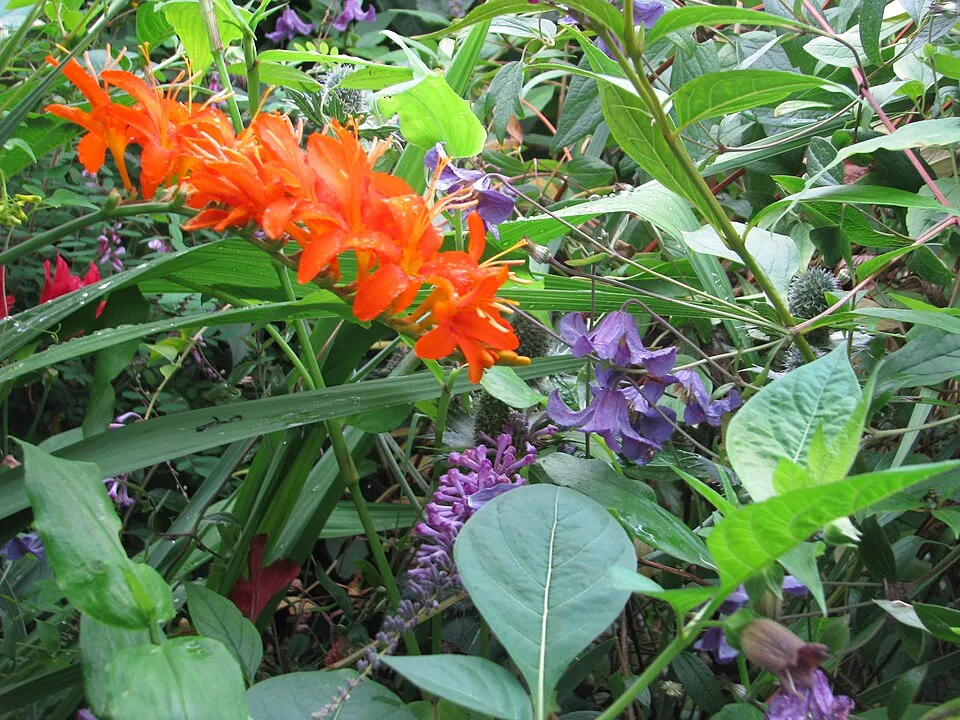
Crocosmia masoniorum, commonly known as Coppertips or Falling Stars, is a striking cormous perennial belonging to the Iridaceae family, also known as the Iris family. Native to the grasslands and rocky slopes of southern and tropical Africa, this species is highly valued for its vibrant floral displays. The plant emerges from a corm, a swollen underground stem base designed for nutrient storage, distinguishing it technically from a true bulb by its solid internal structure.
Its foliage is characterized by sword-shaped, often ribbed or pleated leaves, typically growing 2 to 3 feet in length, providing a strong vertical accent even when not in bloom. These mid-green leaves offer a contrasting form and color among other garden perennials.
During its typical bloom period from mid-summer to fall, Crocosmia masoniorum produces spectacular spikes of tubular flowers. These blossoms are predominantly fiery red, orange, or yellow, and are upturned, creating a dynamic visual effect. The genus name 'Crocosmia' is derived from the Greek words 'krokos' (saffron) and 'osme' (smell), referencing the saffron-like aroma released when dry flowers are steeped in water.
This ornamental species thrives in USDA Hardiness Zones 6 through 10, preferring sites with full sun, though it can tolerate part shade in hotter climates. It requires moist, well-drained, slightly acidic soil of average fertility to flourish. Its resilience and attractive appearance make it a popular choice for borders, mass plantings, and containers in home gardens and commercial landscaping, often serving as a magnet for hummingbirds.
Trusted Scientific References
1. Authoritative external sources for Crocosmia Masoniorum
1.1 Wikipedia — Crocosmia Masoniorum
1.2 Kew POWO (Plants of the World Online)
1.3 PubMed — peer-reviewed research
1.4 NCBI Taxonomy Browser
1.5 GBIF — Global Biodiversity
1.6Crocosmia Masoniorum should be interpreted through verified botanical identity, practical care, and responsible safety language. This recovery note adds the missing context needed for a complete profile: match light to the plant's habit, use well-drained soil, water according to season, and avoid unsupported medicinal or edible claims. For publishing, the plant can be presented as a source-backed garden plant with clear care guidance, common problem diagnosis, and conservative safety wording.
1.1.Crocosmia Masoniorum — Standout Qualities
- ✓Botanical Name — Crocosmia masoniorum, a distinct species within the Crocosmia genus.
- ✓Family — Iridaceae, commonly known as the Iris family, characterized by cormous growth.
- ✓Growth Habit — A robust cormous perennial, forming clumps of upright foliage and flower spikes.
- ✓Flower Color — Exhibits brilliant shades of red, orange, and yellow, creating a striking visual.
- ✓Bloom Time — Flowers prolifically from mid-summer through early fall, extending seasonal interest.
- ✓Foliage — Features attractive sword-shaped, ribbed leaves that provide strong vertical texture.
- ✓Attracts Pollinators — A highly effective hummingbird magnet, also draws bees and butterflies.
- ✓Hardiness Zones — Adaptable and hardy in USDA zones 6 to 10, tolerating a range of climates.
- ✓Low Maintenance — Generally resistant to common pests and diseases, requiring minimal intervention.
- ✓Cut Flower — Produces long-lasting flower spikes ideal for fresh floral arrangements when properly conditioned.
1.2.Crocosmia Masoniorum — Concise Overview
- ✓Vibrant ornamental perennial known for fiery red, orange, and yellow blooms.
- ✓Member of the Iris family (Iridaceae), growing from corms.
- ✓Attracts hummingbirds and other pollinators, enhancing garden biodiversity.
- ✓Easy to cultivate in USDA zones 6-10, preferring full sun and well-drained soil.
- ✓Valued for its sword-shaped foliage and excellent cut flower potential.
- ✓Lacks significant documented traditional medicinal uses; primarily a landscape plant.
2.Crocosmia Masoniorum — Systematic Position
3.Crocosmia Masoniorum — Botanical Stats
4.Crocosmia Masoniorum — Morphological Account
5.Crocosmia Masoniorum — Geographic Distribution
6.Crocosmia Masoniorum — Ethnobotanical Uses
7.Crocosmia Masoniorum — Bioactive Constituents
- ✓Anthocyanins — These water-soluble pigments are responsible for the vibrant red, orange, and yellow hues of Crocosmia masoniorum flowers, acting as potent antioxidants.
- ✓Flavonoids — A diverse group of polyphenolic compounds found throughout the plant, contributing to flower pigmentation and offering potential antioxidant and photoprotective properties.
- ✓Carotenoids — Present in the flowers, these pigments contribute to yellow and orange coloration and function as powerful natural antioxidants.
- ✓Volatile Organic Compounds (VOCs) — Responsible for the subtle saffron-like aroma released by dry flowers when immersed in water, though specific compounds are not extensively cataloged for this species.
- ✓Saponins — Glycosidic compounds that may be present in small quantities, typically found in various plant parts, and are known for their surfactant properties.
- ✓Triterpenoids — A class of natural products that may occur in corms and foliage, often associated with plant defense mechanisms and various biological activities.
- ✓Polysaccharides — Complex carbohydrates found in the corms and other storage tissues, serving as energy reserves and contributing to structural integrity.
- ✓Organic Acids — Various organic acids are present in plant tissues, playing roles in metabolism and contributing to the plant's overall biochemical profile.
- ✓Minerals — Essential macro and micronutrients absorbed from the soil, vital for the plant's growth and physiological functions, including potassium, calcium, and magnesium.
8.Crocosmia Masoniorum — Modern Studies
- ✓Ornamental Value — Primarily cultivated for its aesthetic appeal, Crocosmia masoniorum adds vibrant color and unique form to gardens and floral arrangements.
- ✓Pollinator Attraction — Its nectar-rich, tubular flowers are a significant draw for hummingbirds and other beneficial pollinators, supporting local ecosystems.
- ✓Garden Resilience — Exhibiting notable resistance to most common pests and diseases, Crocosmia masoniorum contributes to a healthy, low-maintenance garden environment.
- ✓Soil Stabilization — As a perennial with a cormous root system, it can contribute to soil stability in suitable climates, particularly in sloped garden beds.
- ✓Cut Flower Longevity — When properly conditioned, the cut flower spikes offer extended beauty in floral arrangements, enhancing indoor aesthetics.
- ✓Landscape Enhancement — Its architectural foliage and brilliant blooms are utilized in landscape design to create visual interest and focal points.
- ✓Biodiversity Support — By attracting hummingbirds, it plays a role in supporting wildlife diversity within cultivated spaces.
- ✓Horticultural Study — Offers a subject for botanical and horticultural research, particularly concerning corm development and hybrid vigor, though not for medicinal applications.
- ✓Aesthetic Well-being — The visual enjoyment derived from its vibrant blooms can contribute to general psychological well-being and stress reduction for gardeners.
8.1.Crocosmia Masoniorum — Indications & Uses
9.Crocosmia Masoniorum — Precautions & Warnings
9.1.Crocosmia Masoniorum — Warnings
- ✓Invasive Potential — Some Crocosmia cultivars, though not typically C. masoniorum, can spread aggressively in certain environments, potentially outcompeting native flora.
- ✓Skin Irritation — While rare, handling plant parts, especially corms, might cause mild skin irritation in sensitive individuals.
- ✓Allergic Reactions — Inhalation of pollen or contact with plant sap could potentially trigger allergic responses in highly susceptible individuals, though not commonly reported.
- ✓Toxicity (Unsubstantiated) — There are no widely documented reports of toxicity to humans or pets from ingesting Crocosmia masoniorum, but ingestion is not recommended.
- ✓Digestive Upset — Ingesting any non-food plant material, including Crocosmia, could potentially lead to mild digestive upset.
- ✓Ecological Disturbance — Uncontrolled spread of any plant can disrupt local ecosystems, a general consideration for all garden plants.
9.2.Crocosmia Masoniorum — Risk Assessment
- ✓General Handling Safety — Crocosmia masoniorum is generally considered safe for garden cultivation and ornamental use; standard gardening practices, such as wearing gloves, are advisable.
- ✓Non-Toxic (Ornamental Use) — Primarily grown for ornamental purposes, there are no widespread reports of toxicity to humans or common pets from external contact or incidental ingestion.
- ✓Avoid Internal Consumption — Despite no documented toxicity, internal consumption of any plant part of Crocosmia masoniorum is not recommended as its safety as a food or medicine has not been established.
- ✓Environmental Consideration — While C. masoniorum itself is less prone to invasiveness than some hybrids, gardeners should be mindful of local ecological conditions when planting.
- ✓Allergic Sensitivity — Individuals with known plant allergies should exercise caution, although allergic reactions to Crocosmia are uncommon.
- ✓Children and Pets — Keep corms and plant parts out of reach of young children and pets to prevent accidental ingestion, despite low toxicity concerns.
10.Crocosmia Masoniorum — Application Forms
- ✓Garden Accent Plant — Utilize Crocosmia masoniorum in borders, mass plantings, or as a vibrant focal point in perennial gardens due to its upright habit and fiery colors.
- ✓Cut Flower Arrangements — Harvest flower spikes when the bottom few blooms begin to open; condition them by stripping lower leaves and placing stems in tepid water in a cool, dark place for 48 hours for extended vase life.
- ✓Pollinator Garden Inclusion — Plant Crocosmia masoniorum to attract hummingbirds, creating a dynamic and ecologically beneficial garden space.
- ✓Container Gardening — Grow in pots or containers to showcase its striking blooms on patios or balconies, especially benefiting from enriched potting mix.
- ✓Xeriscaping (with care) — While preferring moist soil, once established, some Crocosmia varieties, including C. masoniorum, can tolerate short periods of drought, making them suitable for water-wise landscaping strategies.
- ✓Landscape Design Element — Integrate its sword-shaped foliage for structural contrast and its late-season blooms to extend garden interest into fall.
- ✓Mass Planting for Impact — Group a dozen or more corms together for a dramatic visual impact in larger garden beds or naturalized areas.
11.Crocosmia Masoniorum — Growth Requirements
- ✓Site Selection — Choose a location with full sun exposure; in intensely hot regions, provide partial afternoon shade to prevent scorching.
- ✓Soil Preparation — Ensure moist, well-drained, slightly acidic soil with average fertility; amend heavy clay soils with organic matter to improve drainage.
- ✓Planting Corms — Plant corms 6 to 8 inches apart and 3 to 5 inches deep in early spring, after the last danger of frost has passed, similar to dahlias or begonias.
- ✓Watering Regime — Provide regular watering, especially during dry spells and the active growing season, to maintain consistent soil moisture.
- ✓Fertilization — Apply a balanced, slow-release granular fertilizer in spring as new growth emerges to support vigorous development and abundant flowering.
- ✓Division — Plan to lift and divide congested clumps of Crocosmia masoniorum every 3-5 years in early spring, just before new growth commences, to maintain vigor.
- ✓Winter Care — In colder zones (USDA 6-7), a layer of mulch can protect corms; do not remove leaves after blooming, as they protect emerging shoots from frost.
- ✓Container Growing — Crocosmias thrive in containers with ample organic matter and fertilizer, often producing larger flowers than those grown directly in garden beds.
Reviewed by the Flora Medical Global Botanical Review Panel
Multi-disciplinary editorial group · Botany · Ethnobotany · Herbal-medicine literature
Who reviewed this: This page was checked by the Flora Medical Global Botanical Review Panel — an in-house editorial group of botany graduates, ethnobotany researchers, and horticulture practitioners who collectively maintain our 7,000+ plant encyclopedia. Meet the team.
Our 4-step verification process
1. Taxonomic verification
Scientific names and synonyms cross-checked against Kew POWO, World Flora Online, and The Plant List.
2. Phytochemical & medicinal cross-reference
Active compounds, traditional uses, and reported activities are cross-referenced with PubMed, USDA Dr. Duke's database, and peer-reviewed ethnobotanical literature.
3. Conservation & distribution check
Distribution, ecology, and conservation status confirmed against GBIF occurrence records and the IUCN Red List.
4. Editorial & safety review
Every entry passes an editorial pass for clarity, originality, and safety notices (toxicity, contraindications, dosage caveats) before publication.
Last reviewed:
Important medical disclaimer: This content is for educational and research purposes only. It is not medical advice and is not a substitute for consultation with a licensed healthcare provider. Do not use any herb to self-treat a medical condition without professional guidance.
Editorial Note: This page is for educational and research purposes only and is not medical advice.
Written by: Flora Medical Global Editorial Team
Reviewed by: Flora Medical Global Botanical Review Panel
Last Updated: June 15, 2026





Crocosmia Masoniorum — Comments & Community Reviews
Rate this plant