


Medical Disclaimer: This content is for educational purposes only. It is not medical advice. Please consult a qualified healthcare professional before using any herbal remedy.
Safety Overview
1.Crotalaria — At a Glance
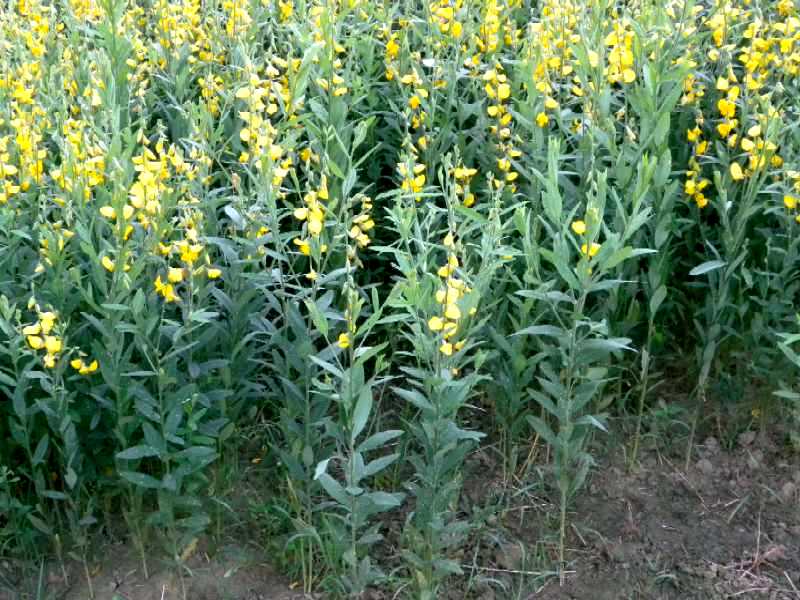
Crotalaria juncea, widely recognized as sunn hemp, is a versatile and robust annual herbaceous plant belonging to the expansive Fabaceae family. Typically reaching impressive heights of 1 to 3 meters, though sometimes observed up to 4 meters under optimal conditions, this plant exhibits a strong, erect growth habit. Its stems are slender but sturdy, often displaying a green to subtly purplish hue, with a smooth, fibrous bark texture that becomes more pronounced with maturity. The leaves are characteristically trifoliate, meaning they comprise three leaflets, each lanceolate in shape and tapering to a distinct sharp point. These leaflets can measure up to 15 centimeters in length, presenting a vibrant green color and a slightly hairy underside. The inflorescence of C.
juncea is a striking feature, consisting of bright, golden-yellow, pea-like flowers arranged in terminal racemes. Each individual flower is bilabiate, approximately 2 to 5 centimeters long, and highly attractive to a variety of pollinators, blooming profusely from late spring through late summer in tropical regions. Following successful pollination, the plant produces short, cylindrical pods, which are typical of legumes, containing numerous small, dark seeds. The root system is fibrous and well-developed, featuring prominent nitrogen-fixing nodules that contribute significantly to soil fertility, a key ecological and agricultural attribute of sunn hemp. Native to the Indian subcontinent, encompassing regions of India, Pakistan, and Sri Lanka, Crotalaria juncea has a long history of cultivation and naturalization across tropical and subtropical zones globally. It thrives in a diverse range of well-drained soils but shows a particular preference for sandy loams, requiring abundant full sunlight for optimal growth.
Its adaptability has led to its widespread adoption as a cover crop, green manure, and fiber crop in agricultural systems throughout Africa, Australia, Southeast Asia, and the Americas. In many cultures, beyond its agricultural utility, C. juncea holds historical and cultural significance, often referenced in traditional texts for its various applications, reflecting its integral role in both ecological balance and human endeavors. Its rapid growth rate and biomass production make it an invaluable species for sustainable farming practices. Trusted Scientific References Authoritative external sources for Crotalaria juncea : Wikipedia — Crotalaria juncea Kew POWO (Plants of the World On ...[CURRENT TEXT EXISTS: 2586 chars]
1.1.Crotalaria — Distinguishing Points
- ✓Growth Habit — Erect annual herbaceous plant reaching 1 to 3 meters in height.
- ✓Leaf Structure — Trifoliate leaves, each leaflet lanceolate and up to 15 cm long.
- ✓Flower Color — Distinctive bright yellow, pea-like flowers arranged in racemes.
- ✓Flowering Period — Blooms from late spring to late summer in tropical regions.
- ✓Fruit Type — Produces short, cylindrical legume pods containing numerous seeds.
- ✓Root System — Fibrous root system with prominent nitrogen-fixing nodules.
- ✓Bark Texture — Stems are slender with a smooth to slightly fibrous, green to purplish bark.
- ✓Climate Preference — Thrives in tropical and subtropical climates, sensitive to frost.
- ✓Soil Preference — Prefers well-drained sandy loams, tolerant of various soil types.
- ✓Nitrogen Fixation — Highly effective at atmospheric nitrogen fixation, enriching soil.
- ✓Primary Traditional Use — Anti-inflammatory, analgesic, and wound-healing properties in folk medicine.
- ✓Key Chemical Class — Contains hepatotoxic pyrrolizidine alkaloids, notably monocrotaline.
- ✓Agricultural Role — Widely used as a green manure, cover crop, and fiber crop.
- ✓Geographic Origin — Native to the Indian subcontinent, now globally distributed in suitable climates.
- ✓Pollinator Attraction — Bright flowers attract a variety of pollinators, contributing to biodiversity.
1.2.Crotalaria — Snapshot Summary
- ✓Primary Use — Historically used in traditional medicine for anti-inflammatory and wound healing, now primarily valued as green manure and fiber crop due to toxicity.
- ✓Key Compound — Pyrrolizidine alkaloids (e.g., monocrotaline) are the primary toxic constituents, causing liver damage.
- ✓Traditional System — Utilized in Ayurvedic and Unani medicine for various ailments, though with significant caution due to inherent toxicity.
- ✓Botanical Family — Belongs to the Fabaceae (legume) family, known for nitrogen-fixing capabilities.
- ✓Habitat — Thrives in tropical and subtropical climates, preferring full sun and well-drained soils.
- ✓Safety Concern — Severe hepatotoxicity due to pyrrolizidine alkaloids makes internal use highly dangerous and largely contraindicated.
- ✓Agricultural Value — Excellent as a cover crop and green manure, improving soil fertility and organic matter content.
- ✓Appearance — Features bright yellow, pea-like flowers and trifoliate leaves.
2.Crotalaria — Botanical Identity
3.Crotalaria — Vital Statistics
4.Crotalaria — Botanical Description
5.Crotalaria — Ecological Habitat
6.Crotalaria — Traditional Uses
7.Crotalaria — Chemical Profile
- ✓Pyrrolizidine Alkaloids (PAs) — Key compounds include monocrotaline, spectabiline, and junceine. These are potent hepatotoxins, responsible for the plant's toxicity, particularly affecting the liver through veno-occlusive disease.
- ✓Flavonoids — Compounds like vitexin, isovitexin, orientin, and isoorientin are present, contributing to antioxidant, anti-inflammatory, and potentially antimicrobial activities.
- ✓Tannins — Predominantly condensed tannins, these compounds contribute to the plant's astringent properties and may offer some antimicrobial and wound-healing benefits.
- ✓Phenolic Acids — Gallic acid, caffeic acid, and ferulic acid are examples found, known for their antioxidant and anti-inflammatory effects.
- ✓Saponins — Triterpenoid saponins are present, which can have hemolytic activity but also exhibit anti-inflammatory and immunomodulatory properties in controlled doses.
- ✓Sterols — Beta-sitosterol and stigmasterol are common plant sterols found, known for their potential cholesterol-lowering and anti-inflammatory actions.
- ✓Glycosides — Various glycosides, including some flavonoid glycosides, contribute to the plant's diverse pharmacological profile.
- ✓Fatty Acids — Linoleic acid, oleic acid, and palmitic acid are among the fatty acids found in the seeds, important for nutritional and industrial applications.
- ✓Terpenoids — While less prominent than PAs, some terpenoid compounds may be present, contributing to general plant defense mechanisms and potential bioactivities.
- ✓Amino Acids — As a legume, C. juncea is rich in various essential and non-essential amino acids, supporting its role in nitrogen fixation and nutritional value as fodder.
- ✓Minerals — Contains essential minerals such as nitrogen (fixed by root nodules), phosphorus, potassium, calcium, and magnesium, vital for both plant growth and potential dietary intake (though not recommended for human consumption due to PAs).
- ✓Carbohydrates — Polysaccharides and simple sugars are present in the plant biomass, forming structural components and energy reserves.
8.Crotalaria — Scientific Evidence
- ✓Anti-inflammatory Properties — Crotalaria juncea has been traditionally used to reduce inflammation. Its active compounds, particularly certain flavonoids and phenolic acids, are believed to modulate inflammatory pathways, offering relief in conditions like arthritis and general tissue swelling, as noted in Ayurvedic practices.
- ✓Analgesic Effects — The plant is recognized in folk medicine for its pain-relieving capabilities. Extracts have been applied topically or consumed to alleviate various forms of pain, from muscular aches to headaches, likely due to its ability to interfere with pain signal transmission.
- ✓Antimicrobial Activity — Studies suggest that C. juncea possesses compounds with inhibitory effects against certain bacteria and fungi. This property makes it valuable in traditional remedies for treating skin infections, wound contamination, and internal microbial imbalances.
- ✓Hepatoprotective Benefits — Traditional systems like Unani medicine have utilized Crotalaria juncea to support liver health. Research indicates that specific constituents may help protect liver cells from damage by toxins and oxidative stress, promoting overall liver function.
- ✓Expectorant Action — In respiratory ailments, sunn hemp has been historically employed to promote the expulsion of mucus from the respiratory tract. Its expectorant properties are thought to help clear congested airways, easing breathing and relieving coughs.
- ✓Wound Healing Acceleration — The leaves and flowers of C. juncea are often prepared into poultices for external application on wounds. This traditional use is supported by its antimicrobial and anti-inflammatory effects, which collectively aid in faster tissue regeneration and infection prevention.
- ✓Antioxidant Support — Rich in flavonoids and other phenolic compounds, Crotalaria juncea exhibits significant antioxidant activity. These compounds help neutralize harmful free radicals in the body, protecting cells from oxidative damage and supporting overall cellular health.
- ✓Digestive Aid — In some traditional practices, sunn hemp has been used to support digestive health. While caution is advised due to its alkaloid content, specific preparations might have been used in small quantities to aid digestion or alleviate mild gastrointestinal discomfort.
- ✓Immunomodulatory Effects — Preliminary research suggests that certain compounds within C. juncea may influence the immune system. This could potentially enhance the body's natural defense mechanisms or help regulate immune responses.
- ✓Antipyretic Potential — Folk medicine occasionally reports the use of Crotalaria juncea for reducing fever. This antipyretic effect is likely linked to its anti-inflammatory properties, which can help mitigate the body's febrile response.
- ✓Detoxifying Support — Due to its potential hepatoprotective and antioxidant properties, C. juncea is sometimes considered to have detoxifying benefits in traditional contexts. It is believed to assist the body in processing and eliminating toxins, though this requires careful consideration of its safety profile.
- ✓Diuretic Properties — Some traditional uses point to Crotalaria juncea having mild diuretic effects. This could aid in promoting urine production and potentially assist in conditions where fluid retention is an issue, helping to flush out excess water and waste products from the body.
8.1.Crotalaria — Reported Uses
9.Crotalaria — Cautions & Contraindications
9.1.Crotalaria — Side Effects & Warnings
- ✓Liver Damage (Hepatotoxicity) — The most severe and common side effect, primarily due to pyrrolizidine alkaloids (PAs), leading to veno-occlusive disease of the liver, characterized by severe liver cell necrosis and obstruction of small hepatic veins.
- ✓Gastrointestinal Distress — Nausea, vomiting, abdominal pain, and diarrhea can occur, often as initial symptoms of systemic toxicity, particularly with oral ingestion of Crotalaria juncea.
- ✓Pulmonary Hypertension — Chronic exposure or severe acute toxicity can lead to damage in the lungs, resulting in pulmonary hypertension and right-sided heart failure.
- ✓Ascites and Edema — Accumulation of fluid in the abdomen (ascites) and generalized swelling (edema) are common manifestations of liver failure induced by PA toxicity.
- ✓Emaciation and Weight Loss — Progressive liver damage and systemic illness can lead to severe weight loss and general wasting of the body.
- ✓Neurological Symptoms — In severe cases, central nervous system effects such as lethargy, confusion, and ataxia (loss of coordination) may be observed.
- ✓Kidney Damage — While the liver is the primary target, PAs can also cause damage to the kidneys, impairing renal function and leading to kidney failure.
- ✓Dermatitis/Skin Irritation — Topical application, especially with high concentrations or prolonged exposure, may cause skin irritation, redness, or allergic reactions in sensitive individuals.
9.2.Crotalaria — Risk Assessment
- ✓Pregnancy and Lactation Warning — Crotalaria juncea is strictly contraindicated during pregnancy due to the presence of pyrrolizidine alkaloids, which are known to be embryotoxic, fetotoxic, and teratogenic, capable of causing severe birth defects or miscarriage. It should also be avoided by lactating mothers as PAs can pass into breast milk, posing a risk to the infant.
- ✓Liver Disease — Individuals with pre-existing liver conditions, including cirrhosis, hepatitis, or any form of liver impairment, must absolutely avoid C. juncea in any form. The hepatotoxic pyrrolizidine alkaloids can exacerbate liver damage and lead to fatal liver failure.
- ✓Kidney Disease — Due to the potential for kidney damage from pyrrolizidine alkaloids, individuals with kidney disease or impaired renal function should avoid Crotalaria juncea.
- ✓Children — Internal use of Crotalaria juncea is strictly contraindicated for children due to their increased susceptibility to pyrrolizidine alkaloid toxicity and lower body mass, making them highly vulnerable to adverse effects.
- ✓Drug Interactions — C. juncea should not be used concurrently with other hepatotoxic medications (e.g., acetaminophen in high doses, certain antifungals, statins, some antibiotics) or substances (e.g., alcohol), as this significantly increases the risk of severe liver damage. It may also interact with medications metabolized by the liver.
- ✓Dosage and Duration — There is no safe internal dosage established for Crotalaria juncea for human therapeutic use due to the inherent toxicity of its pyrrolizidine alkaloids. Even small, repeated doses can lead to cumulative liver damage. Topical use should be short-term and monitored for skin reactions.
- ✓Professional Consultation — Always consult a qualified healthcare professional or medical herbalist before considering any use of Crotalaria juncea, especially given its significant toxicity. Self-medication is highly dangerous and strongly discouraged.
- ✓Contamination Risk — Be aware of the risk of Crotalaria species, particularly C. juncea, contaminating food crops (e.g., grains, seeds). Inadvertent consumption through contaminated food is a known cause of pyrrolizidine alkaloid poisoning in humans and livestock.
10.Crotalaria — Preparation Methods
- ✓Decoction/Tea — For internal use, a decoction of Crotalaria juncea leaves or roots is traditionally prepared by simmering dried plant material in water for 10-15 minutes. Due to toxicity concerns, this method is generally not recommended for human consumption without expert guidance, historically used in very specific, low-dose contexts for conditions like fever or respiratory issues.
- ✓Topical Poultice — Fresh leaves and flowers are crushed and applied directly to the skin as a poultice. This method is common for treating wounds, skin infections, boils, and localized inflammation, leveraging the plant's antimicrobial and anti-inflammatory properties. The poultice is typically secured with a bandage and changed regularly.
- ✓Herbal Infusion — An infusion involves steeping dried leaves or flowers in hot water for a shorter period (5-10 minutes). While historically used, similar to decoctions, internal use is strongly discouraged due to the presence of hepatotoxic pyrrolizidine alkaloids. External washes for skin conditions might be considered with extreme caution.
- ✓Tincture — An alcoholic extract of C. juncea could theoretically be made by soaking plant material in high-proof alcohol. However, due to the high toxicity, tinctures are not a safe or recommended method for human use. They would concentrate the harmful alkaloids.
- ✓Powdered Herb — Dried plant material can be ground into a fine powder. Historically, this powder might have been mixed with water or other carriers for topical applications or, with extreme reservation, in minute quantities for specific traditional internal remedies. Modern herbalism largely avoids internal powdered forms due to safety issues.
- ✓External Wash/Compress — A diluted decoction or infusion can be used as an external wash or compress for larger skin areas affected by irritation, minor infections, or inflammation. This provides a less concentrated exposure than a poultice but still requires careful monitoring for adverse skin reactions.
- ✓Essential Oil (Not Applicable) — Crotalaria juncea is not typically processed for essential oil extraction. Its medicinal properties are associated with non-volatile compounds rather than aromatic oils.
- ✓Soil Amendment/Green Manure — The primary safe and beneficial use of Crotalaria juncea is as a green manure. The entire plant biomass is tilled into the soil while green, enriching it with nitrogen, organic matter, and improving soil structure. This method harnesses its benefits without human internal exposure.
11.Crotalaria — Cultivation & Care
- ✓Soil Requirements — Crotalaria juncea thrives in well-drained soils, preferring sandy loams to loamy soils. It tolerates a wide pH range from 5.0 to 7.5 but performs best in slightly acidic to neutral conditions. Good aeration is crucial for root development and nitrogen fixation.
- ✓Sunlight — This plant is a full sun species, requiring at least 6-8 hours of direct sunlight daily for optimal growth, flowering, and seed production. Shaded conditions will lead to leggy growth and reduced vigor.
- ✓Watering — While relatively drought-tolerant once established, sunn hemp requires consistent moisture during its initial growth stages. Regular watering, especially in dry periods, will promote lush growth, but avoid waterlogging, which can lead to root rot.
- ✓Temperature — C. juncea is a tropical and subtropical plant, preferring warm climates. It grows best in temperatures between 20°C and 35°C (68°F to 95°F) and is sensitive to frost, which will kill the plant.
- ✓Propagation — Primarily propagated by seeds. Seeds should be sown directly into the soil after the last frost, typically 1-2 cm deep and 10-15 cm apart, with rows spaced 30-60 cm apart. Scarification may improve germination rates.
- ✓Fertilization — As a legume, Crotalaria juncea fixes atmospheric nitrogen through symbiotic bacteria in its root nodules, significantly reducing the need for nitrogen fertilizers. A balanced starter fertilizer low in nitrogen but rich in phosphorus and potassium can be beneficial in poor soils.
- ✓Pests and Diseases — Generally robust, C. juncea can be susceptible to root-knot nematodes, which it can also suppress as a cover crop. Occasional issues with leaf spot diseases or aphids may occur, but serious infestations are rare in healthy plants.
- ✓Harvesting — For green manure, the plant is typically cut and incorporated into the soil when it reaches peak biomass, usually 60-90 days after planting, before significant seed set. For fiber, harvesting occurs when stems are mature but still pliable.
- ✓Crop Rotation — Crotalaria juncea is an excellent cover crop in rotation systems, improving soil structure, adding organic matter, and providing biologically fixed nitrogen for subsequent crops. It is particularly beneficial before heavy feeders like corn or vegetables.
- ✓Support — While erect, in very windy conditions or with exceptionally tall growth, some support may be beneficial, especially if grown for seed production to prevent lodging.
Reviewed by the Flora Medical Global Botanical Review Panel
Multi-disciplinary editorial group · Botany · Ethnobotany · Herbal-medicine literature
Who reviewed this: This page was checked by the Flora Medical Global Botanical Review Panel — an in-house editorial group of botany graduates, ethnobotany researchers, and horticulture practitioners who collectively maintain our 7,000+ plant encyclopedia. Meet the team.
Our 4-step verification process
1. Taxonomic verification
Scientific names and synonyms cross-checked against Kew POWO, World Flora Online, and The Plant List.
2. Phytochemical & medicinal cross-reference
Active compounds, traditional uses, and reported activities are cross-referenced with PubMed, USDA Dr. Duke's database, and peer-reviewed ethnobotanical literature.
3. Conservation & distribution check
Distribution, ecology, and conservation status confirmed against GBIF occurrence records and the IUCN Red List.
4. Editorial & safety review
Every entry passes an editorial pass for clarity, originality, and safety notices (toxicity, contraindications, dosage caveats) before publication.
Last reviewed:
Important medical disclaimer: This content is for educational and research purposes only. It is not medical advice and is not a substitute for consultation with a licensed healthcare provider. Do not use any herb to self-treat a medical condition without professional guidance.
Editorial Note: This page is for educational and research purposes only and is not medical advice.
Written by: Flora Medical Global Editorial Team
Reviewed by: Flora Medical Global Botanical Review Panel
Last Updated: June 15, 2026





Crotalaria — Comments & Community Reviews
Rate this plant