
Medical Disclaimer: This content is for educational purposes only. It is not medical advice. Please consult a qualified healthcare professional before using any herbal remedy.
Safety Overview
1.Ctenanthe Lubbersiana — Botanical Snapshot
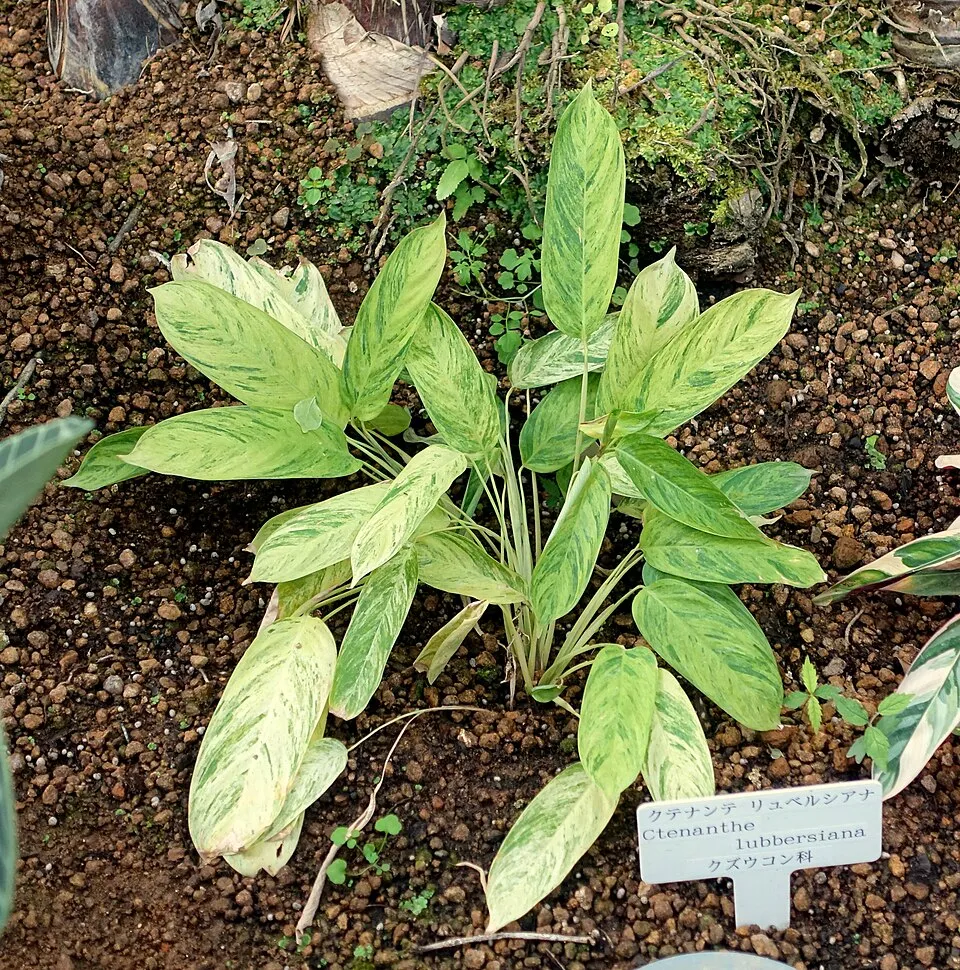
Ctenanthe lubbersiana, affectionately known as the Bamburanta or Never-Never Plant, is a captivating evergreen herbaceous perennial native to the lush, humid tropical rainforests of southeastern Brazil. As a proud member of the Marantaceae family, it shares the characteristic 'prayer plant' movements, where its leaves rhythmically fold upwards at dusk and unfurl with the morning light—a fascinating adaptation to its native understory environment that aids in moisture conservation and protection from nocturnal herbivores. In its natural habitat, Ctenanthe lubbersiana can develop into substantial bushes reaching nearly 6 feet in height and 3 feet in width, though cultivated indoor specimens typically maintain a more compact, upright, and clumping habit, growing 2 to 3 feet tall.
Its most striking feature is its ornamental foliage: distinctive oblong-elliptic to lanceolate or obovate leaves, measuring approximately 6 inches long and 3 to 6 inches wide. These leaves showcase a vibrant lime-green to yellowish-green variegation, appearing as irregular splashes or defined stripes atop a darker green background, often complemented by an attractive reddish-purple or lighter green underside. While its stems bear a resemblance to bamboo canes, its inconspicuous white tubular flowers, appearing in short clusters, are rarely observed when grown as a houseplant.
Historically, its value has been purely horticultural, cherished for its aesthetic appeal rather than any documented ethnobotanical medicinal uses. The genus name, Ctenanthe, is derived from the Greek words 'ktenos' meaning 'comb' and 'anthera' meaning 'anther', possibly referring to the inflorescence structure. It was previously known under the synonym Stromanthe lubbersiana.
Trusted Scientific References
1. Authoritative external sources for Ctenanthe lubbersiana
1.1 Wikipedia — Ctenanthe lubbersiana
1.2 Kew POWO (Plants of the World Online)
1.3 PubMed — peer-reviewed research
1.4 NCBI Taxonomy Browser
1.5 GBIF — Global Biodiversity
1.6Ctenanthe Lubbersiana should be interpreted through verified botanical identity, practical care, and responsible safety language. This recovery note adds the missing context needed for a complete profile: match light to the plant's habit, use well-drained soil, water according to season, and avoid unsupported medicinal or edible claims. For publishing, the plant can be presented as a source-backed indoor plant with clear care guidance, common problem diagnosis, and conservative safety wording.
1.1.Ctenanthe Lubbersiana — Distinguishing Points
- ✓Botanical Name — Ctenanthe lubbersiana
- ✓Common Names — Bamburanta, Never-Never Plant
- ✓Family — Marantaceae (Prayer Plant Family)
- ✓Native Region — Tropical Southeastern Brazil
- ✓Leaf Characteristics — Oblong-elliptic, variegated green with cream/yellow, often reddish-purple underside.
- ✓Nyctinastic Movement — Leaves fold upwards at night and unfold during the day.
- ✓Growth Habit — Upright, clumping herbaceous perennial, typically 2-3 feet tall as a houseplant.
- ✓Preferred Conditions — Bright indirect light, high humidity, warm temperatures (60-85°F).
- ✓Primary Use — Indoor ornamental foliage plant, valued for its aesthetic appeal.
- ✓Toxicity — Non-toxic to humans and common household pets.
1.2.Ctenanthe Lubbersiana — Quick Summary
- ✓Striking Variegated Foliage — Main appeal with its distinct green and yellow patterns.
- ✓Brazilian Tropical Origin — Thrives in humid, shaded understory conditions.
- ✓'Prayer Plant' Movement — Leaves fold up at night, a unique nyctinastic behavior.
- ✓Primarily Ornamental — Valued for aesthetic beauty, not traditional medicine.
- ✓Non-Toxic Houseplant — Safe for homes with children and pets.
- ✓Requires High Humidity — Key to healthy growth and preventing leaf issues.
2.Ctenanthe Lubbersiana — Nomenclature & Classification
3.Ctenanthe Lubbersiana — Vital Statistics
4.Ctenanthe Lubbersiana — Botanical Features
5.Ctenanthe Lubbersiana — Native Range & Habitat
6.Ctenanthe Lubbersiana — Traditional Uses
7.Ctenanthe Lubbersiana — Chemical Profile
- ✓As Ctenanthe lubbersiana has not been extensively studied for its phytochemical profile, specific active medicinal compounds are not documented. However, based on its botanical nature as a green plant within the Marantaceae family, it is expected to contain general classes of plant compounds:
- ✓Flavonoids — These are common plant pigments and antioxidants found broadly across the plant kingdom, potentially contributing to the plant's coloration and cellular protection.
- ✓Carotenoids — Responsible for yellow and orange hues, these accessory pigments are present in the variegated leaves, playing a role in photosynthesis and photoprotection.
- ✓Chlorophylls — The primary photosynthetic pigments, chlorophyll a and b, are abundant in the green tissues of Ctenanthe lubbersiana, essential for energy production.
- ✓Polysaccharides — Complex carbohydrates like cellulose and starch constitute the structural framework and energy reserves within the plant's cells.
- ✓Triterpenoids — This diverse group of compounds is often found in plants, contributing to defense mechanisms and structural integrity, though specific types for this plant are uncharacterized.
- ✓Phenolic Acids — Naturally occurring antioxidant compounds, commonly present in plant tissues, which may offer general protective roles within the plant.
- ✓Organic Acids — Various organic acids are involved in plant metabolism, growth, and defense.
- ✓Volatile Organic Compounds (VOCs) — While not studied for C. lubbersiana, many plants release VOCs that contribute to scent and interaction with the environment; their presence here is speculative.
8.Ctenanthe Lubbersiana — Evidence-Based Benefits
- ✓Ctenanthe lubbersiana, while highly valued for its ornamental beauty, does not possess a significant history of use in traditional medical systems like Ayurveda, Traditional Chinese Medicine (TCM), Unani, or Siddha, nor has it been extensively studied for direct pharmacological applications in modern research. Its primary 'benefits' are indirect and related to its role as an indoor plant:
- ✓Aesthetic and Psychological Well-being — The plant's vibrant variegated foliage and dynamic leaf movements contribute to an aesthetically pleasing environment, which can enhance mood and reduce stress through biophilic connection.
- ✓Indoor Air Quality Enhancement — Like many houseplants, Ctenanthe lubbersiana contributes to the general improvement of indoor air quality through photosynthesis and transpiration, though specific pollutant removal studies are not documented for this species.
- ✓Humidity Regulation — Transpiration from its broad leaves can subtly increase ambient humidity, beneficial in dry indoor environments for human respiratory comfort.
- ✓Biophilic Design Element — Integrating this tropical plant into living or working spaces fosters a connection to nature, promoting relaxation, focus, and overall mental clarity.
- ✓Non-Toxic for Pets and Children — A significant benefit for households, as Ctenanthe lubbersiana is generally regarded as non-toxic, making it a safe choice for homes with curious pets and young children.
- ✓Educational Value — Observing the plant's nyctinastic movements offers an engaging lesson in plant physiology and circadian rhythms, appealing to botanical enthusiasts.
- ✓Ornamental Value — Its striking appearance serves as its main 'benefit', enriching interior decor and providing a focal point of natural beauty.
- ✓Future Research Potential — The unexplored phytochemical profile suggests a theoretical potential for future scientific inquiry into novel compounds, although no specific medicinal uses are currently hypothesized.
8.1.Ctenanthe Lubbersiana — Indications & Uses
9.Ctenanthe Lubbersiana — Cautions & Contraindications
9.1.Ctenanthe Lubbersiana — Side Effects & Warnings
- ✓As an ornamental plant, Ctenanthe lubbersiana does not have 'side effects' in the medicinal sense, but rather cultivation challenges or plant health issues:
- ✓Leaf Scorch — Direct sun exposure leads to burnt edges or faded variegation on leaves.
- ✓Leaf Spotting/Burn — Caused by sensitivity to salts and chlorine in unfiltered tap water.
- ✓Leaf Curl/Wilt — Indicates underwatering or insufficient ambient humidity, leading to dehydration.
- ✓Pest Infestations — Susceptible to common houseplant pests such as spider mites, mealybugs, and aphids, especially in dry conditions.
- ✓Stunted Growth — May occur due to inadequate light, nutrient deficiency, or consistently low humidity levels.
- ✓Root Rot — Results from overwatering or poorly draining soil, leading to fungal issues and plant decline.
- ✓No Known Human/Pet Toxicity — Importantly, it is generally considered non-toxic if ingested by humans or pets.
9.2.Ctenanthe Lubbersiana — Risk Assessment
- ✓Ctenanthe lubbersiana is predominantly considered a safe ornamental plant with no significant health risks associated with its presence or contact:
- ✓Non-Toxic — Generally regarded as non-toxic to humans, cats, dogs, and other common household pets, making it a safe choice for families.
- ✓No Known Allergens — It is not commonly reported to cause allergic reactions upon contact or via airborne particles.
- ✓External Use Only — This plant is strictly for ornamental purposes and should not be ingested or used in any form of medicinal preparation.
- ✓Handling Safety — No special precautions are typically required for handling, beyond general plant care practices.
- ✓Child and Pet Friendly — Its non-toxic nature makes it suitable for homes where children or pets might interact with plants.
- ✓Environmental Impact — Poses no invasive risk in non-tropical climates when grown indoors; dispose of plant material responsibly.
10.Ctenanthe Lubbersiana — Preparations & Uses
- ✓Ctenanthe lubbersiana is primarily cultivated for its ornamental value and is not intended for internal consumption or medicinal application. Its 'usage methods' revolve around its horticultural and aesthetic appeal:
- ✓Indoor Decorative Plant — Its striking variegated foliage makes it a popular choice for enhancing interior spaces, adding a tropical and vibrant touch.
- ✓Biophilic Design Integration — Utilized in interior design to connect inhabitants with nature, promoting a sense of well-being and tranquility.
- ✓Terrarium or Enclosed Garden Specimen — Thrives in high-humidity environments like terrariums, where stable moisture and warmth can be maintained.
- ✓Container Planting — Ideal for pots and planters, allowing for flexible placement and easy relocation to optimize growing conditions.
- ✓Educational Display — Can be used to demonstrate nyctinastic leaf movements, making it an engaging plant for educational settings.
- ✓Gifting — A popular and visually appealing gift for plant enthusiasts due to its unique appearance and relatively straightforward care requirements.
- ✓Air Quality Contribution — While not a direct air purifier, its presence as a living plant can contribute to a healthier indoor atmosphere through natural processes.
11.Ctenanthe Lubbersiana — Cultivation & Care
- ✓Light — Requires bright, indirect light; direct sunlight can cause leaf scorch and fade variegation.
- ✓Watering — Keep soil consistently moist but not waterlogged; water when the top inch of soil feels dry.
- ✓Water Type — Use distilled, filtered, or rainwater to avoid leaf burn and spots caused by salts and chemicals in tap water.
- ✓Soil — Prefers a well-draining, humus-rich potting mix, ideally amended with orchid bark and perlite for aeration.
- ✓Humidity — Thrives in medium to high humidity (60-85%); consider a humidifier or pebble tray, especially in dry environments.
- ✓Temperature — Maintain warm temperatures between 60°F and 85°F (15°C-29°C); intolerant of drafts and temperatures below 60°F (15°C).
- ✓Fertilization — Feed monthly with a half-strength balanced liquid fertilizer during the active growing season (spring and summer).
- ✓Propagation — Best propagated by division of the rhizomes during repotting to maintain plant vigor.
Reviewed by the Flora Medical Global Botanical Review Panel
Multi-disciplinary editorial group · Botany · Ethnobotany · Herbal-medicine literature
Who reviewed this: This page was checked by the Flora Medical Global Botanical Review Panel — an in-house editorial group of botany graduates, ethnobotany researchers, and horticulture practitioners who collectively maintain our 7,000+ plant encyclopedia. Meet the team.
Our 4-step verification process
1. Taxonomic verification
Scientific names and synonyms cross-checked against Kew POWO, World Flora Online, and The Plant List.
2. Phytochemical & medicinal cross-reference
Active compounds, traditional uses, and reported activities are cross-referenced with PubMed, USDA Dr. Duke's database, and peer-reviewed ethnobotanical literature.
3. Conservation & distribution check
Distribution, ecology, and conservation status confirmed against GBIF occurrence records and the IUCN Red List.
4. Editorial & safety review
Every entry passes an editorial pass for clarity, originality, and safety notices (toxicity, contraindications, dosage caveats) before publication.
Last reviewed:
Important medical disclaimer: This content is for educational and research purposes only. It is not medical advice and is not a substitute for consultation with a licensed healthcare provider. Do not use any herb to self-treat a medical condition without professional guidance.
Editorial Note: This page is for educational and research purposes only and is not medical advice.
Written by: Flora Medical Global Editorial Team
Reviewed by: Flora Medical Global Botanical Review Panel
Last Updated: June 15, 2026





Ctenanthe Lubbersiana — Comments & Community Reviews
Rate this plant