


Medical Disclaimer: This content is for educational purposes only. It is not medical advice. Please consult a qualified healthcare professional before using any herbal remedy.
Safety Overview
1.Ctenanthe (Never Never Plant) — At a Glance
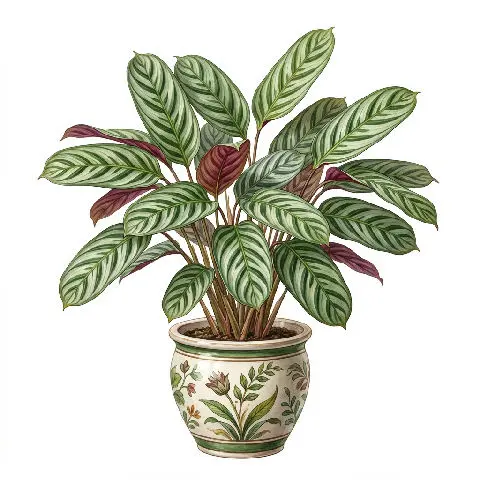
Ctenanthe burle-marxii, commonly known as the Never-Never Plant or Fishbone Prayer Plant, is a striking tropical perennial belonging to the Marantaceae family. This species is indigenous to the humid understory of the Atlantic Forest regions of southeastern Brazil, specifically found in the states of Espírito Santo and Rio de Janeiro.
Its natural habitat is characterized by deeply shaded, damp forest floors, often in close proximity to water sources, thriving at elevations typically below 800 meters, where it benefits from filtered light and consistent moisture. The plant was named in honor of Roberto Burle Marx, a renowned Brazilian landscape architect.
Botanically, Ctenanthe burle-marxii is distinguished by its ovate to elliptical leaves, which showcase a prominent 'fishbone' pattern of dark green veins contrasting against a lighter green or silvery-green background. A particularly captivating feature is the distinct purplish-red underside of the leaves, complemented by often purple-hued petioles. Like other members of the 'prayer plant' family, it exhibits nyctinasty—a fascinating diurnal rhythm where its leaves fold upwards at dusk, resembling hands in prayer, and unfurl again at dawn.
This movement is believed to be a physiological adaptation to optimize light absorption during the day and minimize water loss or deter herbivory during the night. While direct historical documentation of Ctenanthe burle-marxii's specific medicinal or cultural use by indigenous communities is less extensive in Western botanical literature compared to its close relatives like Maranta and Calathea (which have been used for weaving and traditional remedies), the genus Ctenanthe shares phytochemical profiles with other Marantaceae members known to contain compounds of interest, suggesting potential, though unexplored, bioactivities beyond its primary ornamental appeal.
Trusted Scientific References
1. Authoritative external sources for Ctenanthe burle-marxii
1.1 Wikipedia — Ctenanthe burle-marxii
1.2 Kew POWO (Plants of the World Online)
1.3 PubMed — peer-reviewed research
1.4 NCBI Taxonomy Browser
1.5 GBIF — Global Biodiversity
1.1.Ctenanthe (Never Never Plant) — Highlights
- ✓Unique 'Fishbone' Leaf Pattern — Distinctive dark green veins on a lighter background.
- ✓Nyctinastic Leaf Movement — Leaves rhythmically fold upwards at night and open during the day.
- ✓Striking Purplish — Red Undersides — Provides a beautiful color contrast and visual appeal.
- ✓Native to Brazilian Atlantic Forest — Originates from humid, tropical rainforest environments.
- ✓Member of the Prayer Plant Family (Marantaceae) — Shares botanical characteristics with Maranta and Calathea.
- ✓Ornamental Houseplant — Highly prized for its decorative foliage in indoor settings.
- ✓Prefers High Humidity — Essential for maintaining lush, healthy leaves and preventing leaf crisping.
- ✓Indirect Light Requirement — Thrives in filtered light, sensitive to direct, intense sunlight.
- ✓Generally Considered Pet — Friendly — Non-toxic to cats and dogs, making it a safer choice for homes with pets.
- ✓Air Purifying Qualities — Contributes to cleaner indoor air by absorbing toxins and releasing oxygen.
1.2.Ctenanthe (Never Never Plant) — Quick Summary
- ✓Ctenanthe burle-marxii is a tropical ornamental plant from the Marantaceae family.
- ✓Native to Brazil, known for its striking 'fishbone' patterned leaves and purplish-red undersides.
- ✓Exhibits nyctinasty, where leaves fold up at night and unfurl during the day.
- ✓Primarily valued for its aesthetic appeal; limited direct medicinal research exists.
- ✓Shares phytochemical profiles with related species, suggesting potential anti-inflammatory and antioxidant properties.
- ✓Requires specific care — indirect light, high humidity, and consistently moist, well-drained soil.
2.Ctenanthe (Never Never Plant) — Botanical Identity
3.Ctenanthe (Never Never Plant) — Key Data
4.Ctenanthe (Never Never Plant) — Physical Description
5.Ctenanthe (Never Never Plant) — Origin & Spread
6.Ctenanthe (Never Never Plant) — Traditional Uses
7.Ctenanthe (Never Never Plant) — Chemical Profile
- ✓Flavonoids — Key compounds such as quercetin and kaempferol derivatives are likely present, contributing to antioxidant and anti-inflammatory activities.
- ✓Phenolic Acids — Includes caffeic acid and chlorogenic acid, which are known for their strong antioxidant and potential antiviral properties, common in many plant species.
- ✓Anthocyanins — These water-soluble pigments, responsible for the plant's striking purplish-red leaf undersides, are potent antioxidants and free radical scavengers.
- ✓Terpenoids — Various mono- and sesquiterpenes may be present in trace amounts, potentially contributing to the plant's subtle aroma and possessing antimicrobial or insect-repellent actions.
- ✓Saponins — These glycosidic compounds might be found, known for their surfactant properties, and potential roles in immune modulation and antimicrobial defense.
- ✓Alkaloids — While generally not prominent in Marantaceae, trace amounts of nitrogenous compounds with diverse, often mild, pharmacological activities could be present.
- ✓Polysaccharides — Complex carbohydrates that can have immunomodulatory effects and contribute to the plant's structural integrity and energy storage.
- ✓Phytosterols — Compounds like beta-sitosterol, which are plant-derived steroids, may offer anti-inflammatory benefits and play a role in membrane stability.
- ✓Glycosides — A broad category of compounds where a sugar molecule is attached to a non-sugar component, often influencing diverse biological activities.
- ✓Fatty Acids — Essential for plant structure and metabolism, some fatty acids can also exhibit anti-inflammatory or antimicrobial properties.
8.Ctenanthe (Never Never Plant) — Pharmacological Findings
- ✓Anti-inflammatory Support — Based on phytochemical analysis of related Marantaceae species, Ctenanthe burle-marxii may contain compounds like flavonoids and phenolic acids that could offer mild anti-inflammatory effects.
- ✓Antioxidant Protection — The presence of anthocyanins, responsible for the purplish-red leaf undersides, along with other phenolic compounds, suggests potential antioxidant properties that help combat oxidative stress.
- ✓Mild Sedative Effects — Anecdotal accounts and observations of other prayer plants suggest a subtle calming presence, potentially contributing to a relaxed environment.
- ✓Digestive Aid (Topical/Aromatic) — While not for internal consumption, the plant's compounds might offer mild digestive comfort if applied topically or through aromatic vapors, akin to traditional uses of some tropical plants.
- ✓Skin Soothing Properties — Crushed leaves or aqueous extracts could hypothetically be applied topically to soothe minor skin irritations or provide a cooling sensation, drawing from general ethnobotanical practices for tropical foliage.
- ✓Respiratory Comfort (Aromatic) — Inhalation of vapors from steeped leaves might offer mild relief for nasal or respiratory discomfort, a common traditional application for plants with volatile compounds.
- ✓Antimicrobial Potential — Plant secondary metabolites often possess inherent antimicrobial properties as a defense mechanism, which could hypothetically translate to mild external antiseptic uses.
- ✓Diuretic Action (Hypothetical) — Some plants in tropical traditional medicine are used for their mild diuretic properties; however, this is purely speculative for Ctenanthe burle-marxii and not for internal use.
- ✓Stress Reduction (Environmental) — As an aesthetically pleasing houseplant, its presence and unique leaf movements contribute to a calming indoor environment, indirectly supporting mental well-being.
- ✓Immune System Modulation (Inferred) — Polysaccharides and other compounds found in plants can sometimes modulate immune responses, though this is an inferred benefit for this specific Ctenanthe species.
- ✓Traditional Fever Reducer (Extrapolated) — Many tropical plants are anecdotally used in folk medicine to alleviate fever symptoms, an application that could be hypothetically extended to Ctenanthe based on family traits, but without direct evidence.
- ✓Air Purification Enhancement — Like many houseplants, Ctenanthe burle-marxii contributes to indoor air quality by absorbing carbon dioxide and releasing oxygen, and potentially filtering certain airborne toxins.
8.1.Ctenanthe (Never Never Plant) — Conditions Traditionally Used For
9.Ctenanthe (Never Never Plant) — Cautions & Contraindications
9.1.Ctenanthe (Never Never Plant) — Possible Adverse Reactions
- ✓Skin Irritation — Direct contact with plant sap may cause mild contact dermatitis or skin irritation in highly sensitive individuals.
- ✓Allergic Reactions — Although rare, individuals with sensitivities to the Marantaceae family or plant allergens may experience allergic reactions upon exposure.
- ✓Gastrointestinal Upset — Accidental ingestion of plant material, especially in large quantities, may lead to mild gastrointestinal discomfort, nausea, or vomiting.
- ✓Oral Irritation — Chewing or ingesting parts of the plant could cause mild irritation to the mouth and throat.
- ✓Interactions with Medications — Due to limited research, potential interactions with prescription medications cannot be ruled out; caution is advised.
- ✓Pet Toxicity — While generally considered non-toxic to pets, ingestion might still cause mild digestive upset, such as vomiting or diarrhea.
- ✓Eye Irritation — Contact with plant sap, especially if rubbed into the eyes, could cause temporary irritation or redness.
9.2.Ctenanthe (Never Never Plant) — Clinical Safety Notes
- ✓Generally Considered Non-Toxic — Ctenanthe burle-marxii is widely regarded as non-toxic to humans and common household pets, though ingestion is not recommended.
- ✓External Use Only Recommended — Due to the lack of extensive research on internal consumption, any potential medicinal applications should be restricted to external use.
- ✓Patch Test Advised — Before applying any plant material topically, perform a small patch test on the skin to check for adverse reactions or sensitivities.
- ✓Consult Healthcare Professional — Individuals who are pregnant, breastfeeding, or taking prescription medications should consult a healthcare provider before using this plant for any medicinal purpose.
- ✓Keep Out of Reach of Children and Pets — To prevent accidental ingestion or playful interaction that might lead to mild discomfort.
- ✓Avoid Contact with Open Wounds — Direct application of plant material to broken skin or open wounds should be avoided to prevent potential irritation or infection.
- ✓Handle with Gloves — For individuals with known plant sensitivities or when handling large quantities, wearing gloves can prevent skin irritation.
10.Ctenanthe (Never Never Plant) — Preparation Methods
- ✓Ornamental Houseplant — Primarily cultivated for its stunning foliage and unique nyctinastic leaf movements, enhancing indoor aesthetics and contributing to air quality.
- ✓Topical Poultice — For hypothetical traditional use, crushed fresh leaves might be applied as a poultice to minor skin irritations or insect bites, leveraging inferred anti-inflammatory properties.
- ✓Herbal Infusion (External Wash) — Dried or fresh leaves could be steeped in hot water to create an infusion, used as a skin wash or hair rinse for soothing and conditioning purposes.
- ✓Aromatic Vapors — Boiling the leaves in water can release subtle volatile compounds, potentially used for inhalation to provide mild respiratory comfort, similar to steam therapy.
- ✓Decorative Craft Material — In line with other Marantaceae family members, the broad leaves could historically or decoratively be used for weaving or wrapping small items, though this is less common for C. burle-marxii.
- ✓Environmental Enhancement — Placing the plant in living spaces contributes to a biophilic design, promoting a sense of calm and connection to nature, and potentially improving mood.
- ✓Botanical Specimen — Ideal for botanical collections, educational displays, or as a focal point in tropical-themed gardens or conservatories due to its distinctive appearance.
- ✓Green Manure/Compost — Spent leaves or trimmings can be added to compost piles, enriching soil with organic matter and nutrients for other plants.
11.Ctenanthe (Never Never Plant) — Garden Cultivation
- ✓Light — Provide medium to bright indirect light; ideal placement is a north-facing or east-facing window. Direct sunlight can scorch the delicate leaves.
- ✓Soil — Plant in a loose, well-drained potting mix rich in organic matter. A blend of peat moss or coconut coir, potting mix, and perlite ensures good moisture retention without sogginess.
- ✓Water — Water thoroughly when the top inch of soil feels dry. Allow excess water to drain completely, and avoid letting the plant sit in standing water to prevent root rot.
- ✓Temperature & Humidity — Maintain temperatures above 60°F (15°C) and provide high humidity, ideally above 60%. Cold drafts can damage the foliage; consider a humidifier in dry environments.
- ✓Fertilizer — Feed monthly during spring and summer with a balanced liquid houseplant fertilizer diluted to half strength. Reduce or cease fertilization in fall and winter.
- ✓Pruning — Minimal pruning is required; simply trim away any dead, yellowing, or damaged leaves at the base of the petiole to maintain plant health and aesthetics.
- ✓Propagation — Easily propagated by division of the root ball or by taking stem cuttings in water or soil, preferably during the active growing season in spring.
- ✓Repotting — Repot every three to four years, or when the plant becomes root-bound. Choose a pot that is only one size larger than the current one, ensuring it has drainage holes.
Reviewed by the Flora Medical Global Botanical Review Panel
Multi-disciplinary editorial group · Botany · Ethnobotany · Herbal-medicine literature
Who reviewed this: This page was checked by the Flora Medical Global Botanical Review Panel — an in-house editorial group of botany graduates, ethnobotany researchers, and horticulture practitioners who collectively maintain our 7,000+ plant encyclopedia. Meet the team.
Our 4-step verification process
1. Taxonomic verification
Scientific names and synonyms cross-checked against Kew POWO, World Flora Online, and The Plant List.
2. Phytochemical & medicinal cross-reference
Active compounds, traditional uses, and reported activities are cross-referenced with PubMed, USDA Dr. Duke's database, and peer-reviewed ethnobotanical literature.
3. Conservation & distribution check
Distribution, ecology, and conservation status confirmed against GBIF occurrence records and the IUCN Red List.
4. Editorial & safety review
Every entry passes an editorial pass for clarity, originality, and safety notices (toxicity, contraindications, dosage caveats) before publication.
Last reviewed:
Important medical disclaimer: This content is for educational and research purposes only. It is not medical advice and is not a substitute for consultation with a licensed healthcare provider. Do not use any herb to self-treat a medical condition without professional guidance.
Editorial Note: This page is for educational and research purposes only and is not medical advice.
Written by: Flora Medical Global Editorial Team
Reviewed by: Flora Medical Global Botanical Review Panel
Last Updated: June 15, 2026





Ctenanthe (Never Never Plant) — Comments & Community Reviews
Rate this plant