
Medical Disclaimer: This content is for educational purposes only. It is not medical advice. Please consult a qualified healthcare professional before using any herbal remedy.
Safety Overview
1.Cyathea Tree Fern — Overview
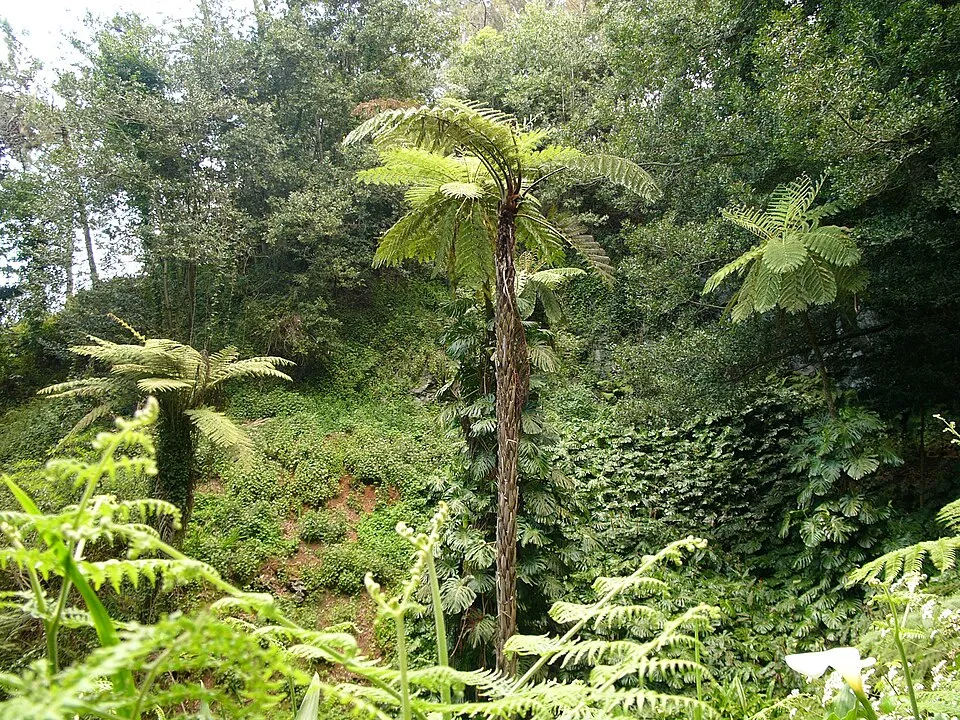
Cyathea cooperi, commonly known as the Lacy Tree Fern, Australian Tree Fern, or Sago Fern, is an elegant and popular ornamental fern indigenous to the subtropical and tropical rainforests of Queensland and New South Wales, Australia. This majestic plant belongs to the ancient family Cyatheaceae, a lineage of primitive vascular plants that have graced Earth's ecosystems for millennia. Characterized by its delicate, lacy, emerald-green fronds and a distinctive, often slender, fibrous trunk, which is actually an erect rhizome formed from coalesced old frond bases, Cyathea cooperi presents a striking architectural presence.
Mature specimens can achieve impressive heights, frequently surpassing 6 meters (20 feet) in optimal growing conditions, making them a stately feature in expansive gardens and conservatories. The fronds, typically bipinnate to tripinnate, unfurl from coiled 'fiddleheads' or croziers that are initially covered in fine, reddish-brown scales. These magnificent fronds can extend up to 3 meters (10 feet) in length, creating a lush, tropical display.
Unlike angiosperms, Cyathea cooperi reproduces via microscopic spores, which are produced in clusters called sori, found on the underside of fertile fronds. Its widespread appeal in cultivation stems from its relatively rapid growth rate compared to other tree ferns and its inherently graceful aesthetic. While its primary value is ornamental, providing a verdant, exotic atmosphere, the broader Cyatheaceae family is a subject of ongoing scientific inquiry into potential bioactive compounds.
Trusted Scientific References
1. Authoritative external sources for Cyathea cooperi
1.1 Wikipedia — Cyathea cooperi
1.2 Kew POWO (Plants of the World Online)
1.3 PubMed — peer-reviewed research
1.4 NCBI Taxonomy Browser
1.5 GBIF — Global Biodiversity
1.6Cyathea Tree Fern should be interpreted through verified botanical identity, practical care, and responsible safety language. This recovery note adds the missing context needed for a complete profile: match light to the plant's habit, use well-drained soil, water according to season, and avoid unsupported medicinal or edible claims. For publishing, the plant can be presented as a source-backed indoor plant with clear care guidance, common problem diagnosis, and conservative safety wording.
1.1.Cyathea Tree Fern — Key Features
- ✓Lacy, Emerald — Green Fronds — Highly decorative, bipinnate to tripinnate fronds.
- ✓Fibrous, Slender Trunk — An erect rhizome formed from old frond bases, reaching significant height.
- ✓Fast — Growing — Relatively quick growth rate compared to other tree ferns.
- ✓Architectural Presence — Creates a strong visual statement in gardens and conservatories.
- ✓Fiddleheads (Croziers) — New fronds unfurl from characteristic coiled, scaled structures.
- ✓Spore — Bearing — Reproduces sexually via sori containing spores on frond undersides.
- ✓Evergreen Nature — Maintains foliage year-round in suitable climates.
- ✓Shade — Loving — Thrives in partial shade, mimicking its natural understory habitat.
- ✓Award of Garden Merit — Recognized for its horticultural excellence by the RHS.
- ✓Native Australian Plant — Integral to the biodiversity of Eastern Australian rainforests.
1.2.Cyathea Tree Fern — At-a-Glance Summary
- ✓Ornamental Tree Fern — Prized for its elegant, lacy fronds and architectural form.
- ✓Native to Australia — Thrives in subtropical and tropical rainforest understories.
- ✓Ancient Lineage — Belongs to the primitive fern family Cyatheaceae.
- ✓Spore Reproduction — Reproduces via spores produced on fertile fronds.
- ✓Limited Medicinal Use — No widely documented traditional or modern medicinal uses for Cyathea cooperi specifically.
- ✓Potential Bioactivities — Broader family research suggests potential for antioxidant and anti-inflammatory properties, not specific to this species.
2.Cyathea Tree Fern — Scientific Profile
3.Cyathea Tree Fern — Quick Facts
4.Cyathea Tree Fern — Plant Morphology
5.Cyathea Tree Fern — Geographic Distribution
6.Cyathea Tree Fern — Historical Applications
7.Cyathea Tree Fern — Secondary Metabolites
- ✓Flavonoids — Potentially present in Cyathea cooperi, these polyphenolic compounds are common in ferns and are known for their antioxidant and anti-inflammatory properties, contributing to overall plant defense.
- ✓Phenolic Acids — Derivatives like caffeic acid and ferulic acid, often found in fern species, may contribute to antioxidant activity by scavenging free radicals and chelating metal ions.
- ✓Triterpenes — These diverse compounds, including various steroids and saponins, are known in some fern species for potential anti-inflammatory, cytotoxic, and adaptogenic effects, though specific to Cyathea cooperi is not well-studied.
- ✓Polysaccharides — Complex carbohydrates found in many plant cell walls, including ferns, which may exhibit immunomodulatory and prebiotic activities, influencing gut health and immune responses.
- ✓Tannins — Water-soluble polyphenols that can confer astringent properties, found in varying concentrations across fern species, potentially offering antimicrobial and antioxidant benefits.
- ✓Alkaloids — While less common in ferns compared to flowering plants, some species may contain trace amounts of nitrogen-containing compounds with diverse pharmacological activities, requiring further investigation for Cyathea cooperi.
- ✓Carotenoids — Pigments like beta-carotene, present in photosynthetic tissues, act as antioxidants and play a role in light harvesting and photoprotection within the plant.
- ✓Essential Oils — While not extensively studied in Cyathea cooperi, some fern species produce volatile compounds, though their medicinal significance is generally low compared to other plant groups.
- ✓Sterols — Plant sterols such as beta-sitosterol are common in plant cell membranes and may contribute to various physiological activities, including anti-inflammatory effects.
8.Cyathea Tree Fern — What Research Suggests
- ✓Antioxidant Potential — Many ferns, including some in the Cyatheaceae family, contain phenolic compounds and flavonoids that exhibit free-radical scavenging abilities, suggesting a role in mitigating oxidative stress. However, specific validated studies for Cyathea cooperi are limited.
- ✓Anti-inflammatory Properties — Preliminary studies on certain fern species indicate the presence of compounds that may modulate inflammatory pathways, offering potential for soothing inflammatory responses. This is an area of general fern research, not specific to Cyathea cooperi.
- ✓Antimicrobial Activity — Some fern extracts have demonstrated inhibitory effects against various microorganisms in vitro, hinting at possible antibacterial or antifungal applications. Direct evidence for Cyathea cooperi is not widely documented.
- ✓Cytotoxic Activity — Research on select fern species has explored their potential cytotoxic effects against certain cell lines, warranting further investigation for specific therapeutic applications. This remains an area of general phytochemical interest.
- ✓Immunomodulatory Effects — Polysaccharides and other compounds found in various ferns are being studied for their capacity to influence immune system responses, potentially enhancing or regulating immunity.
- ✓Wound Healing Support — Traditional uses of some ferns in various cultures involve topical applications for minor wounds, suggesting compounds that might aid tissue regeneration and repair, though not specifically documented for Cyathea cooperi.
- ✓Anthelmintic Potential — Historically, certain fern rhizomes were used to expel intestinal parasites in some cultures, pointing to a potential, though unverified for Cyathea cooperi, anthelmintic action.
- ✓Astringent Action — The presence of tannins in many ferns can confer astringent properties, which might be useful for tightening tissues or reducing secretions, but is not a documented medicinal use for this specific species.
- ✓Ornamental Value — Primarily valued for its aesthetic contribution to gardens and landscapes, enhancing well-being through visual beauty and creating serene environments.
- ✓Air Purification — Like many plants, Cyathea cooperi contributes to local air quality by absorbing carbon dioxide and releasing oxygen, a general ecological benefit.
8.1.Cyathea Tree Fern — Therapeutic Indications
9.Cyathea Tree Fern — Risk Profile
9.1.Cyathea Tree Fern — Warnings
- ✓Skin Irritation — The fine scales or hairs on new fronds and fiddleheads may cause mild skin irritation in sensitive individuals upon direct contact.
- ✓Allergic Reactions — As with any plant, there is a potential for allergic reactions, such as dermatitis or respiratory irritation from spores, though this is rare.
- ✓Gastrointestinal Upset — Ingesting any part of Cyathea cooperi is not recommended as its edibility and safety for internal consumption are unknown and unstudied.
- ✓Toxicity Unknown — Due to the lack of research on its internal use, potential systemic toxicity or adverse effects from ingestion cannot be ruled out.
- ✓Environmental Impact — In some regions outside its native range, it can become an invasive species, outcompeting native flora.
9.2.Cyathea Tree Fern — Safety Overview
- ✓Non-Medicinal Use — Cyathea cooperi is primarily an ornamental plant; it is not documented for traditional or modern medicinal use in humans, so safety for ingestion is unknown.
- ✓External Contact — While generally safe to handle, individuals with sensitive skin should exercise caution to avoid potential irritation from frond scales.
- ✓Ingestion Risk — Avoid ingestion of any part of the plant, as its edibility, toxicity, and pharmacological effects in humans are not established.
- ✓Children and Pets — Keep out of reach of children and pets to prevent accidental ingestion, as potential toxicity has not been evaluated.
- ✓Allergic Sensitivity — Individuals with known plant allergies should handle with care, especially during spore release, to prevent respiratory or skin reactions.
- ✓Environmental Considerations — When planting outside its native range, ensure it does not become invasive to local ecosystems.
10.Cyathea Tree Fern — Preparation & Dosage
- ✓Ornamental Cultivation — Primarily used as a striking landscape specimen or a container plant in tropical and subtropical gardens, providing lush, architectural beauty.
- ✓Terrarium/Conservatory Specimen — Its elegant fronds and upright habit make it ideal for large terrariums or conservatories, recreating a rainforest ambiance.
- ✓Spore Propagation — Reproduces readily from spores, which can be collected from mature fronds and sown for new plants.
- ✓Stem Watering — In cultivation, particularly during hot, dry periods, watering the fibrous trunk directly helps to maintain moisture, mimicking natural rainfall absorption.
- ✓Landscape Design Element — Employed in garden design for its strong visual presence, creating focal points or providing a tropical backdrop in shaded areas.
- ✓Research Material (Botanical) — Utilized in botanical studies for its unique evolutionary lineage and morphological characteristics as an ancient fern, contributing to plant science.
- ✓Ecological Restoration — Can be used in appropriate native habitat restoration projects to re-establish understory biodiversity.
11.Cyathea Tree Fern — Growth Requirements
- ✓Soil Requirements — Thrives in moist, humus-rich, well-drained soils with an acidic to neutral pH, mimicking its natural rainforest understory habitat.
- ✓Light Conditions — Prefers part shade, especially protection from harsh afternoon sun, which can scorch its delicate fronds.
- ✓Watering — Requires consistent moisture; water the fibrous trunk regularly, particularly during hot, dry periods, but avoid overwatering the crown in winter.
- ✓Temperature and Hardiness — Best suited for mild winter temperatures, hardy in USDA Zones 9-11. Frost protection is essential in colder climates.
- ✓Fertilization — Apply a balanced liquid fertilizer monthly during the active growing season (spring to fall) to support vigorous frond development.
- ✓Propagation — Easily propagated by sowing spores collected from the undersides of mature fronds as soon as they are ripe.
- ✓Maintenance — Low maintenance, primarily involving the removal of dead or damaged fronds to maintain aesthetic appeal and plant health.
Reviewed by the Flora Medical Global Botanical Review Panel
Multi-disciplinary editorial group · Botany · Ethnobotany · Herbal-medicine literature
Who reviewed this: This page was checked by the Flora Medical Global Botanical Review Panel — an in-house editorial group of botany graduates, ethnobotany researchers, and horticulture practitioners who collectively maintain our 7,000+ plant encyclopedia. Meet the team.
Our 4-step verification process
1. Taxonomic verification
Scientific names and synonyms cross-checked against Kew POWO, World Flora Online, and The Plant List.
2. Phytochemical & medicinal cross-reference
Active compounds, traditional uses, and reported activities are cross-referenced with PubMed, USDA Dr. Duke's database, and peer-reviewed ethnobotanical literature.
3. Conservation & distribution check
Distribution, ecology, and conservation status confirmed against GBIF occurrence records and the IUCN Red List.
4. Editorial & safety review
Every entry passes an editorial pass for clarity, originality, and safety notices (toxicity, contraindications, dosage caveats) before publication.
Last reviewed:
Important medical disclaimer: This content is for educational and research purposes only. It is not medical advice and is not a substitute for consultation with a licensed healthcare provider. Do not use any herb to self-treat a medical condition without professional guidance.
Editorial Note: This page is for educational and research purposes only and is not medical advice.
Written by: Flora Medical Global Editorial Team
Reviewed by: Flora Medical Global Botanical Review Panel
Last Updated: June 15, 2026





Cyathea Tree Fern — Comments & Community Reviews
Rate this plant