
Medical Disclaimer: This content is for educational purposes only. It is not medical advice. Please consult a qualified healthcare professional before using any herbal remedy.
Safety Overview
1.Cymbidium Orchid — Plant Snapshot
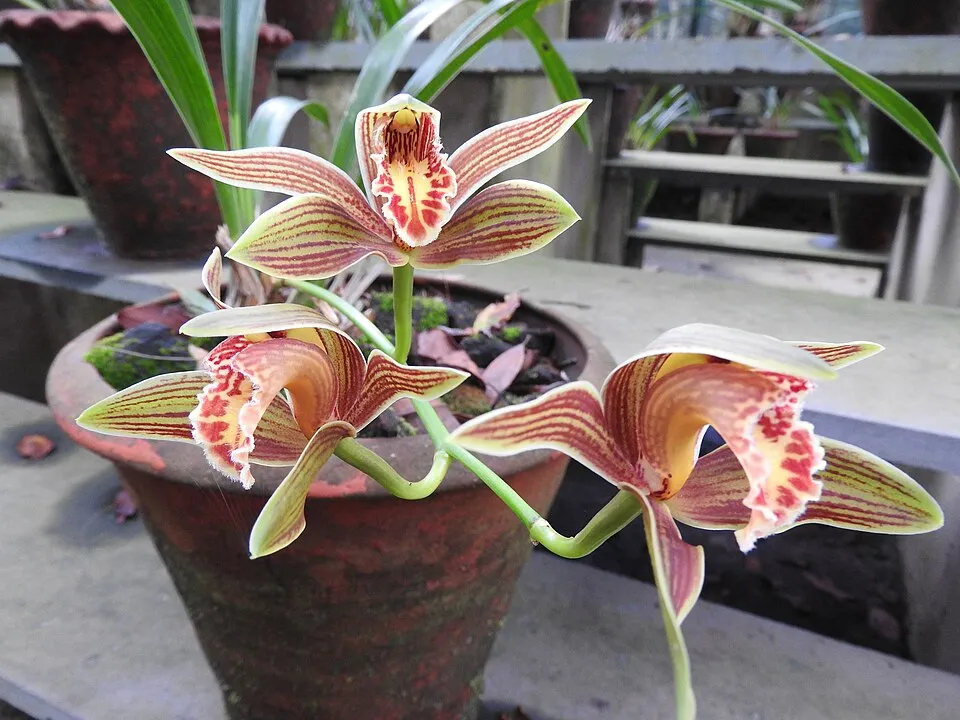
Cymbidium orchids, encompassing the vast genus Cymbidium and its numerous cultivated hybrids, are celebrated globally for their striking, long-lasting blossoms and relatively straightforward cultivation. The term "Cymbidium hybrid" specifically refers to the multitude of selectively bred varieties, often stemming from species native to the Himalayan regions and Southeast Asia, such as Cymbidium insigne and Cymbidium tracyanum. These hybrids are prized for their enhanced vigor, larger flower sizes, and an extraordinary spectrum of colors, including pure whites, vibrant yellows, deep burgundies, and intricate spotted patterns.
Historically, Cymbidiums hold deep cultural significance, particularly in China, where they were revered over 2,500 years ago. Confucius himself lauded their exquisite fragrance and elegant form, associating them with nobility, friendship, and scholarly pursuits. Their introduction to the Western horticultural world dates back to the late 18th century.
Botanically, Cymbidiums are predominantly sympodial epiphytic or terrestrial orchids. They are characterized by prominent pseudobulbs, which serve as vital storage organs for water and nutrients. From these clustered, ovoid to conical pseudobulbs, which can vary significantly in size, emerge graceful, arching flower spikes and strap-like, leathery leaves.
The deep green foliage, typically arranged in a fan-like manner, can reach lengths of up to 90 cm. Flowering generally occurs from late autumn through spring, influenced by the specific hybrid and prevailing environmental conditions. Each robust flower spike can bear a considerable number of blooms, often ranging from 5 to 30, with individual flowers maintaining their beauty for several weeks to a few months.
While their primary appeal remains ornamental, traditional knowledge systems, particularly in their indigenous habitats, have historically recognized the medicinal value of various wild Cymbidium species.
Trusted Scientific References
1. Authoritative external sources for Cymbidium hybrid
1.1 Wikipedia — Cymbidium hybrid
1.2 Kew POWO (Plants of the World Online)
1.3 PubMed — peer-reviewed research
1.4 NCBI Taxonomy Browser
1.5 GBIF — Global Biodiversity
1.1.Cymbidium Orchid — Defining Traits
- ✓Ornamental Excellence — Highly valued for their large, colorful, and long-lasting flowers.
- ✓Rich Phytochemistry — Contains diverse secondary metabolites including phenanthrenes and dibenzyls.
- ✓Antioxidant Power — Extracts exhibit significant free radical scavenging capabilities.
- ✓Anti — Aging Potential — Demonstrated inhibition of elastase and collagenase enzymes, crucial for skin integrity.
- ✓Skin Brightening Effects — Anti-tyrosinase activity suggests efficacy against hyperpigmentation.
- ✓Traditional Reverence — Historically significant in Eastern cultures, notably China, as symbols of nobility.
- ✓Sustainable Sourcing — Research focuses on utilizing cultivation by-products, promoting sustainability.
- ✓Versatile Growth Habits — Includes both epiphytic and terrestrial forms, adaptable to various environments.
- ✓Long Bloom Duration — Individual flowers can last for several weeks to months, providing extended beauty.
- ✓Cultural Symbolism — Represents friendship, elegance, and virtue in many Asian traditions.
1.2.Cymbidium Orchid — Snapshot Summary
- ✓Cymbidium orchids are popular ornamentals with emerging dermo-cosmetic potential.
- ✓Research indicates antioxidant, anti-tyrosinase, anti-elastase, and anti-collagenase activities.
- ✓Key compounds include phenanthrenes, dibenzyls, and phenolic acid derivatives.
- ✓Traditional uses exist for wild Cymbidium species in systems like TCM.
- ✓Primarily explored for anti-aging, skin brightening, and protective skin care applications.
- ✓Safety for internal use is largely unstudied; topical application requires caution and patch testing.
2.Cymbidium Orchid — Systematic Position
3.Cymbidium Orchid — Botanical Stats
4.Cymbidium Orchid — Plant Morphology
5.Cymbidium Orchid — Geographic Distribution
6.Cymbidium Orchid — Historical Applications
7.Cymbidium Orchid — Active Compounds
- ✓Phenanthrenes — This class includes compounds like 3-hydroxy-2,4,7-trimethoxy-phenanthrene and 5-hydroxy-2-methoxy-1,4-phenanthrenequinone, which have been found to exhibit anti-collagenase activity, vital for maintaining skin structural integrity.
- ✓1,4-Phenanthrenquinones — Notably, cymbisamoquinone (6-hydroxy-5,7-dimethoxy-1,4-phenanthrenequinone) was identified as a new natural product, alongside ephemeranthroquinone B, both contributing to anti-collagenase effects.
- ✓Dibenzyls — Key compounds such as gigantol, tristin, and marylaurencinol A belong to this class. Gigantol and tristin are significant for their anti-tyrosinase activity, while marylaurencinol A shows anti-collagenase effects.
- ✓Phenolic Acid Derivatives — These compounds contribute to the overall antioxidant capacity of Cymbidium extracts, helping to protect cells from oxidative damage.
- ✓Sterols — Including plant sterols, these compounds often play a role in membrane stability and can have anti-inflammatory properties, though specific actions in Cymbidium are still under investigation.
- ✓Dehydrodiconiferyl Alcohol Derivatives — Bulbophyllanthrin, a prominent compound in this category, has been identified for its dose-dependent anti-collagenase activity, supporting skin health.
- ✓Simple Phenolic Compounds — These fundamental phenolic structures contribute to the plant's broad antioxidant defense mechanisms.
- ✓Alkaloids — While not highlighted in the dermo-cosmetic study, alkaloids are a significant phytochemical class found across Orchidaceae, often associated with diverse pharmacological activities.
- ✓Flavonoids — Known for their strong antioxidant and anti-inflammatory effects, flavonoids are common in many plant species, including orchids, contributing to cellular protection.
- ✓Glycosides — These compounds, where a sugar molecule is attached to a non-sugar component, can enhance solubility and bioavailability, and often contribute to various biological activities.
8.Cymbidium Orchid — What Research Suggests
- ✓Antioxidant Activity — Studies indicate that Cymbidium extracts, particularly from pseudobulbs and roots, exhibit significant antioxidant properties, helping to neutralize free radicals and mitigate oxidative stress in the body and skin.
- ✓Anti-Tyrosinase Effects — Certain compounds like gigantol and tristin isolated from Cymbidium by-products have shown potent anti-tyrosinase activity, suggesting potential for reducing hyperpigmentation and brightening skin complexion.
- ✓Anti-Elastase Activity — Total extracts from Cymbidium have demonstrated inhibitory effects on elastase, an enzyme responsible for breaking down elastin, thereby potentially supporting skin elasticity and firmness, offering anti-aging benefits.
- ✓Anti-Collagenase Activity — Research reveals that specific phenanthrenes and dibenzyls from Cymbidium, such as bulbophyllanthrin and marylaurencinol A, can inhibit collagenase, an enzyme that degrades collagen, which is crucial for maintaining skin structure and reducing wrinkle formation.
- ✓Skin Rejuvenation — The combined anti-elastase and anti-collagenase properties suggest that Cymbidium extracts could contribute to overall skin rejuvenation by preserving the integrity of the extracellular matrix.
- ✓Photoprotective Potential — The antioxidant capacity of Cymbidium may offer a degree of protection against UV-induced skin damage by scavenging reactive oxygen species generated by sun exposure.
- ✓Anti-inflammatory Properties — While not the primary focus of recent dermo-cosmetic studies, some traditional uses of orchid species suggest potential anti-inflammatory actions, which could further benefit skin health.
- ✓Traditional Chinese Medicine (TCM) Uses — Historically, certain wild Cymbidium species like C. ensifolium have been used in TCM for various ailments, though specific applications vary and are not directly attributed to modern Cymbidium hybrids.
8.1.Cymbidium Orchid — Health Applications
9.Cymbidium Orchid — Risk Profile
9.1.Cymbidium Orchid — Reported Side Effects
- ✓Allergic Reactions — Topical application of Cymbidium extracts may cause skin irritation, redness, itching, or allergic dermatitis in sensitive individuals.
- ✓Unknown Internal Effects — Due to the lack of extensive human studies on Cymbidium hybrids for internal consumption, potential systemic side effects are largely unknown and could be significant.
- ✓Gastrointestinal Upset — If ingested, especially without proper preparation or dosage, plant materials could potentially lead to digestive discomfort.
- ✓Drug Interactions — There is currently insufficient data on how Cymbidium extracts might interact with prescription medications or other herbal supplements.
- ✓Photosensitivity — While not specifically noted, some plant-derived compounds can increase skin sensitivity to sunlight, warranting caution with topical use.
9.2.Cymbidium Orchid — Risk Assessment
- ✓Limited Human Research — The medicinal and dermo-cosmetic uses of Cymbidium hybrids are primarily based on in vitro studies of by-products; human clinical trials are scarce, warranting caution.
- ✓Topical Use Only (Recommended) — For cosmetic applications, Cymbidium extracts should be used externally. A patch test on a small skin area is highly recommended before widespread use.
- ✓Avoid During Pregnancy/Lactation — Due to insufficient safety data, pregnant and breastfeeding individuals should avoid using Cymbidium preparations.
- ✓Not for Children — The safety of Cymbidium products in children has not been established; therefore, use should be avoided.
- ✓Consult a Healthcare Professional — Individuals with pre-existing medical conditions or those taking medications should consult a doctor before using any Cymbidium-derived products.
- ✓Do Not Ingest Ornamental Plants — Cymbidium orchids cultivated for ornamental purposes should never be ingested, as their safety for consumption is not confirmed.
10.Cymbidium Orchid — Application Forms
- ✓Dermo-Cosmetic Extracts — For topical applications, extracts from Cymbidium by-products (pseudobulbs, roots, leaves) are prepared using solvents like ethyl acetate, then formulated into serums, creams, or lotions for skin care.
- ✓Antioxidant Serums — Extracts rich in phenanthrenes and phenolic compounds can be incorporated into antioxidant serums designed to protect skin from environmental stressors and oxidative damage.
- ✓Skin Brightening Formulations — Compounds with anti-tyrosinase activity, such as gigantol and tristin, are being explored for use in skin brightening products to address hyperpigmentation and uneven skin tone.
- ✓Anti-Aging Creams — Extracts demonstrating anti-elastase and anti-collagenase activities are candidates for inclusion in anti-aging creams and treatments aimed at improving skin elasticity and reducing the appearance of wrinkles.
- ✓Traditional Decoctions (limited to specific wild species) — In some traditional medicine systems, certain wild Cymbidium species (e.g., C. ensifolium) may be prepared as decoctions for internal use, though this is not applicable to modern Cymbidium hybrids without specific guidance.
- ✓Poultices (traditional, specific species) — Historically, certain wild orchid parts were crushed and applied topically as poultices for local ailments, a practice not recommended for ornamental Cymbidium hybrids due to lack of research.
- ✓Aromatic Infusions — While mainly ornamental, the fragrant flowers of some Cymbidium hybrids could potentially be used in aromatic infusions for aesthetic or therapeutic ambiance, though not for direct medicinal ingestion.
11.Cymbidium Orchid — Growth Requirements
- ✓Light — Provide bright, indirect light; avoid direct scorching sun, especially during peak hours. East or west-facing windows are ideal.
- ✓Watering — Water thoroughly when the potting medium approaches dryness. Allow some drying between waterings to prevent root rot, which is common in orchids.
- ✓Potting Medium — Use a well-draining, coarse orchid mix, typically composed of bark, perlite, and charcoal, to ensure adequate aeration for the roots.
- ✓Temperature — Maintain daytime temperatures between 18-24°C (65-75°F) and nighttime temperatures slightly cooler, around 10-16°C (50-60°F), to encourage flowering.
- ✓Humidity — Aim for moderate to high humidity, ideally between 40-60%. Misting or using a humidity tray can be beneficial, especially in dry indoor environments.
- ✓Fertilization — Feed regularly during the growing season with a balanced orchid-specific fertilizer, typically at half strength, reducing frequency during dormancy.
- ✓Repotting — Repot every 1-2 years or when the plant outgrows its pot, typically after flowering, using fresh potting medium to prevent breakdown and compaction.
- ✓Air Circulation — Ensure good air movement around the plants to prevent fungal diseases and promote healthy growth.
Reviewed by the Flora Medical Global Botanical Review Panel
Multi-disciplinary editorial group · Botany · Ethnobotany · Herbal-medicine literature
Who reviewed this: This page was checked by the Flora Medical Global Botanical Review Panel — an in-house editorial group of botany graduates, ethnobotany researchers, and horticulture practitioners who collectively maintain our 7,000+ plant encyclopedia. Meet the team.
Our 4-step verification process
1. Taxonomic verification
Scientific names and synonyms cross-checked against Kew POWO, World Flora Online, and The Plant List.
2. Phytochemical & medicinal cross-reference
Active compounds, traditional uses, and reported activities are cross-referenced with PubMed, USDA Dr. Duke's database, and peer-reviewed ethnobotanical literature.
3. Conservation & distribution check
Distribution, ecology, and conservation status confirmed against GBIF occurrence records and the IUCN Red List.
4. Editorial & safety review
Every entry passes an editorial pass for clarity, originality, and safety notices (toxicity, contraindications, dosage caveats) before publication.
Last reviewed:
Important medical disclaimer: This content is for educational and research purposes only. It is not medical advice and is not a substitute for consultation with a licensed healthcare provider. Do not use any herb to self-treat a medical condition without professional guidance.
Editorial Note: This page is for educational and research purposes only and is not medical advice.
Written by: Flora Medical Global Editorial Team
Reviewed by: Flora Medical Global Botanical Review Panel
Last Updated: June 15, 2026





Cymbidium Orchid — Comments & Community Reviews
Rate this plant