
Medical Disclaimer: This content is for educational purposes only. It is not medical advice. Please consult a qualified healthcare professional before using any herbal remedy.
Safety Overview
1.Cyperus Papyrus Dwarf — At a Glance
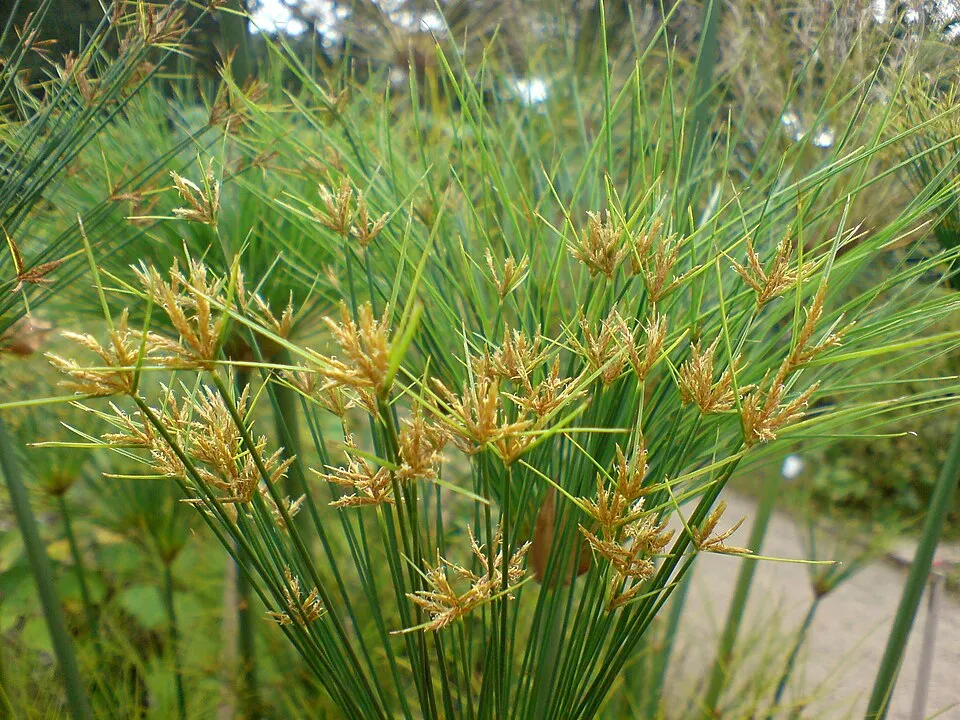
Cyperus papyrus, commonly known as papyrus or Egyptian reed, is a majestic perennial aquatic sedge belonging to the Cyperaceae family, a diverse group of grass-like plants. Native to the vast wetlands, riverbanks, and shallow lakes of Africa, particularly around the Nile Delta where it was once abundant, its natural range extends to Madagascar and parts of the southern Mediterranean. This remarkable plant is characterized by its robust, triangular-shaped stems, or culms, which can reach impressive heights of up to 4 meters (13 feet) in its wild form.
The stems are topped by a distinctive, dense, umbrella-like inflorescence composed of numerous bright green, thread-like rays, creating a visually striking 'feather-duster' effect. Small, inconspicuous greenish-brown flowers emerge from these rays, eventually developing into small, nut-like fruits dispersed by water. While the species can be quite tall, ornamental selections like 'Dwarf Form' (often marketed as 'Nanus' or 'King Tut®') typically grow to a more manageable 0.6 to 1 meter (2-3 feet).
These dwarf cultivars maintain the characteristic form but are better suited for container culture and smaller water features, offering increased shade tolerance compared to their towering wild counterparts. Papyrus plays a crucial ecological role in its native habitats, providing shelter and sustenance for wildlife, while also historically serving as the primary source material for ancient Egyptian papyrus paper.
Trusted Scientific References
1. Authoritative external sources for Cyperus papyrus
1.1 Wikipedia — Cyperus papyrus
1.2 Kew POWO (Plants of the World Online)
1.3 PubMed — peer-reviewed research
1.4 NCBI Taxonomy Browser
1.5 GBIF — Global Biodiversity
1.6Cyperus Papyrus Dwarf should be interpreted through verified botanical identity, practical care, and responsible safety language. This recovery note adds the missing context needed for a complete profile: match light to the plant's habit, use well-drained soil, water according to season, and avoid unsupported medicinal or edible claims. For publishing, the plant can be presented as a source-backed garden plant with clear care guidance, common problem diagnosis, and conservative safety wording.
1.1.Cyperus Papyrus Dwarf — Notable Characteristics
- ✓Iconic Wetland Plant — Instantly recognizable for its tall, triangular stems and umbrella-like inflorescence.
- ✓Historical Significance — The original source material for ancient Egyptian papyrus paper.
- ✓Ornamental Appeal — Dwarf cultivars are highly valued for their tropical aesthetics in water features and containers.
- ✓Vigorous Growth — Establishes quickly and grows robustly in suitable moist to wet environments.
- ✓Ecological Contributor — Supports biodiversity, aids in water purification, and prevents soil erosion.
- ✓Edible Rhizomes and Culms — Historically consumed as a starchy food source in its native regions.
- ✓Craft Versatility — Stems are widely used for weaving and various traditional handicrafts.
- ✓Low Maintenance (Once Established) — Requires consistent moisture but is otherwise easy to care for in optimal conditions.
- ✓Hardy in Warm Climates — Perennial in USDA Zones 9-12, often cultivated as an annual in colder regions.
- ✓Drought Intolerance — Requires constant moisture; cannot tolerate dry soil conditions.
1.2.Cyperus Papyrus Dwarf — At-a-Glance Summary
- ✓Cyperus papyrus is a distinctive wetland sedge, historically vital for ancient paper and crafts.
- ✓Dwarf varieties are popular ornamental plants, ideal for water gardens and containers.
- ✓Contains flavonoids and essential oils, offering potential but unproven medicinal properties.
- ✓Thrives in wet, sunny conditions and is propagated by rhizome division.
- ✓Known primarily for its ecological role, historical utility, and ornamental value rather than direct medicinal use.
- ✓Generally safe for handling and ornamental cultivation, with edible rhizomes from clean sources.
2.Cyperus Papyrus Dwarf — Botanical Identity
3.Cyperus Papyrus Dwarf — Key Data
4.Cyperus Papyrus Dwarf — Botanical Features
5.Cyperus Papyrus Dwarf — Origin & Spread
6.Cyperus Papyrus Dwarf — Heritage Uses
7.Cyperus Papyrus Dwarf — Chemical Profile
- ✓Flavonoids — A diverse group of polyphenolic compounds, such as luteolin and quercetin derivatives, identified in Cyperus papyrus, which are recognized for their potent antioxidant activity and potential cellular protective effects.
- ✓Essential Oils — Volatile aromatic compounds found within the plant, contributing to its characteristic scent and believed to possess natural antimicrobial, insect-repellent, and anti-inflammatory properties.
- ✓Starch — A significant complex carbohydrate stored abundantly within the rhizomes and lower culms, serving as the plant's primary energy reserve and historically a vital food source.
- ✓Cellulose and Hemicellulose — Key structural polysaccharides that form the robust cell walls of the stems, providing rigidity and strength, essential for the plant's upright growth and its historical use in papermaking.
- ✓Lignin — A complex phenolic polymer that impregnates the cellulose fibers, providing additional structural support, water impermeability, and resistance to decay, crucial for the durability of papyrus stems.
- ✓Phenolic Acids — Simple phenolic compounds, often co-occurring with flavonoids, which contribute to the overall antioxidant capacity and protective mechanisms against environmental stressors in the plant.
- ✓Fatty Acids — Present in smaller quantities, contributing to the plant's cellular membranes and energy storage, though not a primary constituent for medicinal applications.
- ✓Saponins — While not extensively studied in C. papyrus, some members of the Cyperaceae family contain saponins, which are glycosides known for their foam-forming properties and potential biological activities.
8.Cyperus Papyrus Dwarf — Pharmacological Findings
- ✓Ecological Support — Cyperus papyrus forms dense stands in wetlands, providing critical habitat and nesting sites for birds and aquatic fauna, thereby promoting local biodiversity and ecosystem health.
- ✓Water Purification — Its extensive and fibrous root system acts as a natural biofilter, helping to absorb excess nutrients and pollutants from water bodies, which contributes to improved water quality.
- ✓Soil Conservation — The robust root network of papyrus effectively stabilizes riverbanks and wetland soils, significantly reducing erosion and mitigating land degradation in vulnerable aquatic environments.
- ✓Historical Utility — Beyond its ecological role, the plant is globally recognized as the historical source of ancient papyrus paper, a revolutionary writing material central to ancient Egyptian civilization and knowledge dissemination.
- ✓Craft Material — The strong, flexible stems of Cyperus papyrus are still widely used in various traditional crafts, including weaving mats, baskets, and small boats in its native regions.
- ✓Edible Parts — Historically, the starchy rhizomes and the lower, tender parts of the culms were consumed either raw or cooked, serving as a valuable source of sustenance for indigenous communities.
- ✓Ornamental Value — Dwarf cultivars of papyrus are highly prized in modern landscaping for their unique architectural form and tropical aesthetic, making them ideal for water gardens, ponds, and decorative containers.
- ✓Phytochemical Potential — The presence of flavonoids and essential oils suggests potential antioxidant, anti-inflammatory, or antimicrobial properties, though specific therapeutic applications for Cyperus papyrus in traditional medicine are not widely documented.
- ✓Wetland Restoration — Due to its vigorous growth and ecological benefits, papyrus is increasingly utilized in wetland restoration projects to re-establish native flora and support ecosystem recovery.
8.1.Cyperus Papyrus Dwarf — Therapeutic Indications
9.Cyperus Papyrus Dwarf — Safety & Side Effects
9.1.Cyperus Papyrus Dwarf — Caution Notes
- ✓Skin Irritation — Direct contact with the fibrous stems or sap may cause mild skin irritation or allergic contact dermatitis in individuals with high sensitivity.
- ✓Digestive Discomfort — While edible, consuming large quantities of raw, unprepared rhizomes or culms might lead to mild digestive upset due to their high fiber content.
- ✓Allergic Reactions — Although rare, individuals predisposed to plant allergies may experience minor allergic responses upon prolonged exposure or handling.
- ✓Invasive Tendency — In suitable warm, wetland climates, Cyperus papyrus can spread vigorously and potentially outcompete native aquatic vegetation if not managed.
- ✓Pollutant Accumulation — If grown in water contaminated with heavy metals or other pollutants, the plant may absorb these substances, making it unsafe for consumption.
9.2.Cyperus Papyrus Dwarf — Toxicity Assessment
- ✓General Handling — Cyperus papyrus is generally considered safe for ornamental cultivation and handling; minimal risk is associated with casual contact.
- ✓Edibility Caution — If intended for consumption, ensure that rhizomes and culms are harvested from clean, uncontaminated water sources to avoid pollutant ingestion.
- ✓Allergy Awareness — Individuals with known sensitivities to plants should exercise caution during handling, though severe allergic reactions are uncommon.
- ✓Children and Pets — Generally regarded as non-toxic; however, ingestion of large fibrous quantities by children or pets is not recommended due to potential choking hazards or mild digestive upset.
- ✓Environmental Management — Responsible cultivation practices are advised to prevent its uncontrolled spread into natural waterways where it could disrupt local ecosystems.
- ✓Medicinal Use — There are no widely recognized or scientifically validated medicinal applications for Cyperus papyrus; therefore, it is not recommended for therapeutic self-medication.
10.Cyperus Papyrus Dwarf — Preparation Methods
- ✓Ornamental Landscaping — Dwarf forms are popularly used in water gardens, ponds, and large containers as striking vertical accents, adding a tropical and exotic ambiance.
- ✓Traditional Papermaking — Historically, the stems were peeled, sliced into thin strips, soaked, and then pressed and dried to create the durable writing material known as papyrus paper.
- ✓Craft Material — The fibrous stems are utilized in various traditional crafts, including weaving mats, baskets, sandals, and constructing small boats.
- ✓Edible Consumption — The tender basal portions of the culms and the starchy rhizomes can be peeled and consumed raw or cooked, serving as a historical food source.
- ✓Ecological Restoration — Planted in wetland areas to stabilize soil, prevent erosion, and contribute to natural water filtration and habitat creation.
- ✓Cut Foliage — The distinctive 'feather-duster' inflorescences are prized in floral arrangements for their unique texture and architectural form.
- ✓Water Feature Filtration — Can be strategically placed in natural or artificial water features to aid in passive biological filtration, improving water clarity and reducing algal blooms.
11.Cyperus Papyrus Dwarf — How to Grow
- ✓Site Selection — Thrives best in full sun to partial shade, with dwarf cultivars showing greater tolerance for shaded conditions; requires warm temperatures to flourish.
- ✓Soil Requirements — Prefers rich, organic soil; can be planted directly into moist garden beds or in containers with a heavy, loamy substrate.
- ✓Watering — Essential to maintain consistently wet conditions, ideally with the plant's base submerged in 1-6 inches of standing water, such as in ponds or water gardens.
- ✓Propagation — Easily propagated by dividing the robust rhizomes in spring, or alternatively, by collecting and sowing the small seeds.
- ✓Fertilization — Benefits from regular, heavy fertilization during its active growing season to support its vigorous growth and lush foliage.
- ✓Winter Care — In regions below USDA Zone 9, it must be protected from frost; plants can be overwintered indoors in a bright, consistently moist environment, preferably with the pot placed in water.
- ✓Maintenance — Trim old, yellowing, or browned culms close to the rhizome base to encourage continuous new growth and maintain a tidy appearance.
- ✓Container Growing — Excellent for container culture, especially dwarf varieties, ensuring the container has no drainage holes or is placed in a larger water-filled vessel to maintain constant moisture.
Reviewed by the Flora Medical Global Botanical Review Panel
Multi-disciplinary editorial group · Botany · Ethnobotany · Herbal-medicine literature
Who reviewed this: This page was checked by the Flora Medical Global Botanical Review Panel — an in-house editorial group of botany graduates, ethnobotany researchers, and horticulture practitioners who collectively maintain our 7,000+ plant encyclopedia. Meet the team.
Our 4-step verification process
1. Taxonomic verification
Scientific names and synonyms cross-checked against Kew POWO, World Flora Online, and The Plant List.
2. Phytochemical & medicinal cross-reference
Active compounds, traditional uses, and reported activities are cross-referenced with PubMed, USDA Dr. Duke's database, and peer-reviewed ethnobotanical literature.
3. Conservation & distribution check
Distribution, ecology, and conservation status confirmed against GBIF occurrence records and the IUCN Red List.
4. Editorial & safety review
Every entry passes an editorial pass for clarity, originality, and safety notices (toxicity, contraindications, dosage caveats) before publication.
Last reviewed:
Important medical disclaimer: This content is for educational and research purposes only. It is not medical advice and is not a substitute for consultation with a licensed healthcare provider. Do not use any herb to self-treat a medical condition without professional guidance.
Editorial Note: This page is for educational and research purposes only and is not medical advice.
Written by: Flora Medical Global Editorial Team
Reviewed by: Flora Medical Global Botanical Review Panel
Last Updated: June 15, 2026





Cyperus Papyrus Dwarf — Comments & Community Reviews
Rate this plant