
Medical Disclaimer: This content is for educational purposes only. It is not medical advice. Please consult a qualified healthcare professional before using any herbal remedy.
Safety Overview
1.Cyrtomium — Botanical Snapshot
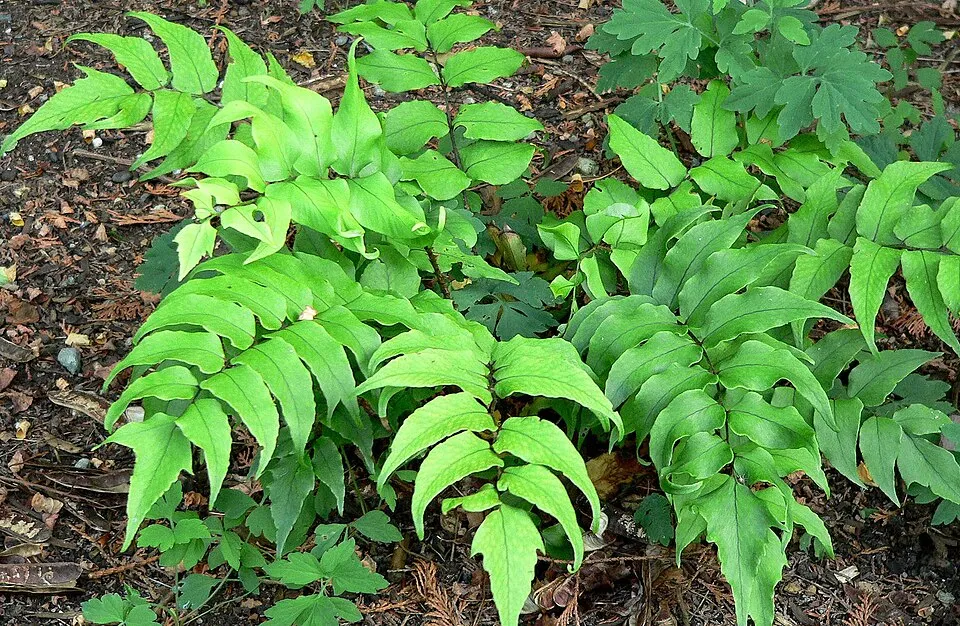
Cyrtomium falcatum, widely recognized as the Japanese Holly Fern or House Holly Fern, is a striking evergreen herbaceous perennial belonging to the Dryopteridaceae family. Native to the diverse landscapes of East Asia, encompassing Japan, Korea, and parts of China, this resilient fern flourishes in a variety of environments, from the dappled shade of forest floors to the more exposed conditions of coastal cliffs. Its common name, 'Holly Fern,' is derived from the distinctive resemblance of its fronds to the glossy, somewhat spiny leaves of holly, despite it being botanically unrelated to the true holly family (Aquifoliaceae). The fronds are pinnately compound, featuring oblong-ovate, sickle-shaped (falcate) pinnae with characteristic serrated margins.
Spores, which are light green when young and darken with maturity, are uniformly distributed in round sori on the underside of the fronds. Its rhizomes are stout, ascending to erect, and densely scaly at the base. Historically, Cyrtomium falcatum has been cherished for its significant ornamental value, particularly in traditional Japanese garden design, where its architectural form and vibrant, year-round greenery provide enduring structural interest. The genus name 'Cyrtomium' originates from Greek words 'kyrtos' (curved) and 'homos' (equal), possibly referencing its curved sori, while 'falcatum' is Latin for 'sickle-shaped,' accurately describing its pinnae.
This adaptable fern has also naturalized in some areas of the southeastern USA, showcasing its robust nature and tolerance to various conditions, including some salt exposure. Its ability to thrive in partial to full shade and relatively low humidity makes it an exceptionally popular and low-maintenance indoor plant globally.
Trusted Scientific References
1. Authoritative external sources for Cyrtomium falcatum
1.1 Wikipedia — Cyrtomium falcatum
1.2 Kew POWO (Plants of the World Online)
1.3 PubMed — peer-reviewed research
1.4 NCBI Taxonomy Browser
1.5 GBIF — Global Biodiversity
1.6Cyrtomium should be interpreted through verified botanical identity, practical care, and responsible safety language. This recovery note adds the missing context needed for a complete profile: match light to the plant's habit, use well-drained soil, water according to season, and avoid unsupported medicinal or edible claims. For publishing, the plant can be presented as a source-backed indoor plant with clear care guidance, common problem diagnosis, and conservative safety wording.
1.1.Cyrtomium — Highlights
- ✓Evergreen Foliage — Maintains vibrant, glossy green fronds throughout the year, providing continuous aesthetic appeal.
- ✓Holly — like Pinnae — Distinctive, leathery, sickle-shaped leaflets with serrated margins, giving it its common name.
- ✓Adaptable Growth — Thrives in a wide range of shaded environments, from deep shade to dappled sunlight.
- ✓Drought Tolerance — Shows relatively good tolerance to lower humidity compared to many other fern species.
- ✓Deer and Rabbit Resistant — Seldom bothered by common garden pests like deer or rabbits.
- ✓Ornamental Value — Highly valued for its architectural form and lush texture in landscape and interior design.
- ✓Potential Bioactivity — Contains a spectrum of phytochemicals with antioxidant and anti-inflammatory potential.
- ✓East Asian Origin — Naturally distributed across Japan, Korea, and parts of China.
- ✓Low Maintenance — Requires minimal pruning and is relatively easy to care for, making it ideal for beginners.
- ✓Spore Reproduction — Reproduces via abundant spores located on the undersides of its fronds.
1.2.Cyrtomium — Snapshot Summary
- ✓Evergreen fern native to East Asia, prized for its ornamental beauty and emerging medicinal potential.
- ✓Rich in bioactive compounds like flavonoids, triterpenoids, and phenolics, offering antioxidant and anti-inflammatory properties.
- ✓Traditionally noted for antiparasitic effects, though modern scientific validation is ongoing.
- ✓A popular, low-maintenance houseplant and shade garden perennial, tolerant of varied conditions.
- ✓Essential to exercise caution with internal use, especially during pregnancy, lactation, or with existing medical conditions.
- ✓Commonly known as Japanese Holly Fern, House Holly Fern, or Fish Tail Fern.
2.Cyrtomium — Nomenclature & Classification
3.Cyrtomium — Key Data
4.Cyrtomium — Botanical Features
5.Cyrtomium — Origin & Spread
6.Cyrtomium — Heritage Uses
7.Cyrtomium — Phytochemistry
- ✓Flavonoids — Including quercetin and kaempferol derivatives, these compounds are potent antioxidants and contribute significantly to the fern's anti-inflammatory actions.
- ✓Triterpenoids — Such as fernenes and hopanes, these are known for their anti-inflammatory, hepatoprotective, and potentially antimicrobial activities.
- ✓Phenolic Acids — Featuring caffeic acid and ferulic acid, these are strong antioxidants that help neutralize free radicals and protect against cellular damage.
- ✓Saponins — Glycosides that can exhibit hemolytic, antimicrobial, and adaptogenic properties, though their specific role in Cyrtomium falcatum is still being elucidated.
- ✓Tannins — These astringent compounds are responsible for the fern's potential to aid in wound healing and provide mild antimicrobial effects.
- ✓Sterols — Beta-sitosterol, a common plant sterol, contributes to its anti-inflammatory potential and may have cholesterol-lowering properties.
- ✓Polysaccharides — Complex carbohydrates often associated with immunomodulatory effects, supporting the body's natural defense system.
- ✓Essential Oils — While less prominent in ferns, trace amounts of volatile compounds may contribute to subtle aromatic or antimicrobial characteristics.
- ✓Alkaloids — Nitrogen-containing compounds, typically found in smaller quantities in ferns, with potential for diverse pharmacological activities.
8.Cyrtomium — Evidence-Based Benefits
- ✓Antiparasitic — Traditional uses suggest efficacy against certain internal parasites, with some phytochemical studies supporting this action through specific compounds.
- ✓Anti-inflammatory — The presence of flavonoids and triterpenoids contributes to its ability to modulate inflammatory pathways, potentially reducing swelling and pain.
- ✓Antioxidant — Rich in phenolic compounds and flavonoids, it actively scavenges free radicals, thereby protecting cellular structures from oxidative damage.
- ✓Antimicrobial — Extracts have shown potential to inhibit the growth of various bacteria and fungi, offering a protective effect against common pathogens.
- ✓Hepatoprotective — Certain constituents may support liver health, aiding in detoxification processes and shielding liver cells from toxin-induced injury.
- ✓Immunomodulatory — Research indicates a potential to modulate immune responses, which could help in balancing the body's defense mechanisms.
- ✓Astringent — Tannins present in the fern contribute to its astringent properties, which can be beneficial for tightening tissues and aiding in minor wound healing.
- ✓Diuretic — Folk medicine suggests its use to promote urination, assisting in fluid balance and the elimination of bodily wastes.
- ✓Wound Healing — Its combined anti-inflammatory and antimicrobial properties may contribute to accelerated healing of minor cuts and abrasions.
- ✓Febrifuge — Traditionally, it has been employed in some folk practices to help reduce fever and alleviate associated discomfort.
8.1.Cyrtomium — Reported Uses
9.Cyrtomium — Cautions & Contraindications
9.1.Cyrtomium — Reported Side Effects
- ✓Gastrointestinal Upset — High doses or prolonged internal use may lead to symptoms such as nausea, vomiting, or diarrhea.
- ✓Allergic Reactions — Sensitive individuals may experience skin irritation, rashes, or respiratory discomfort upon contact or ingestion.
- ✓Liver Toxicity — There is a theoretical risk of hepatotoxicity with excessive or long-term internal use, particularly from raw plant material.
- ✓Drug Interactions — May potentially interact with certain medications, including anticoagulants, diuretics, or drugs metabolized by the liver.
- ✓Reproductive Effects — Insufficient data exists; therefore, use is cautioned during pregnancy and breastfeeding due to potential risks.
- ✓Kidney Strain — Very high concentrations of certain plant compounds could potentially place a burden on kidney function.
- ✓Hypotension — In susceptible individuals, internal consumption might contribute to a mild lowering of blood pressure.
9.2.Cyrtomium — Clinical Safety Notes
- ✓Pregnancy and Lactation — Avoid use during pregnancy and breastfeeding due to insufficient safety data and potential adverse effects on fetal development or infant health.
- ✓Children — Not recommended for infants and young children without explicit guidance from a qualified medical herbalist or physician.
- ✓Pre-existing Conditions — Individuals with liver disease, kidney impairment, or cardiovascular conditions should consult a healthcare professional before use.
- ✓Medication Interactions — Exercise caution and seek medical advice if taking prescription medications, especially anticoagulants, diuretics, or immunosuppressants.
- ✓Dosage Adherence — Strictly follow recommended dosages; exceeding guidelines can increase the risk of adverse reactions and toxicity.
- ✓Raw Consumption — Refrain from consuming raw plant material, as it may contain higher concentrations of potentially irritating or toxic compounds.
- ✓Allergic Sensitivity — Discontinue use immediately if any signs of allergic reaction, such as skin rash, itching, or difficulty breathing, occur.
10.Cyrtomium — Preparations & Uses
- ✓Decoction — Dried rhizomes or fronds are simmered in water to create a concentrated liquid, traditionally used internally for parasitic infections.
- ✓Poultice — Fresh, crushed fronds can be applied directly to the skin as a poultice to soothe minor inflammations or aid in wound healing.
- ✓Tincture — An alcohol-based extract of fresh or dried plant material, offering a potent and shelf-stable form for internal medicinal use.
- ✓Infusion — Dried leaves are steeped in hot water to make a herbal tea, suitable for milder effects or as a general tonic.
- ✓Powder — Dried plant material is ground into a fine powder, which can be encapsulated or mixed into food/drinks for ingestion.
- ✓Topical Wash — A diluted decoction can be used as an external wash for skin irritations, minor cuts, or as an astringent.
- ✓Ornamental Use — Primarily cultivated as an attractive houseplant or for landscaping in shaded garden areas.
11.Cyrtomium — Cultivation & Care
- ✓Soil — Thrives in moist, humus-rich, and well-drained soil; prefers slightly acidic to neutral pH.
- ✓Light — Best grown in part to full shade, avoiding direct, intense sunlight which can scorch fronds.
- ✓Water — Requires consistent moisture; keep soil evenly damp but never waterlogged, as it is drought intolerant.
- ✓Temperature — Hardy in USDA zones 6-10; can be deciduous in colder climates but typically evergreen.
- ✓Humidity — Tolerant of average indoor humidity levels, but appreciates higher humidity in very dry environments.
- ✓Fertilization — Fertilize sparingly during the active growing season (spring/summer) with a diluted balanced liquid feed.
- ✓Propagation — Easily propagated by dividing rhizomes in spring or by sowing spores.
- ✓Pests and Diseases — Generally robust, but monitor for Florida Fern Caterpillar, scale insects, fungal spots, and root rot in overly wet conditions.
Reviewed by the Flora Medical Global Botanical Review Panel
Multi-disciplinary editorial group · Botany · Ethnobotany · Herbal-medicine literature
Who reviewed this: This page was checked by the Flora Medical Global Botanical Review Panel — an in-house editorial group of botany graduates, ethnobotany researchers, and horticulture practitioners who collectively maintain our 7,000+ plant encyclopedia. Meet the team.
Our 4-step verification process
1. Taxonomic verification
Scientific names and synonyms cross-checked against Kew POWO, World Flora Online, and The Plant List.
2. Phytochemical & medicinal cross-reference
Active compounds, traditional uses, and reported activities are cross-referenced with PubMed, USDA Dr. Duke's database, and peer-reviewed ethnobotanical literature.
3. Conservation & distribution check
Distribution, ecology, and conservation status confirmed against GBIF occurrence records and the IUCN Red List.
4. Editorial & safety review
Every entry passes an editorial pass for clarity, originality, and safety notices (toxicity, contraindications, dosage caveats) before publication.
Last reviewed:
Important medical disclaimer: This content is for educational and research purposes only. It is not medical advice and is not a substitute for consultation with a licensed healthcare provider. Do not use any herb to self-treat a medical condition without professional guidance.
Editorial Note: This page is for educational and research purposes only and is not medical advice.
Written by: Flora Medical Global Editorial Team
Reviewed by: Flora Medical Global Botanical Review Panel
Last Updated: June 15, 2026





Cyrtomium — Comments & Community Reviews
Rate this plant