
Medical Disclaimer: This content is for educational purposes only. It is not medical advice. Please consult a qualified healthcare professional before using any herbal remedy.
Safety Overview
1.Daboecia Cantabrica — Introduction & Highlights
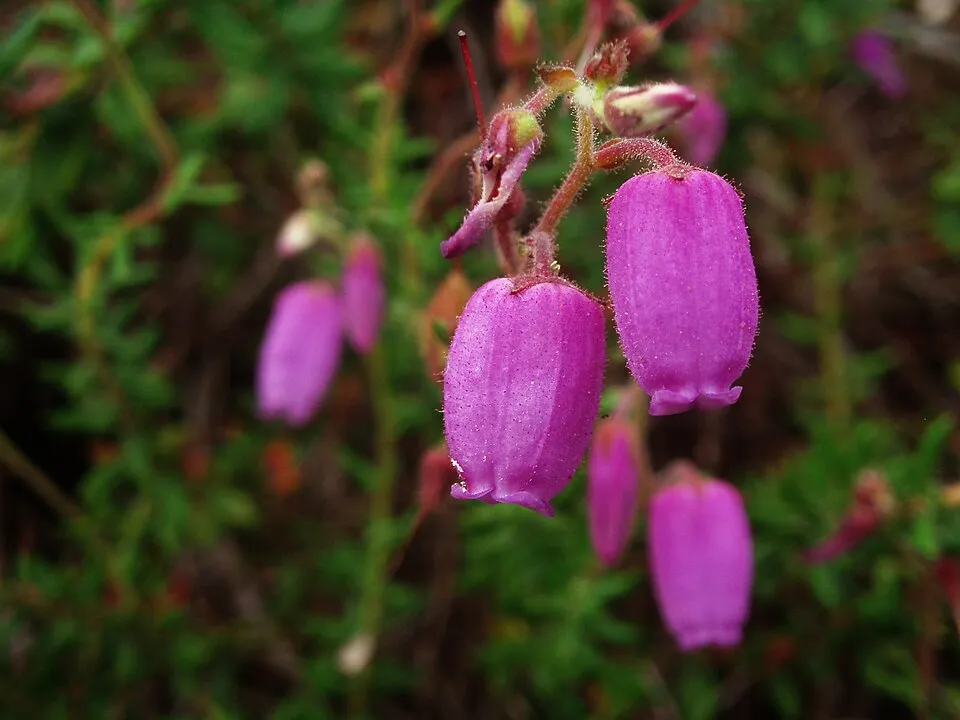
Daboecia cantabrica, commonly known as St. Daboec's Heath or Irish Heath, is a distinctive evergreen shrub native to the Atlantic coastal regions of Western Europe, specifically found in Ireland (notably Connemara), Western France, Northern Spain, and Portugal. It belongs to the Ericaceae family, sharing characteristics with other heaths and heathers.
This low-growing plant typically reaches heights of 1.5 to 2 feet, forming dense, twiggy colonies that are integral to its native bog and heathland ecosystems. Its slender, erect stems are often furnished with fine glandular hairs, contributing to its unique texture.
Botanically, the Irish Heath is recognized by its small, alternate, ovate-oblong leaves, which measure about 1/4 to 5/8 inch long. These leaves are a glossy, dark green on the upper surface and covered with a characteristic close white wool or silvery pubescence on the underside, creating a subtle two-toned effect. The plant's most striking feature is its profusion of bell-shaped or urceolate flowers, which emerge from June through November.
These flowers are typically a rich rosy-purple, 3/8 to 1/2 inch long, with four tiny reflexed lobes at the mouth. Cultivars offer a spectrum of colors, including pure white (f. alba), various pinks ('Praegerae'), richer red-purples (f.
atropurpurea), and even bicolors. These vibrant blossoms are a significant nectar source, attracting numerous pollinators, especially bees, which are vital for ecosystem health. Propagation is typically by seed for the species or by cuttings for its various cultivars, and regular early spring pruning helps maintain a compact habit and promotes abundant flowering.
Trusted Scientific References
1. Authoritative external sources for Daboecia cantabrica
1.1 Wikipedia — Daboecia cantabrica
1.2 Kew POWO (Plants of the World Online)
1.3 PubMed — peer-reviewed research
1.4 NCBI Taxonomy Browser
1.5 GBIF — Global Biodiversity
1.6Daboecia Cantabrica should be interpreted through verified botanical identity, practical care, and responsible safety language. This recovery note adds the missing context needed for a complete profile: match light to the plant's habit, use well-drained soil, water according to season, and avoid unsupported medicinal or edible claims. For publishing, the plant can be presented as a source-backed garden plant with clear care guidance, common problem diagnosis, and conservative safety wording.
1.1.Daboecia Cantabrica — Standout Qualities
- ✓Native to Western — Native to Western European Heathlands
- ✓Evergreen Foliage with — Evergreen Foliage with Silvery Underside
- ✓Distinctive Urceolate (Urn — shaped) Flowers
- ✓Extended Flowering Season — Extended Flowering Season from Summer to Autumn
- ✓Significant Attractor for — Significant Attractor for Pollinators, especially Bees
- ✓Thrives in Acidic, Lime — Free Soils
- ✓Resilient to Harsh — Resilient to Harsh Coastal and Temperate Climates
- ✓Highly Prized for — Highly Prized for Ornamental Gardening
- ✓Rich in Potential — Rich in Potential Bioactive Polyphenolic Compounds
- ✓Low — Maintenance Shrub when Grown in Suitable Conditions
1.2.Daboecia Cantabrica — Concise Overview
- ✓Evergreen shrub, Ericaceae family, native to Western Europe.
- ✓Features glossy dark green leaves and vibrant, bell-shaped flowers.
- ✓Primarily valued for its ornamental beauty and role as a pollinator plant.
- ✓Contains polyphenolic compounds, including flavonoids and phenolic acids.
- ✓Modern research into its medicinal properties is nascent; no established traditional uses.
- ✓Requires acidic, well-drained soil and thrives in full sun to partial shade.
2.Daboecia Cantabrica — Systematic Position
3.Daboecia Cantabrica — Quick Facts
4.Daboecia Cantabrica — Morphological Account
5.Daboecia Cantabrica — Where It Grows
6.Daboecia Cantabrica — Historical Applications
7.Daboecia Cantabrica — Secondary Metabolites
- ✓Polyphenols — A broad category of plant compounds, including flavonoids and phenolic acids, known for their significant antioxidant and anti-inflammatory activities.
- ✓Flavonoids — Key subclasses like flavonols (e.g., quercetin derivatives) are anticipated, acting as potent antioxidants and contributing to plant pigmentation and defense mechanisms.
- ✓Phenolic Acids — Includes compounds such as caffeic acid, ferulic acid, and gallic acid, which are recognized for their antioxidant, anti-inflammatory, and potential antimicrobial properties.
- ✓Tannins — Expected to be present in varying concentrations, providing astringent qualities and contributing to the plant's defense against herbivores and pathogens, also possessing antioxidant activity.
- ✓Glycosides — Various compounds, often involving sugars linked to flavonoids or phenolics, which can influence bioavailability and biological activity within the plant.
- ✓Triterpenoids — While not extensively studied in Daboecia cantabrica, these compounds are common in the Ericaceae family and can contribute to anti-inflammatory and protective plant functions.
- ✓Waxes — Found on the leaf surface, these provide a protective layer against desiccation and environmental stressors, contributing to the plant's resilience.
- ✓Sugars — Essential for plant metabolism and energy storage, present in various forms throughout the plant tissues.
- ✓Minerals — Essential trace elements and macronutrients absorbed from the soil, vital for cellular processes and overall plant health.
8.Daboecia Cantabrica — Research Insights
- ✓Antioxidant Support — Preliminary phytochemical analyses reveal the presence of polyphenolic compounds, including flavonoids and phenolic acids, which are known for their ability to neutralize free radicals and mitigate oxidative stress.
- ✓Anti-inflammatory Potential — The identified flavonoids and phenolic acids in Daboecia cantabrica may possess properties that help modulate inflammatory pathways, offering a theoretical basis for anti-inflammatory effects.
- ✓Cellular Protection — Through their antioxidant mechanisms, compounds in Irish Heath could contribute to protecting cellular structures from damage caused by environmental stressors and metabolic byproducts.
- ✓Cardiovascular Health (Hypothetical) — Flavonoids are generally associated with supporting cardiovascular function by improving vascular integrity and reducing oxidative burden, suggesting a potential, though unstudied, role for Daboecia cantabrica.
- ✓Immune System Modulation (Speculative) — Certain plant polyphenols can interact with immune cells, potentially influencing immune responses, which could be an area for future research with Daboecia cantabrica.
- ✓Antimicrobial Properties (Theoretical) — Some phenolic acids and flavonoids exhibit mild antimicrobial activity, suggesting Daboecia cantabrica might possess protective effects against certain microorganisms, awaiting specific investigation.
- ✓Skin Health (Topical Potential) — The antioxidant and anti-inflammatory attributes of its phytochemicals could hypothetically offer benefits for skin protection and soothing when applied topically, though this remains to be explored.
- ✓Digestive Comfort (Unproven) — General anti-inflammatory properties of plant compounds can sometimes extend to supporting digestive comfort, but this application for Daboecia cantabrica is purely speculative and lacks evidence.
- ✓Metabolic Regulation (Investigational) — Phenolic acids are sometimes studied for their roles in glucose and lipid metabolism, offering a very preliminary and unconfirmed avenue for Daboecia cantabrica research.
- ✓Neuroprotective Effects (Future Research) — The broad class of polyphenols often includes compounds with neuroprotective potential, making this a distant, theoretical area for Daboecia cantabrica investigation.
8.1.Daboecia Cantabrica — Health Applications
9.Daboecia Cantabrica — Adverse Effects
9.1.Daboecia Cantabrica — Reported Side Effects
- ✓Allergic Reactions — Potential for contact dermatitis or allergic responses in sensitive individuals upon skin exposure to plant material.
- ✓Gastrointestinal Upset — If ingested in unstudied quantities, common plant compounds can cause mild digestive disturbances such as nausea or stomach discomfort.
- ✓Lack of Safety Data — Due to the absence of extensive traditional medicinal use and human clinical trials, the full spectrum of potential side effects is unknown.
- ✓Drug Interactions (Theoretical) — The presence of polyphenols and other bioactive compounds could theoretically interact with certain medications, though specific interactions are unconfirmed.
- ✓Photosensitivity — Some plant compounds can increase skin sensitivity to sunlight, but this is unproven for Daboecia cantabrica.
- ✓Toxicity (Unconfirmed) — While the Ericaceae family contains some toxic species, specific toxicity for Daboecia cantabrica upon ingestion is not established, but caution is advised.
9.2.Daboecia Cantabrica — Safety Profile
- ✓Limited Human Data — There is very little to no established human safety data for the internal or external medicinal use of Daboecia cantabrica.
- ✓Not for Internal Medicinal Use — Due to the lack of research and traditional medicinal applications, internal consumption for therapeutic purposes is not recommended.
- ✓Pregnancy and Lactation — Avoid use during pregnancy and breastfeeding due to insufficient safety information and unknown effects on fetal development or infant health.
- ✓Children — Not recommended for use in children due to the complete absence of pediatric safety studies.
- ✓Allergic Individuals — Individuals with known allergies to plants in the Ericaceae family should exercise caution or avoid contact.
- ✓Consult a Professional — Always consult a healthcare professional before considering any use of Daboecia cantabrica for medicinal purposes.
- ✓Patch Test for Topical Use — If considering experimental topical application, perform a patch test on a small skin area first to check for adverse reactions.
10.Daboecia Cantabrica — Preparation & Dosage
- ✓Ornamental Planting — Primarily used as an attractive evergreen shrub in rock gardens, borders, ground cover, and containers due to its long flowering season and vibrant blooms.
- ✓Pollinator Support — Cultivated to attract bees and other pollinators, contributing significantly to local biodiversity and ecosystem health.
- ✓Botanical Specimen — Valued in botanical gardens and educational settings for its unique morphology and ecological significance within the Ericaceae family.
- ✓Research Extracts — Plant material may be prepared as ethanolic or aqueous extracts for preliminary phytochemical screening and in vitro studies on its antioxidant or anti-inflammatory potential.
- ✓Topical Applications (Experimental) — Hypothetical use in experimental topical preparations like creams or poultices for skin health, based on its antioxidant compounds, but not established for human use.
- ✓Infusions/Decoctions (Research Only) — Preparation of infusions or decoctions for laboratory-based research to analyze chemical content and biological activities, not for human consumption.
- ✓Horticultural Variety Development — Used in breeding programs to develop new cultivars with different flower colors, growth habits, or increased hardiness.
11.Daboecia Cantabrica — Growth Requirements
- ✓Soil Preference — Thrives in acidic, peaty soil or a light, sandy loam that is entirely lime-free; incorporating leaf-mould enhances growing conditions.
- ✓Sunlight Exposure — Prefers full sun to partial shade for optimal flowering and robust growth, though it can tolerate some shade.
- ✓Watering Requirements — Requires consistently moist but very well-drained soil; avoid waterlogging, especially in winter.
- ✓Pruning — Prune in early spring to remove old flower spikes and about one-third of the previous year's growth to maintain a compact habit and encourage prolific blooming.
- ✓Propagation — Can be propagated by seed for the species, or more commonly by semi-ripe cuttings taken in late summer for specific cultivars.
- ✓Hardiness Zone — Hardy to USDA Zone 6, tolerating temperatures down to -10°F (-23°C), and resilient to harsh coastal conditions.
- ✓Fertilization — Generally requires minimal fertilization; use an ericaceous (acid-loving) fertilizer sparingly if growth appears weak.
- ✓Pest and Disease Management — Relatively pest-free, but watch for common ericaceous issues like root rot in poorly drained soils or fungal leaf spots.
Reviewed by the Flora Medical Global Botanical Review Panel
Multi-disciplinary editorial group · Botany · Ethnobotany · Herbal-medicine literature
Who reviewed this: This page was checked by the Flora Medical Global Botanical Review Panel — an in-house editorial group of botany graduates, ethnobotany researchers, and horticulture practitioners who collectively maintain our 7,000+ plant encyclopedia. Meet the team.
Our 4-step verification process
1. Taxonomic verification
Scientific names and synonyms cross-checked against Kew POWO, World Flora Online, and The Plant List.
2. Phytochemical & medicinal cross-reference
Active compounds, traditional uses, and reported activities are cross-referenced with PubMed, USDA Dr. Duke's database, and peer-reviewed ethnobotanical literature.
3. Conservation & distribution check
Distribution, ecology, and conservation status confirmed against GBIF occurrence records and the IUCN Red List.
4. Editorial & safety review
Every entry passes an editorial pass for clarity, originality, and safety notices (toxicity, contraindications, dosage caveats) before publication.
Last reviewed:
Important medical disclaimer: This content is for educational and research purposes only. It is not medical advice and is not a substitute for consultation with a licensed healthcare provider. Do not use any herb to self-treat a medical condition without professional guidance.
Editorial Note: This page is for educational and research purposes only and is not medical advice.
Written by: Flora Medical Global Editorial Team
Reviewed by: Flora Medical Global Botanical Review Panel
Last Updated: June 15, 2026





Daboecia Cantabrica — Comments & Community Reviews
Rate this plant