
Medical Disclaimer: This content is for educational purposes only. It is not medical advice. Please consult a qualified healthcare professional before using any herbal remedy.
Safety Overview
1.Daffodil — Essential Profile
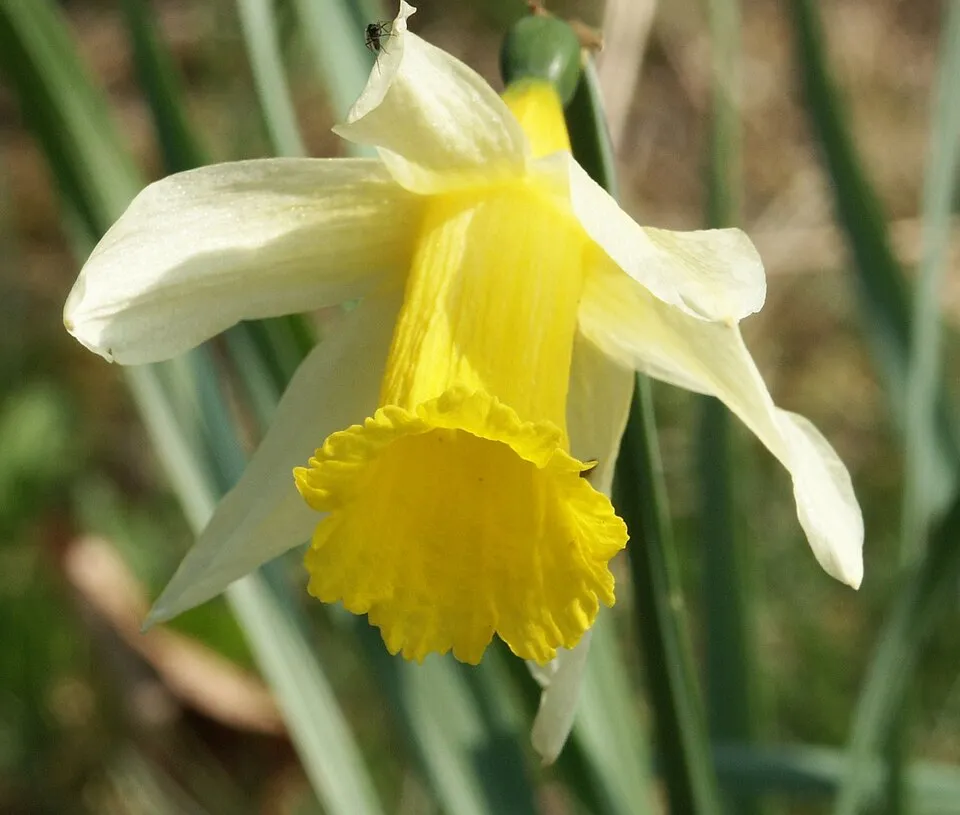
Narcissus pseudonarcissus, commonly known as the Wild Daffodil or Lent Lily, is a striking member of the Amaryllidaceae family, celebrated for its vivid yellow blooms that herald the arrival of spring. This perennial bulbous plant is indigenous to Western Europe, thriving in woodlands, meadows, and along riverbanks. Botanically, it is characterized by its distinctive morphology: a prominent, trumpet-shaped central corona encircled by six surrounding perianth segments, typically in brilliant shades of yellow. The plant’s long, strap-like leaves emerge directly from its subterranean bulb. The genus name 'Narcissus' is widely believed to originate from the ancient Greek word 'narkao,' meaning 'to numb or daze,' a direct reference to the plant's inherent narcotic properties and significant toxicity. Historically, daffodils have been revered for their aesthetic appeal since classical antiquity, featuring prominently in Greek mythology, Roman artistry, and early botanical chronicles by figures such as Theophrastus and Pliny the Elder.
While its beauty was celebrated, its medicinal applications were largely overshadowed by an awareness of its poisonous nature. In traditional European folklore, daffodils are frequently associated with themes of new beginnings, hope, and the seasonal renewal of spring. Due to its non-native status and potent toxicity, it was not a primary herb in mainstream Ayurvedic, Traditional Chinese Medicine (TCM), or Unani systems. However, some historical European herbalists did cautiously explore its topical uses, for instance, on wounds or joint pain, attempting to harness its emetic and purgative qualities. These historical applications are now largely discredited and considered unsafe due to severe adverse effects. Modern scientific inquiry has predominantly focused on isolating and characterizing the plant's diverse array of isoquinoline alkaloids, most notably galantamine and lycorine.
Galantamine, a reversible cholinesterase inhibitor, has achieved significant pharmaceutical importance, becoming a cornerstone in the treatment of mild to moderate Alzheimer's disease. This discovery led to its development as a modern prescription medication. Other alkaloids, such as lycorine, have demonstrated various in vitro biological activities, including antiviral, antimalarial, and cytotoxic effects, which continue to prompt further investigative research. Trusted Scientific References Authoritative external sources for Narcissus pseudonarcissus : ...[CURRENT TEXT EXISTS: 2657 chars]
1.1.Daffodil — Distinguishing Points
- ✓Scientific Name — Narcissus pseudonarcissus
- ✓Family — Amaryllidaceae
- ✓Common Names — Daffodil, Wild Daffodil, Lent Lily
- ✓Key Bioactive Compound — Galantamine (for Alzheimer's treatment)
- ✓Primary Toxicity — Isoquinoline alkaloids (e.g., lycorine, galantamine)
- ✓Distinctive Morphology — Trumpet-shaped corona, typically yellow flowers
- ✓Native Habitat — Western Europe, temperate woodlands and meadows
- ✓Historical Significance — Revered in ancient cultures for beauty, folklore symbol of spring
- ✓Medical Status — Not a safe herbal remedy; source of a modern pharmaceutical drug
- ✓Critical Safety Warning — Highly poisonous; never for consumption or direct topical application
1.2.Daffodil — Quick Summary
- ✓Narcissus pseudonarcissus, or Daffodil, is a highly toxic plant known for its beautiful spring blooms.
- ✓It is the natural source of galantamine, a key pharmaceutical compound used to treat Alzheimer's disease.
- ✓All parts of the plant, especially the bulbs, are profoundly poisonous and must never be ingested.
- ✓Ingestion can cause severe gastrointestinal distress, neurological symptoms, and can be fatal.
- ✓Direct skin contact can lead to allergic dermatitis; handling precautions are essential.
- ✓Its use in medicine is strictly limited to purified, extracted compounds under medical supervision, not as a direct herbal remedy.
2.Daffodil — Botanical Identity
3.Daffodil — Vital Statistics
4.Daffodil — Botanical Features
5.Daffodil — Origin & Spread
6.Daffodil — Heritage Uses
7.Daffodil — Chemical Profile
- ✓Isoquinoline Alkaloids — This is the most significant group, encompassing galantamine (a reversible acetylcholinesterase inhibitor used in Alzheimer's treatment), lycorine (known for antiviral, antimalarial, emetic, and cytotoxic properties), narciclasine (a potent cytotoxic and antimitotic agent), and haemanthamine.
- ✓Phenolic Compounds — Includes various phenolic acids and derivatives, contributing to antioxidant activity, though in lower concentrations compared to alkaloids.
- ✓Flavonoids — Present in the leaves and flowers, these compounds offer antioxidant and potential anti-inflammatory benefits, common across many plant species.
- ✓Saponins — These glycosides are found in various plant parts and can have foaming properties and some biological activities, though their role in daffodil is less studied.
- ✓Polysaccharides — Complex carbohydrates that contribute to the plant's structural integrity and energy storage, particularly in the bulb.
- ✓Lipids — Fats and oils are present, primarily in the bulb, serving as energy reserves for the plant.
- ✓Volatile Compounds — Aromatic compounds contributing to the daffodil's characteristic fragrance, though not typically associated with its medicinal or toxic effects.
- ✓Amino Acids — Essential building blocks for proteins, present throughout the plant's tissues.
8.Daffodil — Scientific Evidence
- ✓Cholinesterase Inhibition — Galantamine, a primary alkaloid extracted from Narcissus pseudonarcissus, acts as a selective, reversible acetylcholinesterase inhibitor, thereby increasing acetylcholine levels in the brain.
- ✓Alzheimer's Disease Management — This established pharmacological mechanism makes galantamine a clinically approved pharmaceutical agent for the symptomatic treatment of mild to moderate Alzheimer's disease.
- ✓Potential Antiviral Activity — Research has indicated that certain Narcissus alkaloids, particularly lycorine, exhibit notable in vitro antiviral effects against a range of viruses, including influenza and poliovirus.
- ✓Antimalarial Properties — Lycorine and related Amaryllidaceae alkaloids have demonstrated antimalarial activity in laboratory studies, suggesting a potential for development into novel antimalarial agents.
- ✓Cytotoxic Effects — Various alkaloids from the daffodil plant, such as lycorine and narciclasine, have shown cytotoxic properties against different cancer cell lines in preclinical research, warranting further investigation.
- ✓Anti-inflammatory Research — Preliminary in vitro studies suggest that some daffodil extracts might possess anti-inflammatory actions, although human data is completely lacking and the plant's toxicity prohibits direct use.
- ✓Historical Topical Application for Wounds — In traditional European folk medicine, daffodil preparations were cautiously applied externally to wounds, aiming to utilize their purported cleansing properties, but this practice is now considered unsafe due to severe skin irritation and systemic absorption risks.
- ✓Traditional Relief for Joint Pain — Similarly, historical European herbalists occasionally used daffodil plasters for localized joint pain, a method no longer recommended given the plant's profound toxicity and absence of proven efficacy.
- ✓Emetic and Purgative Actions — The plant's historical use as a strong emetic or purgative in some traditions stems directly from its toxic alkaloid content, which induces severe gastrointestinal distress and is extremely dangerous for internal consumption.
8.1.Daffodil — Reported Uses
9.Daffodil — Safety Considerations
9.1.Daffodil — Reported Side Effects
- ✓Severe Gastrointestinal Distress — Ingestion causes immediate and intense vomiting, nausea, abdominal pain, and diarrhea due to potent alkaloids.
- ✓Neurological Symptoms — Higher doses can lead to dizziness, tremors, confusion, convulsions, and in severe cases, paralysis and respiratory depression.
- ✓Cardiac Issues — Alkaloids like lycorine can induce irregular heartbeats (arrhythmias), hypotension, and other cardiovascular disturbances.
- ✓Allergic Contact Dermatitis — Direct skin contact with the sap or bulbs can cause severe irritation, redness, swelling, blistering, and itching (known as 'daffodil itch').
- ✓Respiratory Depression — In cases of significant poisoning, compromised breathing, and lung collapse may occur.
- ✓Organ Damage — High-level exposure or ingestion can potentially lead to liver and kidney dysfunction.
- ✓Fatal Outcomes — Ingestion of a sufficient quantity, particularly bulbs mistaken for onions or garlic, can be lethal, especially in children or vulnerable individuals.
9.2.Daffodil — Clinical Safety Notes
- ✓Extreme Toxicity — All parts of Narcissus pseudonarcissus are highly poisonous, with the bulbs containing the highest concentration of toxic alkaloids.
- ✓Absolutely Not for Internal Consumption — The daffodil plant is strictly contraindicated for ingestion by humans or animals in any form due to the risk of severe, potentially fatal poisoning.
- ✓Topical Application Caution — Direct contact with the plant's sap or bulbs should be minimized, and protective gloves should always be worn to prevent contact dermatitis.
- ✓Pregnancy and Breastfeeding — Use of daffodil in any form, including topical application, is considered highly unsafe for pregnant or breastfeeding individuals.
- ✓Children and Pets Hazard — Keep all parts of the daffodil plant strictly out of reach of children and pets, who are particularly vulnerable to its toxic effects.
- ✓Risk of Misidentification — There is a significant risk of accidental poisoning due to confusion of daffodil bulbs with edible onions, garlic, or leeks, or leaves with chives.
- ✓Pharmaceutical Use Only — The medicinal compound galantamine is only safe and effective when extracted, purified, and administered as a precisely dosed prescription medication under medical supervision.
10.Daffodil — Usage Guide
- ✓Pharmaceutical Extraction — The primary and only safe "usage" of Narcissus pseudonarcissus is the industrial extraction of the alkaloid galantamine for pharmaceutical production of prescription medications.
- ✓Controlled Laboratory Research — Plant material is utilized exclusively in highly controlled laboratory settings for the isolation, characterization, and study of its various bioactive alkaloids.
- ✓Ornamental Cultivation — Widely cultivated globally as an ornamental plant in gardens, parks, and landscapes for its beautiful spring blooms.
- ✓STRICT AVOIDANCE of Ingestion — It is absolutely critical to never ingest any part of the daffodil plant, including bulbs, leaves, or flowers, due to its severe toxicity.
- ✓Handling Precautions — When handling daffodil bulbs or plants, especially during planting or harvesting, wear protective gloves to prevent contact dermatitis and skin irritation.
- ✓No Traditional Herbal Preparation for Internal Use — Despite some historical mentions, no safe or recommended traditional herbal preparations exist for internal consumption of daffodil.
- ✓Educational Display — Used in botanical gardens and educational settings to showcase its unique morphology and highlight its pharmacological significance and toxicity.
11.Daffodil — How to Grow
- ✓Climate — Daffodils thrive in temperate climates with distinct seasons, requiring a cold dormancy period for optimal flowering.
- ✓Soil Requirements — Prefers well-draining, fertile soil rich in organic matter, with a slightly acidic to neutral pH (6.0-7.0).
- ✓Planting Depth and Spacing — Bulbs should be planted in autumn, typically 6-8 inches deep and 4-6 inches apart, with the pointed end facing upwards.
- ✓Light Exposure — Requires full sun to partial shade; too much shade can reduce flowering vigor.
- ✓Watering — Needs consistent moisture during active growth in spring, but reduce watering significantly after flowering when foliage begins to yellow and during summer dormancy.
- ✓Fertilization — Apply a balanced, low-nitrogen fertilizer in early spring as shoots emerge and again after flowering to replenish bulb reserves.
- ✓Pest and Disease Management — Generally robust, but susceptible to narcissus bulb fly, basal rot (fungal), and slug damage; good sanitation and proper drainage are key.
- ✓Propagation — Primarily propagated by dividing offsets (daughter bulbs) from mature clumps after flowering, or less commonly, by seed for genetic variation.
Reviewed by the Flora Medical Global Botanical Review Panel
Multi-disciplinary editorial group · Botany · Ethnobotany · Herbal-medicine literature
Who reviewed this: This page was checked by the Flora Medical Global Botanical Review Panel — an in-house editorial group of botany graduates, ethnobotany researchers, and horticulture practitioners who collectively maintain our 7,000+ plant encyclopedia. Meet the team.
Our 4-step verification process
1. Taxonomic verification
Scientific names and synonyms cross-checked against Kew POWO, World Flora Online, and The Plant List.
2. Phytochemical & medicinal cross-reference
Active compounds, traditional uses, and reported activities are cross-referenced with PubMed, USDA Dr. Duke's database, and peer-reviewed ethnobotanical literature.
3. Conservation & distribution check
Distribution, ecology, and conservation status confirmed against GBIF occurrence records and the IUCN Red List.
4. Editorial & safety review
Every entry passes an editorial pass for clarity, originality, and safety notices (toxicity, contraindications, dosage caveats) before publication.
Last reviewed:
Important medical disclaimer: This content is for educational and research purposes only. It is not medical advice and is not a substitute for consultation with a licensed healthcare provider. Do not use any herb to self-treat a medical condition without professional guidance.
Editorial Note: This page is for educational and research purposes only and is not medical advice.
Written by: Flora Medical Global Editorial Team
Reviewed by: Flora Medical Global Botanical Review Panel
Last Updated: June 15, 2026





Daffodil — Comments & Community Reviews
Rate this plant