
Medical Disclaimer: This content is for educational purposes only. It is not medical advice. Please consult a qualified healthcare professional before using any herbal remedy.
Safety Overview
1.Dahlia Bishop — Overview
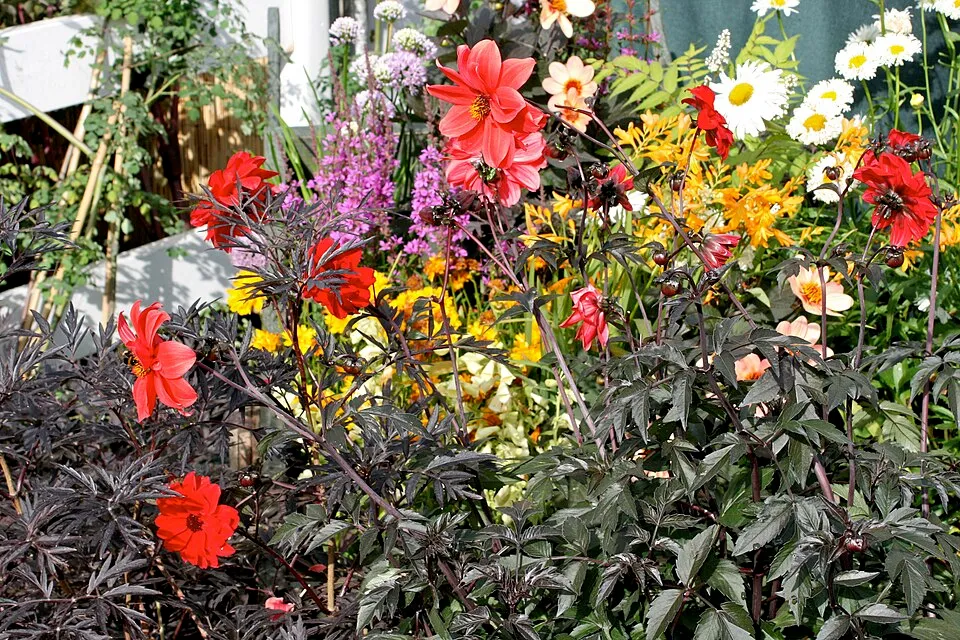
Dahlia 'Bishop of Llandaff' is a distinguished perennial herbaceous plant, a captivating cultivar within the Dahlia genus, primarily recognized for its dramatic ornamental appeal. This hybrid, specifically Dahlia ×hortensis, is believed to be derived from a cross between Dahlia coccinea and Dahlia pinnata, both species native to the high-altitude regions of Mexico and Central America. Morphologically, it stands out with its striking dark bronze to almost black, deeply cut foliage, providing a vivid contrast to its brilliant scarlet-red flowers.
The plant typically reaches a height of 1 to 1.5 meters (3 to 5 feet) with a spread of about 45 cm (18 inches), featuring sturdy, branching stems that support its prolific blooms. Its flowers, which appear from early summer through autumn, are classified as peony-flowered dahlias, characterized by a single to semi-double row of broad outer petals surrounding a visible central disc, making nectar and pollen readily accessible to pollinators like bees and butterflies. First bred by Fred Treseder in Cardiff in 1924 and honored with the Royal Horticultural Society's Award of Garden Merit in 1928, 'Bishop of Llandaff' thrives in full sun and well-drained, fertile soil, making it a popular choice for borders, mixed beds, and as a cut flower.
Trusted Scientific References
1. Authoritative external sources for Dahlia Bishop of Llandaff
1.1 Wikipedia — Dahlia Bishop of Llandaff
1.2 Kew POWO (Plants of the World Online)
1.3 PubMed — peer-reviewed research
1.4 NCBI Taxonomy Browser
1.5 GBIF — Global Biodiversity
1.6Dahlia Bishop should be interpreted through verified botanical identity, practical care, and responsible safety language. This recovery note adds the missing context needed for a complete profile: match light to the plant's habit, use well-drained soil, water according to season, and avoid unsupported medicinal or edible claims. For publishing, the plant can be presented as a source-backed garden plant with clear care guidance, common problem diagnosis, and conservative safety wording.
1.1.Dahlia Bishop — Defining Traits
- ✓Striking dark bronze — purple to almost black foliage, creating a dramatic visual contrast.
- ✓Vibrant, single to semi — double scarlet-red flowers that bloom profusely from summer to autumn.
- ✓Classified as a peony — flowered dahlia, offering an open form that attracts pollinators.
- ✓A prestigious recipient — A prestigious recipient of the Royal Horticultural Society's Award of Garden Merit (1928).
- ✓Tuberous perennial, requiring overwintering in frost — free conditions in colder climates.
- ✓Grows to a substantial height of 1 — 1.5 meters (3-5 feet), making it an excellent statement plant.
- ✓Ideal for use — Ideal for use in garden borders, mixed perennial beds, and as a captivating cut flower.
- ✓An heirloom variety — An heirloom variety with a rich history, bred by Fred Treseder in 1924.
- ✓Relatively low maintenance — Relatively low maintenance once established, thriving in sunny, well-drained locations.
- ✓Its unique color — Its unique color palette makes it a favorite among gardeners and floral designers.
1.2.Dahlia Bishop — Quick Summary
- ✓Dahlia 'Bishop of Llandaff' is a renowned ornamental perennial with dark foliage and fiery red flowers.
- ✓It is a hybrid cultivar, Dahlia ×hortensis, celebrated for its visual contrast and RHS Award of Garden Merit.
- ✓Native to Mexico, the broader Dahlia genus has tubers rich in inulin, traditionally used as food.
- ✓While the genus shows potential for prebiotic, antioxidant, and anti-inflammatory benefits, specific medicinal research on 'Bishop of Llandaff' is limited.
- ✓Requires full sun, well-drained soil, and tubers must be lifted and stored indoors in frost-prone climates.
- ✓Attracts pollinators and is a versatile plant for garden borders and cut flower arrangements.
2.Dahlia Bishop — Taxonomic Classification
3.Dahlia Bishop — Quick Facts
4.Dahlia Bishop — Morphological Account
5.Dahlia Bishop — Habitat & Distribution
6.Dahlia Bishop — Ethnobotanical Uses
7.Dahlia Bishop — Secondary Metabolites
- ✓The phytochemistry of the Dahlia genus, including its cultivars, reveals a diverse array of compounds, though specific concentrations in 'Bishop of Llandaff' are not extensively documented. Research on Dahlia species has identified several key constituent categories:
- ✓Carbohydrates — Primarily inulin, a fructan polysaccharide, which is abundantly present in the tubers and serves as a significant storage carbohydrate. Inulin is known for its prebiotic effects and potential role in blood sugar regulation.
- ✓Flavonoids — A major class of polyphenols, including anthocyanins responsible for the vibrant red color of the flowers and dark pigmentation of the foliage (e.g., cyanidin glycosides), along with flavones and flavonols like quercetin and luteolin. These compounds are potent antioxidants and contribute to anti-inflammatory activity.
- ✓Phenolic Acids — Such as caffeic acid, chlorogenic acid, and ferulic acid, which are widely distributed in plants and possess significant antioxidant and anti-inflammatory properties.
- ✓Terpenoids — Various diterpenes and triterpenes have been isolated from Dahlia species, contributing to diverse biological activities and plant defense mechanisms.
- ✓Alkaloids — While not a primary class, some Dahlia species may contain trace amounts of nitrogenous compounds, the biological significance of which is still under investigation.
- ✓Glycosides — A range of glycosides, including those formed with flavonoids and terpenoids, are present, influencing bioavailability and bioactivity.
- ✓Vitamins — Tubers contain trace amounts of B vitamins and Vitamin C, contributing to their nutritional profile when consumed.
- ✓Minerals — Essential minerals such as potassium, calcium, and magnesium are found in the tubers, supporting various metabolic functions.
8.Dahlia Bishop — Research Insights
- ✓While Dahlia 'Bishop of Llandaff' is predominantly cultivated for its ornamental beauty, the broader Dahlia genus, from which it originates, holds a history of traditional uses and has been the subject of some preliminary scientific inquiry.
- ✓Prebiotic Support — The tubers of many Dahlia species, including the ancestral forms, are rich in inulin, a fructan that acts as a prebiotic, potentially promoting beneficial gut flora and digestive health.
- ✓Blood Sugar Modulation — Due to its high inulin content, Dahlia tubers have been traditionally consumed in some cultures to help regulate blood glucose levels, though specific mechanisms require further study.
- ✓Antioxidant Activity — Extracts from various Dahlia species contain flavonoids and phenolic acids, compounds known for their antioxidant properties, which help combat oxidative stress in the body.
- ✓Anti-inflammatory Potential — Some research on Dahlia extracts suggests the presence of compounds with anti-inflammatory effects, potentially useful in mitigating inflammatory responses.
- ✓Diuretic Properties — Traditionally, certain Dahlia species were used as a mild diuretic, assisting in the elimination of excess fluids from the body.
- ✓Antimicrobial Action — Preliminary studies have indicated that extracts from some Dahlia species may possess antimicrobial properties against certain bacteria and fungi.
- ✓Skin Soothing — In traditional practices, poultices made from Dahlia leaves or flowers have been applied topically to soothe minor skin irritations and promote healing.
- ✓Nutritional Value — The tubers, when cooked, offer a source of dietary fiber and some essential minerals, contributing to overall nutritional intake.
- ✓Immune System Support — The presence of various bioactive compounds, including vitamins and minerals, may indirectly support immune function.
- ✓Digestive Aid — Beyond prebiotic effects, the fiber content in Dahlia tubers can aid in healthy bowel function and alleviate constipation. It is crucial to note that these potential benefits are largely attributed to the Dahlia genus generally and specific research on the medicinal efficacy of Dahlia 'Bishop of Llandaff' is limited, and it is not typically used for medicinal purposes.
8.1.Dahlia Bishop — Reported Uses
9.Dahlia Bishop — Precautions & Warnings
9.1.Dahlia Bishop — Caution Notes
- ✓While Dahlia 'Bishop of Llandaff' is generally considered safe for garden handling, certain potential side effects and considerations exist, particularly for the genus as a whole.
- ✓Skin Irritation — Contact with the sap of Dahlia plants can cause mild skin irritation or dermatitis in sensitive individuals.
- ✓Allergic Reactions — Pollen or plant parts may trigger allergic reactions, such as hay fever symptoms or skin rashes, in susceptible people.
- ✓Digestive Upset — Ingesting large quantities of raw Dahlia tubers, while generally edible, may cause mild digestive discomfort due to high inulin content or other compounds.
- ✓Photosensitivity — Rarely, some members of the Asteraceae family can induce photosensitivity reactions in highly sensitive individuals.
- ✓Pet Toxicity — Dahlia plants are considered mildly toxic to pets, including cats and dogs, if ingested, potentially causing gastrointestinal upset.
- ✓Drug Interactions — Given the presence of various bioactive compounds, potential interactions with medications cannot be entirely ruled out, especially if consumed in concentrated forms.
- ✓Unknown Effects — Due to the limited specific medicinal research on 'Bishop of Llandaff', long-term or high-dose internal consumption effects are largely unknown.
9.2.Dahlia Bishop — Safety Profile
- ✓The safety profile of Dahlia 'Bishop of Llandaff', primarily an ornamental plant, should be considered with caution regarding internal medicinal use, drawing on general knowledge of the Dahlia genus.
- ✓Pregnancy and Lactation — Insufficient scientific data exists regarding the safety of Dahlia consumption during pregnancy or lactation; therefore, advise avoidance.
- ✓Children — Internal use is not recommended for children due to a lack of specific safety studies and its primary ornamental classification.
- ✓Allergies — Individuals with known allergies to plants in the Asteraceae family (e.g., ragweed, chrysanthemums) should exercise caution due to potential cross-reactivity.
- ✓Diabetes — While Dahlia tubers contain inulin, which may affect blood sugar, individuals with diabetes should consult a healthcare professional before considering any internal use to avoid interference with medication.
- ✓Topical Use — For individuals with sensitive skin, performing a patch test is recommended before extensive topical application of any Dahlia plant material.
- ✓Internal Consumption — Given its primary role as an ornamental plant, Dahlia 'Bishop of Llandaff' is not intended for routine internal medicinal consumption.
- ✓Horticultural Handling — Always wear gardening gloves when handling Dahlia plants if you have sensitive skin to prevent potential contact dermatitis.
10.Dahlia Bishop — Application Forms
- ✓While Dahlia 'Bishop of Llandaff' is celebrated for its ornamental value, the broader Dahlia genus has various traditional and horticultural uses.
- ✓Ornamental Display — Its primary use is as a stunning garden plant, ideal for borders, mixed perennial beds, and containers, providing vibrant color and dark foliage contrast.
- ✓Cut Flowers — The striking red flowers with their dark stems are excellent for floral arrangements, offering a dramatic and long-lasting display indoors.
- ✓Traditional Culinary Use (Dahlia Tubers) — In its native Mexico, Dahlia tubers have historically been consumed as a root vegetable, roasted, boiled, or baked, valued for their inulin content.
- ✓Traditional Decoctions (Dahlia species) — Historically, decoctions made from various Dahlia species' tubers or leaves were used in some indigenous cultures for their purported diuretic or blood sugar regulating properties.
- ✓Poultices (Dahlia species) — Crushed leaves or flowers of some Dahlia species were traditionally applied topically as poultices for minor skin ailments or irritations.
- ✓Research Extracts — Scientific research may involve preparing solvent extracts from different parts of Dahlia plants to isolate and study specific bioactive compounds.
- ✓Seed Collection — For breeding purposes or to grow 'Bishops Children' strains that retain dark foliage with varied flower colors, seeds can be collected after flowering. It is important to reiterate that 'Bishop of Llandaff' is not typically used for medicinal purposes, and any traditional uses mentioned refer to the Dahlia genus generally.
11.Dahlia Bishop — Growing Guide
- ✓Cultivating Dahlia 'Bishop of Llandaff' requires specific attention to ensure its vibrant display and healthy growth.
- ✓Site Selection — Choose a location with full sun exposure (at least 6-8 hours daily) and protection from strong winds.
- ✓Soil Requirements — Plant in fertile, well-drained soil rich in organic matter, with a slightly acidic to neutral pH (6.0-7.0).
- ✓Planting — Plant tubers in spring after the last frost, placing them 6-8 inches deep with the 'eye' facing upwards, spaced 1-3 feet apart.
- ✓Watering — Provide consistent moisture, especially during dry spells and the flowering period, but avoid waterlogging.
- ✓Fertilization — Apply a balanced, low-nitrogen fertilizer every 3-4 weeks during the growing season to promote strong growth and abundant blooms.
- ✓Support — Due to its height, staking or other forms of support may be necessary to prevent stems from breaking, particularly when laden with flowers.
- ✓Deadheading — Regularly remove spent flowers (deadhead) to encourage continuous blooming throughout the season and maintain plant vigor.
- ✓Overwintering — In frost-prone regions (USDA Zones 7 and below), tubers must be lifted from the ground after the first frost, cleaned, dried, and stored in a cool, dry, frost-free place until the following spring.
Reviewed by the Flora Medical Global Botanical Review Panel
Multi-disciplinary editorial group · Botany · Ethnobotany · Herbal-medicine literature
Who reviewed this: This page was checked by the Flora Medical Global Botanical Review Panel — an in-house editorial group of botany graduates, ethnobotany researchers, and horticulture practitioners who collectively maintain our 7,000+ plant encyclopedia. Meet the team.
Our 4-step verification process
1. Taxonomic verification
Scientific names and synonyms cross-checked against Kew POWO, World Flora Online, and The Plant List.
2. Phytochemical & medicinal cross-reference
Active compounds, traditional uses, and reported activities are cross-referenced with PubMed, USDA Dr. Duke's database, and peer-reviewed ethnobotanical literature.
3. Conservation & distribution check
Distribution, ecology, and conservation status confirmed against GBIF occurrence records and the IUCN Red List.
4. Editorial & safety review
Every entry passes an editorial pass for clarity, originality, and safety notices (toxicity, contraindications, dosage caveats) before publication.
Last reviewed:
Important medical disclaimer: This content is for educational and research purposes only. It is not medical advice and is not a substitute for consultation with a licensed healthcare provider. Do not use any herb to self-treat a medical condition without professional guidance.
Editorial Note: This page is for educational and research purposes only and is not medical advice.
Written by: Flora Medical Global Editorial Team
Reviewed by: Flora Medical Global Botanical Review Panel
Last Updated: June 15, 2026





Dahlia Bishop — Comments & Community Reviews
Rate this plant