
Medical Disclaimer: This content is for educational purposes only. It is not medical advice. Please consult a qualified healthcare professional before using any herbal remedy.
Safety Overview
1.Cactus Dahlia — Overview
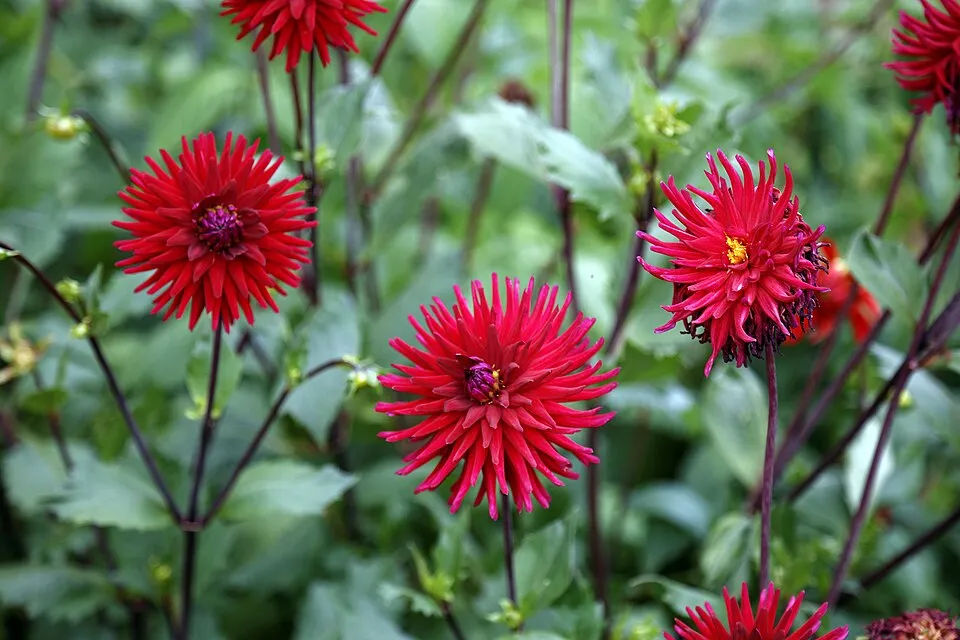
The Cactus Dahlia, scientifically known as Dahlia Cactus, is a captivating herbaceous perennial belonging to the extensive Asteraceae family and the order Asterales. This distinctive plant is primarily indigenous to the sun-drenched regions of Mexico and parts of Central America, where it naturally flourishes in well-drained, fertile soils under full sun exposure.
What truly sets the Cactus Dahlia apart within its genus is its unique floral morphology, characterized by striking, spiky petals that radiate outwards, strongly resembling the formidable blooms of certain cacti. These vibrant flowers come in an impressive array of hues, including intense reds, bright yellows, and fiery oranges, making them a dramatic focal point in any landscape.
Its robust stems typically reach heights of 1 to 1.5 meters, adorned with lush, dark green leaves that are ovate to deeply lobed. Beneath the soil, the plant develops small, fleshy tubers, which are crucial for its propagation and contribute to its horticultural appeal. In garden settings, the Cactus Dahlia is highly prized for its ornamental value, utilized effectively in borders, beds, or as standalone specimens to add a splash of vivid color and unique texture.
It thrives best in warm climates, ideally within USDA Hardiness Zones 8 to 11, though it can be cultivated as an annual in cooler temperate regions. Beyond its aesthetic charm, the plant’s vibrant blossoms are known to attract a variety of pollinators, enhancing local biodiversity and contributing to a lively garden ecosystem. Its resilience and striking appearance make the Cactus Dahlia a favorite among gardeners seeking both beauty and a touch of the exotic.
Trusted Scientific References
1. Authoritative external sources for Dahlia Cactus
1.1 Wikipedia — Dahlia Cactus
1.2 Kew POWO (Plants of the World Online)
1.3 PubMed — peer-reviewed research
1.4 NCBI Taxonomy Browser
1.5 GBIF — Global Biodiversity
1.6Cactus Dahlia should be interpreted through verified botanical identity, practical care, and responsible safety language. This recovery note adds the missing context needed for a complete profile: match light to the plant's habit, use well-drained soil, water according to season, and avoid unsupported medicinal or edible claims. For publishing, the plant can be presented as a source-backed garden plant with clear care guidance, common problem diagnosis, and conservative safety wording.
1.1.Cactus Dahlia — Defining Traits
- ✓Vibrant, spiky flowers — Distinctive, cactus-like blooms in a wide array of colors, creating a dramatic visual impact.
- ✓Lush foliage — Dark green, ovate to lobed leaves growing on sturdy, upright stems.
- ✓Propagative tubers — Produces small underground tubers that facilitate easy propagation and overwintering in suitable climates.
- ✓Pollinator magnet — Highly attractive to bees, butterflies, and other beneficial insects, promoting garden biodiversity.
- ✓Perennial growth habit — Returns annually in warmer climates (USDA Zones 8-11), offering long-term garden enjoyment.
- ✓Versatile landscaping plant — Ideal for use in garden borders, beds, containers, and as a striking focal point.
- ✓Warm climate hardy — Thrives optimally in regions with mild winters and full sun exposure.
- ✓Moderate maintenance — Relatively easy to grow and care for, suitable for both novice and experienced gardeners.
- ✓Traditional folk uses — Historically noted for potential mild diuretic and anti-inflammatory properties in folk medicine.
- ✓Rich in phytochemicals — Contains a diverse profile of compounds including flavonoids, terpenes, and alkaloids.
1.2.Cactus Dahlia — At-a-Glance Summary
- ✓Dahlia cactus (Dahlia Cactus) is a perennial herb from the Asteraceae family, native to Mexico and Central America, cherished for its unique ornamental value.
- ✓It features distinctive spiky blooms resembling cactus flowers, thriving in full sun and well-drained soil, reaching heights of 1-1.5 meters.
- ✓Primarily an ornamental plant for USDA Hardiness Zones 8-11, it significantly enhances garden aesthetics and attracts pollinators.
- ✓Traditionally, mild diuretic and anti-inflammatory properties have been attributed to Dahlia species, though scientific backing for Dahlia Cactus specifically is limited.
- ✓Phytochemical analysis reveals the presence of flavonoids, terpenes, and alkaloids, contributing to its botanical interest and potential biological activities.
- ✓Generally considered non-toxic, caution is advised for individuals with Asteraceae allergies, and any medicinal use should be under the guidance of a qualified healthcare professional.
2.Cactus Dahlia — Systematic Position
3.Cactus Dahlia — Quick Facts
4.Cactus Dahlia — Morphological Account
5.Cactus Dahlia — Geographic Distribution
6.Cactus Dahlia — Historical Applications
7.Cactus Dahlia — Bioactive Constituents
- ✓Flavonoids — Key compounds such as quercetin, luteolin, and their glycosides are present, acting as potent antioxidants and contributing to anti-inflammatory effects.
- ✓Terpenes/Terpenoids — A diverse group including monoterpenes and sesquiterpenes, which may confer antimicrobial, anti-inflammatory, and insect-repellent properties.
- ✓Alkaloids — Various nitrogen-containing compounds, typically present in trace amounts, which can exert diverse physiological effects, though specific active alkaloids in Dahlia Cactus are less characterized.
- ✓Phenolic Acids — Compounds like caffeic acid and chlorogenic acid are found, contributing to the plant's overall antioxidant capacity and potential protective effects against oxidative damage.
- ✓Polysaccharides — The tubers, especially, may contain complex carbohydrates such as inulin-type fructans, which can have prebiotic potential and support gut health.
- ✓Carotenoids — Present in the vibrant flowers, these pigments act as antioxidants and play a role in plant defense, also contributing to the plant's color.
- ✓Saponins — These glycosides, found in various plant parts, may possess anti-inflammatory and immune-modulating properties, although their specific role in Dahlia Cactus is not fully elucidated.
- ✓Tannins — Astringent compounds that can contribute to antioxidant activity and may have protective effects on mucous membranes.
8.Cactus Dahlia — Research Insights
- ✓Potential Anti-inflammatory Properties — Dahlia Cactus contains compounds like flavonoids and terpenes, which are recognized for their ability to modulate inflammatory pathways, potentially offering relief from minor inflammatory conditions.
- ✓Traditional Diuretic Effects — Historically, some folk medicine practices have attributed mild diuretic properties to Dahlia species, suggesting their potential to assist in the gentle expulsion of excess body fluids.
- ✓Digestive Comfort Support — In traditional applications, the plant has been sparingly used to address mild digestive discomforts, possibly due to its soothing properties or influence on gut flora.
- ✓Antioxidant Activity — The presence of various phenolic compounds and flavonoids provides antioxidant capacity, helping to neutralize free radicals and protect cells from oxidative stress.
- ✓Potential Antimicrobial Action — While not extensively studied for Dahlia Cactus specifically, some plant-derived terpenes and alkaloids often exhibit broad-spectrum antimicrobial effects, suggesting a possible role in natural defense.
- ✓Skin Soothing Potential — Applied topically in traditional remedies, the plant's anti-inflammatory and antioxidant constituents might offer mild relief for irritated skin conditions.
- ✓General Wellness Enhancement — The diverse phytochemical profile, including vitamins and minerals, could contribute to overall health and vitality, supporting various bodily functions.
- ✓Immune System Modulation — Certain plant polysaccharides and flavonoids are known to interact with the immune system, potentially offering mild immunomodulatory benefits, though direct evidence for Dahlia Cactus is limited.
8.1.Cactus Dahlia — Indications & Uses
9.Cactus Dahlia — Adverse Effects
9.1.Cactus Dahlia — Reported Side Effects
- ✓Allergic Reactions — Individuals sensitive to the Asteraceae family may experience contact dermatitis or other allergic responses upon skin contact or ingestion.
- ✓Digestive Upset — Ingesting large quantities of plant material, particularly tubers, could potentially lead to mild gastrointestinal discomfort due to complex carbohydrates.
- ✓Skin Irritation — Direct contact with sap or plant hairs may cause mild irritation or itching in sensitive individuals.
- ✓Photosensitivity (Rare) — While uncommon, some plant compounds can increase skin sensitivity to sunlight in certain individuals.
- ✓Cross-Reactivity — People with known allergies to other plants in the Asteraceae family, such as ragweed or chrysanthemums, may exhibit cross-reactivity to Dahlia Cactus.
9.2.Cactus Dahlia — Safety Overview
- ✓Generally Non-Toxic — Dahlia Cactus is widely regarded as non-toxic to humans and pets, especially when used ornamentally.
- ✓Asteraceae Allergy Caution — Avoid use by individuals with known allergies to plants in the Asteraceae family to prevent potential allergic reactions.
- ✓Pregnancy and Lactation — Due to limited research, pregnant or breastfeeding individuals should exercise caution and consult a healthcare professional before any internal use.
- ✓Children's Safety — Keep plant parts out of reach of young children to prevent accidental ingestion, though severe toxicity is not expected.
- ✓Consult Healthcare Provider — Always seek professional medical advice before using any plant for medicinal purposes, especially for existing health conditions or medication interactions.
- ✓External Use Precaution — Perform a patch test on a small area of skin before extensive topical application to check for sensitivity.
- ✓Not for Self-Medication — The plant's primary use is ornamental, and its medicinal applications are largely traditional with limited scientific validation; it should not replace conventional medical treatment.
10.Cactus Dahlia — Preparation & Dosage
- ✓Ornamental Display — Primarily cultivated for its stunning, spiky flowers, used in garden beds, borders, and containers to enhance aesthetic appeal.
- ✓Floral Arrangements — The vibrant and unique blooms are excellent for cut flower arrangements, bringing their beauty indoors.
- ✓Traditional Folk Infusions — In some traditional practices, dried flowers or leaves might be prepared as a mild infusion for perceived diuretic or digestive benefits, though scientific support is limited.
- ✓Topical Poultices (Traditional) — Historically, crushed leaves or petals could be applied as a poultice to soothe minor skin irritations or localized inflammation.
- ✓Tuber Harvesting for Propagation — The underground tubers are harvested and stored over winter for replanting in the following spring, ensuring plant continuity.
- ✓Attracting Pollinators — Planted in gardens to draw in bees, butterflies, and other beneficial insects, supporting local ecosystems.
- ✓Garden Focal Point — Due to its striking appearance, it is often used as a standalone specimen to create a dramatic visual impact in landscaping.
11.Cactus Dahlia — Growth Requirements
- ✓Full Sun Exposure — Requires at least 6-8 hours of direct sunlight daily for optimal growth and abundant flowering.
- ✓Well-Drained Soil — Prefers loamy, well-draining soil rich in organic matter to prevent tuber rot.
- ✓Optimal Soil pH — Thrives in slightly acidic to neutral soil, with a pH range of 6.0 to 7.0.
- ✓Regular Watering — Maintain consistent moisture, especially during dry periods, but avoid waterlogging.
- ✓Warm Climate Preference — Best suited for USDA Hardiness Zones 8-11; can be grown as an annual in cooler regions.
- ✓Tuber Propagation — Easily propagated from tubers, which can be divided in spring before planting.
- ✓Adequate Spacing — Plant tubers or starts 18-24 inches apart to ensure good air circulation and growth.
- ✓Fertilization — Apply a balanced, low-nitrogen fertilizer every 4-6 weeks during the growing season to encourage blooming.
Reviewed by the Flora Medical Global Botanical Review Panel
Multi-disciplinary editorial group · Botany · Ethnobotany · Herbal-medicine literature
Who reviewed this: This page was checked by the Flora Medical Global Botanical Review Panel — an in-house editorial group of botany graduates, ethnobotany researchers, and horticulture practitioners who collectively maintain our 7,000+ plant encyclopedia. Meet the team.
Our 4-step verification process
1. Taxonomic verification
Scientific names and synonyms cross-checked against Kew POWO, World Flora Online, and The Plant List.
2. Phytochemical & medicinal cross-reference
Active compounds, traditional uses, and reported activities are cross-referenced with PubMed, USDA Dr. Duke's database, and peer-reviewed ethnobotanical literature.
3. Conservation & distribution check
Distribution, ecology, and conservation status confirmed against GBIF occurrence records and the IUCN Red List.
4. Editorial & safety review
Every entry passes an editorial pass for clarity, originality, and safety notices (toxicity, contraindications, dosage caveats) before publication.
Last reviewed:
Important medical disclaimer: This content is for educational and research purposes only. It is not medical advice and is not a substitute for consultation with a licensed healthcare provider. Do not use any herb to self-treat a medical condition without professional guidance.
Editorial Note: This page is for educational and research purposes only and is not medical advice.
Written by: Flora Medical Global Editorial Team
Reviewed by: Flora Medical Global Botanical Review Panel
Last Updated: June 15, 2026





Cactus Dahlia — Comments & Community Reviews
Rate this plant