

Medical Disclaimer: This content is for educational purposes only. It is not medical advice. Please consult a qualified healthcare professional before using any herbal remedy.
Safety Overview
1.Dahlia Coccinea — Overview
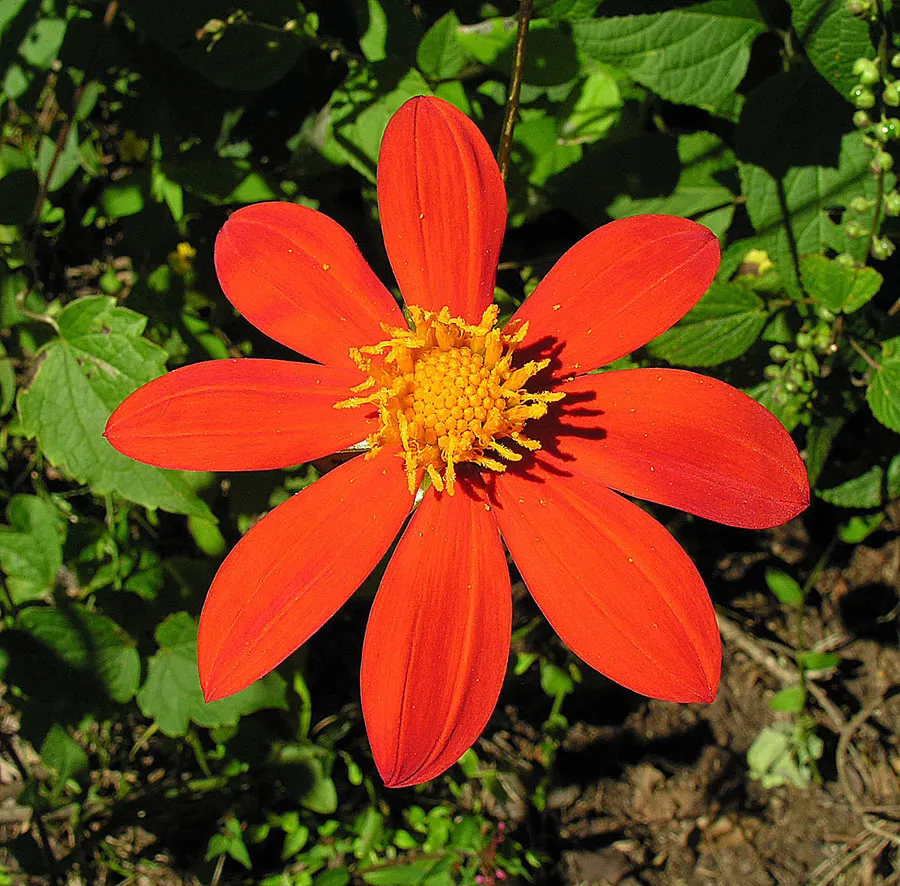
Dahlia coccinea, commonly known as Scarlet Dahlia or Red Dahlia, is a captivating herbaceous perennial native to the high-altitude regions of Mexico and Central America, including El Salvador, Belize, and Guatemala. This robust member of the vast Asteraceae family typically achieves heights ranging from 50 to 150 centimeters, though it can occasionally reach an impressive 300 centimeters, forming an erect, bushy habit. Its stems are generally unbranched to sparsely branched, providing a sturdy framework for its lush foliage. The leaves are ovate, distinctly serrated along their margins, and arranged alternately along the stems, exhibiting a vibrant deep green hue.
Dahlia coccinea is renowned for its striking floral display, featuring composite flower heads in brilliant shades of red, orange, and yellow. Each bloom consists of numerous ray florets surrounding a central disc of smaller, fertile disc florets, making them highly attractive to pollinators such as bees and butterflies. The plant’s root system comprises prominent tuberous roots, historically valued for both culinary and medicinal purposes. Adaptable to its native mountainous habitat, Dahlia coccinea thrives in well-drained, porous, sandy loam soils with a gravelly, often volcanic, subsoil that is typically mildly acidic.
It is found at elevations between 1,100 and 3,000 meters, preferring damp or dry, open, or brushy slopes, often within oak or pine-oak forests, where it tolerates partial to full sun exposure. Its resilience to temperature fluctuations and adaptation to distinct rainy and dry seasons underscore its ecological significance.
Trusted Scientific References
1. Authoritative external sources for Dahlia Coccinea
1.1 Wikipedia — Dahlia Coccinea
1.2 Kew POWO (Plants of the World Online)
1.3 PubMed — peer-reviewed research
1.4 NCBI Taxonomy Browser
1.5 GBIF — Global Biodiversity
1.6Dahlia Coccinea should be interpreted through verified botanical identity, practical care, and responsible safety language. This recovery note adds the missing context needed for a complete profile: match light to the plant's habit, use well-drained soil, water according to season, and avoid unsupported medicinal or edible claims. For publishing, the plant can be presented as a source-backed garden plant with clear care guidance, common problem diagnosis, and conservative safety wording.
1.1.Dahlia Coccinea — Defining Traits
- ✓Tuberous Root System — Provides edible and medicinal storage organs, rich in inulin.
- ✓Vibrant Floral Display — Known for striking red, orange, and yellow composite flowers.
- ✓Asteraceae Family Member — Characteristic daisy-like inflorescence structure.
- ✓Native to Mesoamerica — Indigenous to high-altitude regions of Mexico and Central America.
- ✓Traditional Food Source — Historically consumed in pre-Columbian Mexican cultures.
- ✓Rich in Inulin — A prebiotic fructan polysaccharide, with potential for sugar production.
- ✓Contains Benzoic Acid — Imparts antiseptic, keratolytic, and fungicidal properties.
- ✓Adaptable Perennial Herb — Thrives in well-drained, often volcanic, mildly acidic soils.
- ✓Pollinator Attractor — Its showy flowers are a magnet for various beneficial insects.
- ✓Ethnobotanical Significance — Deeply rooted in the traditional medicine and diet of indigenous communities.
1.2.Dahlia Coccinea — At-a-Glance Summary
- ✓Dahlia coccinea is a perennial herb native to Mexico and Central America, known for its vibrant flowers.
- ✓Its tuberous roots have a rich history of traditional use as both food and medicine.
- ✓Key compounds include benzoic acid (antiseptic, keratolytic) and inulin (prebiotic, sugar source).
- ✓Offers medicinal benefits such as antibiotic, antiatherogenic, diuretic, and expectorant actions.
- ✓Cultivation requires well-drained, mildly acidic soils and specific harvesting times for optimal use.
- ✓Exercise caution with dosage, especially for pregnant individuals or those with allergies to Asteraceae.
2.Dahlia Coccinea — Taxonomic Classification
3.Dahlia Coccinea — Reference Facts
4.Dahlia Coccinea — Plant Morphology
5.Dahlia Coccinea — Where It Grows
6.Dahlia Coccinea — Historical Applications
7.Dahlia Coccinea — Secondary Metabolites
- ✓Benzoic Acid — A significant active compound identified in Dahlia coccinea tubers, known for its potent antiseptic, keratolytic, fungicidal, and diuretic properties. It is rapidly excreted from the body as hippuric acid.
- ✓Eriodictyol — A flavonoid, also found in related species, that contributes to the plant's bitter tonic, expectorant, and astringent activities, and is traditionally associated with respiratory support.
- ✓Inulin — A fructan polysaccharide abundantly present in the tubers, serving as a primary storage carbohydrate. It can be enzymatically converted into fructose, influencing the tubers' sweetness and nutritional value.
- ✓Fructose — A simple fruit sugar derived from the hydrolysis of inulin, providing natural sweetness and an energy source, especially when tubers are harvested in spring.
- ✓Flavonoids — A broad class of polyphenolic compounds, including Eriodictyol, which contribute to antioxidant, anti-inflammatory, and potentially anti-atherogenic effects.
- ✓Phenolic Acids — Beyond benzoic acid, various other phenolic compounds are likely present, contributing to the plant's overall antioxidant capacity and protective effects.
- ✓Essential Oils — The tubers contain an essential oil from which benzoic acid is derived, suggesting a complex mixture of volatile organic compounds that may contribute to its aroma and medicinal properties.
- ✓Glycosides — Various glycosidic compounds may be present, influencing diverse biological activities such as diuretic or tonic effects, typical of many medicinal plants.
8.Dahlia Coccinea — What Research Suggests
- ✓Antibiotic Properties — Tubers contain compounds that exhibit antimicrobial activity, traditionally utilized for fighting various infections.
- ✓Antiatherogenic Effects — Research suggests that constituents in Dahlia coccinea may help in preventing or treating atherosclerosis by inhibiting plaque buildup.
- ✓Central Nervous System Depressant — Traditionally employed for its calming effects, potentially aiding in states of agitation or sleeplessness.
- ✓General Tonic — Used to invigorate the body and enhance overall vitality, particularly in traditional Mexican medicine.
- ✓Diuretic Action — Promotes increased urine output, assisting the body in expelling excess fluids and supporting kidney function.
- ✓Diaphoretic Agent — Induces sweating, a traditional method for reducing fever and promoting detoxification.
- ✓Antiflatulent Properties — Helps to alleviate symptoms of colics and flatulence by reducing excessive gas in the digestive tract.
- ✓Expectorant Aid — Facilitates the expulsion of mucus from the respiratory passages, beneficial in coughs and congestive conditions, attributed to benzoic acid.
- ✓Keratolytic Fungicide/Bactericide — Benzoic acid, present in the tubers, acts topically to exfoliate skin layers and combat fungal and bacterial skin infections like athlete's foot.
- ✓Antiseptic Mouthwash — Diluted preparations of the tubers or derived benzoic acid can serve as an antiseptic rinse for oral hygiene, due to germicidal action.
- ✓Astringent Effects — Eriodictyol, a compound found in Dahlia, can tighten tissues, useful in various topical and internal applications.
- ✓Bitter Tonic — Eriodictyol also functions as a bitter tonic, stimulating digestive secretions and improving appetite.
8.1.Dahlia Coccinea — Conditions Traditionally Used For
9.Dahlia Coccinea — Adverse Effects
9.1.Dahlia Coccinea — Possible Adverse Reactions
- ✓Allergic Reactions — Individuals sensitive to the Asteraceae family may experience contact dermatitis or other allergic responses upon exposure.
- ✓Gastrointestinal Upset — Consumption of large quantities or improperly prepared tubers, particularly those harvested at the wrong time, may lead to digestive discomfort.
- ✓Bitter Taste — Tubers harvested late in the growing season or at the beginning of the dry season may develop a potent, unpleasant bitter taste.
- ✓Diuretic Effect — Excessive internal use may lead to increased urination and potential electrolyte imbalance.
- ✓Skin Irritation — Topical applications containing benzoic acid may cause irritation, redness, or desquamation on sensitive skin if too concentrated.
- ✓Drug Interactions — Potential for interaction with diuretic medications or drugs affecting uric acid levels due to benzoic acid's metabolic pathway.
- ✓Hypotension — As a CNS depressant, excessive use might theoretically contribute to lower blood pressure in sensitive individuals.
9.2.Dahlia Coccinea — Toxicity Assessment
- ✓General Safety — Dahlia coccinea tubers are generally considered safe for consumption as food when harvested and prepared appropriately.
- ✓Pregnancy and Lactation — Insufficient scientific data exists regarding its safety during pregnancy and breastfeeding; therefore, use is not recommended without expert medical advice.
- ✓Pediatric Use — Not recommended for infants or young children without consulting a qualified healthcare professional due to limited safety data.
- ✓Asteraceae Allergy — Individuals with known allergies to plants in the Asteraceae family (e.g., ragweed, chamomile) should exercise caution due to potential cross-reactivity.
- ✓Topical Application — A patch test on a small skin area is advisable before widespread topical use to check for potential skin sensitivity or irritation.
- ✓Medical Conditions — Patients with pre-existing medical conditions, particularly kidney issues or those on diuretic medications, should consult a healthcare provider before use.
- ✓Dosage Adherence — Strict adherence to recommended dosages is crucial, as excessive intake may lead to adverse effects or interactions.
10.Dahlia Coccinea — Application Forms
- ✓Culinary Preparation of Tubers — Tubers can be eaten raw when harvested in spring for a sweet, juicy taste, or baked/cooked after the dry season when they are rich in inulin.
- ✓Medicinal Decoction — Prepare a decoction by simmering sliced tubers in water; traditionally used as a tonic, diuretic, or diaphoretic.
- ✓Topical Ointments — Extracts containing benzoic acid can be incorporated into ointments for external application to treat fungal or bacterial skin infections like athlete's foot.
- ✓Antiseptic Mouthwash — A diluted infusion or decoction of the tubers can be used as an antiseptic rinse for oral hygiene, leveraging its germicidal properties.
- ✓Expectorant Syrup — Formulate a syrup from tuber extracts to aid in clearing respiratory passages and alleviating coughs.
- ✓Antiflatulent Remedy — Consume prepared tubers or their extracts to help relieve digestive discomforts such as colics and flatulence.
- ✓Timing of Harvest for Specific Uses — Harvest tubers in spring for raw consumption, mid-to-late summer for enhanced medicinal properties, and after wilting in the dry season for storable, inulin-rich food.
- ✓Dosage Guidance — Always adhere to traditional dosages or consult a qualified herbalist for appropriate amounts, especially for internal medicinal applications.
11.Dahlia Coccinea — Growth Requirements
- ✓Site Selection — Choose a location with full sun to partial shade, ideally mimicking its native high-altitude habitat.
- ✓Soil Preparation — Requires well-drained, porous, sandy loam soil with a gravelly subsoil, ideally mildly acidic (pH 6.0-6.8).
- ✓Climate Conditions — Best suited for moderate to higher elevations where temperatures fluctuate but severe frosts are absent; benefits from hot, dry winters and rainy summers.
- ✓Watering Regime — Needs consistent moisture during the growing season, especially during summer rains, but excellent drainage is crucial to prevent tuber rot.
- ✓Propagation — Primarily propagated by seed, which typically germinates within 1 to 3 weeks at approximately 20°C (68°F).
- ✓Tuber Harvesting — For sweet, edible tubers, harvest in spring after inulin converts to fruit sugar. For medicinal use, gather later in summer. For baking/storage, harvest after the dry season begins when upper parts wilt and tubers are full of inulin.
- ✓Fertilization — Benefits from organic matter enrichment, but avoid excessive nitrogen which can promote foliage over flowers and tubers.
- ✓Pest and Disease Management — Monitor for common dahlia pests like slugs, snails, and aphids, and diseases such as powdery mildew, ensuring good air circulation.
Reviewed by the Flora Medical Global Botanical Review Panel
Multi-disciplinary editorial group · Botany · Ethnobotany · Herbal-medicine literature
Who reviewed this: This page was checked by the Flora Medical Global Botanical Review Panel — an in-house editorial group of botany graduates, ethnobotany researchers, and horticulture practitioners who collectively maintain our 7,000+ plant encyclopedia. Meet the team.
Our 4-step verification process
1. Taxonomic verification
Scientific names and synonyms cross-checked against Kew POWO, World Flora Online, and The Plant List.
2. Phytochemical & medicinal cross-reference
Active compounds, traditional uses, and reported activities are cross-referenced with PubMed, USDA Dr. Duke's database, and peer-reviewed ethnobotanical literature.
3. Conservation & distribution check
Distribution, ecology, and conservation status confirmed against GBIF occurrence records and the IUCN Red List.
4. Editorial & safety review
Every entry passes an editorial pass for clarity, originality, and safety notices (toxicity, contraindications, dosage caveats) before publication.
Last reviewed:
Important medical disclaimer: This content is for educational and research purposes only. It is not medical advice and is not a substitute for consultation with a licensed healthcare provider. Do not use any herb to self-treat a medical condition without professional guidance.
Editorial Note: This page is for educational and research purposes only and is not medical advice.
Written by: Flora Medical Global Editorial Team
Reviewed by: Flora Medical Global Botanical Review Panel
Last Updated: June 15, 2026





Dahlia Coccinea — Comments & Community Reviews
Rate this plant