
Medical Disclaimer: This content is for educational purposes only. It is not medical advice. Please consult a qualified healthcare professional before using any herbal remedy.
Safety Overview
1.Daphne Odora — Essential Profile
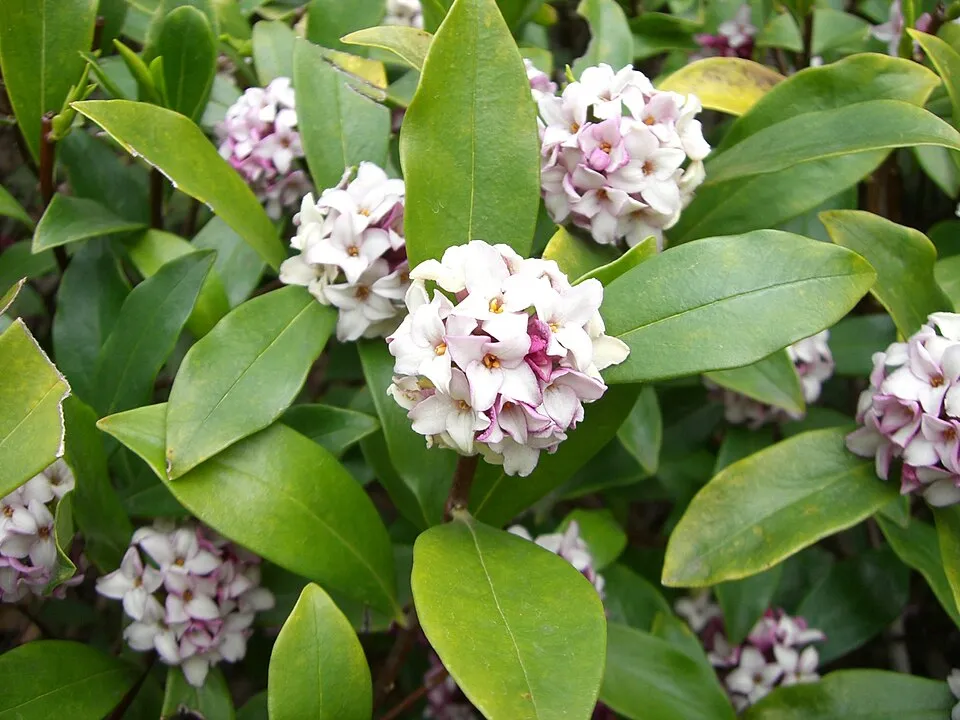
Daphne odora, commonly known as Winter Daphne or Fragrant Daphne, is an exquisite evergreen shrub belonging to the Thymelaeaceae family, celebrated for its profoundly aromatic flowers and its remarkable ability to bloom from late winter into early spring. This compact, densely branched shrub typically attains a modest height and spread of 1 to 1.5 meters (3 to 5 feet), forming an elegant, rounded silhouette. Its foliage is characterized by glossy, dark green leaves that are leathery to the touch, simple, entire-margined, and alternately arranged along the stems.
Each leaf can extend up to 10 cm (4 inches) in length, providing a lush, attractive backdrop throughout the year. The stems are generally smooth, exhibiting a reddish-brown bark that develops slight fissures with age, revealing the tough, fibrous texture distinctive of the Thymelaeaceae family. The root system is shallow and fibrous, ideally suited for well-drained soil conditions.
The true spectacle of Daphne odora is its profusion of flowers, which emerge in dense, terminal clusters during the colder months, often before the last snows have melted, signaling the imminent arrival of warmer seasons. These small, tubular blossoms typically display a captivating color gradient, ranging from pale pink or rose-purple on the exterior to creamy white on the interior. Each flower features four spreading lobes and a waxy texture, contributing to their delicate appearance.
However, their most renowned attribute is their powerful, sweet, and intoxicating fragrance, which can permeate a significant area of the garden, effectively attracting early pollinators such as bees. Native to the temperate regions of East Asia, including China, Japan, and Korea, Daphne odora thrives naturally in the understories of forests, on rocky slopes, and in open woodlands. It prefers shaded to partially shaded locations, mimicking its natural habitat where it is shielded from intense sun.
The plant adapts well to a range of well-drained soils, ideally those that are slightly acidic to neutral (pH 6.0-7.0). Its extraordinary capacity to flower when most other plants are dormant bestows immense ornamental value.
Trusted Scientific References
1. Authoritative external sources for Daphne odora
1.1 Wikipedia — Daphne odora
1.2 Kew POWO (Plants of the World Online)
1.3 PubMed — peer-reviewed research
1.4 NCBI Taxonomy Browser
1.5 GBIF — Global Biodiversity
1.1.Daphne Odora — Notable Characteristics
- ✓Botanical Name — Daphne odora.
- ✓Common Names — Winter Daphne, Fragrant Daphne, Paradise Plant, Spurge Flax.
- ✓Family — Thymelaeaceae.
- ✓Striking Fragrance — Emits an intense, sweet, and intoxicating scent, especially in late winter to early spring.
- ✓Evergreen Foliage — Maintains glossy, dark green, leathery leaves throughout the year.
- ✓Early Bloomer — Produces flowers when most other plants are dormant, acting as a harbinger of spring.
- ✓Compact Shrub — Typically grows to a modest height and spread of 1 to 1.5 meters.
- ✓Native Region — Indigenous to temperate East Asia, including China, Japan, and Korea.
- ✓High Toxicity — All plant parts, especially berries, are highly poisonous if ingested.
- ✓Ornamental Value — Highly prized in horticulture for its aesthetic beauty and powerful aroma.
1.2.Daphne Odora — At-a-Glance Summary
- ✓Fragrant evergreen shrub, renowned for its captivating late winter to early spring blooms.
- ✓Native to East Asia, thriving best in partial shade with well-drained soil.
- ✓All plant parts are highly toxic, particularly the berries, if ingested.
- ✓Contains potent daphnane-type diterpenoids (e.g., mezerein) and coumarins (e.g., daphnetin).
- ✓Primarily valued as an ornamental garden plant for its intense fragrance.
- ✓Traditional medicinal uses are external and require extreme caution due to toxicity.
2.Daphne Odora — Scientific Identity
3.Daphne Odora — Key Data
4.Daphne Odora — Botanical Features
5.Daphne Odora — Ecological Habitat
6.Daphne Odora — Traditional Uses
7.Daphne Odora — Chemical Profile
- ✓Coumarins — Daphnetin and umbelliferone are prominent, known for their anti-inflammatory, antioxidant, and potential anticoagulant activities, though their presence in the whole plant contributes to toxicity.
- ✓Diterpenoids — Mezerein and various daphnane-type diterpenes are highly toxic compounds responsible for the plant's irritant and cytotoxic properties, actively studied for potential antitumor effects in controlled research.
- ✓Flavonoids — A diverse group of polyphenolic compounds, contributing to antioxidant and anti-inflammatory effects, though their concentration might be low compared to more potent toxins.
- ✓Lignans — These compounds possess antioxidant, anti-inflammatory, and antineoplastic properties, found in various plant parts.
- ✓Tannins — Astringent compounds present in the bark and leaves, traditionally associated with wound healing and anti-diarrheal properties, though direct use of Daphne odora is unsafe.
- ✓Saponins — Natural detergents that can cause irritation and cellular disruption, contributing to the plant's toxic profile.
- ✓Volatile Oils — Responsible for the intense, sweet fragrance of the flowers, composed of various terpenes and esters.
- ✓Glycosides — Various types of glycosides are present, with some contributing to the plant's overall toxicity or specific biological activities upon hydrolysis.
- ✓Resins — Sticky plant exudates that play a role in plant defense mechanisms, often containing biologically active compounds.
8.Daphne Odora — Pharmacological Findings
- ✓Cautionary Note — Due to its extreme toxicity, direct internal consumption of Daphne odora is highly dangerous and not recommended; medicinal applications are primarily external or involve highly processed isolated compounds under strict supervision.
- ✓Anti-inflammatory Potential — Research on isolated coumarins like daphnetin, found in Daphne species, indicates potential anti-inflammatory effects by modulating inflammatory pathways.
- ✓Analgesic Properties (Traditional External) — In some traditional folk practices, crushed bark or leaves were cautiously applied topically as a poultice for localized pain relief, though with significant risk of skin irritation.
- ✓Antimicrobial Activity (In Vitro) — Extracts from various Daphne species have demonstrated inhibitory effects against certain bacteria and fungi in laboratory settings, suggesting potential for compound isolation.
- ✓Antifungal Activity (In Vitro) — Specific compounds within Daphne odora may exhibit antifungal properties, which is an area of ongoing scientific investigation.
- ✓Traditional External Use for Skin Ailments — Historically, highly diluted preparations or poultices were sometimes used for specific skin conditions, but always with expert supervision due to irritant properties.
- ✓Potential in Oncology Research — Daphnane-type diterpenoids, such as mezerein, are potent cytotoxic agents actively studied in cancer research for their antiproliferative effects, though they are highly toxic in their natural form.
- ✓Diuretic Support (Traditional, highly toxic plant parts) — Some related Daphne species were traditionally used as powerful diuretics to address fluid retention, but Daphne odora itself is too toxic for such internal use.
- ✓Purgative Action (Traditional, highly toxic plant parts) — Historically, certain Daphne species were employed as strong purgatives for severe constipation, a use not applicable to Daphne odora due to its extreme toxicity.
- ✓Wound Healing (External, Traditional) — Topical application of highly diluted preparations was sometimes used in traditional medicine to support wound healing, requiring extreme caution due to irritancy.
8.1.Daphne Odora — Therapeutic Indications
9.Daphne Odora — Safety Considerations
9.1.Daphne Odora — Possible Adverse Reactions
- ✓Severe Gastrointestinal Distress — Ingestion causes intense nausea, vomiting, abdominal pain, and severe diarrhea due to irritant compounds.
- ✓Oral and Pharyngeal Irritation — A burning sensation, swelling, and blistering of the mouth, throat, and tongue are immediate effects of contact or ingestion.
- ✓Contact Dermatitis — Direct skin contact with sap or plant parts can lead to severe skin irritation, redness, blistering, and allergic reactions.
- ✓Cardiac Toxicity — In severe poisoning cases, cardiac rhythm disturbances such as irregular heartbeat, bradycardia, or tachycardia can occur.
- ✓Central Nervous System Effects — Symptoms can include dizziness, confusion, weakness, convulsions, and potentially coma with significant exposure.
- ✓Kidney Damage — Acute renal failure or damage to kidney function can result from systemic absorption of toxins.
- ✓Fatalities — Ingestion of even small quantities, particularly the berries, can be lethal, especially for children and pets.
9.2.Daphne Odora — Toxicity Assessment
- ✓Highly Toxic Plant — All parts of Daphne odora, especially the berries and bark, are extremely poisonous if ingested.
- ✓Avoid Internal Use — Absolutely no part of the Daphne odora plant should ever be consumed internally by humans or animals.
- ✓Handle with Extreme Care — Always wear protective gloves when handling the plant to prevent skin irritation, blisters, and contact dermatitis.
- ✓Keep Away from Children and Pets — Ensure the plant is inaccessible to prevent accidental ingestion, which can be fatal.
- ✓First Aid for Exposure — In case of any ingestion or severe skin contact, seek immediate emergency medical attention or contact a poison control center without delay.
- ✓Pregnant and Nursing Women — Should strictly avoid any direct contact or proximity to the plant due to potential systemic absorption and risks.
- ✓No Therapeutic Index for Whole Plant — The entire plant lacks an established safe therapeutic dose for internal human use, making self-medication highly dangerous.
10.Daphne Odora — Usage Guide
- ✓Critical Safety Warning — Due to the extreme toxicity of all parts of Daphne odora, internal consumption is strictly prohibited and can be fatal. All traditional uses involve high risk and expert knowledge.
- ✓Topical Poultices (Traditional, Highly Cautioned) — Historically, crushed leaves or bark were very cautiously applied externally as a poultice for localized pain or skin conditions, but this method carries a high risk of severe irritation and contact dermatitis.
- ✓Liniments/Oils (Traditional External, Diluted) — Infused oils or liniments derived from Daphne species were sometimes used topically for muscle aches or rheumatic pain, strictly avoiding application to broken skin.
- ✓Research Extraction — Plant parts are utilized in controlled laboratory settings to extract and study specific compounds like daphnetin or mezerein for pharmacological research, not for direct human use.
- ✓Homeopathic Preparations — Highly diluted homeopathic remedies derived from Daphne species are available for specific indications, prepared under strict pharmaceutical guidelines, bearing no whole-plant toxicity.
- ✓Garden Ornamental — The primary and safest use of Daphne odora is as an ornamental plant in gardens, prized for its early blooms and intense fragrance.
- ✓Pest Deterrent (Traditional) — In some traditional practices, the plant's strong scent and toxicity were exploited to deter pests, sometimes through controlled burning, though inhalation of smoke is hazardous.
11.Daphne Odora — Cultivation & Care
- ✓Climate Zone — Thrives in USDA Hardiness Zones 7-9, requiring protection in colder climates.
- ✓Light Requirements — Prefers partial shade to full shade, especially in regions with hot summers, as direct sun can scorch leaves.
- ✓Soil Preference — Requires moist, very well-drained, organically rich soil, ideally with a slightly acidic to neutral pH (6.0-7.0).
- ✓Watering — Needs consistent moisture but is highly sensitive to waterlogging; allow the topsoil to dry slightly between waterings.
- ✓Pruning — Prune lightly immediately after flowering to maintain shape and remove any dead or damaged branches; avoid heavy pruning as it can stress the plant.
- ✓Propagation — Best propagated from semi-hardwood stem cuttings taken in late summer or by layering.
- ✓Pests and Diseases — Generally resistant to major pests and diseases, but susceptible to root rot in poorly drained or overly wet conditions.
- ✓Special Considerations — Extremely sensitive to root disturbance once established, so plant when young and avoid transplanting.
Reviewed by the Flora Medical Global Botanical Review Panel
Multi-disciplinary editorial group · Botany · Ethnobotany · Herbal-medicine literature
Who reviewed this: This page was checked by the Flora Medical Global Botanical Review Panel — an in-house editorial group of botany graduates, ethnobotany researchers, and horticulture practitioners who collectively maintain our 7,000+ plant encyclopedia. Meet the team.
Our 4-step verification process
1. Taxonomic verification
Scientific names and synonyms cross-checked against Kew POWO, World Flora Online, and The Plant List.
2. Phytochemical & medicinal cross-reference
Active compounds, traditional uses, and reported activities are cross-referenced with PubMed, USDA Dr. Duke's database, and peer-reviewed ethnobotanical literature.
3. Conservation & distribution check
Distribution, ecology, and conservation status confirmed against GBIF occurrence records and the IUCN Red List.
4. Editorial & safety review
Every entry passes an editorial pass for clarity, originality, and safety notices (toxicity, contraindications, dosage caveats) before publication.
Last reviewed:
Important medical disclaimer: This content is for educational and research purposes only. It is not medical advice and is not a substitute for consultation with a licensed healthcare provider. Do not use any herb to self-treat a medical condition without professional guidance.
Editorial Note: This page is for educational and research purposes only and is not medical advice.
Written by: Flora Medical Global Editorial Team
Reviewed by: Flora Medical Global Botanical Review Panel
Last Updated: June 15, 2026





Daphne Odora — Comments & Community Reviews
Rate this plant