

Medical Disclaimer: This content is for educational purposes only. It is not medical advice. Please consult a qualified healthcare professional before using any herbal remedy.
Safety Overview
1.Darlingtonia — Overview
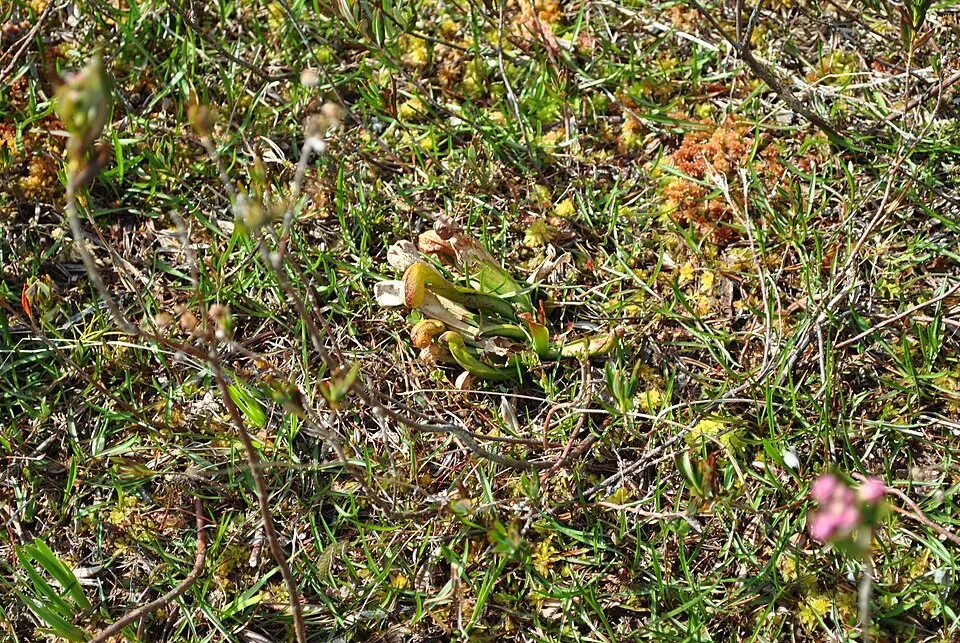
Darlingtonia californica, widely known as the California pitcher plant or Cobra Lily, is a highly specialized and enigmatic perennial herbaceous plant belonging to the carnivorous Sarraceniaceae family. This distinctive species typically reaches a height of 1 to 3 feet (30 to 90 cm), with some mature specimens extending up to 4 feet (120 cm) in ideal conditions. Its most striking features are its elongated, tubular leaves, which are intricately modified into pitcher-like traps, ranging from 12 to 36 inches (30 to 90 cm) in length. These pitchers are crowned by a unique, inflated, and translucent hood-like structure, the operculum, which strikingly resembles a cobra's head, giving the plant its common name. A small, forked appendage, often called a 'fish tail' or 'fang,' protrudes from beneath the operculum, enhancing its allure to insects.
The coloration of the Cobra Lily's leaves is vibrant, transitioning from emerald green to deep purplish-red, with the intensity heightening under strong light, particularly on the hood and 'fangs.' This aesthetic appeal makes it a captivating species. The interior of the pitcher's entrance and the underside of the operculum are lined with nectar glands, secreting sweet substances that serve as irresistible lures. Below these enticing zones, the internal surface of the pitcher becomes exceedingly slick and waxy, making it impossible for insects to gain purchase. Further down, a dense array of downward-pointing hairs ensures that once an insect enters, its escape is virtually impossible. The base of the pitcher contains a pool of digestive fluids, rich in enzymes and symbiotic bacteria, which efficiently break down captured prey, allowing the plant to absorb essential nutrients typically scarce in its native boggy, often serpentine, soils of Northern California and Western Oregon.
Flowering occurs from late spring to early summer, with solitary, nodding flowers emerging on tall, sturdy peduncles that can reach up to 24 inches (60 cm). Each unusual flower consists of five yellow to greenish-purple petals, often with a unique twisted appearance, designed to protect pollen from rain. Darlingtonia californica is restricted to moist, sunny bogs and stream banks, often in serpentine soils, which naturally limits its habitat range and contributes to its conservation status as a species of limited distribution, threatened by habitat loss and over-collection. Trusted Scientific References Authoritative external sources for Darlingt ...[CURRENT TEXT EXISTS: 2674 chars]
1.1.Darlingtonia — Key Features
- ✓Unique Cobra — shaped Pitchers
- ✓Translucent Hood (Operculum) — Translucent Hood (Operculum)
- ✓Forked 'Fish Tail' — Forked 'Fish Tail' Appendage
- ✓Highly Specialized Carnivorous — Highly Specialized Carnivorous Traps
- ✓Perennial Herbaceous Plant — Perennial Herbaceous Plant
- ✓Endemic to Northern — Endemic to Northern California and Western Oregon
- ✓Adapted to Acidic — Adapted to Acidic Bog and Serpentine Habitats
- ✓Striking Green — to-Purplish Red Coloration
- ✓Complex Internal Digestive — Complex Internal Digestive System
- ✓Solitary, Nodding, Twisted — Solitary, Nodding, Twisted Flowers
1.2.Darlingtonia — Quick Summary
- ✓Carnivorous Cobra Lily — A unique pitcher plant known for its cobra-head shaped traps.
- ✓Native to Pacific Northwest — Thrives in the bogs and stream banks of Northern California and Western Oregon.
- ✓Specialized Insect Trapping — Lures insects with nectar and traps them with slippery surfaces and downward-pointing hairs.
- ✓No Traditional Medicinal Use — Primarily valued for its botanical uniqueness and ornamental appeal.
- ✓Challenging Cultivation — Requires specific conditions like cool roots, pure water, and high humidity.
- ✓Conservation Concern — Wild populations are threatened by habitat loss and illegal collection.
2.Darlingtonia — Taxonomic Classification
3.Darlingtonia — Reference Facts
4.Darlingtonia — Morphological Account
5.Darlingtonia — Where It Grows
6.Darlingtonia — Ethnobotanical Uses
7.Darlingtonia — Bioactive Constituents
- ✓Digestive Enzymes — Includes proteases, chitinases, and lipases, crucial for breaking down insect proteins, chitin, and fats within the pitcher fluid.
- ✓Nectar Sugars — Primarily composed of glucose, fructose, and sucrose, secreted by glands on the operculum and pitcher rim to attract insect prey.
- ✓Waxy Esters — Form a superhydrophobic, slippery coating on the inner pitcher walls, preventing insects from climbing out.
- ✓Anthocyanins — Pigments responsible for the vibrant red and purple coloration, especially on the hood and 'fangs,' intensifying under strong light.
- ✓Organic Acids — Contribute to the acidic pH of the pitcher fluid, aiding in the digestive process and inhibiting microbial growth.
- ✓Volatile Organic Compounds (VOCs) — Hypothesized to be present in trace amounts, potentially contributing to insect attraction through scent.
- ✓Flavonoids — General plant secondary metabolites, likely present for UV protection and defense, common in many plant species.
- ✓Polysaccharides — Mucilaginous compounds found in the pitcher fluid, possibly contributing to its viscosity and trapping efficiency.
- ✓Alkaloids — While not specifically identified as major constituents, many plants produce alkaloids for defense; their presence in Darlingtonia warrants further investigation.
- ✓Terpenoids — Another broad class of plant secondary metabolites, potentially contributing to defense or attraction, awaiting specific research in this species.
8.Darlingtonia — What Research Suggests
- ✓No Documented Traditional Medicinal Use — Darlingtonia californica is not known to have any traditional human medicinal applications in documented herbal systems globally.
- ✓Ecological Role in Nutrient Cycling — As a carnivorous plant, it plays a vital role in its native bog ecosystems by capturing insects and returning nutrients to the otherwise nutrient-poor soil.
- ✓Source of Digestive Enzymes — The plant produces a unique array of proteases, chitinases, and other enzymes for insect digestion, which could be of interest for biochemical research.
- ✓Potential for Biomimicry Research — Its intricate trapping mechanism, including slippery surfaces and translucent windows, offers inspiration for novel material science and engineering applications.
- ✓Indicator Species for Wetland Health — The presence of healthy Darlingtonia populations can indicate a pristine and specific wetland ecosystem, making it valuable for ecological monitoring.
- ✓Horticultural and Aesthetic Value — Widely admired for its unique morphology and striking appearance, it is a prized specimen in specialized carnivorous plant collections and bog gardens.
- ✓Subject for Evolutionary Studies — Its highly specialized carnivorous adaptations provide an excellent model for studying plant evolution and ecological niche specialization.
- ✓Educational Tool — Serves as an effective teaching aid in botany and ecology to illustrate the concepts of carnivory, adaptation, and ecosystem dynamics.
- ✓Potential Novel Compound Discovery — While not traditionally medicinal, its unique ecological niche could lead to the discovery of novel secondary metabolites with as-yet-undiscovered properties in future phytochemistry research.
8.1.Darlingtonia — Therapeutic Indications
9.Darlingtonia — Risk Profile
9.1.Darlingtonia — Caution Notes
- ✓No Internal Toxicity — Darlingtonia californica is not intended for human consumption and has no known internal toxic effects.
- ✓Skin Irritation — Minor skin irritation or allergic reactions could theoretically occur from contact with sap or plant hairs for highly sensitive individuals.
- ✓Physical Punctures — The sharp 'fangs' or leaf edges could cause minor skin punctures if handled carelessly.
- ✓Ecological Disruption — Introducing the plant to non-native environments could potentially disrupt local ecosystems, though its specific requirements make this unlikely.
- ✓Habitat Degradation — Unscrupulous collection from wild populations poses a significant threat to its natural habitat and species survival.
- ✓Misidentification Risk — While distinct, novices could potentially confuse it with other Sarraceniaceae species, leading to improper care.
9.2.Darlingtonia — Toxicity Assessment
- ✓Not for Human Consumption — Darlingtonia californica has no documented history of safe human internal or external medicinal use.
- ✓Handle with Care — Wear gloves if sensitive skin, to avoid potential minor irritation or physical scrapes from plant structures.
- ✓Conservation Priority — Wild populations are protected; avoid collecting plants from their natural habitats to support conservation efforts.
- ✓Keep Away from Pets and Children — While not acutely toxic, ingestion is not recommended and could lead to mild digestive upset.
- ✓Environmental Responsibility — Cultivate responsibly to prevent accidental escape into non-native ecosystems, though its specific needs make this difficult.
- ✓Consult Specialists — Seek advice from botanical or horticultural experts for proper care and handling, especially for cultivation.
10.Darlingtonia — Preparation & Dosage
- ✓Ornamental Cultivation — Primarily grown as a captivating specimen plant in specialized bog gardens, terrariums, or indoor carnivorous plant collections.
- ✓Educational Displays — Utilized in botanical gardens, conservatories, and schools to illustrate the fascinating adaptations of carnivorous plants.
- ✓Habitat Conservation — Employed in native plant restoration projects within its specific geographical range to help re-establish wild populations.
- ✓Scientific Research — Serves as a subject for botanical studies investigating plant carnivory, ecological interactions, and unique physiological adaptations.
- ✓Aesthetic Landscaping — Can be incorporated into specialized wetland or bog landscaping designs in suitable climates for its unique visual appeal.
- ✓Bioremediation Potential — Its tolerance for serpentine soils and heavy metals suggests potential for research in phytoremediation, though not a direct 'usage method.'
11.Darlingtonia — Growth Requirements
- ✓Substrate Requirements — Use a highly acidic, nutrient-poor mix, typically consisting of sphagnum peat moss and perlite or horticultural sand (1:1 ratio).
- ✓Water Quality — Employ only distilled water, rainwater, or reverse osmosis water; tap water minerals and chlorine are detrimental.
- ✓Consistent Moisture — Keep the substrate constantly moist, ideally sitting in a tray of water during growing season, but ensure good drainage.
- ✓Root Temperature Control — Crucial to keep roots cool, even during hot summers; consider using deep pots, evaporative cooling, or placing ice on the soil surface.
- ✓Light Exposure — Provide full sun to partial shade; strong, direct sunlight is preferred for robust growth and intense coloration.
- ✓Humidity Levels — Maintain high ambient humidity, especially beneficial for juvenile plants and in drier climates.
- ✓Feeding Regime — Do not fertilize; the plant derives all necessary nutrients from captured insects or can survive without them in cultivation.
- ✓Repotting Frequency — Repot only when plants outgrow their container, typically every 2-3 years, disturbing roots as little as possible.
Reviewed by the Flora Medical Global Botanical Review Panel
Multi-disciplinary editorial group · Botany · Ethnobotany · Herbal-medicine literature
Who reviewed this: This page was checked by the Flora Medical Global Botanical Review Panel — an in-house editorial group of botany graduates, ethnobotany researchers, and horticulture practitioners who collectively maintain our 7,000+ plant encyclopedia. Meet the team.
Our 4-step verification process
1. Taxonomic verification
Scientific names and synonyms cross-checked against Kew POWO, World Flora Online, and The Plant List.
2. Phytochemical & medicinal cross-reference
Active compounds, traditional uses, and reported activities are cross-referenced with PubMed, USDA Dr. Duke's database, and peer-reviewed ethnobotanical literature.
3. Conservation & distribution check
Distribution, ecology, and conservation status confirmed against GBIF occurrence records and the IUCN Red List.
4. Editorial & safety review
Every entry passes an editorial pass for clarity, originality, and safety notices (toxicity, contraindications, dosage caveats) before publication.
Last reviewed:
Important medical disclaimer: This content is for educational and research purposes only. It is not medical advice and is not a substitute for consultation with a licensed healthcare provider. Do not use any herb to self-treat a medical condition without professional guidance.
Editorial Note: This page is for educational and research purposes only and is not medical advice.
Written by: Flora Medical Global Editorial Team
Reviewed by: Flora Medical Global Botanical Review Panel
Last Updated: June 15, 2026





Darlingtonia — Comments & Community Reviews
Rate this plant