
Medical Disclaimer: This content is for educational purposes only. It is not medical advice. Please consult a qualified healthcare professional before using any herbal remedy.
Safety Overview
1.Darmera Peltata — Introduction & Highlights
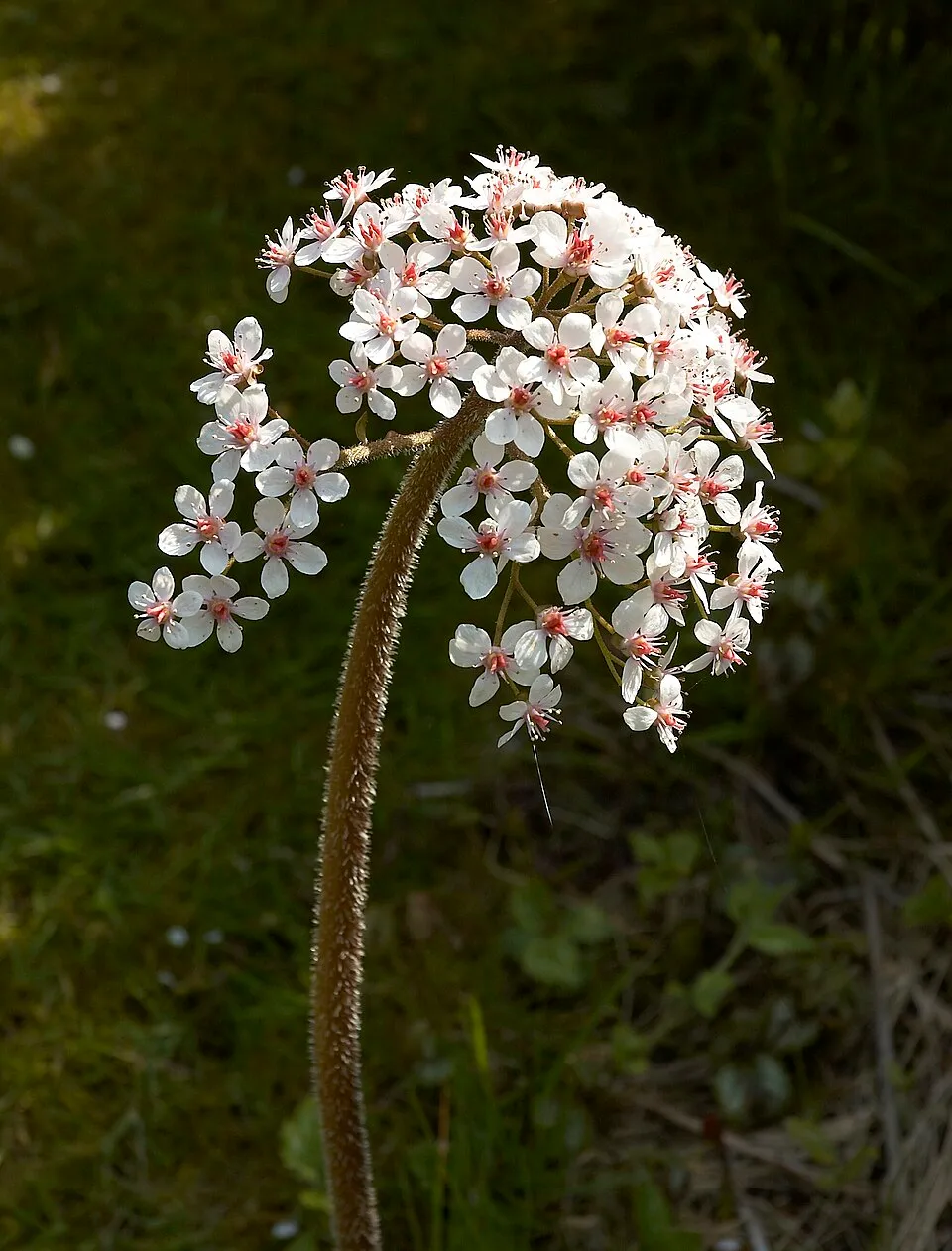
Darmera peltata, commonly known as Indian Rhubarb or Umbrella Plant, is a striking perennial herbaceous plant belonging to the Saxifragaceae family. Native to the cold, rocky banks of mountain streams and rivers in western North America, particularly in California, Oregon, and Utah, it thrives in consistently moist to wet conditions. This rhizomatous plant is characterized by its magnificent, large, nearly round leaves, which can reach up to 2-3 feet in diameter, featuring jaggedly toothed margins and a distinctive peltate attachment where the leafstalk connects near the center of the blade, giving it an umbrella-like appearance.
The plant is winter dormant, with its dramatic foliage unfurling after the bloom period. In mid to late spring, before the leaves fully expand, it sends up robust, naked flowering stalks, typically 3-5 feet tall, topped with large, rounded clusters of small, delicate white to pale pink flowers. These panicles of showy blooms are followed by decorative, reddish, follicle-like seed pods.
In autumn, the lush green leaves transform into vibrant shades of russet, adding seasonal interest. Its luxuriant growth and architectural form make it a popular ornamental plant, often anchoring firmly among water-washed rocks, contributing a verdant, almost tropical aspect to its native habitats.
Trusted Scientific References
1. Authoritative external sources for Darmera Peltata
1.1 Wikipedia — Darmera Peltata
1.2 Kew POWO (Plants of the World Online)
1.3 PubMed — peer-reviewed research
1.4 NCBI Taxonomy Browser
1.5 GBIF — Global Biodiversity
1.6Darmera Peltata should be interpreted through verified botanical identity, practical care, and responsible safety language. This recovery note adds the missing context needed for a complete profile: match light to the plant's habit, use well-drained soil, water according to season, and avoid unsupported medicinal or edible claims. For publishing, the plant can be presented as a source-backed garden plant with clear care guidance, common problem diagnosis, and conservative safety wording.
1.1.Darmera Peltata — Standout Qualities
- ✓Striking architectural perennial with large, umbrella — like leaves.
- ✓Native to the — Native to the cold, rocky stream banks of western North America.
- ✓Produces showy clusters — Produces showy clusters of pink to white flowers in early spring before the foliage.
- ✓Characterized by peltate — Characterized by peltate leaves, where the stem attaches near the center of the blade.
- ✓Rhizomatous growth habit, — Rhizomatous growth habit, forming impressive colonies over time.
- ✓Rich in beneficial — Rich in beneficial phytochemicals such as flavonoids, tannins, and phenolic acids.
- ✓Traditionally used for its anti — inflammatory, antioxidant, and digestive properties.
- ✓Thrives in consistently — Thrives in consistently moist, partially shaded environments, ideal for waterside gardens.
- ✓Exhibits vibrant russet — Exhibits vibrant russet fall foliage, adding seasonal color to landscapes.
- ✓Attracts early pollinators, — Attracts early pollinators, contributing to local biodiversity.
1.2.Darmera Peltata — In Brief
- ✓Darmera peltata, or Indian Rhubarb, is a striking perennial native to western North America, known for its large, umbrella-like leaves.
- ✓It produces delicate pink to white flowers in early spring, often before the foliage fully develops.
- ✓Traditionally valued for its anti-inflammatory, antioxidant, and digestive support properties.
- ✓Rich in beneficial phytochemicals including flavonoids, terpenoids, and phenolic acids.
- ✓Requires consistently moist, well-draining soil and partial shade for optimal growth and health.
- ✓Use with caution, especially during pregnancy, lactation, or when taking prescription medications.
2.Darmera Peltata — Scientific Profile
3.Darmera Peltata — Quick Facts
4.Darmera Peltata — Morphological Account
5.Darmera Peltata — Where It Grows
6.Darmera Peltata — Ethnobotanical Uses
7.Darmera Peltata — Active Compounds
- ✓Flavonoids — Key compounds like quercetin and kaempferol derivatives are present, acting as potent antioxidants and anti-inflammatory agents.
- ✓Terpenoids — Various monoterpenes and sesquiterpenes contribute to the plant's aromatic profile and may possess antimicrobial or anti-inflammatory properties.
- ✓Phenolic Acids — Includes caffeic acid and gallic acid, which are known for their strong antioxidant capacity and potential to modulate immune responses.
- ✓Tannins — Predominantly proanthocyanidins, these compounds confer astringent properties, useful in traditional applications for wound healing and digestive regulation.
- ✓Saponins — Glycosidic compounds that can have expectorant, immune-stimulating, and potentially cholesterol-lowering effects.
- ✓Polysaccharides — Complex carbohydrates that contribute to the plant's demulcent properties and can support immune system function.
- ✓Coumarins — Naturally occurring compounds that may exhibit anti-inflammatory, anticoagulant, and antimicrobial activities.
- ✓Plant Sterols — Phytosterols are present, which can contribute to the plant's overall anti-inflammatory effects and support cardiovascular health.
- ✓Lignans — Often found in plants, these polyphenols are recognized for their antioxidant and phytoestrogenic properties.
- ✓Essential Oils — Volatile organic compounds responsible for the plant's characteristic scent, contributing to its potential therapeutic effects.
8.Darmera Peltata — Modern Studies
- ✓Anti-inflammatory Support — Traditionally valued for its ability to mitigate inflammatory responses, which may help alleviate conditions such as arthritis and muscle aches.
- ✓Antioxidant Protection — Rich in phenolic compounds and flavonoids, it helps neutralize harmful free radicals, protecting cells from oxidative stress and supporting overall cellular health.
- ✓Digestive Health — Historically employed in traditional medicine to soothe and regulate the digestive system, addressing issues like indigestion and minor gastrointestinal discomfort.
- ✓Immune System Modulation — Certain constituents are believed to support and modulate immune function, potentially enhancing the body's natural defense mechanisms.
- ✓Respiratory Relief — Used in folk medicine to provide comfort from various respiratory ailments, such as coughs and congestion, likely due to expectorant or soothing properties.
- ✓Dermatological Aid — The leaves have been traditionally applied externally as a poultice to minor wounds, cuts, and skin irritations to promote healing and reduce inflammation.
- ✓Astringent Properties — Contains tannins that provide astringent effects, beneficial for tightening tissues and potentially aiding in cases of mild diarrhea or bleeding.
- ✓Pain Management — Its anti-inflammatory actions may contribute to the alleviation of minor aches and pains, offering a natural approach to discomfort relief.
- ✓Cellular Regeneration — By reducing oxidative damage and inflammation, it may support the healthy regeneration of cells and tissues, particularly in topical applications.
- ✓Microbial Defense — Some plant compounds exhibit mild antimicrobial properties, which could contribute to its traditional use in wound care and internal cleansing.
8.1.Darmera Peltata — Indications & Uses
9.Darmera Peltata — Risk Profile
9.1.Darmera Peltata — Reported Side Effects
- ✓Allergic Reactions — Individuals sensitive to plants in the Saxifragaceae family may experience mild skin irritation, itching, or, rarely, allergic dermatitis.
- ✓Gastrointestinal Upset — High doses or prolonged use, particularly of the raw plant material, might lead to nausea, stomach discomfort, or diarrhea.
- ✓Hypotension Risk — Theoretical potential for mild blood pressure lowering due to certain compounds; caution is advised for individuals on antihypertensive medications.
- ✓Blood Coagulation — Some plant constituents may theoretically influence blood clotting; caution with anticoagulant medications or bleeding disorders.
- ✓Skin Sensitivity — While generally safe for topical use, a patch test is recommended for individuals with sensitive skin to rule out local irritation.
- ✓Interactions with Medications — Potential for interactions with prescription drugs, especially those affecting blood pressure, blood thinning, or liver metabolism.
9.2.Darmera Peltata — Risk Assessment
- ✓Pregnancy and Lactation — Not recommended for use during pregnancy or breastfeeding due to insufficient scientific safety data.
- ✓Children — Use with caution in children; consultation with a qualified healthcare practitioner is advised before administration.
- ✓Pre-existing Conditions — Individuals with chronic health conditions, particularly liver, kidney, or cardiovascular diseases, should consult a doctor before use.
- ✓Scheduled Surgery — Discontinue use at least two weeks prior to any scheduled surgical procedure due to potential effects on blood clotting.
- ✓Dosage Adherence — Strictly follow recommended dosages from qualified herbalists or healthcare professionals to avoid potential adverse effects.
- ✓Allergic History — Individuals with known allergies to plants, especially those in the Saxifragaceae family, should exercise extreme caution.
- ✓Professional Guidance — Always seek advice from a qualified medical herbalist or healthcare provider for proper identification, dosage, and safe integration into a health regimen.
10.Darmera Peltata — How to Use
- ✓Herbal Tea/Decoction — Dried rhizomes or leaves can be simmered in water to create a decoction for internal use, traditionally for digestive or respiratory support.
- ✓Tincture — An alcohol-based extract of the rhizomes or leaves, offering a concentrated form for internal administration and ease of dosage.
- ✓Poultice — Fresh, crushed leaves or powdered dried rhizome mixed with a small amount of water can be applied directly to minor wounds, bruises, or skin irritations.
- ✓Compress — An infusion or decoction soaked onto a clean cloth and applied externally to inflamed joints, sore muscles, or skin conditions.
- ✓Encapsulated Powder — Dried and finely ground rhizome material can be encapsulated for convenient oral consumption as a dietary supplement.
- ✓Topical Ointment/Salve — Extracts can be infused into carrier oils and then combined with beeswax to create soothing salves or ointments for dermatological applications.
- ✓Syrup — A sweetened decoction, often combined with honey, can be prepared to alleviate sore throats or coughs, particularly for respiratory ailments.
- ✓Glycerite — A non-alcoholic extract using vegetable glycerin, suitable for individuals who prefer to avoid alcohol, especially children.
11.Darmera Peltata — Growth Requirements
- ✓Soil Preference — Thrives in rich, deep, consistently moist to wet soils that are well-draining, mimicking its native riverside habitat.
- ✓PH Range — Optimal growth occurs in slightly acidic to neutral soil conditions, ideally within a pH range of 6.0 to 7.0.
- ✓Light Requirements — Prefers partial to full shade, especially in warmer climates, where intense sun can scorch its large leaves.
- ✓Watering Regimen — Requires abundant and consistent moisture; the soil should never be allowed to dry out, but avoid stagnant waterlogging.
- ✓Spacing Guidelines — Plant rhizomes or young plants approximately 30-45 cm (12-18 inches) apart to accommodate their mature spread and ensure adequate air circulation.
- ✓Soil Amendments — Incorporate generous amounts of organic matter, such as compost or leaf mold, to improve soil structure, moisture retention, and nutrient availability.
- ✓Winter Hardiness — Fully deciduous in winter, it is hardy in USDA zones 5-9 and will re-emerge vigorously in spring from its rhizomatous rootstock.
- ✓Propagation — Easily propagated by division of its rhizomes in early spring or fall, or by seed, though seed germination can be slow.
Reviewed by the Flora Medical Global Botanical Review Panel
Multi-disciplinary editorial group · Botany · Ethnobotany · Herbal-medicine literature
Who reviewed this: This page was checked by the Flora Medical Global Botanical Review Panel — an in-house editorial group of botany graduates, ethnobotany researchers, and horticulture practitioners who collectively maintain our 7,000+ plant encyclopedia. Meet the team.
Our 4-step verification process
1. Taxonomic verification
Scientific names and synonyms cross-checked against Kew POWO, World Flora Online, and The Plant List.
2. Phytochemical & medicinal cross-reference
Active compounds, traditional uses, and reported activities are cross-referenced with PubMed, USDA Dr. Duke's database, and peer-reviewed ethnobotanical literature.
3. Conservation & distribution check
Distribution, ecology, and conservation status confirmed against GBIF occurrence records and the IUCN Red List.
4. Editorial & safety review
Every entry passes an editorial pass for clarity, originality, and safety notices (toxicity, contraindications, dosage caveats) before publication.
Last reviewed:
Important medical disclaimer: This content is for educational and research purposes only. It is not medical advice and is not a substitute for consultation with a licensed healthcare provider. Do not use any herb to self-treat a medical condition without professional guidance.
Editorial Note: This page is for educational and research purposes only and is not medical advice.
Written by: Flora Medical Global Editorial Team
Reviewed by: Flora Medical Global Botanical Review Panel
Last Updated: June 15, 2026





Darmera Peltata — Comments & Community Reviews
Rate this plant