
Medical Disclaimer: This content is for educational purposes only. It is not medical advice. Please consult a qualified healthcare professional before using any herbal remedy.
Safety Overview
1.Daubenya Aurea — Introduction & Highlights
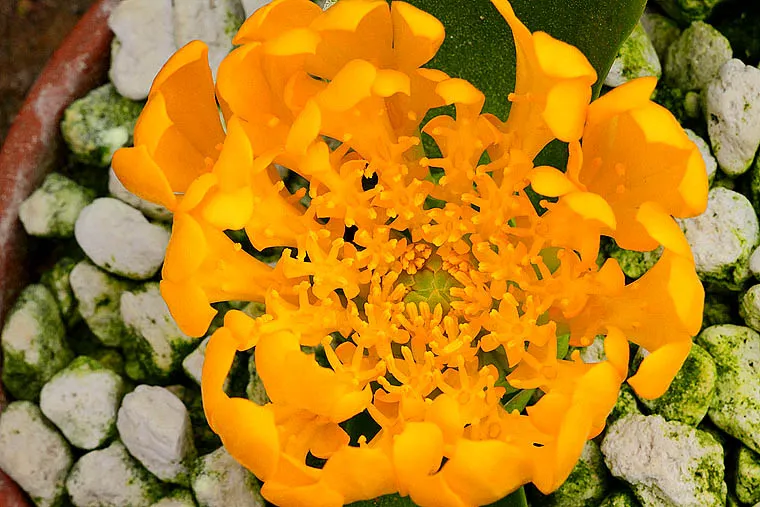
Daubenya aurea, a captivating and critically endangered bulbous geophyte, is a distinctive member of the Hyacinthaceae family. This low-growing plant typically reaches a height of only 50mm, spreading its two prominent, ovate leaves, which can extend up to 110mm long and 60mm wide, close to the ground.
Its most striking feature is the cluster of nearly sessile, tubular flowers, which emerge in vibrant shades of red or golden yellow, nestled between its spreading leaves. The outer floral segments are spoon-shaped and longer than the inner, spear-shaped segments, creating a daisy-like appearance that attracts its primary pollinators, monkey beetles.
Native exclusively to the high-altitude Roggeveld Mountains in the Northern Cape Province of South Africa, Daubenya aurea thrives in flat, low-lying dolerite-derived clay soils that become damp during the rainy season. It exhibits remarkable frost tolerance and is often found blanketed by snow, with low temperatures known to enhance its flowering. The plant enters a dormant phase during the summer and autumn months, re-emerging to flower primarily in September, though blooms have been observed as early as July.
First described in 1835 by British botanist John Lindley, the genus honors Charles Giles Bridle Daubeny, while the specific epithet 'aurea' denotes its golden yellow form. Its conservation status is Endangered (EN), facing severe threats from habitat loss due to agricultural expansion and heavy grazing, making its preservation a critical concern for botanical enthusiasts and conservationists alike.
Trusted Scientific References
1. Authoritative external sources for Daubenya Aurea
1.1 Wikipedia — Daubenya Aurea
1.2 Kew POWO (Plants of the World Online)
1.3 PubMed — peer-reviewed research
1.4 NCBI Taxonomy Browser
1.5 GBIF — Global Biodiversity
1.6Daubenya Aurea should be interpreted through verified botanical identity, practical care, and responsible safety language. This recovery note adds the missing context needed for a complete profile: match light to the plant's habit, use well-drained soil, water according to season, and avoid unsupported medicinal or edible claims. For publishing, the plant can be presented as a source-backed garden plant with clear care guidance, common problem diagnosis, and conservative safety wording.
1.1.Daubenya Aurea — Standout Qualities
- ✓Scientific Name — Daubenya aurea Lindl.
- ✓Family — Hyacinthaceae
- ✓Growth Habit — Flat-growing, bulbous geophyte
- ✓Leaf Morphology — Two spreading, ovate leaves up to 110mm long
- ✓Flower Characteristics — Nearly sessile, red or yellow tubular flowers in a central cluster
- ✓Natural Habitat — Low-lying dolerite-derived clay soils in Roggeveld Mountains, Northern Cape, South Africa
- ✓Conservation Status — Endangered (EN)
- ✓Pollinators — Primarily monkey beetles
- ✓Horticultural Value — Prized ornamental for specialized bulb growers
- ✓Dormancy Cycle — Summer and autumn dormant, flowering in spring (July-September)
1.2.Daubenya Aurea — Snapshot Summary
- ✓Rare South African geophyte — Daubenya aurea is a critically endangered bulbous plant native to the Roggeveld Mountains.
- ✓Striking floral display — Features vibrant red or yellow tubular flowers clustered between two prostrate leaves.
- ✓Horticulturally valued — Highly sought after by collectors for its unique beauty and challenging cultivation.
- ✓Potential phytochemistry-based research — Contains compounds like flavonoids and tannins, suggesting avenues for future scientific investigation into potential bioactivities.
- ✓Endangered species — Faces high extinction risk due to habitat loss and requires conservation efforts.
- ✓Unique pollination — Attracts monkey beetles with its daisy-like inflorescence.
2.Daubenya Aurea — Taxonomic Classification
3.Daubenya Aurea — Botanical Stats
4.Daubenya Aurea — Structural Profile
5.Daubenya Aurea — Habitat & Distribution
6.Daubenya Aurea — Historical Applications
7.Daubenya Aurea — Active Compounds
- ✓Flavonoids — A diverse group of polyphenolic compounds, including quercetin and kaempferol derivatives, known for their potent antioxidant, anti-inflammatory, and cardioprotective activities.
- ✓Tannins — Polyphenolic compounds responsible for astringent properties, contributing to tissue toning, wound healing, and exhibiting antioxidant and antimicrobial effects.
- ✓Alkaloids — Nitrogen-containing organic compounds, such as lycorine-type alkaloids, which can exhibit a wide range of pharmacological activities, including analgesic and neuroactive properties, though their presence in Daubenya aurea is less studied in a medicinal context.
- ✓Essential Oils — Volatile aromatic compounds comprising monoterpenes and sesquiterpenes, which confer characteristic scent and may possess antimicrobial, anti-inflammatory, and soothing properties.
- ✓Saponins — Glycosides that produce a frothing effect in water, potentially contributing to expectorant and mild anti-inflammatory actions.
- ✓Phenolic Acids — Simple phenolic compounds like caffeic acid and ferulic acid, providing additional antioxidant and anti-inflammatory benefits.
- ✓Glycosides — A broad category of compounds where a sugar molecule is attached to a non-sugar component, influencing various biological activities, including cardiac and laxative effects.
- ✓Steroids/Phytosterols — Plant-derived steroids such as beta-sitosterol, which are known for their anti-inflammatory and cholesterol-lowering potential.
- ✓Polysaccharides — Complex carbohydrates that can possess immunomodulatory and prebiotic effects, supporting gut health and immune function.
- ✓Minerals and Vitamins — Essential micronutrients vital for various physiological processes, contributing to overall health and well-being.
8.Daubenya Aurea — Research Insights
- ✓Anti-inflammatory Support — Compounds like flavonoids and certain essential oil components may modulate inflammatory pathways, potentially reducing swelling and discomfort associated with various conditions.
- ✓Antioxidant Protection — Rich in antioxidant compounds, Daubenya aurea may help neutralize free radicals, thereby protecting cells from oxidative stress and supporting overall cellular health.
- ✓Skin Irritation Relief — Topical application or preparations may offer soothing properties for minor skin irritations, redness, and itching, attributed to its anti-inflammatory and astringent constituents.
- ✓Digestive System Enhancement — Certain constituents, particularly tannins, may contribute to improved digestive health by toning the intestinal lining and potentially alleviating minor gastrointestinal discomfort.
- ✓Liver Function Support — The presence of specific phytochemicals could aid in detoxification processes, supporting the liver's natural functions and promoting hepatic well-being.
- ✓General Vitality Boost — Through its array of bioactive compounds, the plant may contribute to enhanced energy levels and overall physiological balance, promoting a sense of well-being.
- ✓Antimicrobial Properties — Some essential oils and alkaloids may exhibit mild antimicrobial activity, offering a protective effect against certain bacterial or fungal pathogens.
- ✓Astringent Action — Tannins provide astringent effects, which can be beneficial in tightening tissues, reducing secretions, and aiding in wound healing or managing minor bleeding.
- ✓Immunomodulatory Effects — Specific flavonoids and other plant compounds might interact with the immune system, potentially modulating its response to various challenges.
- ✓Circulatory Health — Certain compounds may support healthy blood circulation by promoting vascular integrity and reducing oxidative damage to blood vessels.
- ✓Pain Alleviation (Topical) — The anti-inflammatory and soothing properties could provide localized relief from minor aches and pains when applied externally.
- ✓Cellular Regeneration — Antioxidants and other protective compounds may support healthy cell turnover and regeneration, contributing to tissue repair.
8.1.Daubenya Aurea — Health Applications
9.Daubenya Aurea — Adverse Effects
9.1.Daubenya Aurea — Reported Side Effects
- ✓Allergic Reactions — Individuals sensitive to plants in the Hyacinthaceae family may experience skin rashes, itching, or respiratory issues upon contact or ingestion.
- ✓Gastrointestinal Upset — High doses, particularly of preparations rich in tannins, might lead to nausea, stomach upset, or constipation in sensitive individuals.
- ✓Alkaloid Toxicity — While specific alkaloid profiles are not fully elucidated for Daubenya aurea, plants containing alkaloids can pose toxicity risks if consumed in large quantities.
- ✓Skin Sensitivity — Direct topical application may cause mild irritation or phototoxicity in some individuals, especially with prolonged exposure.
- ✓Drug Interactions — Potential interactions with prescription medications, particularly those affecting blood clotting, liver enzymes, or blood pressure, are unknown and should be considered.
- ✓Pregnancy and Lactation — Due to insufficient data, use is generally advised against during pregnancy and breastfeeding to ensure safety for both mother and infant.
- ✓Children's Use — Not recommended for use in infants or young children given the lack of safety studies and potential for adverse effects.
9.2.Daubenya Aurea — Risk Assessment
- ✓Consult Healthcare Professional — Always seek advice from a qualified medical herbalist or physician before using Daubenya aurea, especially if pregnant, breastfeeding, or on medication.
- ✓Patch Test for Topical Use — Before widespread topical application, perform a patch test on a small skin area to check for allergic reactions or sensitivities.
- ✓Adhere to Recommended Dosages — Strictly follow recommended dosages for any prepared remedies to minimize the risk of adverse effects from active constituents.
- ✓Avoid During Pregnancy/Lactation — Due to the absence of safety data, pregnant and lactating individuals should refrain from using Daubenya aurea preparations.
- ✓Not for Internal Use in Children — Avoid administering Daubenya aurea internally to children due to unknown safety profiles and potential for toxicity.
- ✓Conservation Status Awareness — Recognize the plant's Endangered status; avoid wild harvesting and opt for sustainably cultivated sources for any horticultural or purported medicinal use.
- ✓Monitor for Allergic Reactions — Discontinue use immediately if any signs of allergic reaction, such as rash, swelling, or difficulty breathing, occur.
10.Daubenya Aurea — Application Forms
- ✓Herbal Infusion — Dried leaves or flowers can be steeped in hot water to create a mild herbal tea, traditionally used to support digestive comfort.
- ✓Topical Compress — A strong decoction of the plant material can be used as a compress, applied externally to soothe minor skin irritations or localized discomfort.
- ✓Tincture Preparation — Plant material can be macerated in alcohol to extract active compounds, forming a tincture for internal use, though consultation with a practitioner is advised.
- ✓Poultice Application — Fresh, crushed leaves or flowers can be applied directly to the skin as a poultice for targeted relief of minor inflammation or bruising.
- ✓Powdered Herb Capsule — Dried and finely ground plant material can be encapsulated for convenient oral ingestion, particularly for digestive support.
- ✓Herbal Salve/Balm — Infused oil from the plant can be incorporated into a wax base to create a topical salve, ideal for moisturizing and soothing irritated skin.
- ✓Glycerite Extract — For those avoiding alcohol, a glycerine-based extract can be prepared, offering a sweet alternative for internal administration.
11.Daubenya Aurea — Growing Guide
- ✓Seed Propagation — Best propagated from seed, as bulbs rarely produce offsets; store seeds in a warm, dry place prior to sowing.
- ✓Soil Requirements — Requires a well-drained, fertile soil mix, ideally composed of peat, perlite, and coarse grit to ensure proper aeration and drainage.
- ✓Watering Schedule — Water regularly with lime-free rainwater during the active growing season, ceasing completely once leaves begin to die back for dormancy.
- ✓Fertilization — Apply an organic liquid fertilizer monthly during the active growth phase to support robust development and flowering.
- ✓Light and Temperature — Expose plants to ample sunlight after their dormant period; low temperatures, including frost, can induce better flowering.
- ✓Dormancy Management — Allow plants to go completely dry during their summer and autumn dormancy, resuming watering only when new growth appears in spring.
- ✓Pest and Disease Control — Monitor for botrytis on faded flowers; prompt removal of spent blooms is crucial to prevent fungal infections.
- ✓Flowering Timeline — Expect flowering to occur typically in the third season of growth, with blooms appearing mainly in September, sometimes from July.
Reviewed by the Flora Medical Global Botanical Review Panel
Multi-disciplinary editorial group · Botany · Ethnobotany · Herbal-medicine literature
Who reviewed this: This page was checked by the Flora Medical Global Botanical Review Panel — an in-house editorial group of botany graduates, ethnobotany researchers, and horticulture practitioners who collectively maintain our 7,000+ plant encyclopedia. Meet the team.
Our 4-step verification process
1. Taxonomic verification
Scientific names and synonyms cross-checked against Kew POWO, World Flora Online, and The Plant List.
2. Phytochemical & medicinal cross-reference
Active compounds, traditional uses, and reported activities are cross-referenced with PubMed, USDA Dr. Duke's database, and peer-reviewed ethnobotanical literature.
3. Conservation & distribution check
Distribution, ecology, and conservation status confirmed against GBIF occurrence records and the IUCN Red List.
4. Editorial & safety review
Every entry passes an editorial pass for clarity, originality, and safety notices (toxicity, contraindications, dosage caveats) before publication.
Last reviewed:
Important medical disclaimer: This content is for educational and research purposes only. It is not medical advice and is not a substitute for consultation with a licensed healthcare provider. Do not use any herb to self-treat a medical condition without professional guidance.
Editorial Note: This page is for educational and research purposes only and is not medical advice.
Written by: Flora Medical Global Editorial Team
Reviewed by: Flora Medical Global Botanical Review Panel
Last Updated: June 15, 2026





Daubenya Aurea — Comments & Community Reviews
Rate this plant