


Medical Disclaimer: This content is for educational purposes only. It is not medical advice. Please consult a qualified healthcare professional before using any herbal remedy.
Safety Overview
1.Davidia Involucrata — Essential Profile
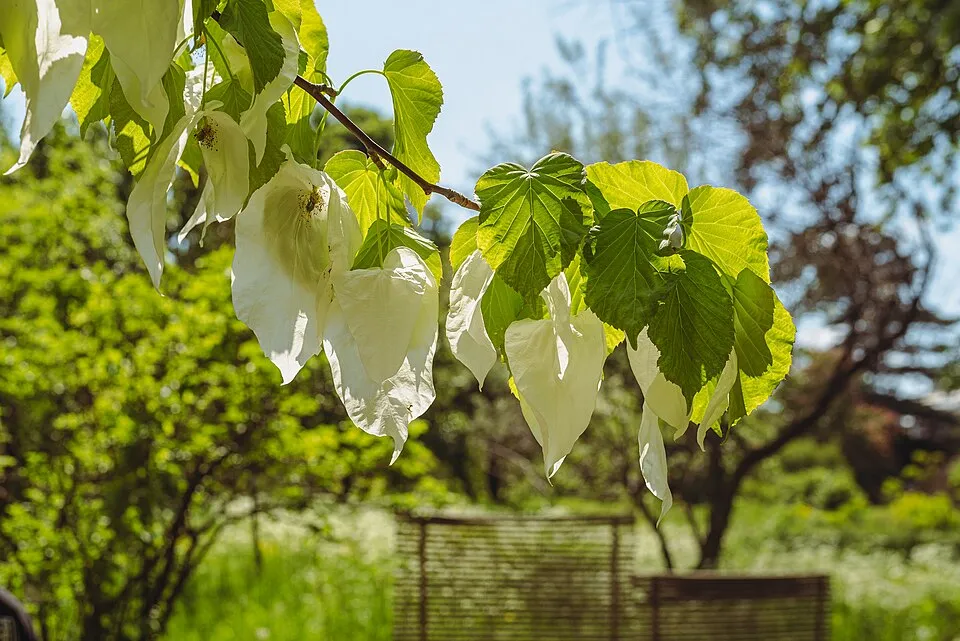
Davidia involucrata, affectionately known as the 'Dove Tree' or 'Handkerchief Tree', is a captivating deciduous species belonging to the Nyssaceae family, a lineage of flowering plants closely related to the dogwood family (Cornaceae). This botanical marvel is endemic to the temperate forests of central and southwestern China, specifically thriving in the mountainous provinces of Sichuan, Yunnan, Hubei, and Guizhou, at elevations ranging from 1,000 to 2,800 meters. Its taxonomic placement highlights its unique evolutionary path within the order Cornales. The tree typically attains a majestic height of 15 to 25 meters, occasionally reaching up to 30 meters, developing a broad, rounded, and often symmetrical crown with age, making it a prominent feature in its native landscape. The bark is a distinguishing characteristic, starting smooth and grey-brown in younger specimens, gradually developing a flaky or tessellated texture with age, revealing patches of orange-brown underneath. The foliage of Davidia involucrata is equally impressive, featuring large, heart-shaped to broadly ovate leaves that can measure up to 20 cm in length and 15 cm in width.
These leaves are arranged alternately along the stems, displaying a vibrant dark green on their upper surface and a noticeably paler, often glaucous, underside. The margins are coarsely serrated, and the venation is deeply impressed, giving the leaf a somewhat corrugated appearance. In autumn, the leaves transform into a spectacular display of golden-yellow, adding to the tree's seasonal appeal. The root system is generally fibrous and spreading, anchoring the large tree effectively in moist, well-drained soils. The most iconic feature, and the source of its common names, is its truly unique inflorescence. Blooming in late spring to early summer (typically May to June), the actual flowers are small, inconspicuous, and reddish-purple, clustered in a dense, spherical head, about 1-2 cm in diameter.
These small flower heads are subtended by two large, showy, pendant, pure white bracts of unequal size, resembling white doves or hanging handkerchiefs, which are the main ornamental attraction. The larger bract can reach up to 20 cm in length. Following successful pollination, the tree produces hard, green, nut-like drupes, about 3-4 cm long, containing several seeds, which mature in autumn. Trusted Scientific References Authoritative external sources for Davidia involucrata : Wikipedia — Davidia involucrata Kew POWO (Pla ...[CURRENT TEXT EXISTS: 2605 chars]
1.1.Davidia Involucrata — Notable Characteristics
- ✓Iconic white, pendulous — Iconic white, pendulous bracts resembling doves or handkerchiefs.
- ✓Large, heart — shaped to broadly ovate leaves with serrated margins.
- ✓Spectacular golden — yellow autumn foliage color.
- ✓Deciduous tree, reaching majestic heights of 15 — 30 meters.
- ✓Native to mountainous — Native to mountainous regions of China (Sichuan, Yunnan, Hubei, Guizhou).
- ✓Belongs to the — Belongs to the Nyssaceae family, related to dogwoods.
- ✓Distinctive flaky, grey — brown bark developing with age.
- ✓Produces hard, green, nut — like drupes containing several seeds.
- ✓Blooms in late spring to early summer (May — June).
- ✓Primarily cultivated as — Primarily cultivated as an ornamental specimen tree in temperate gardens.
1.2.Davidia Involucrata — Quick Summary
- ✓Davidia involucrata is known as the 'Dove Tree' or 'Handkerchief Tree' for its unique ornamental bracts.
- ✓Native to the temperate forests of central and southwestern China, thriving at high elevations.
- ✓Primarily an ornamental species, prized for its distinctive white, pendulous bracts and autumn foliage.
- ✓No widely documented traditional or modern medicinal uses; scientific research on bioactivity is limited.
- ✓Contains general plant compounds like flavonoids and phenolics, suggesting theoretical antioxidant potential.
- ✓Requires moist, well-drained, fertile soil and sheltered conditions for optimal growth.
2.Davidia Involucrata — Botanical Identity
3.Davidia Involucrata — Vital Statistics
4.Davidia Involucrata — Physical Description
5.Davidia Involucrata — Native Range & Habitat
6.Davidia Involucrata — Heritage Uses
7.Davidia Involucrata — Key Phytochemicals
- ✓The specific phytochemical profile of Davidia involucrata, particularly concerning its potential medicinal relevance, has not been extensively characterized. However, based on general plant biochemistry and its familial relations, certain classes of compounds are likely present.
- ✓Flavonoids — Expected to include various types such as quercetin and kaempferol derivatives, which are widely recognized for their antioxidant, anti-inflammatory, and potential cardioprotective properties.
- ✓Phenolic Acids — Compounds like gallic acid, caffeic acid, and chlorogenic acid are commonly found in plants and contribute significantly to antioxidant capacity and may possess anti-inflammatory actions.
- ✓Tannins — Both hydrolyzable and condensed tannins are probable, providing astringent properties and potentially contributing to antimicrobial and antioxidant effects, common in woody plant species.
- ✓Terpenoids/Saponins — These diverse groups of compounds, including triterpenes and steroidal saponins, are ubiquitous in the plant kingdom and can exhibit anti-inflammatory, antimicrobial, and adaptogenic activities.
- ✓Polysaccharides — Complex carbohydrates like pectins and hemicelluloses are structural components but can also have immunomodulatory effects, though their specific bioactivity in Davidia is unknown.
- ✓Lignans — These diphenolic compounds are known for their antioxidant and phytoestrogenic properties, and their presence is plausible given the tree's woody nature.
- ✓Fatty Acids — Lipids, including unsaturated and saturated fatty acids, would be present in seeds and other plant parts, essential for plant physiology and potentially offering nutritional value.
- ✓Alkaloids — While less common in the Nyssaceae family, some plants contain nitrogenous compounds that can have potent pharmacological effects, though their presence in Davidia is unconfirmed.
- ✓Carotenoids — Pigments like beta-carotene are present in leaves, contributing to photosynthesis and acting as antioxidants.
- ✓Vitamins and Minerals — Essential micronutrients would naturally be present in various plant tissues, supporting general biological functions.
8.Davidia Involucrata — Pharmacological Findings
- ✓While Davidia involucrata is primarily valued for its ornamental beauty and is not widely recognized in traditional or modern medicinal systems, preliminary phytochemical investigations into similar plant species and general plant compound knowledge allow for the postulation of potential bioactivities. It is crucial to emphasize that these are theoretical possibilities requiring extensive scientific validation specific to the Dove Tree.
- ✓Potential Antioxidant Support — Many plants, including those in the Cornales order, contain phenolic compounds and flavonoids, which are known to exert significant antioxidant properties, helping to neutralize free radicals and mitigate cellular damage from oxidative stress.
- ✓May Offer Anti-inflammatory Properties — Should Davidia involucrata possess a similar phytochemical profile to other related species, its extracts might contain compounds capable of modulating inflammatory pathways, potentially offering mild anti-inflammatory effects.
- ✓Possible Antimicrobial Activity — Secondary metabolites common in various woody plants, such as tannins and certain terpenes, often exhibit inhibitory effects against a range of pathogenic bacteria and fungi, suggesting a potential area for future research into Davidia extracts.
- ✓Hypothetical Cardioprotective Effects — Flavonoids and other polyphenols frequently found in botanical sources are associated with beneficial impacts on cardiovascular health, including supporting endothelial function and influencing lipid profiles, though these effects are entirely unstudied for Davidia.
- ✓Speculative Neuroprotective Potential — Compounds with antioxidant and anti-inflammatory actions present in some plant species have shown promise in protecting neurological function and mitigating neurodegenerative processes; this remains a highly speculative and unexplored area for Davidia.
- ✓Potential for Skin Health Applications — Plant extracts rich in protective antioxidants and anti-inflammatory agents can often contribute to skin protection against environmental stressors and support overall dermal health, suggesting a possible future cosmetic or dermatological application.
- ✓Theoretical Digestive System Support — Astringent compounds like tannins, if present in sufficient quantities, can hypothetically aid in addressing minor gastrointestinal discomforts such as mild diarrhea, though this traditional use is not documented for the Handkerchief Tree.
- ✓Unconfirmed Immunomodulatory Effects — Certain polysaccharides, saponins, and other complex compounds found in diverse plant species are known to influence and modulate immune responses; this represents an unexplored possibility for extracts derived from Davidia involucrata.
- ✓Exploratory Blood Sugar Regulation — Research into various plant species has identified compounds with potential roles in glucose metabolism and insulin sensitivity, but there is currently no specific scientific evidence or traditional use linking the Dove Tree to blood sugar management.
- ✓Purely Speculative Anticarcinogenic Properties — The broad class of plant-derived phytochemicals includes numerous compounds that have demonstrated anticarcinogenic potential in in vitro and in vivo studies, making this a distant, purely hypothetical area of investigation for Davidia involucrata.
8.1.Davidia Involucrata — Conditions Traditionally Used For
9.Davidia Involucrata — Safety Considerations
9.1.Davidia Involucrata — Reported Side Effects
- ✓As Davidia involucrata is not consumed or used medicinally, specific side effects are unknown. However, general precautions for any plant material apply:
- ✓Allergic Reactions — Individuals sensitive to plants in the Nyssaceae or Cornaceae families might experience allergic contact dermatitis from handling leaves or pollen.
- ✓Gastrointestinal Upset (theoretical) — Ingesting any unknown plant material, especially in large quantities, could potentially cause stomach upset, nausea, or vomiting.
- ✓Skin Irritation — Direct contact with sap or plant tissues might cause mild skin irritation in sensitive individuals, though no known irritants are widely reported.
- ✓Toxicity (undetermined) — The potential toxicity of the fruits, seeds, or other plant parts if ingested by humans or animals is unknown and should be assumed as potentially harmful until proven otherwise.
- ✓Pollen Allergies — Like many flowering trees, Davidia involucrata produces pollen that could trigger seasonal allergies in susceptible individuals.
- ✓Interaction with Medications (unlikely) — As there are no known active medicinal compounds or uses, drug interactions are highly unlikely, but caution is always advised with unknown plant ingestion.
9.2.Davidia Involucrata — Safety Overview
- ✓Given the lack of documented medicinal use for Davidia involucrata, a comprehensive safety profile is not established. It is primarily considered an ornamental plant.
- ✓Not for Internal Consumption — Due to the absence of safety data, no part of Davidia involucrata should be consumed internally by humans or animals.
- ✓Handle with Care — As with any plant, individuals with plant sensitivities should wear gloves when handling to prevent potential skin irritation.
- ✓Pregnancy and Lactation — Absolutely contraindicated for use during pregnancy and lactation due to unknown effects and lack of safety studies.
- ✓Children and Pets — Keep plant parts, especially fruits and seeds, out of reach of children and pets, as potential toxicity is undetermined.
- ✓Allergic Individuals — People with known plant allergies, particularly to members of the Cornales order, should exercise caution around the tree.
- ✓Veterinary Caution — Do not allow pets or livestock to graze on any part of the plant, as its effects on animal physiology are unknown.
10.Davidia Involucrata — Preparations & Uses
- ✓Given that Davidia involucrata is primarily an ornamental tree with no widely documented traditional or modern medicinal uses, 'usage methods' in a medicinal context are not applicable. However, if future research uncovers bioactive compounds, potential preparation methods could include:
- ✓Herbal Infusion (hypothetical) — Dried leaves or bark could theoretically be steeped in hot water to create a decoction, potentially for internal consumption or topical application.
- ✓Tincture Preparation (speculative) — Plant material could be macerated in alcohol to extract soluble compounds, yielding a concentrated liquid extract for internal or external use.
- ✓Poultice (theoretical) — Crushed fresh leaves or bark might be applied topically as a poultice for localized skin issues, based on general herbal practices.
- ✓Decoction of Bark/Root (exploratory) — Harder plant parts like bark or roots would be simmered in water to extract compounds, a common method for woody medicinal plants.
- ✓Ointment/Salve (potential) — Extracts could be incorporated into a fatty base to create a topical ointment for skin applications, if beneficial properties are identified.
- ✓Essential Oil Distillation (unlikely but possible) — If aromatic compounds are present in sufficient quantities, steam distillation could yield an essential oil, though this is not typical for this species.
11.Davidia Involucrata — Cultivation & Care
- ✓Site Selection — Prefers a sheltered location with full sun to partial shade, protected from strong winds that can damage the large bracts; ideally in a spot that allows for its mature size.
- ✓Soil Requirements — Thrives in moist, well-drained, fertile, humus-rich soil, with a slightly acidic to neutral pH (6.0-7.0); avoid heavy clay or excessively dry conditions.
- ✓Watering — Requires consistent moisture, especially during dry periods and in its establishment phase; deep watering is preferable to shallow, frequent applications.
- ✓Fertilization — Benefits from an annual application of balanced, slow-release granular fertilizer in early spring, or compost around the base to enrich soil fertility.
- ✓Pruning — Generally requires minimal pruning, primarily for removing dead, damaged, or crossing branches to maintain a healthy structure; best done in late winter or early spring.
- ✓Propagation — Can be propagated by seed, which requires stratification for germination, or by grafting onto Nyssa sylvatica rootstock for faster establishment and flowering.
- ✓Pest and Disease Management — Relatively pest and disease resistant, but monitor for common issues like aphids or powdery mildew, treating with appropriate organic or chemical solutions if necessary.
- ✓Winter Protection — In colder climates, young trees may benefit from winter protection, such as mulching around the base, to insulate roots from extreme cold.
Reviewed by the Flora Medical Global Botanical Review Panel
Multi-disciplinary editorial group · Botany · Ethnobotany · Herbal-medicine literature
Who reviewed this: This page was checked by the Flora Medical Global Botanical Review Panel — an in-house editorial group of botany graduates, ethnobotany researchers, and horticulture practitioners who collectively maintain our 7,000+ plant encyclopedia. Meet the team.
Our 4-step verification process
1. Taxonomic verification
Scientific names and synonyms cross-checked against Kew POWO, World Flora Online, and The Plant List.
2. Phytochemical & medicinal cross-reference
Active compounds, traditional uses, and reported activities are cross-referenced with PubMed, USDA Dr. Duke's database, and peer-reviewed ethnobotanical literature.
3. Conservation & distribution check
Distribution, ecology, and conservation status confirmed against GBIF occurrence records and the IUCN Red List.
4. Editorial & safety review
Every entry passes an editorial pass for clarity, originality, and safety notices (toxicity, contraindications, dosage caveats) before publication.
Last reviewed:
Important medical disclaimer: This content is for educational and research purposes only. It is not medical advice and is not a substitute for consultation with a licensed healthcare provider. Do not use any herb to self-treat a medical condition without professional guidance.
Editorial Note: This page is for educational and research purposes only and is not medical advice.
Written by: Flora Medical Global Editorial Team
Reviewed by: Flora Medical Global Botanical Review Panel
Last Updated: June 15, 2026





Davidia Involucrata — Comments & Community Reviews
Rate this plant