
Medical Disclaimer: This content is for educational purposes only. It is not medical advice. Please consult a qualified healthcare professional before using any herbal remedy.
Safety Overview
1.Daylily Happy Returns — Essential Profile
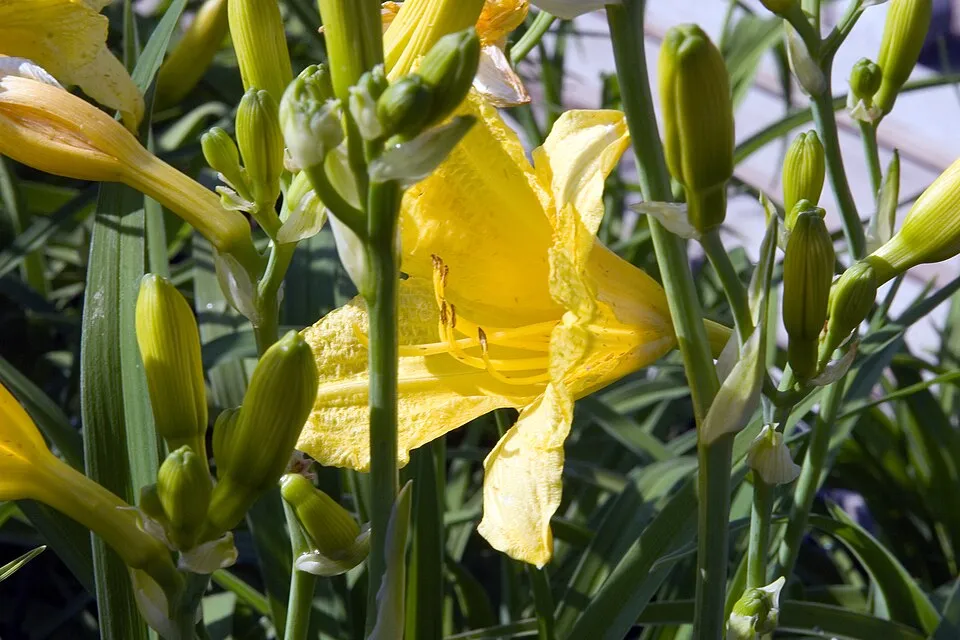
Hemerocallis 'Happy Returns', commonly known as Daylily 'Happy Returns', is a distinguished herbaceous perennial cultivar belonging to the genus Hemerocallis within the family Asphodelaceae, and previously classified under Hemerocallidaceae. This particular cultivar is celebrated for its remarkable reblooming characteristic, offering a prolonged display of brilliant yellow, trumpet-shaped flowers throughout the summer and often into early autumn.
Each flower, typically 3-4 inches across, features six tepals (three petals and three sepals that look alike), often with a slightly ruffled edge, opening in the morning and senescing by evening, hence the common name 'Daylily'.
The plant forms a dense clump of arching, strap-like leaves that are typically bright green, ranging from 12 to 18 inches in length. These leaves provide a lush, textural backdrop for the vibrant blooms and contribute to the plant's overall tidy appearance.
Mature plants generally reach a height of 18 to 24 inches with a similar spread, making them versatile for various landscape applications, from mass plantings to border fronts or as specimen plants. The root system consists of fleshy, fibrous roots that help the plant withstand periods of drought once established.
Native to East Asia, the genus Hemerocallis has been extensively hybridized, leading to numerous cultivars like 'Happy Returns'. While the species Hemerocallis are found in diverse habitats, this cultivar thrives in a wide range of cultivated conditions.
Its resilience and adaptability to various soil types, provided they are well-drained, and its preference for full sun to partial shade, underscore its popularity among gardeners. This adaptability, combined with its aesthetic appeal and low maintenance requirements, makes Hemerocallis 'Happy Returns' a highly valued ornamental plant globally.
Trusted Scientific References
1. Authoritative external sources for Hemerocallis Happy Returns
1.1 Wikipedia — Hemerocallis Happy Returns
1.2 Kew POWO (Plants of the World Online)
1.3 PubMed — peer-reviewed research
1.4 NCBI Taxonomy Browser
1.5 GBIF — Global Biodiversity
1.1.Daylily Happy Returns — Highlights
- ✓Reblooming Perennial — Offers extended flowering throughout summer and fall.
- ✓Vibrant Yellow Blooms — Trumpet-shaped flowers provide a bright garden accent.
- ✓Low Maintenance — Drought-tolerant once established and adaptable to various conditions.
- ✓Attracts Pollinators — Flowers attract bees, butterflies, and other beneficial insects.
- ✓Hardy and Resilient — Thrives in USDA Zones 4-9, tolerating a range of climates.
- ✓Strap — like Foliage — Forms a neat clump of arching green leaves, providing good texture.
- ✓Versatile Landscaping — Suitable for borders, mass plantings, or container gardening.
- ✓Edible Flowers (of some Hemerocallis species) — Flowers can be used in salads or as garnishes.
- ✓Traditional Medicinal Uses — Historically used for various ailments in some cultures.
- ✓Antioxidant Rich — Contains beneficial compounds like flavonoids and carotenoids.
1.2.Daylily Happy Returns — Concise Overview
- ✓Hemerocallis 'Happy Returns' is a popular reblooming yellow daylily cultivar.
- ✓Primarily ornamental, it offers vibrant, low-maintenance garden beauty.
- ✓General Hemerocallis species have traditional uses as diuretics and anti-inflammatories.
- ✓Rich in antioxidants like flavonoids and carotenoids.
- ✓Edible flowers and buds of some Daylily species are consumed for nutrition.
- ✓Caution advised for consumption due to potential mild toxicity in some species and for pets.
2.Daylily Happy Returns — Nomenclature & Classification
3.Daylily Happy Returns — Vital Statistics
4.Daylily Happy Returns — Botanical Features
5.Daylily Happy Returns — Native Range & Habitat
6.Daylily Happy Returns — Folk Medicine Applications
7.Daylily Happy Returns — Key Phytochemicals
- ✓Flavonoids — Includes compounds like quercetin, kaempferol, and their glycosides, known for their antioxidant, anti-inflammatory, and potentially anticarcinogenic activities.
- ✓Carotenoids — Such as lutein and zeaxanthin, responsible for the vibrant yellow color of 'Happy Returns' flowers, providing antioxidant protection and supporting eye health.
- ✓Saponins — Triterpenoid saponins are present, which may contribute to diuretic and expectorant effects, and have some antifungal properties.
- ✓Anthraquinones — Certain species contain anthraquinone derivatives, which can have laxative properties and have been investigated for antimicrobial activity.
- ✓Phenolic Acids — Compounds like caffeic acid and ferulic acid, contributing to the plant's overall antioxidant capacity and protective effects.
- ✓Alkaloids — While not dominant, some minor alkaloids may be present, potentially contributing to specific physiological effects, though generally in low concentrations.
- ✓Polysaccharides — Found in various plant parts, these can have immune-modulating and demulcent properties, soothing mucous membranes.
- ✓Volatile Compounds — Small amounts of essential oils contribute to the subtle fragrance of the flowers, although not typically extracted for medicinal use.
- ✓Phytosterols — Plant sterols like beta-sitosterol are present, known for their potential cholesterol-lowering and anti-inflammatory benefits.
- ✓Vitamins and Minerals — The edible parts contain Vitamin C, B vitamins, and essential minerals like potassium and iron, providing nutritional value.
- ✓Amino Acids — Proteins and free amino acids are present, contributing to the plant's basic biological functions and nutritional profile.
- ✓Glycosides — Various glycosidic compounds are found, which can influence pharmacological activities upon hydrolysis.
8.Daylily Happy Returns — Scientific Evidence
- ✓Antioxidant Properties — Daylilies, including potentially Hemerocallis 'Happy Returns', contain flavonoids and carotenoids that act as potent antioxidants, helping to neutralize free radicals and protect cells from oxidative damage.
- ✓Anti-inflammatory Effects — Traditional use and some studies on Hemerocallis species suggest the presence of compounds that may help reduce inflammation, potentially beneficial for conditions like arthritis or general bodily discomfort.
- ✓Diuretic Action — Certain Hemerocallis species have been traditionally employed as mild diuretics, aiding in the excretion of excess water and toxins from the body, supporting kidney function.
- ✓Mild Sedative Qualities — Extracts from some Daylily species are anecdotally used for their calming effects, potentially helping to alleviate mild anxiety or promote relaxation and sleep.
- ✓Wound Healing Support — Topically applied preparations from Daylily leaves or flowers have been traditionally used to soothe minor skin irritations and support the healing process of small cuts or abrasions due to their emollient properties.
- ✓Digestive Aid — In some traditional systems, Daylily preparations are used to support digestion and alleviate mild gastrointestinal discomfort, though specific mechanisms are not fully elucidated.
- ✓Nutritional Value — The flowers and young shoots of edible Hemerocallis species are consumed as vegetables, providing vitamins (e.g., Vitamin C) and minerals, contributing to overall dietary health.
- ✓Immune System Support — The presence of various bioactive compounds may contribute to general immune system modulation, helping the body defend against pathogens.
- ✓Blood Sugar Regulation — Preliminary research on some Hemerocallis species indicates potential for mild blood sugar-lowering effects, warranting further investigation for metabolic health support.
- ✓Antifungal Activity — Extracts from certain Daylily parts have shown in vitro antifungal properties, suggesting potential for combating fungal infections.
- ✓Hypotensive Effects — Some traditional applications hint at a mild hypotensive (blood pressure-lowering) effect, though this requires significant scientific validation.
- ✓Skin Health Enhancement — The antioxidant and anti-inflammatory compounds can contribute to healthier skin by protecting against environmental damage and reducing redness.
8.1.Daylily Happy Returns — Conditions Traditionally Used For
9.Daylily Happy Returns — Safety Considerations
9.1.Daylily Happy Returns — Warnings
- ✓Gastrointestinal Upset — Consumption of large quantities, especially raw leaves or roots of some Hemerocallis species, can cause mild stomach upset, nausea, vomiting, or diarrhea in sensitive individuals.
- ✓Allergic Reactions — Contact dermatitis or other allergic reactions may occur in susceptible individuals upon handling the plant, or ingestive allergies if consumed.
- ✓Toxicity Concerns — While some Daylily species are consumed, others are considered mildly toxic, particularly the roots, and can cause more severe symptoms if ingested in large amounts by humans or pets.
- ✓Diuretic Effects — Overconsumption of preparations with diuretic properties could potentially lead to electrolyte imbalances or dehydration if not properly managed.
- ✓Sedation — If consumed in significant amounts, the mild sedative properties might cause drowsiness, especially when combined with other sedatives or alcohol.
- ✓Drug Interactions — Potential interactions with diuretics, blood pressure medications, or sedatives should be considered due to the plant's traditional uses, though specific interactions are not well-documented for 'Happy Returns'.
- ✓Photosensitivity — In rare cases, some plant compounds might induce photosensitivity in susceptible individuals, leading to skin reactions upon sun exposure.
9.2.Daylily Happy Returns — Clinical Safety Notes
- ✓Proper Identification is Crucial — Ensure correct identification of Hemerocallis 'Happy Returns' or any Daylily species before use, as some ornamental lilies (not true daylilies) are toxic.
- ✓Not for Pregnant or Breastfeeding Women — Due to insufficient safety data, pregnant and breastfeeding women should avoid consuming Daylily preparations.
- ✓Avoid in Children — The use of Daylily for medicinal purposes in children is not recommended due to lack of research on safety and appropriate dosing.
- ✓Consult a Healthcare Professional — Individuals with pre-existing medical conditions, especially kidney or liver issues, or those on medication, should consult a doctor before using Daylily for medicinal purposes.
- ✓Animal Safety — Daylilies are toxic to cats, causing kidney failure. Keep pets away from the plants, especially if they are prone to nibbling foliage.
- ✓Moderate Consumption for Edible Parts — Even edible parts like flowers and buds should be consumed in moderation to avoid potential gastrointestinal discomfort.
- ✓Patch Test for Topical Use — Before applying any topical preparation extensively, perform a small patch test to check for allergic skin reactions.
10.Daylily Happy Returns — Preparations & Uses
- ✓Culinary Use (Flowers/Buds) — The fresh flower petals and unopened buds of edible Hemerocallis species can be added to salads, stir-fries, or used as edible garnishes for their mild, slightly sweet flavor.
- ✓Herbal Tea — Dried flowers or leaves from traditionally used Hemerocallis species can be steeped in hot water to create a calming or mildly diuretic herbal tea.
- ✓Tincture Preparation — A tincture can be made by steeping fresh or dried plant material (e.g., roots or leaves of traditionally used species) in alcohol for several weeks, then straining, for concentrated medicinal use.
- ✓Poultice — Crushed fresh leaves or roots of Hemerocallis species can be applied topically as a poultice to minor skin irritations, insect bites, or sprains to soothe inflammation.
- ✓Decoction — The roots or rhizomes of traditionally used Hemerocallis species can be simmered in water to create a decoction, often used internally for diuretic or anti-inflammatory purposes.
- ✓Salve or Ointment — Infused oil made from Daylily flowers or leaves can be incorporated into salves or ointments for topical application to support skin healing and provide moisture.
- ✓Extracts — Standardized extracts from Hemerocallis species are sometimes prepared for specific bioactive compounds, used in supplements, though less common for 'Happy Returns'.
- ✓Dried Material — Dried flowers or foliage of edible species can be stored for later culinary use or for making potpourri due to their subtle fragrance.
11.Daylily Happy Returns — Garden Cultivation
- ✓Soil Preference — Thrives in fertile, well-drained loamy soils, but adaptable to various soil types including clay and sand, as long as drainage is adequate.
- ✓Light Requirements — Prefers full sun (at least 6 hours direct sunlight) for optimal flowering, but tolerates partial shade, especially in hot climates, though flowering may be reduced.
- ✓Watering — Requires regular watering during dry periods, particularly when establishing. Once established, Hemerocallis 'Happy Returns' exhibits good drought tolerance.
- ✓Fertilization — Benefits from a balanced granular fertilizer in early spring as new growth emerges, and potentially again after the first flush of blooms to encourage reblooming.
- ✓Propagation — Primarily propagated by division of the root clump in early spring or late fall, which also helps rejuvenate older plants and maintain vigor.
- ✓Pest and Disease Management — Generally resistant to most serious pests and diseases, but watch for aphids, thrips, and daylily rust; ensure good air circulation to prevent fungal issues.
- ✓Deadheading — Removing spent flowers (deadheading) encourages continuous blooming and maintains a tidy appearance, particularly important for reblooming cultivars like 'Happy Returns'.
- ✓Winter Care — In colder climates (below USDA Zone 4), a layer of mulch can provide winter protection, though 'Happy Returns' is generally very hardy.
Reviewed by the Flora Medical Global Botanical Review Panel
Multi-disciplinary editorial group · Botany · Ethnobotany · Herbal-medicine literature
Who reviewed this: This page was checked by the Flora Medical Global Botanical Review Panel — an in-house editorial group of botany graduates, ethnobotany researchers, and horticulture practitioners who collectively maintain our 7,000+ plant encyclopedia. Meet the team.
Our 4-step verification process
1. Taxonomic verification
Scientific names and synonyms cross-checked against Kew POWO, World Flora Online, and The Plant List.
2. Phytochemical & medicinal cross-reference
Active compounds, traditional uses, and reported activities are cross-referenced with PubMed, USDA Dr. Duke's database, and peer-reviewed ethnobotanical literature.
3. Conservation & distribution check
Distribution, ecology, and conservation status confirmed against GBIF occurrence records and the IUCN Red List.
4. Editorial & safety review
Every entry passes an editorial pass for clarity, originality, and safety notices (toxicity, contraindications, dosage caveats) before publication.
Last reviewed:
Important medical disclaimer: This content is for educational and research purposes only. It is not medical advice and is not a substitute for consultation with a licensed healthcare provider. Do not use any herb to self-treat a medical condition without professional guidance.
Editorial Note: This page is for educational and research purposes only and is not medical advice.
Written by: Flora Medical Global Editorial Team
Reviewed by: Flora Medical Global Botanical Review Panel
Last Updated: June 15, 2026





Daylily Happy Returns — Comments & Community Reviews
Rate this plant