


Medical Disclaimer: This content is for educational purposes only. It is not medical advice. Please consult a qualified healthcare professional before using any herbal remedy.
Safety Overview
1.Delosperma Cooperi — At a Glance
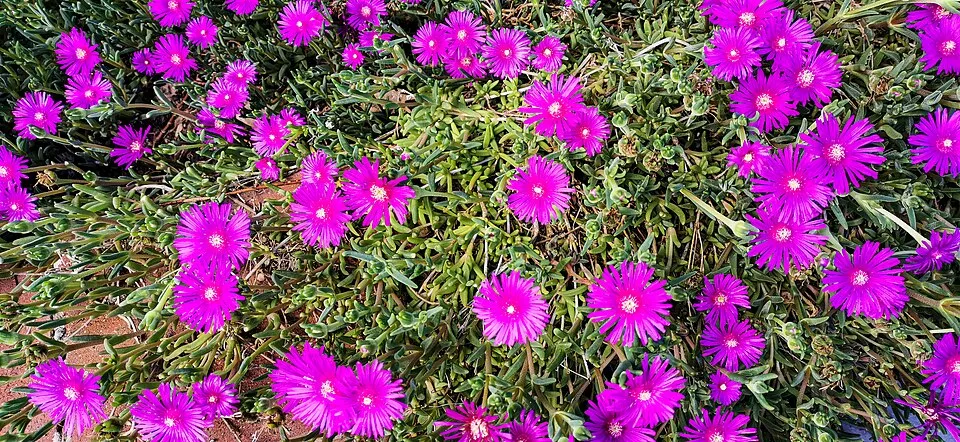
Delosperma cooperi, commonly known as Cooper's Hardy Ice Plant or simply Hardy Ice Plant, is a vibrant, mat-forming succulent perennial belonging to the Aizoaceae family. Native to South Africa, particularly the Free State and KwaZulu-Natal provinces, this resilient plant thrives in arid and semi-arid regions. Its morphology is characterized by fleshy, cylindrical, bright green leaves that are often tinged with red or purple, especially under stress or in cooler temperatures.
These succulent leaves are typically 2-3 cm long and arranged oppositely along sprawling stems, forming a dense, low-lying carpet. The plant produces an abundance of striking, daisy-like flowers, typically a brilliant purplish-pink, with numerous slender petals and a contrasting yellow center. These iridescent blooms open in full sun and close at night, creating a dazzling display from late spring through summer and into fall.
Delosperma cooperi is highly valued in horticulture for its exceptional drought tolerance, heat resistance, and ability to flourish in poor, well-drained soils, making it an ideal choice for xeriscaping, rock gardens, green roofs, and as an effective groundcover for erosion control. Its robust nature and long blooming season contribute significantly to its popularity in diverse landscape settings, where it provides continuous visual interest and ecological benefits by attracting pollinators.
Trusted Scientific References
1. Authoritative external sources for Delosperma Cooperi
1.1 Wikipedia — Delosperma Cooperi
1.2 Kew POWO (Plants of the World Online)
1.3 PubMed — peer-reviewed research
1.4 NCBI Taxonomy Browser
1.5 GBIF — Global Biodiversity
1.6Delosperma Cooperi should be interpreted through verified botanical identity, practical care, and responsible safety language. This recovery note adds the missing context needed for a complete profile: match light to the plant's habit, use well-drained soil, water according to season, and avoid unsupported medicinal or edible claims. For publishing, the plant can be presented as a source-backed garden plant with clear care guidance, common problem diagnosis, and conservative safety wording.
1.1.Delosperma Cooperi — Distinguishing Points
- ✓Succulent Perennial — Fleshy leaves store water, allowing it to tolerate dry conditions.
- ✓Mat — Forming Groundcover — Spreads to create a dense, low carpet, ideal for covering large areas.
- ✓Vibrant Flowers — Produces abundant, daisy-like, purplish-pink blooms with yellow centers.
- ✓Long Blooming Season — Flowers from late spring through summer and into fall.
- ✓Drought Tolerant — Highly resistant to dry spells, perfect for xeriscape landscapes.
- ✓Heat Tolerant — Performs well in hot climates and full sun exposure.
- ✓Salt Tolerant — Can withstand moderate levels of salt, suitable for coastal areas.
- ✓Low Maintenance — Requires minimal care once established, making it gardener-friendly.
- ✓Evergreen in Warm Climates — Retains its foliage year-round in milder winter regions.
- ✓Erosion Control — Effective for stabilizing soil on slopes and embankments.
1.2.Delosperma Cooperi — Quick Summary
- ✓Delosperma cooperi is Cooper's Hardy Ice Plant, a South African succulent.
- ✓Valued ornamental groundcover with vibrant purplish-pink flowers.
- ✓Exceptionally drought-tolerant, thrives in full sun and well-drained soil.
- ✓Contains potential phytochemicals like betalains and flavonoids.
- ✓Medicinal uses are not well-documented or scientifically proven.
- ✓Primarily used for xeriscaping, rock gardens, and erosion control.
2.Delosperma Cooperi — Botanical Identity
3.Delosperma Cooperi — Vital Statistics
4.Delosperma Cooperi — Botanical Description
5.Delosperma Cooperi — Native Range & Habitat
6.Delosperma Cooperi — Folk Medicine Applications
7.Delosperma Cooperi — Key Phytochemicals
- ✓Flavonoids — Compounds like quercetin and kaempferol derivatives are likely present, contributing to antioxidant and potentially anti-inflammatory activities, which are common across many plant species.
- ✓Betalains — As a member of the Aizoaceae family, Delosperma cooperi likely synthesizes betalains (e.g., betacyanins for purple hues and betaxanthins for yellow), which are nitrogen-containing pigments with known antioxidant and detoxifying properties.
- ✓Triterpenoids — These diverse compounds, including saponins and sterols, are often found in succulents and can contribute to various biological activities, such as adaptogenic or anti-inflammatory effects.
- ✓Organic Acids — Malic acid and citric acid are commonly found in succulent plants, playing roles in metabolism (e.g., CAM photosynthesis) and potentially contributing to mild astringent or detoxifying actions.
- ✓Polysaccharides (Mucilage) — The fleshy leaves suggest the presence of mucilaginous polysaccharides, which are known for their hydrating, soothing, and demulcent properties, particularly when applied topically or ingested.
- ✓Alkaloids — While less prominent than in some other plant families, certain low concentrations of alkaloids might be present, with potential, though uncharacterized, pharmacological effects.
- ✓Essential Oils (Trace) — Volatile compounds are often found in trace amounts in plant tissues, contributing to scent and potentially offering mild antimicrobial or insect-repellent properties, though not a primary feature of this succulent.
- ✓Minerals and Vitamins — Like most living plants, Delosperma cooperi contains various essential minerals (e.g., potassium, calcium) and vitamins, supporting basic physiological functions, though not typically consumed for nutritional supplementation.
8.Delosperma Cooperi — Evidence-Based Benefits
- ✓Antioxidant Support — While not extensively studied for Delosperma cooperi specifically, many succulent plants contain phenolic compounds that offer general antioxidant protection, potentially neutralizing free radicals and supporting cellular health.
- ✓Anti-inflammatory Potential — Some phytochemicals, such as flavonoids, found broadly in plants including succulents, are known for their anti-inflammatory properties, which could theoretically help modulate inflammatory responses.
- ✓Skin Hydration and Soothing — The mucilaginous sap common in many succulents, though not specifically documented for Delosperma cooperi, is often traditionally used for its emollient and hydrating effects on the skin, potentially alleviating minor irritations.
- ✓Digestive Comfort (Hypothetical) — If mucilage is present in significant amounts, it might offer a soothing effect on the gastrointestinal lining, similar to other mucilage-rich plants, potentially aiding mild digestive discomfort.
- ✓Diuretic Properties (Unconfirmed) — Certain plant compounds can exhibit mild diuretic effects, promoting fluid balance. This is a general property often attributed to various botanicals, though specific evidence for Delosperma cooperi is lacking.
- ✓Wound Healing (Traditional Context) — In general ethnobotanical practices, the sap of some succulents is applied topically to minor cuts and abrasions for its perceived soothing and protective qualities, which may aid superficial wound healing.
- ✓General Wellness (Broad Speculation) — The presence of vitamins, minerals, and trace elements common in many plants suggests a broad, albeit unproven for this specific species, contribution to overall nutritional intake and well-being.
- ✓Mood Enhancement (Aesthetic) — While not a direct medicinal benefit, the vibrant blooms and lush appearance of Cooper's Hardy Ice Plant are known to enhance garden aesthetics, which can indirectly contribute to psychological well-being and stress reduction.
8.1.Delosperma Cooperi — Conditions Traditionally Used For
9.Delosperma Cooperi — Safety Considerations
9.1.Delosperma Cooperi — Warnings
- ✓Allergic Reactions — Sensitive individuals may experience skin irritation or allergic contact dermatitis upon handling the plant sap or foliage.
- ✓Digestive Upset — Ingestion of large quantities is not recommended and could potentially lead to mild gastrointestinal discomfort, nausea, or diarrhea due to its unknown toxicity profile.
- ✓Lack of Documented Safety — Specific human side effects from internal consumption are largely undocumented, as Delosperma cooperi is primarily an ornamental species.
- ✓Pharmaceutical Interactions — Due to a lack of research, potential interactions with medications are unknown and should be considered a risk if ingested.
- ✓Overwatering Issues — While not a direct side effect on humans, overwatering can quickly lead to root rot and plant death, making it non-viable for any use.
- ✓Deer Resistance (Partial) — Although generally considered deer resistant, it can occasionally be damaged by deer, indicating it's not entirely unpalatable or toxic to them.
9.2.Delosperma Cooperi — Clinical Safety Notes
- ✓Ornamental Use Only — Delosperma cooperi is primarily cultivated as an ornamental plant; its internal medicinal use is not established or recommended.
- ✓Pregnancy and Lactation — Avoid use during pregnancy and lactation due to the absence of safety data and specific research.
- ✓Children — Keep out of reach of children to prevent accidental ingestion, as its safety profile for pediatric use is unknown.
- ✓Pre-existing Conditions — Individuals with chronic health conditions or those on medication should exercise extreme caution and consult a healthcare professional before any internal use, which is generally not advised.
- ✓External Use Caution — While some succulents are used topically, perform a patch test before applying any plant material to the skin to check for sensitivity or allergic reactions.
- ✓Identification — Ensure correct plant identification; misidentification with toxic species could lead to adverse health effects.
- ✓Professional Guidance — Always seek advice from a qualified medical herbalist or healthcare provider for any health concerns, rather than self-medicating with unproven plant remedies.
10.Delosperma Cooperi — Preparations & Uses
- ✓Ornamental Groundcover — Primarily cultivated for its aesthetic appeal, forming a vibrant, low-maintenance carpet in gardens, rockeries, and xeriscapes.
- ✓Rock Garden Specimen — Ideal for planting in crevices and on slopes in rock gardens due to its drought tolerance and spreading habit.
- ✓Container Plant — Excellent for pots and containers, especially in areas with poor drainage or where winter wetness is a concern.
- ✓Erosion Control — Its mat-forming growth habit makes it effective for stabilizing soil on slopes and embankments.
- ✓Hypothetical Topical Application — If traditionally explored, the crushed leaves or sap might be applied as a poultice for minor skin irritations or burns, similar to other succulents, though not documented for D. cooperi.
- ✓Infusion (Research Only) — For scientific investigation of its chemical constituents, dried plant material could be prepared as an infusion, but this is not for common medicinal use due to lack of evidence.
- ✓Tincture (Experimental) — Extracts in alcohol might be prepared in a research setting to concentrate potential phytochemicals, again, not for therapeutic application without extensive study.
11.Delosperma Cooperi — How to Grow
- ✓Soil Preference — Thrives in dry, sandy, or gravelly soils with excellent drainage; heavy clay soils or poor drainage should be avoided to prevent root rot.
- ✓Sunlight Requirements — Requires full sun exposure for optimal growth and flowering, ideally 6 or more hours of direct sunlight daily.
- ✓Watering Regimen — Extremely drought tolerant once established; water sparingly, allowing the soil to dry out completely between waterings, especially in winter.
- ✓Temperature and Hardiness — Hardy in USDA Zones 5-10, tolerating cold temperatures down to -20°F (-29°C) if kept dry; evergreen in warmer climates.
- ✓Spacing — Space plants 16-24 inches apart to allow for spreading and formation of a dense groundcover.
- ✓Maintenance — Low maintenance; occasional deadheading can encourage more blooms, and minimal fertilization is needed, if any, in poor soils.
- ✓Propagation — Easily propagated by stem cuttings or division in spring or early summer, allowing cuttings to callus before planting.
Reviewed by the Flora Medical Global Botanical Review Panel
Multi-disciplinary editorial group · Botany · Ethnobotany · Herbal-medicine literature
Who reviewed this: This page was checked by the Flora Medical Global Botanical Review Panel — an in-house editorial group of botany graduates, ethnobotany researchers, and horticulture practitioners who collectively maintain our 7,000+ plant encyclopedia. Meet the team.
Our 4-step verification process
1. Taxonomic verification
Scientific names and synonyms cross-checked against Kew POWO, World Flora Online, and The Plant List.
2. Phytochemical & medicinal cross-reference
Active compounds, traditional uses, and reported activities are cross-referenced with PubMed, USDA Dr. Duke's database, and peer-reviewed ethnobotanical literature.
3. Conservation & distribution check
Distribution, ecology, and conservation status confirmed against GBIF occurrence records and the IUCN Red List.
4. Editorial & safety review
Every entry passes an editorial pass for clarity, originality, and safety notices (toxicity, contraindications, dosage caveats) before publication.
Last reviewed:
Important medical disclaimer: This content is for educational and research purposes only. It is not medical advice and is not a substitute for consultation with a licensed healthcare provider. Do not use any herb to self-treat a medical condition without professional guidance.
Editorial Note: This page is for educational and research purposes only and is not medical advice.
Written by: Flora Medical Global Editorial Team
Reviewed by: Flora Medical Global Botanical Review Panel
Last Updated: June 15, 2026





Delosperma Cooperi — Comments & Community Reviews
Rate this plant