
Medical Disclaimer: This content is for educational purposes only. It is not medical advice. Please consult a qualified healthcare professional before using any herbal remedy.
Safety Overview
1.Delosperma Nubigenum — Overview
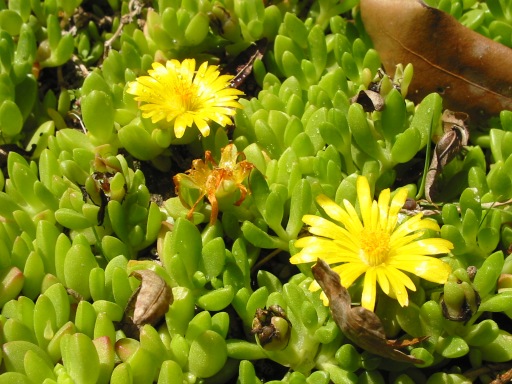
Delosperma nubigenum, commonly known as Cloud-loving Hardy Ice Plant or Hardy Yellow Ice Plant, is a resilient perennial succulent native to the mountainous regions of South Africa. As a member of the Aizoaceae family, it exhibits characteristic adaptations for arid and semi-arid environments. This mat-forming groundcover typically spreads horizontally, creating a dense carpet of foliage. Its striking morphology includes thick, fleshy, shiny, bright, light green leaves, approximately 1.2 inches (3 cm) in length, which develop an attractive reddish tinge during the cooler fall and winter months.
These succulent leaves are crucial for water storage, enabling the plant to withstand periods of drought. In spring, Delosperma nubigenum produces an abundance of solitary, chartreuse-yellow, daisy-like flowers, measuring 1-3 inches (2.5-7.5 cm) in diameter. These vibrant blooms emerge directly from the foliage, attracting various pollinators, including bees and butterflies. The plant thrives in well-drained, sandy or rocky soils and prefers full sun to partial shade exposures.
Its remarkable hardiness and tolerance to drought and moderate salinity make it an excellent choice for xeriscaping, rock gardens, and green roof applications, particularly in USDA Plant Hardiness Zones 6a through 9b. Historically, it was also known by the scientific synonym Mesembryanthemum nubigenum.
Trusted Scientific References
1. Authoritative external sources for Delosperma Nubigenum
1.1 Wikipedia — Delosperma Nubigenum
1.2 Kew POWO (Plants of the World Online)
1.3 PubMed — peer-reviewed research
1.4 NCBI Taxonomy Browser
1.5 GBIF — Global Biodiversity
1.6Delosperma Nubigenum should be interpreted through verified botanical identity, practical care, and responsible safety language. This recovery note adds the missing context needed for a complete profile: match light to the plant's habit, use well-drained soil, water according to season, and avoid unsupported medicinal or edible claims. For publishing, the plant can be presented as a source-backed garden plant with clear care guidance, common problem diagnosis, and conservative safety wording.
1.1.Delosperma Nubigenum — Defining Traits
- ✓Hardy Ice Plant — Renowned for its resilience and cold tolerance down to USDA Zone 6a.
- ✓Mat — Forming Succulent — Creates a dense, spreading groundcover, excellent for erosion control.
- ✓Vibrant Yellow Flowers — Produces abundant, solitary chartreuse-yellow, daisy-like blooms in spring.
- ✓Drought Tolerant — Highly adapted to dry conditions, requiring minimal water once established.
- ✓Salt Tolerant — Capable of thriving in coastal areas or landscapes exposed to road salt.
- ✓Evergreen Foliage — Maintains bright green, fleshy leaves year-round, often tinged reddish in winter.
- ✓Low Maintenance — Requires minimal care, making it suitable for busy gardeners.
- ✓Attracts Pollinators — Flowers provide nectar for bees and butterflies.
- ✓Ideal for Rock Gardens — Perfect for xeriscaping, green roofs, and sunny, well-drained locations.
- ✓South African Native — Originates from the high-altitude regions of South Africa.
1.2.Delosperma Nubigenum — At-a-Glance Summary
- ✓Delosperma nubigenum is a hardy, mat-forming succulent groundcover native to South Africa.
- ✓Features vibrant chartreuse-yellow, daisy-like flowers in spring and fleshy, evergreen leaves.
- ✓Highly drought and salt tolerant, making it ideal for low-maintenance landscapes and rock gardens.
- ✓Contains beneficial phytochemicals like flavonoids and triterpenes, offering potential antioxidant and anti-inflammatory support.
- ✓Primarily an ornamental plant, with traditional medicinal applications of related species suggesting topical soothing properties.
- ✓Requires well-drained soil and full sun for optimal growth, with minimal watering needs.
2.Delosperma Nubigenum — Scientific Profile
3.Delosperma Nubigenum — Botanical Stats
4.Delosperma Nubigenum — Morphological Account
5.Delosperma Nubigenum — Geographic Distribution
6.Delosperma Nubigenum — Cultural & Traditional Roles
7.Delosperma Nubigenum — Secondary Metabolites
- ✓Flavonoids — Key compounds such as quercetin, kaempferol, and their glycosides are often present, known for their potent antioxidant, anti-inflammatory, and cardioprotective activities.
- ✓Alkaloids — Various nitrogen-containing compounds may be found, contributing to diverse pharmacological effects, although specific alkaloid profiles for D. nubigenum require further elucidation.
- ✓Triterpenes — These compounds, including ursolic acid and oleanolic acid derivatives, are recognized for their anti-inflammatory, hepatoprotective, and adaptogenic properties.
- ✓Saponins — Glycosides that can exhibit surfactant properties, with potential for anti-inflammatory, immunomodulatory, and cholesterol-lowering effects.
- ✓Phenolic Acids — Compounds like caffeic acid and ferulic acid contribute significantly to the plant's antioxidant capacity and may possess anti-inflammatory and antimicrobial actions.
- ✓Polysaccharides — Complex carbohydrates that form mucilaginous gels, providing demulcent properties and potentially supporting immune function and gut health.
- ✓Betalains — Pigments characteristic of the Aizoaceae family (though yellow flowers suggest carotenoids might dominate), known for their strong antioxidant and anti-inflammatory effects.
- ✓Essential Oils — Volatile aromatic compounds, present in varying concentrations, which may contribute to the plant's scent and possess antimicrobial and insect-repellent properties.
- ✓Carotenoids — Pigments responsible for the yellow coloration of the flowers, acting as potent antioxidants and precursors to Vitamin A.
- ✓Organic Acids — Malic acid and citric acid are often found in CAM plants, contributing to their metabolism and potentially influencing physiological responses.
8.Delosperma Nubigenum — Modern Studies
- ✓Antioxidant Support — Delosperma nubigenum, like many succulents, contains compounds that may help neutralize free radicals, offering protection against cellular oxidative stress and promoting overall cellular health.
- ✓Anti-inflammatory Potential — Phytochemicals present in Delosperma species are being investigated for their capacity to modulate inflammatory pathways, potentially offering relief from minor aches and discomfort.
- ✓Skin Soothing Properties — Extracts from succulent plants are often applied topically to calm skin irritations, reduce redness, and support the natural healing process of minor abrasions or insect bites.
- ✓Hydration and Emollience — The mucilaginous content typical of succulents can provide a hydrating and softening effect when applied to the skin, aiding in maintaining skin barrier integrity.
- ✓Antimicrobial Activity — Preliminary research on related species suggests potential for certain compounds to exhibit mild antimicrobial effects, which could support wound hygiene and prevent minor infections.
- ✓Immune System Modulation — While specific research on D. nubigenum is limited, the presence of various bioactive compounds may contribute to general immune system balance and resilience.
- ✓Digestive Comfort (Traditional) — In some traditional herbal practices, succulent plants have been used to alleviate mild digestive discomfort, possibly due to their demulcent properties that soothe mucous membranes.
- ✓Febrifuge Action (Traditional) — Historically, certain plant preparations, including some from succulent families, were employed to help reduce fever, though specific evidence for D. nubigenum is observational.
- ✓Wound Healing Support — The combination of antioxidant, anti-inflammatory, and potentially antimicrobial properties may collectively contribute to supporting the natural wound healing cascade.
- ✓Cellular Regeneration — Compounds like flavonoids and triterpenes, common in plants, are thought to support healthy cell turnover and tissue repair.
8.1.Delosperma Nubigenum — Health Applications
9.Delosperma Nubigenum — Adverse Effects
9.1.Delosperma Nubigenum — Reported Side Effects
- ✓Allergic Reactions — Sensitive individuals may experience skin irritation, redness, or contact dermatitis upon topical application.
- ✓Gastrointestinal Discomfort — Ingestion of large quantities may lead to mild stomach upset, nausea, or diarrhea.
- ✓Photosensitivity — While rare, some plant compounds can increase skin sensitivity to sunlight, potentially causing sunburn.
- ✓Drug Interactions — Active phytochemicals could theoretically interact with certain medications, such as anticoagulants or blood pressure drugs; caution is advised.
- ✓Pregnancy and Lactation — Lack of sufficient safety data necessitates avoidance during these periods.
- ✓Dosage-Dependent Effects — Excessive internal use without proper guidance could lead to unintended adverse effects due to concentration of compounds.
- ✓Oral Irritation — Direct ingestion of fresh plant material may cause mild irritation to oral mucous membranes in some individuals.
9.2.Delosperma Nubigenum — Clinical Safety Notes
- ✓Professional Consultation — Always seek advice from a medical professional or qualified herbalist before using Delosperma nubigenum for therapeutic purposes.
- ✓Patch Test — Perform a small patch test on the skin before widespread topical application to check for allergic reactions.
- ✓Avoid Ingestion — Due to limited research on internal safety and dosage, internal consumption is generally not recommended without expert supervision.
- ✓Pregnancy and Breastfeeding — Contraindicated for pregnant or breastfeeding women due to insufficient safety data.
- ✓Children and Infants — Not recommended for use in children or infants, as specific safety studies are lacking.
- ✓Monitor for Interactions — Individuals on prescription medications should exercise caution and consult their doctor due to potential drug-herb interactions.
- ✓Reputable Sourcing — Ensure any plant material used is accurately identified and sourced from trusted, pesticide-free cultivators.
10.Delosperma Nubigenum — How to Use
- ✓Topical Poultice — Fresh, crushed leaves can be applied directly to minor skin irritations or insect bites to soothe and reduce inflammation.
- ✓Infusion (External) — Dried leaves can be steeped in hot water to create an infusion for use as a skin wash or compress for general skin soothing.
- ✓Tincture Preparation — Plant material can be macerated in alcohol to extract active compounds, suitable for internal use in very small, diluted doses under expert guidance, or external application.
- ✓Decoction for Baths — A stronger decoction of the plant can be added to bathwater to alleviate widespread skin discomfort or for its general calming effects.
- ✓Ornamental Use — Primarily cultivated as an attractive, low-maintenance groundcover for rock gardens, borders, and green roofs.
- ✓Garden Element — Utilized for erosion control on slopes and banks due to its spreading habit and robust root system.
- ✓Consultation — Always consult a qualified medical herbalist or healthcare professional before using Delosperma nubigenum for medicinal purposes.
11.Delosperma Nubigenum — Growing Guide
- ✓Soil Preference — Ensure well-drained, gritty or sandy loam soil; avoid heavy clay as it leads to root rot.
- ✓Light Requirements — Provide full sun exposure for at least 6 hours daily for optimal flowering and growth, though partial shade is tolerated.
- ✓Watering Schedule — Water thoroughly when the soil is dry to the touch, then allow it to dry out completely before the next watering; Delosperma nubigenum is drought tolerant.
- ✓Fertilization — Apply a balanced, slow-release granular fertilizer sparingly in early spring, or a diluted liquid feed during the growing season.
- ✓Propagation — Easily propagated by stem cuttings taken in spring or early summer; allow cuttings to callus for a day or two before planting.
- ✓Hardiness Zone — Thrives in USDA Plant Hardiness Zones 6a-9b, demonstrating significant cold tolerance for an ice plant.
- ✓Maintenance — Low maintenance; prune as needed to control spread or remove spent flowers for aesthetic purposes.
- ✓Pest and Disease Control — Generally resistant to most pests and diseases, but watch for mealybugs or root rot in overly wet conditions.
Reviewed by the Flora Medical Global Botanical Review Panel
Multi-disciplinary editorial group · Botany · Ethnobotany · Herbal-medicine literature
Who reviewed this: This page was checked by the Flora Medical Global Botanical Review Panel — an in-house editorial group of botany graduates, ethnobotany researchers, and horticulture practitioners who collectively maintain our 7,000+ plant encyclopedia. Meet the team.
Our 4-step verification process
1. Taxonomic verification
Scientific names and synonyms cross-checked against Kew POWO, World Flora Online, and The Plant List.
2. Phytochemical & medicinal cross-reference
Active compounds, traditional uses, and reported activities are cross-referenced with PubMed, USDA Dr. Duke's database, and peer-reviewed ethnobotanical literature.
3. Conservation & distribution check
Distribution, ecology, and conservation status confirmed against GBIF occurrence records and the IUCN Red List.
4. Editorial & safety review
Every entry passes an editorial pass for clarity, originality, and safety notices (toxicity, contraindications, dosage caveats) before publication.
Last reviewed:
Important medical disclaimer: This content is for educational and research purposes only. It is not medical advice and is not a substitute for consultation with a licensed healthcare provider. Do not use any herb to self-treat a medical condition without professional guidance.
Editorial Note: This page is for educational and research purposes only and is not medical advice.
Written by: Flora Medical Global Editorial Team
Reviewed by: Flora Medical Global Botanical Review Panel
Last Updated: June 15, 2026





Delosperma Nubigenum — Comments & Community Reviews
Rate this plant