
Medical Disclaimer: This content is for educational purposes only. It is not medical advice. Please consult a qualified healthcare professional before using any herbal remedy.
Safety Overview
1.Deutzia Gracilis — Plant Snapshot
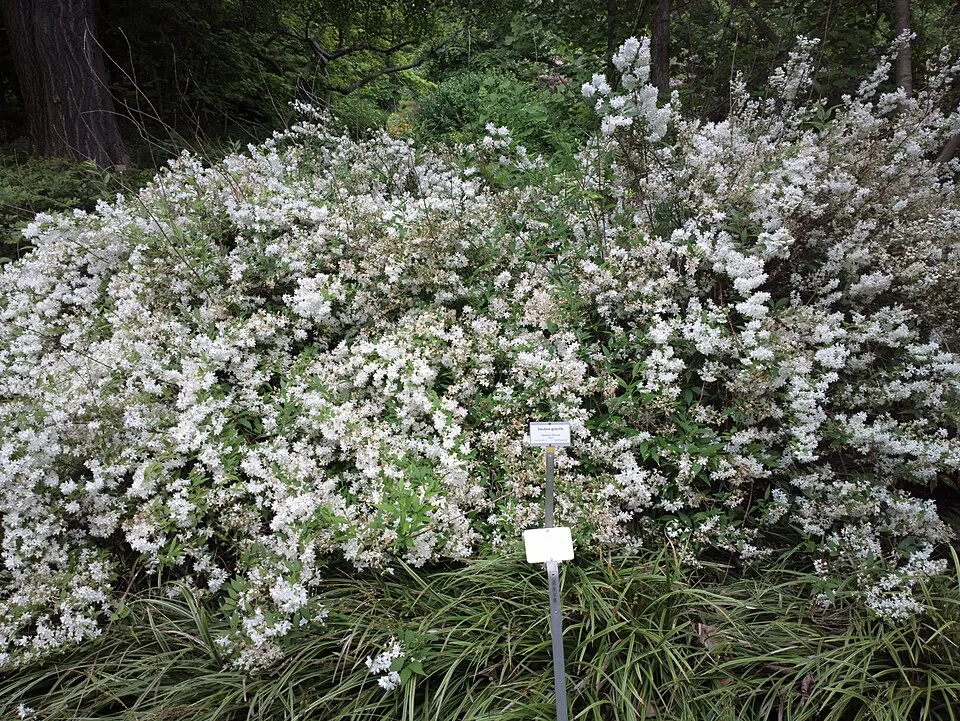
Deutzia gracilis, commonly known as slender Deutzia or Japanese Snow Flower, is a captivating deciduous shrub prized for its elegant form and abundant floral display. Typically growing to a height of 2 to 5 feet (60 to 150 cm) and spreading similarly, it develops a dense, rounded habit with gracefully arching, slender brown stems that are notably smooth. Its ovate to lanceolate leaves, ranging from 1 to 4 inches (2.5 to 10 cm) in length, exhibit a vibrant, glossy green throughout the growing season, often transitioning into appealing shades of yellow, red, or burgundy in autumn, particularly noticeable in cultivars like 'Nikko'.
The plant’s most striking feature is its profusion of small, star-shaped to bell-shaped white or pale pink flowers, each approximately 1 inch (2.5 cm) in diameter. These blossoms emerge in dense racemes or clusters from late spring to early summer, typically May to June, creating a spectacular, cascading effect. Taxonomically, Deutzia gracilis is a member of the genus Deutzia within the family Hydrangeaceae, making it a botanical relative of well-known Hydrangea species.
Its native range is confined to the mountainous regions of East Asia, predominantly in central and southern Japan, where it thrives in temperate woodlands and forest margins, often as an understory plant adapted to dappled light conditions. Historically, while primarily cultivated for its ornamental value, its origin in regions with rich ethnobotanical traditions suggests a potential, albeit currently undocumented, for broader applications that warrant further scientific exploration.
Trusted Scientific References
1. Authoritative external sources for Deutzia gracilis
1.1 Wikipedia — Deutzia gracilis
1.2 Kew POWO (Plants of the World Online)
1.3 PubMed — peer-reviewed research
1.4 NCBI Taxonomy Browser
1.5 GBIF — Global Biodiversity
1.6Deutzia Gracilis should be interpreted through verified botanical identity, practical care, and responsible safety language. This recovery note adds the missing context needed for a complete profile: match light to the plant's habit, use well-drained soil, water according to season, and avoid unsupported medicinal or edible claims. For publishing, the plant can be presented as a source-backed garden plant with clear care guidance, common problem diagnosis, and conservative safety wording.
1.1.Deutzia Gracilis — Key Features
- ✓Striking Floral Display — Profusion of small, white, star-shaped flowers in racemes during late spring to early summer.
- ✓Graceful Arching Stems — Slender, smooth stems that create an elegant, rounded, and spreading habit.
- ✓Vibrant Foliage — Glossy green leaves that often develop attractive yellow, red, or burgundy fall color.
- ✓Compact Growth Habit — Typically reaching 2-5 feet in height and spread, suitable for various garden sizes.
- ✓High Adaptability — Tolerates a range of soil types, pH levels, and is drought-tolerant once established.
- ✓Pest and Disease Resistance — Generally free from significant insect pests and plant diseases.
- ✓Deer Resistance — Seldom damaged by deer, making it a good choice for areas with wildlife.
- ✓Cold and Pollution Tolerance — Exhibits good resistance to cold temperatures and urban air pollution.
- ✓Low Maintenance — Requires minimal care beyond annual post-flowering pruning.
- ✓Ethnobotanical Potential — Origin in East Asia suggests potential, albeit undocumented, traditional uses.
1.2.Deutzia Gracilis — Concise Overview
- ✓Elegant deciduous shrub with abundant white, star-shaped flowers in late spring.
- ✓Native to East Asia, thriving in temperate woodlands.
- ✓Highly adaptable and low-maintenance, tolerant of drought and pollution.
- ✓Primarily an ornamental plant, ideal for borders, hedges, and cottage gardens.
- ✓Non-toxic to common pets (dogs, cats, horses).
- ✓Minimal pest and disease issues, making it a robust garden choice.
2.Deutzia Gracilis — Taxonomic Classification
3.Deutzia Gracilis — Quick Facts
4.Deutzia Gracilis — Morphological Account
5.Deutzia Gracilis — Where It Grows
6.Deutzia Gracilis — Cultural & Traditional Roles
7.Deutzia Gracilis — Active Compounds
- ✓Flavonoids — A diverse group of polyphenolic compounds often present in plant tissues, potentially contributing to antioxidant and anti-inflammatory effects.
- ✓Phenolic Acids — Simple aromatic compounds like caffeic acid or ferulic acid, frequently found in plants and known for their antioxidant properties.
- ✓Tannins — Astringent polyphenols that may offer protective benefits and are common in many plant species.
- ✓Saponins — Glycosides that can have diverse biological activities, though their specific role and presence in Deutzia gracilis are not well-documented.
- ✓Triterpenoids — A large class of natural products with various potential medicinal properties, including anti-inflammatory and adaptogenic effects, often found in plant waxes and resins.
- ✓Lignans — Phenolic compounds with potential antioxidant and phytoestrogenic activities, frequently found in woody plants.
- ✓Volatile Organic Compounds (VOCs) — Responsible for plant fragrances, though the specific composition and biological activity of Deutzia gracilis VOCs are largely uncharacterized.
- ✓Polysaccharides — Complex carbohydrates that can contribute to immune modulation and general plant structure, present in most plant species.
8.Deutzia Gracilis — What Research Suggests
- ✓Potential Antioxidant Support — Like many botanical species, Deutzia gracilis may contain phenolic compounds and flavonoids, which are known to exert antioxidant activity, potentially helping to neutralize free radicals and reduce oxidative stress in the body.
- ✓Modulatory Effects on Inflammation — Certain plant-derived compounds, such as triterpenoids and other polyphenols potentially present in Deutzia gracilis, are often associated with modulating inflammatory pathways, though specific research on this plant is lacking.
- ✓Hypothetical Antimicrobial Properties — Plant extracts frequently exhibit antimicrobial characteristics due to various secondary metabolites; however, specific efficacy or application for Deutzia gracilis has not been established.
- ✓Potential Astringent Action — Tannins, commonly found in many plants, could hypothetically contribute to astringent properties, which might be useful for minor skin irrititations, though this is speculative for Deutzia gracilis.
- ✓General Wellness Support — The presence of a diverse array of phytochemicals in plants often contributes to overall physiological balance and well-being, though direct evidence for Deutzia gracilis is not available.
- ✓Cardiovascular Health Speculation — Flavonoids and other antioxidants in plants are sometimes linked to cardiovascular benefits, but this is a broad generalization and not a proven effect for Deutzia gracilis.
- ✓Digestive Comfort Potential — Some plant compounds can support digestive health by soothing irritation or aiding in nutrient absorption, though specific benefits for Deutzia gracilis remain uninvestigated.
- ✓Skin Health Considerations — If certain anti-inflammatory or antioxidant compounds are present, there is a theoretical potential for topical applications to support skin health, requiring specific research.
8.1.Deutzia Gracilis — Conditions Traditionally Used For
9.Deutzia Gracilis — Adverse Effects
9.1.Deutzia Gracilis — Caution Notes
- ✓Due to the lack of documented medicinal uses for Deutzia gracilis, specific side effects are largely unknown.
- ✓Allergic Reactions — As with any plant, individuals sensitive to members of the Hydrangeaceae family or general plant allergens may experience contact dermatitis or respiratory irritation.
- ✓Ingestion Risks — While classified as non-toxic for common pets, human ingestion of large quantities of any unresearched plant material is not recommended and could lead to gastrointestinal upset.
- ✓Photosensitivity — Some plant compounds can cause photosensitivity in susceptible individuals when applied topically and exposed to sunlight, though not specifically documented for Deutzia gracilis.
- ✓Drug Interactions — If potent bioactive compounds were present, they could theoretically interact with medications, but this is currently speculative due to lack of research.
- ✓Skin Irritation — Direct contact with plant sap could potentially cause mild skin irritation in sensitive individuals.
- ✓Gastrointestinal Discomfort — Ingesting parts of the plant, even if non-toxic, might cause mild stomach upset in some individuals.
9.2.Deutzia Gracilis — Risk Assessment
- ✓Non-Toxic to Pets — Documented as non-toxic for horses, dogs, and cats, making it a safe choice for gardens frequented by common domestic animals.
- ✓Lack of Human Medicinal Research — There is currently no significant scientific research supporting the medicinal use of Deutzia gracilis in humans; therefore, internal consumption is not advised.
- ✓Ornamental Use Only — Primarily recommended for ornamental landscaping purposes; any purported medicinal benefits are speculative and require rigorous scientific validation.
- ✓Allergy Caution — Individuals with known plant allergies should handle with care to avoid potential contact dermatitis or other allergic responses.
- ✓Pregnancy and Lactation — Due to the absence of safety data, pregnant or lactating individuals should avoid any hypothetical internal use of Deutzia gracilis.
- ✓Children — Keep plant material out of reach of young children, as with all garden plants, to prevent accidental ingestion.
- ✓External Contact — Generally safe for external contact, but sensitive individuals should perform a patch test before extensive skin exposure.
10.Deutzia Gracilis — Preparation & Dosage
- ✓Deutzia gracilis is primarily cultivated as an ornamental shrub and is not traditionally documented for internal medicinal use. However, if future research were to identify specific beneficial compounds, potential preparation methods, based on general herbal practices, might include:
- ✓Infusion — For water-soluble compounds, dried leaves or flowers could be steeped in hot water to create a tea, assuming safety and efficacy are established.
- ✓Decoction — For harder plant parts like stems or roots (if used), simmering in water could extract less soluble constituents.
- ✓Tincture — An alcohol-based extraction method for a broader range of phytochemicals, typically used for concentrated remedies.
- ✓Topical Poultice/Compress — Freshly crushed leaves or flowers applied externally for localized relief, if anti-inflammatory or soothing properties were confirmed.
- ✓Culinary Use (Hypothetical) — Without specific documentation, direct culinary use is not advised; however, some edible flowers are used as garnishes, a path not explored for Deutzia gracilis.
- ✓Garden Specimen — The most common and established use, planted for its aesthetic appeal in borders, foundation plantings, or hedges.
11.Deutzia Gracilis — Propagation & Care
- ✓Site Selection — Thrives best in full sun to partial shade; in hotter climates, provide afternoon shade to prevent leaf scorch.
- ✓Soil Requirements — Prefers moist, well-drained soils of most types and is adaptable to a wide range of pH levels.
- ✓Watering — Establish with regular watering; once mature, it is drought-tolerant.
- ✓Pruning — Annual pruning is recommended immediately after flowering to maintain shape and promote new blooms, as flowers appear on old growth.
- ✓Propagation — Can be effectively propagated by softwood cuttings taken during the summer months.
- ✓Pest and Disease Management — Generally resistant to most pests and diseases, though occasional aphids or leaf miners may occur.
- ✓Environmental Tolerance — Highly resistant to adverse conditions including cold, air pollution, and transplant shock.
- ✓Frost Protection — Protect from late spring frosts, which can damage emerging buds and new growth.
Reviewed by the Flora Medical Global Botanical Review Panel
Multi-disciplinary editorial group · Botany · Ethnobotany · Herbal-medicine literature
Who reviewed this: This page was checked by the Flora Medical Global Botanical Review Panel — an in-house editorial group of botany graduates, ethnobotany researchers, and horticulture practitioners who collectively maintain our 7,000+ plant encyclopedia. Meet the team.
Our 4-step verification process
1. Taxonomic verification
Scientific names and synonyms cross-checked against Kew POWO, World Flora Online, and The Plant List.
2. Phytochemical & medicinal cross-reference
Active compounds, traditional uses, and reported activities are cross-referenced with PubMed, USDA Dr. Duke's database, and peer-reviewed ethnobotanical literature.
3. Conservation & distribution check
Distribution, ecology, and conservation status confirmed against GBIF occurrence records and the IUCN Red List.
4. Editorial & safety review
Every entry passes an editorial pass for clarity, originality, and safety notices (toxicity, contraindications, dosage caveats) before publication.
Last reviewed:
Important medical disclaimer: This content is for educational and research purposes only. It is not medical advice and is not a substitute for consultation with a licensed healthcare provider. Do not use any herb to self-treat a medical condition without professional guidance.
Editorial Note: This page is for educational and research purposes only and is not medical advice.
Written by: Flora Medical Global Editorial Team
Reviewed by: Flora Medical Global Botanical Review Panel
Last Updated: June 15, 2026





Deutzia Gracilis — Comments & Community Reviews
Rate this plant