
Medical Disclaimer: This content is for educational purposes only. It is not medical advice. Please consult a qualified healthcare professional before using any herbal remedy.
Safety Overview
1.Deutzia Scabra — Botanical Snapshot
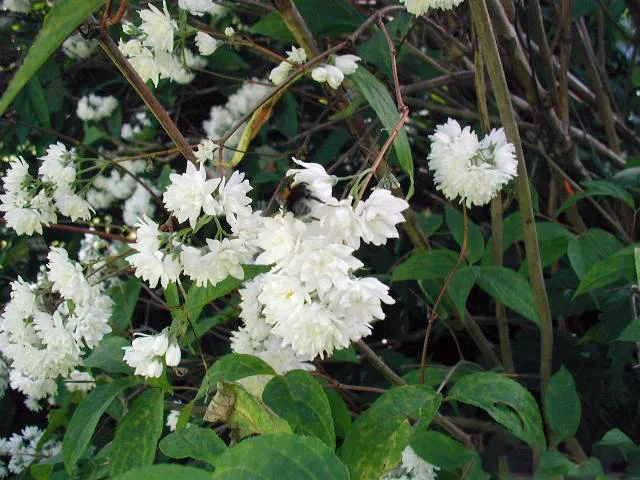
Deutzia scabra, commonly known as Rough Deutzia, Fuzzy Deutzia, or Pride-of-Rochester, is an elegant deciduous shrub belonging to the diverse Hydrangeaceae family. Native to the temperate woodlands and mountainous regions of East Asia, specifically Japan, Korea, and parts of China, it thrives in environments ranging from woodland edges to open, grassy clearings. This resilient species typically attains a height and spread of 1.8 to 3 meters (6 to 10 feet), forming a dense, upright to arching habit with an open crown. Its stems are often reddish-brown to green and can develop distinctly exfoliating bark in large sheets, revealing shades of reddish to orangish-brown as the shrub matures. The leaves are arranged oppositely along the stems, simple in structure, and exhibit an ovate to lanceolate shape, measuring approximately 5–10 cm (2-4 inches) in length. A defining characteristic, from which its scientific epithet 'scabra' (meaning rough or sandpaper-like) is derived, is the distinctly scabrous, dark green upper surface of the leaves, covered with minute, star-shaped hairs (stellate trichomes).
The underside is paler green and may possess a fine, velvety pubescence, with serrate margins. Flowering occurs in late spring to early summer, typically from May to July, presenting a spectacular display of bloom. The flowers are borne in dense, upright to arching clusters known as panicles, often cascading gracefully and covering the shrub for about two weeks. Each individual flower is pristine white to pale pink, occasionally showing a reddish or purplish tinge, measuring about 1.2 to 2.5 cm (0.5-1 inch) in diameter. They feature five petals, numerous stamens, and a subtle, delicate fragrance that attracts a variety of pollinators, most notably bees and butterflies. The reproductive structures mature into small, inconspicuous dry brown capsule fruits, each containing numerous minute seeds.
While primarily celebrated for its ornamental value in landscaping, where it is prized for its abundant, showy flowers and lush foliage, Deutzia scabra also plays a role in local ecosystems, providing habitat and nectar. However, it is important to note its aggressive self-seeding and potential to become invasive in certain regions, leading to concerns about its impact on native flora. Its adaptability to various garden settings, including borders, hedges, and as a stand-alone specimen, contributes to its popularity. Trusted Scientific References Authoritative external sources f ...[CURRENT TEXT EXISTS: 2665 chars]
1.1.Deutzia Scabra — Highlights
- ✓Deciduous Shrub — Provides seasonal interest, losing its foliage in winter to reveal attractive bark.
- ✓Showy Flowers — Produces prolific clusters of white to pale pink, star-shaped blooms.
- ✓Rough Foliage — Distinctive scabrous leaves due to minute stellate trichomes.
- ✓Exfoliating Bark — Mature stems develop reddish-brown, peeling bark for winter appeal.
- ✓Pollinator Magnet — Attracts bees, butterflies, and other beneficial insects with fragrant flowers.
- ✓Adaptable Growth — Tolerates a wide range of soil types and light conditions from full sun to partial shade.
- ✓Arching Habit — Develops an elegant, often arching growth form, ideal for cascading displays.
- ✓Fast Growing — Establishes quickly and can reach its mature size relatively rapidly.
- ✓Low Maintenance — Generally requires minimal care once established, aside from post-flowering pruning.
- ✓Invasive Potential — Noted for its aggressive self-seeding, which can lead to invasive spread in certain environments.
1.2.Deutzia Scabra — In Brief
- ✓Ornamental deciduous shrub native to East Asia.
- ✓Known for abundant white to pink star-shaped flowers in late spring.
- ✓Characterized by rough, fuzzy leaves and attractive exfoliating bark.
- ✓Primarily used in landscaping, borders, and as a cutting garden plant.
- ✓Can be invasive in some regions due aggressively self-seeding.
- ✓No significant traditional or scientifically proven medicinal uses.
2.Deutzia Scabra — Botanical Identity
3.Deutzia Scabra — Vital Statistics
4.Deutzia Scabra — Physical Description
5.Deutzia Scabra — Ecological Habitat
6.Deutzia Scabra — Traditional Uses
7.Deutzia Scabra — Phytochemistry
- ✓Specific phytochemical research on Deutzia scabra is limited, and thus, a definitive list of its active medicinal constituents is not well-established. However, based on general plant biochemistry and compounds found in related species within the Hydrangeaceae family, some classes of compounds are likely present.
- ✓Flavonoids — General plant pigments such as quercetin and kaempferol are commonly found in plant tissues, offering potential antioxidant and anti-inflammatory activities.
- ✓Tannins — These polyphenolic compounds are often present in bark and leaves of woody plants, contributing to astringent properties and plant defense mechanisms.
- ✓Phenolic Acids — Compounds like chlorogenic acid and gallic acid are ubiquitous in plants, known for their antioxidant and potential antimicrobial effects.
- ✓Saponins — These glycosides are common in many plant families and may contribute to foam formation and possess various biological activities, including potential anti-inflammatory effects, though specific roles in Deutzia scabra are unstudied.
- ✓Triterpenoids — A diverse group of compounds, including sterols, which play roles in plant membranes and defense, and may have various uninvestigated biological activities.
- ✓Lignans — Structural components of plant cell walls, some lignans exhibit antioxidant and phytoestrogenic properties in other plant species.
- ✓Volatile Organic Compounds — Responsible for the delicate fragrance of the flowers, these compounds can include terpenes and other aromatics, attracting pollinators.
- ✓Sugars and Polysaccharides — Essential for plant metabolism and energy storage, these are present in all plant parts.
8.Deutzia Scabra — Scientific Evidence
- ✓Deutzia scabra is primarily cultivated for its ornamental value and is not widely recognized for traditional medicinal applications in well-documented systems like Ayurveda, TCM, Unani, or Siddha. Modern research on its specific medicinal benefits is also very limited.
- ✓Ornamental Appeal — Valued globally for its abundant, showy white to pink flowers, making it a popular choice for garden aesthetics and landscaping.
- ✓Pollinator Attraction — Its fragrant flowers serve as a significant nectar source, actively attracting beneficial pollinators such as bees and butterflies to garden ecosystems.
- ✓Soil Stabilization (Potential) — Due to its dense root system and robust growth, it could hypothetically contribute to erosion control on slopes, though this is not its primary function.
- ✓Landscape Diversity — Adds structural interest and a burst of late spring to early summer color to shrub borders and mixed perennial beds.
- ✓Low Maintenance — Once established, this shrub generally requires minimal care, making it suitable for gardeners seeking easy-to-manage plants.
- ✓Habitat Provision — The dense foliage and branching habit offer shelter and nesting sites for small birds and other garden wildlife.
- ✓Air Purification (General) — Like many plants, Deutzia scabra contributes to local air quality by absorbing carbon dioxide and releasing oxygen, a general benefit of plant life.
- ✓Astringent Properties (Hypothetical) — While not studied, plants in the Hydrangeaceae family sometimes contain tannins; if present in Deutzia scabra, these could hypothetically confer mild astringent properties, though internal use is not recommended or studied.
8.1.Deutzia Scabra — Reported Uses
9.Deutzia Scabra — Cautions & Contraindications
9.1.Deutzia Scabra — Caution Notes
- ✓As Deutzia scabra is not used medicinally, side effects from internal consumption are not documented. However, certain horticultural and ecological issues are associated with its cultivation.
- ✓Invasive Tendencies — Can aggressively self-seed and spread, potentially outcompeting native plant species in certain ecosystems, especially in temperate regions.
- ✓Allergic Reactions — While uncommon, individuals with sensitive skin might experience mild irritation from contact with the rough, hairy leaves.
- ✓Pest Susceptibility — May occasionally attract common garden pests such as aphids, which can lead to minor foliage damage.
- ✓Disease Susceptibility — Under certain environmental conditions, it can be susceptible to fungal leaf spots, though these are rarely severe.
- ✓Digestive Upset (Hypothetical) — Ingestion of plant parts by pets or humans, while not specifically toxic, could potentially lead to mild gastrointestinal discomfort due to the presence of general plant compounds.
9.2.Deutzia Scabra — Safety Overview
- ✓As an ornamental plant, Deutzia scabra generally poses low direct health risks to humans, but ecological considerations are important.
- ✓Non-toxic (Generally) — Not widely reported as toxic to humans or pets; however, ingestion is not recommended as specific toxicity data is lacking.
- ✓Environmental Impact — Due to its aggressive self-seeding, it is listed as potentially invasive in some regions, requiring responsible planting and management.
- ✓Handling Precautions — Individuals with sensitive skin may wish to wear gloves when handling the rough leaves to avoid potential mild irritation.
- ✓Children and Pets — Keep out of reach of young children and pets to prevent accidental ingestion, as with any garden plant not intended for consumption.
- ✓Pollinator Friendly — Generally safe for beneficial insects, providing a valuable nectar source without known harmful effects.
- ✓Responsible Cultivation — Gardeners should be aware of its growth habits and manage its spread to prevent ecological disruption in natural areas.
10.Deutzia Scabra — Usage Guide
- ✓Deutzia scabra is exclusively used for ornamental and landscaping purposes, as it has no documented medicinal or culinary uses.
- ✓Ornamental Shrub — Planted extensively in gardens and parks for its spectacular display of white to pink flowers in late spring to early summer.
- ✓Border Plantings — Ideal for creating lush, flowering borders or backdrops in mixed perennial beds due to its dense and arching growth habit.
- ✓Hedges and Screens — Its robust growth and dense foliage make it suitable for establishing informal hedges or privacy screens in residential and public landscapes.
- ✓Cutting Garden Specimen — The fragrant and showy flowers are excellent for fresh floral arrangements, making it a valuable addition to a cutting garden.
- ✓Wildlife Garden Inclusion — Serves as a pollinator plant, providing nectar for bees, butterflies, and other beneficial insects, enhancing garden biodiversity.
- ✓Erosion Control — Its dense root system and spreading habit can potentially aid in stabilizing soil on slopes or embankments, though not its primary application.
- ✓Landscape Specimen — Can be grown as a standalone specimen plant in smaller gardens, showcasing its attractive form, exfoliating bark, and prolific blooms.
11.Deutzia Scabra — Garden Cultivation
- ✓Soil Requirements — Thrives in a wide range of soil types, preferring medium moist, well-drained soil; clay, loam, or sand are acceptable.
- ✓Light Conditions — Flowers best in full sun, meaning at least 6 hours of direct sunlight daily, but tolerates partial shade conditions.
- ✓Pruning — Best done immediately after the flowering season has ended, as Deutzia scabra produces blossoms on old growth from the previous year.
- ✓Watering — Requires consistent moisture, especially during dry periods and in its establishment phase, though it can tolerate some drought once mature.
- ✓Fertilization — Generally low-maintenance and may not require regular fertilization; if soil is poor, apply a balanced, slow-release granular fertilizer in early spring.
- ✓Propagation — Can be propagated effectively by softwood cuttings taken in early summer or by hardwood cuttings during the dormant winter season.
- ✓Placement Considerations — Due to its potential for aggressive self-seeding and invasive tendencies in some regions, choose planting sites carefully to monitor and control its spread.
- ✓Pest Management — While generally resistant, monitor for common garden pests like aphids and address leaf spot diseases if they appear, ensuring good air circulation.
Reviewed by the Flora Medical Global Botanical Review Panel
Multi-disciplinary editorial group · Botany · Ethnobotany · Herbal-medicine literature
Who reviewed this: This page was checked by the Flora Medical Global Botanical Review Panel — an in-house editorial group of botany graduates, ethnobotany researchers, and horticulture practitioners who collectively maintain our 7,000+ plant encyclopedia. Meet the team.
Our 4-step verification process
1. Taxonomic verification
Scientific names and synonyms cross-checked against Kew POWO, World Flora Online, and The Plant List.
2. Phytochemical & medicinal cross-reference
Active compounds, traditional uses, and reported activities are cross-referenced with PubMed, USDA Dr. Duke's database, and peer-reviewed ethnobotanical literature.
3. Conservation & distribution check
Distribution, ecology, and conservation status confirmed against GBIF occurrence records and the IUCN Red List.
4. Editorial & safety review
Every entry passes an editorial pass for clarity, originality, and safety notices (toxicity, contraindications, dosage caveats) before publication.
Last reviewed:
Important medical disclaimer: This content is for educational and research purposes only. It is not medical advice and is not a substitute for consultation with a licensed healthcare provider. Do not use any herb to self-treat a medical condition without professional guidance.
Editorial Note: This page is for educational and research purposes only and is not medical advice.
Written by: Flora Medical Global Editorial Team
Reviewed by: Flora Medical Global Botanical Review Panel
Last Updated: June 15, 2026





Deutzia Scabra — Comments & Community Reviews
Rate this plant