

Medical Disclaimer: This content is for educational purposes only. It is not medical advice. Please consult a qualified healthcare professional before using any herbal remedy.
Safety Overview
1.Dhataki — Overview
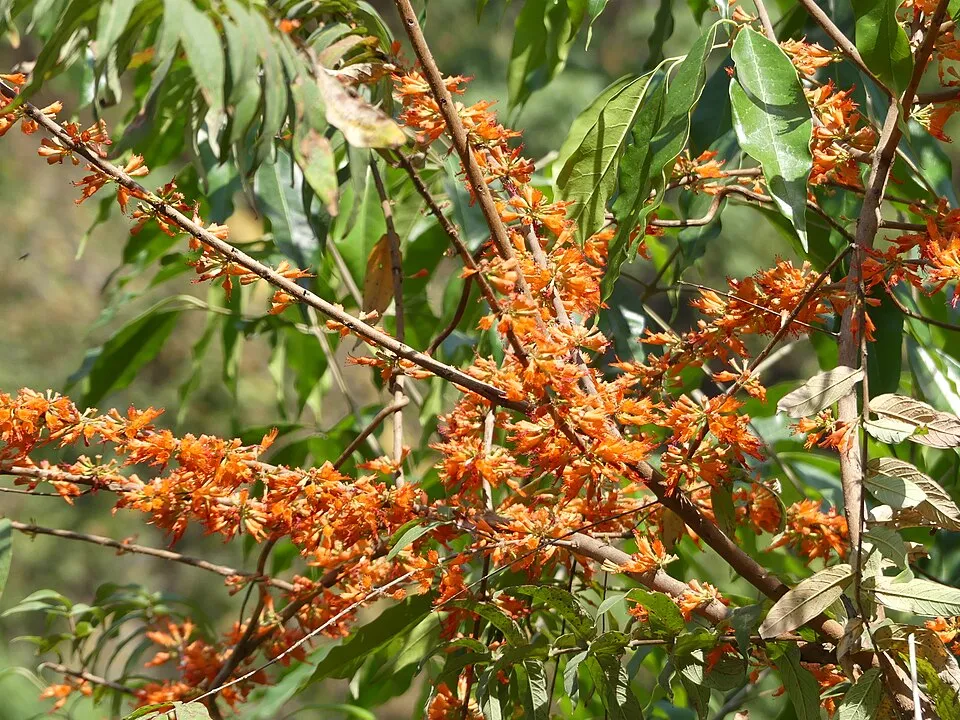
Woodfordia fruticosa, known as Dhataki, is a robust, deciduous shrub belonging to the Lythraceae family, typically reaching heights of 1 to 3 meters, though some mature specimens can grow up to 5 meters. Its branching pattern is often widely spreading, creating a rounded, bushy silhouette that is particularly striking during its flowering period. The leaves are simple, arranged oppositely or sub-oppositely along the stems, sometimes in whorls of three. They are generally elliptical to ovate-lanceolate in shape, measuring approximately 8 to 12 cm in length and 3 to 5 cm in width. They exhibit an entire margin, a prominent midrib that is often reddish, and distinct reticulate venation, presenting a glossy dark green adaxial surface and a paler, sometimes finely pubescent, abaxial surface. The texture is distinctly smooth and somewhat leathery, contributing to its resilience.
During the dry season, Dhataki sheds its leaves, giving way to a spectacular floral display that makes it easily identifiable. The most striking feature of Dhataki is its vibrant inflorescence. The flowers are distinctive, tubular, and pentamerous, typically appearing in dense, axillary clusters or panicles along the leafless branches, creating a fiery spectacle of color. Their color ranges from bright yellow to vivid orange upon opening, deepening to a rich reddish-crimson as they mature, a color transformation believed to attract specific avian and insect pollinators. Each flower possesses a prominent, persistent calyx tube with 5-6 lobes and numerous exserted stamens that are significantly longer than the petals, giving them a unique, brush-like appearance. Blooming typically occurs from February to May, though it can extend to July depending on regional climatic conditions and moisture availability.
Following successful pollination, the plant produces small, ovoid to sub-globose capsules, approximately 6-8 mm long, which are enclosed within the persistent calyx and contain numerous minute, dark brown seeds. The bark of Woodfordia fruticosa is smooth and pale brown or reddish-brown when young, gradually becoming rough, longitudinally fissured, and exfoliating in thin, papery strips with age, revealing lighter, often reddish inner bark layers. The root system consists of a sturdy taproot with numerous fibrous lateral roots, anchoring the shrub firmly and enabling it to access moisture from deeper soil layers, contributing significantly to its notable drought tolerance. Dhataki is indig ...[CURRENT TEXT EXISTS: 3847 chars]
1.1.Dhataki — Key Features
- ✓Deciduous Shrub — Sheds leaves during the dry season, revealing a spectacular floral display.
- ✓Vibrant Flowers — Produces dense clusters of tubular, reddish-crimson flowers, resembling flames.
- ✓Exserted Stamens — Flowers have numerous stamens significantly longer than petals, giving a brush-like appearance.
- ✓Astringent Properties — High tannin content makes it a powerful natural astringent.
- ✓Fermentation Catalyst — Essential ingredient for initiating fermentation in Ayurvedic Asava and Arishta preparations.
- ✓Drought Tolerant — Possesses a strong root system allowing it to thrive in dry conditions.
- ✓Wide Distribution — Native to the Indian subcontinent and parts of Southeast Asia.
- ✓Adaptable Growth — Found in diverse habitats from scrub forests to roadsides.
- ✓Oppositely Arranged Leaves — Simple, elliptical to ovate-lanceolate leaves with prominent venation.
- ✓Bark Exfoliation — Mature bark becomes fissured and exfoliates in papery strips.
- ✓Ayurvedic Significance — Deeply rooted in traditional Indian medicine for centuries.
- ✓Pitta — Kapha Balancer — Balances Pitta and Kapha doshas according to Ayurvedic principles.
- ✓Anti — diarrheal Action — Effectively used to treat diarrhea and dysentery.
- ✓Hemostatic Use — Valued for its ability to control various types of bleeding.
- ✓Wound Healing — Applied topically to promote the healing of wounds and skin conditions.
1.2.Dhataki — Concise Overview
- ✓Primary Use — Renowned in Ayurveda as a potent astringent and fermentation catalyst for Asavas and Arishtas.
- ✓Key Compounds — Rich in tannins, including gallic acid and ellagic acid, responsible for its hemostatic and anti-diarrheal actions.
- ✓Traditional System — A cornerstone herb in Ayurvedic medicine, also used in Unani and Siddha for similar properties.
- ✓Distinctive Feature — Known as 'Fire Flame Bush' for its vibrant, reddish-crimson flowers that bloom on leafless branches.
- ✓Major Benefit — Highly effective for managing diarrhea, dysentery, and various bleeding disorders.
- ✓Safety Note — Overdose can lead to delirium; consult a practitioner for appropriate dosage.
- ✓Habitat — Native to the Indian subcontinent and Southeast Asia, thriving in diverse, often degraded, environments.
2.Dhataki — Scientific Profile
3.Dhataki — Reference Facts
4.Dhataki — Structural Profile
5.Dhataki — Geographic Distribution
6.Dhataki — Historical Applications
7.Dhataki — Active Compounds
- ✓Tannins — High concentrations of hydrolyzable tannins, including gallic acid and ellagic acid, are prominent. These compounds are responsible for Dhataki's strong astringent, anti-inflammatory, and antioxidant properties, contributing significantly to its wound healing and anti-diarrheal effects.
- ✓Flavonoids — Various flavonoid glycosides and aglycones are present, such as quercetin and kaempferol derivatives. These compounds contribute to the plant's antioxidant, anti-inflammatory, and antimicrobial activities.
- ✓Phenolic Acids — Beyond gallic and ellagic acids, other phenolic acids like caffeic acid and ferulic acid may be present. These compounds offer additional antioxidant and protective benefits against oxidative stress.
- ✓Triterpenoids — Compounds like beta-sitosterol, a phytosterol, are found in Dhataki. Beta-sitosterol is known for its anti-inflammatory, immunomodulatory, and cholesterol-lowering properties.
- ✓Glycosides — Various glycosidic compounds, which are often sugar-bound active molecules, contribute to the plant's diverse pharmacological effects, including potential cardiotonic or adaptogenic actions.
- ✓Saponins — Saponins may be present, contributing to expectorant, anti-inflammatory, and immune-stimulating activities, though their specific role in Dhataki's medicinal profile is less emphasized than tannins.
- ✓Alkaloids — While not a primary class, trace amounts of alkaloids might be found, which could contribute to minor pharmacological effects, though Dhataki is not typically recognized as an alkaloid-rich plant.
- ✓Sugars — Simple sugars are naturally present in the flowers, playing a crucial role as a substrate for the fermentation process in Ayurvedic Asava and Arishta preparations, acting as a natural energy source for microbial activity.
- ✓Fixed Oils — Small amounts of fixed oils or fatty acids might be present, contributing to the plant's overall lipid profile and potentially offering some emollient or protective qualities when applied topically.
- ✓Essential Oils — Trace amounts of volatile compounds giving a characteristic aroma may be present, contributing to the plant's traditional use and potentially offering mild antimicrobial or carminative effects.
- ✓Resins — Resinous components can be found, which often possess antiseptic and protective properties, contributing to the plant's wound healing capabilities and traditional applications.
8.Dhataki — Modern Studies
- ✓Astringent Action — Dhataki flowers are renowned for their potent astringent properties, primarily due to a high concentration of tannins. This action helps to constrict tissues, reduce secretions, and promote healing, making it valuable in traditional Ayurvedic formulations for various conditions.
- ✓Anti-diarrheal — In Ayurveda, Dhataki is a prime herb for managing Atisara (diarrhea) and dysentery. Its astringent qualities help to firm stools, reduce fluid loss, and alleviate intestinal inflammation, thereby restoring normal bowel function.
- ✓Hemostatic Properties — The styptic nature of Woodfordia fruticosa makes it effective in controlling various bleeding disorders (Pittasra). It is traditionally used to staunch menorrhagia (excessive menstrual bleeding), epistaxis (nasal bleeding), and bleeding per rectum, by promoting coagulation and tissue constriction.
- ✓Wound Healing — Dhataki flowers, when applied topically as a paste or powder, accelerate wound healing. Their antimicrobial and astringent actions cleanse the wound, reduce exudation, and encourage tissue regeneration, as described in classical Ayurvedic texts for Sandhaneeya (wound healing) benefits.
- ✓Anti-inflammatory — The plant possesses anti-inflammatory properties, which contribute to its use in reducing swelling and pain. This makes it beneficial for conditions like Visarpa (spreading skin diseases, including herpes) and other inflammatory skin conditions, helping to soothe irritation.
- ✓Antimicrobial Activity — Dhataki exhibits significant antimicrobial and anthelmintic (Krimighna) properties. It is traditionally used to combat various infections and parasitic infestations, supporting the body's natural defense mechanisms against pathogens.
- ✓Detoxifying Agent — Historically, Dhataki has been considered an anti-poisonous (Visaghna) herb in Ayurveda. It aids in neutralizing toxins and supporting the body's detoxification processes, contributing to overall systemic cleansing.
- ✓Urinary Health Support — The herb is traditionally used to restore normal urine color (Mutra Virajaneeya) and is indicated in Pittaja Prameha (certain urinary disorders associated with excess Pitta). Its cooling and astringent properties help balance urinary functions.
- ✓Digestive Aid — While primarily known for its anti-diarrheal action, Dhataki also supports overall digestive health. It helps regulate intestinal motility and reduces excessive thirst (Trushnahara), often associated with imbalanced Pitta in the digestive system.
- ✓Skin Conditions Management — Due to its anti-inflammatory, astringent, and antimicrobial effects, Dhataki is a valuable remedy for various skin afflictions. It is particularly used for conditions like erysipelas, herpes, and other spreading skin diseases, promoting clearer and healthier skin.
- ✓Fever Management — Traditionally, the leaves of Dhataki are used in the Konkan region for treating fevers, especially those accompanied by a burning sensation (Paittika Jvara). Its cooling (Sheeta Veerya) property helps to alleviate feverish symptoms and discomfort.
- ✓Reproductive Health — Dhataki flowers are utilized in Ayurvedic medicine to manage excessive vaginal secretions, such as leukorrhea, and to regulate menorrhagia. Its astringent action helps to tone and tighten reproductive tissues.
- ✓Fermentation Catalyst — Uniquely, Dhataki flowers are indispensable as a fermenting agent in almost all Asava and Arishta preparations in Ayurveda. They initiate and stabilize the fermentation process, which is crucial for extracting and preserving the medicinal properties of other herbs in these liquid formulations.
- ✓General Debility — In traditional practices, Dhataki is sometimes used as a Rasayana, an adaptogenic herb that helps combat general debility and body weakness. It is believed to restore vitality and improve overall systemic strength.
- ✓Oral Health — The astringent properties of Dhataki can be beneficial for oral health, helping to tighten gums and reduce bleeding. It may be included in traditional formulations for gum health and to alleviate oral inflammations.
8.1.Dhataki — Therapeutic Indications
9.Dhataki — Precautions & Warnings
9.1.Dhataki — Caution Notes
- ✓Delirium — Overdosing on Dhataki, especially due to its 'Madakara' (intoxicating) property, can lead to symptoms of delirium, confusion, or altered mental states. Adhere strictly to recommended dosages.
- ✓Constipation — Due to its strong astringent action, excessive or prolonged use of Dhataki may lead to constipation in some individuals, particularly those prone to it.
- ✓Dryness — The 'Rooksha' (dry) quality of Dhataki may exacerbate dryness in individuals with a dominant Vata constitution or those already experiencing dry skin, eyes, or mucous membranes.
- ✓Gastrointestinal Discomfort — In sensitive individuals, high doses might cause mild stomach upset, nausea, or indigestion, although generally well-tolerated at therapeutic levels.
- ✓Allergic Reactions — As with any plant material, rare allergic reactions such as skin rashes, itching, or respiratory issues may occur in susceptible individuals.
- ✓Interference with Hydration — While useful for excessive thirst, its intense astringency might paradoxically lead to a feeling of dryness if used improperly or in excess.
9.2.Dhataki — Risk Assessment
- ✓Pregnancy Warning — Dhataki should be used with caution or avoided during pregnancy due to insufficient safety data regarding its effects on fetal development. Consult a healthcare professional before use.
- ✓Lactation Warning — Nursing mothers should exercise caution and seek medical advice before using Dhataki, as there is limited research on its excretion into breast milk and potential effects on infants.
- ✓Drug Interactions — Dhataki's high tannin content may interfere with the absorption of certain medications, particularly iron supplements or other drugs that bind to tannins. Maintain a time gap between Dhataki and other medications.
- ✓Anticoagulant Interactions — Due to its hemostatic properties, Dhataki might theoretically interact with anticoagulant or antiplatelet medications, potentially altering blood clotting. Use under medical supervision.
- ✓Gastrointestinal Sensitivity — Individuals with pre-existing severe constipation, irritable bowel syndrome (IBS) with constipation, or other chronic gastrointestinal sensitivities should use Dhataki cautiously.
- ✓Children and Elderly — Use in children and the elderly should be under the guidance of a qualified healthcare practitioner, with adjusted dosages appropriate for age and physiological condition.
- ✓Delirium Risk — Strict adherence to recommended dosages is crucial to avoid the 'Madakara' effect, which can lead to delirium or altered mental states, particularly with higher doses.
- ✓Consultation Recommended — Always consult a qualified medical herbalist or Ayurvedic physician before starting Dhataki, especially if you have underlying health conditions or are taking other medications.
10.Dhataki — How to Use
- ✓Decoction/Tea — For internal use, a decoction of Dhataki flowers is commonly prepared. Steep 1-3 grams of dried flowers in 200 ml of hot water for 10-15 minutes, then strain. Consume 1-2 times daily for diarrhea or bleeding disorders, as advised by an Ayurvedic practitioner.
- ✓Powder (Churna) — Dried Dhataki flowers are ground into a fine powder. The typical dosage is 1-3 grams of this powder, mixed with honey or warm water, taken once or twice a day, particularly for its astringent and anti-inflammatory effects.
- ✓Topical Paste — For external application on wounds, skin conditions, or burns, a paste can be made by grinding fresh or rehydrated dried flowers with a small amount of water. Apply directly to the affected area, often mixed with castor oil for burns.
- ✓Fermented Preparations (Asava/Arishta) — Dhataki flowers are a crucial ingredient in numerous Ayurvedic fermented liquid medicines. They act as a fermenting agent and contribute their medicinal properties. These preparations (e.g., Mustharishtam) are taken in prescribed doses, usually 15-30 ml with an equal amount of water, after meals.
- ✓Gargle/Mouthwash — Due to its astringent properties, a mild decoction of Dhataki flowers can be used as a gargle or mouthwash to alleviate gum inflammation, mouth ulcers, or sore throats. Use 2-3 times daily as needed.
- ✓Baths for Skin Conditions — For widespread skin irritations or conditions like erysipelas, a strong decoction of Dhataki flowers can be added to bathwater. This allows for broad topical exposure to its anti-inflammatory and antiseptic compounds.
- ✓Infused Oil — Dhataki flowers can be infused into a carrier oil (like sesame or coconut oil) by gentle heating over a period. This infused oil can then be used for massage on inflamed joints or skin, or for wound care.
- ✓Poultice — A warm poultice made from crushed Dhataki leaves or flowers can be applied to areas of localized swelling or pain, providing relief through its anti-inflammatory action.
11.Dhataki — Growing Guide
- ✓Soil Requirements — Dhataki prefers well-drained, fertile loamy or sandy-loamy soils. It tolerates a range of soil pH from slightly acidic to neutral (6.0-7.5) and can adapt to degraded lands, indicating its resilience.
- ✓Light Exposure — This shrub thrives in full sun exposure, requiring at least 6-8 hours of direct sunlight daily for optimal growth and abundant flowering. Partial shade can be tolerated but may result in fewer blooms.
- ✓Watering — Woodfordia fruticosa is drought-tolerant once established, but regular watering is crucial during its initial growth phase and prolonged dry spells. Avoid waterlogging, as it can lead to root rot.
- ✓Temperature and Climate — Dhataki is well-suited to tropical and subtropical climates. It prefers warm temperatures and can tolerate both dry and humid conditions, but is sensitive to frost.
- ✓Propagation — Propagation is primarily done through seeds, which germinate readily, or through stem cuttings. Cuttings from semi-hardwood branches taken during the monsoon season tend to root well.
- ✓Fertilization — While adaptable, applying a balanced organic fertilizer annually during the growing season can enhance vigor and flowering. Composted manure or a slow-release granular fertilizer is suitable.
- ✓Pruning — Light pruning after the flowering season helps maintain a bushy shape, encourages new growth, and can increase flower production in subsequent seasons. Remove dead or diseased branches regularly.
- ✓Pests and Diseases — Dhataki is generally robust and not prone to severe pest or disease issues. Occasional aphid infestations or fungal spots can be managed with organic pesticides or fungicides if necessary.
- ✓Harvesting — The primary medicinal part, the flowers, are harvested when fully mature and vibrant red, typically from February to May. They should be carefully picked and dried in shade to preserve their color and active constituents.
Reviewed by the Flora Medical Global Botanical Review Panel
Multi-disciplinary editorial group · Botany · Ethnobotany · Herbal-medicine literature
Who reviewed this: This page was checked by the Flora Medical Global Botanical Review Panel — an in-house editorial group of botany graduates, ethnobotany researchers, and horticulture practitioners who collectively maintain our 7,000+ plant encyclopedia. Meet the team.
Our 4-step verification process
1. Taxonomic verification
Scientific names and synonyms cross-checked against Kew POWO, World Flora Online, and The Plant List.
2. Phytochemical & medicinal cross-reference
Active compounds, traditional uses, and reported activities are cross-referenced with PubMed, USDA Dr. Duke's database, and peer-reviewed ethnobotanical literature.
3. Conservation & distribution check
Distribution, ecology, and conservation status confirmed against GBIF occurrence records and the IUCN Red List.
4. Editorial & safety review
Every entry passes an editorial pass for clarity, originality, and safety notices (toxicity, contraindications, dosage caveats) before publication.
Last reviewed:
Important medical disclaimer: This content is for educational and research purposes only. It is not medical advice and is not a substitute for consultation with a licensed healthcare provider. Do not use any herb to self-treat a medical condition without professional guidance.
Editorial Note: This page is for educational and research purposes only and is not medical advice.
Written by: Flora Medical Global Editorial Team
Reviewed by: Flora Medical Global Botanical Review Panel
Last Updated: June 15, 2026





Dhataki — Comments & Community Reviews
Rate this plant