


Medical Disclaimer: This content is for educational purposes only. It is not medical advice. Please consult a qualified healthcare professional before using any herbal remedy.
Safety Overview
1.Dhattura (Thorn Apple) — At a Glance
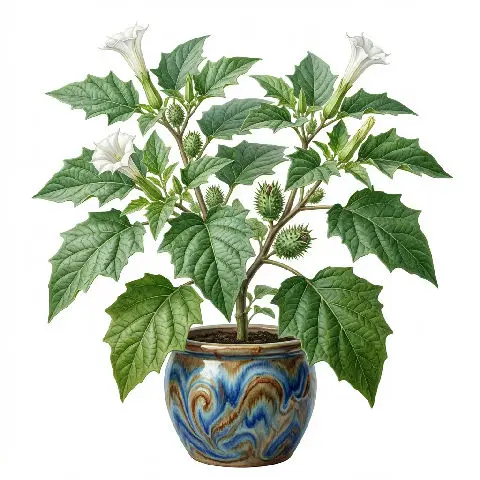
Datura metel, widely recognized as Dhattura (Thorn Apple) or Devil's Trumpet, is a captivating and highly significant plant within the Solanaceae family, known for both its striking ornamental value and potent medicinal, albeit toxic, properties. This robust perennial herb typically achieves a height of up to 1.5 meters, presenting a sturdy, branching stem that transitions from a smooth, grayish-brown bark in its juvenile state to a more rugged, textured surface with maturity. Its foliage is characterized by large, ovate-lanceolate leaves, often measuring between 10 to 30 centimeters in length, distinguished by their dark green hue and a slightly hairy texture that is soft to the touch. The plant's most notable feature is its magnificent, trumpet-shaped flowers, which can extend up to 25 centimeters. These blossoms exhibit a spectrum of colors, predominantly creamy white to pale yellow, frequently adorned with delicate purple shading, and are a common sight during the warmer summer months.
Following successful pollination, Dhattura (Thorn Apple) produces a distinctively spiny, globular capsule fruit, intricately designed to house numerous small, kidney-shaped seeds, all of which are highly toxic. Native to the tropical and subtropical belts of the world, Datura metel thrives in diverse environments, from its ancestral homes in India and parts of Africa to widespread naturalization across the Americas and other disturbed habitats like roadsides and waste grounds. Its adaptability to varying soil conditions, though preferring fertile and well-draining substrates, contributes to its broad geographical spread. Taxonomically, it is classified under the order Solanales, a group renowned for encompassing a multitude of agriculturally important and medicinally active plants. The profound impact of Dhattura (Thorn Apple) stems from its rich phytochemical profile, particularly the presence of tropane alkaloids such as atropine, scopolamine, and hyoscyamine.
These compounds are the biochemical architects behind the plant's potent psychoactive, sedative, and anticholinergic effects, which contribute to both its therapeutic applications in controlled settings and its significant toxicity. Historically and culturally, Datura metel holds deep roots in various traditional belief systems and ethnomedical practices, especially in Ayurvedic, Unani, and Chinese medicine, where specific parts of the plant have been cautiously utilized for centuries. Its presence in religious c ...[CURRENT TEXT EXISTS: 3050 chars]
1.1.Dhattura (Thorn Apple) — Highlights
- ✓Trumpet — shaped Flowers — Datura metel is distinguished by its large, showy, trumpet-shaped flowers, often creamy white to pale yellow with purple tinges.
- ✓Spiny Fruit Capsule — The plant produces a characteristic globular fruit covered in spines, containing numerous toxic seeds.
- ✓Ovate — Lanceolate Leaves — Its leaves are large, ovate to lanceolate, dark green, and often covered with fine hairs.
- ✓Potent Tropane Alkaloids — Contains high concentrations of highly toxic tropane alkaloids like atropine and scopolamine.
- ✓Perennial Herb — Typically grows as a perennial herb, reaching up to 1.5 meters in height.
- ✓Widespread Distribution — Native to tropical and subtropical regions, now naturalized globally in disturbed areas.
- ✓Ornamental Appeal — Despite its toxicity, it is often cultivated for its striking floral display.
- ✓Anticholinergic Properties — The alkaloids impart significant anticholinergic effects on the body.
- ✓Traditional Medicinal Use — Historically used in various traditional medicine systems for a range of ailments, with extreme caution.
- ✓Distinctive Odor — The plant emits a somewhat strong, unpleasant odor, particularly when leaves are crushed.
- ✓Rapid Growth Rate — Dhattura (Thorn Apple) is known for its relatively fast growth under optimal conditions.
- ✓Adaptable to Soils — While preferring rich soil, it can tolerate a variety of soil types, including poor and disturbed grounds.
- ✓Psychoactive Potential — Recognized for its hallucinogenic and deliriant effects, leading to its abuse potential.
- ✓Solanaceae Family Member — Belongs to the nightshade family, known for its diverse chemical compounds.
- ✓Cultural Significance — Holds religious and ritualistic importance in some cultures, particularly in India.
1.2.Dhattura (Thorn Apple) — Concise Overview
- ✓Primary Use — Traditionally employed for analgesic, anti-inflammatory, and antispasmodic effects, primarily external applications.
- ✓Key Compounds — Potent tropane alkaloids like atropine, scopolamine, and hyoscyamine.
- ✓Traditional Systems — Deeply rooted in Ayurveda, Unani, and traditional Chinese medicine for specific, highly controlled uses.
- ✓Extreme Toxicity — All parts of the plant, especially seeds, are highly poisonous and can be fatal if ingested.
- ✓Bronchodilator — Historically used for asthma relief through inhalation, a practice now considered extremely dangerous.
- ✓External Application — Most traditional therapeutic uses involve topical application for pain, inflammation, and skin issues.
- ✓Psychoactive Effects — Known for its hallucinogenic properties, leading to recreational abuse and severe poisoning.
- ✓Solanaceae Family — Member of the nightshade family, which includes both food crops and many toxic plants.
2.Dhattura (Thorn Apple) — Scientific Identity
3.Dhattura (Thorn Apple) — Vital Statistics
4.Dhattura (Thorn Apple) — Botanical Features
5.Dhattura (Thorn Apple) — Ecological Habitat
6.Dhattura (Thorn Apple) — Folk Medicine Applications
7.Dhattura (Thorn Apple) — Phytochemistry
- ✓Tropane Alkaloids — Atropine (C17H23NO3), scopolamine (C17H21NO4), hyoscyamine (C17H23NO3). These are the primary active compounds, responsible for anticholinergic, antispasmodic, bronchodilator, sedative, and psychoactive effects.
- ✓Flavonoids — Quercetin, kaempferol, rutin. These compounds contribute to the plant's antioxidant and anti-inflammatory properties, often acting as free radical scavengers.
- ✓Coumarins — Scopoletin, umbelliferone. Possess anti-inflammatory, antioxidant, and antimicrobial activities, contributing to the plant's traditional uses.
- ✓Steroids — Beta-sitosterol, stigmasterol. These phytosterols are known for their anti-inflammatory and cholesterol-lowering potential, though their contribution to Dhattura's primary medicinal uses is secondary.
- ✓Cardiac Glycosides — Digitoxin-like compounds. While present in some Datura species, their specific role and concentration in D. metel are less emphasized compared to tropane alkaloids, but they can contribute to cardiac effects.
- ✓Tannins — Gallotannins, ellagitannins. These astringent compounds possess antioxidant, anti-inflammatory, and antimicrobial properties, often playing a role in wound healing and digestive health.
- ✓Phenolic Acids — Caffeic acid, ferulic acid. These are potent antioxidants and anti-inflammatory agents, contributing to the overall protective effects of plant extracts.
- ✓Amino Acids — Aspartic acid, glutamic acid, leucine. Essential building blocks for proteins, their presence supports general plant metabolism but does not typically contribute to specific pharmacological actions in Dhattura (Thorn Apple).
- ✓Saponins — Steroidal saponins. These compounds can have expectorant, anti-inflammatory, and immune-modulating effects, potentially aiding in respiratory conditions.
- ✓Volatile Oils — Trace amounts of various terpenes and other volatile compounds. Contribute to the plant's aroma and may have minor antimicrobial or insecticidal properties.
- ✓Fatty Acids — Linoleic acid, oleic acid. Found in the seeds, these are essential components of plant lipids and contribute to the nutritional value of the seeds, although the seeds are toxic.
- ✓Carbohydrates — Polysaccharides, sugars. Provide structural support and energy storage for the plant, but not typically considered active medicinal constituents in Dhattura (Thorn Apple).
8.Dhattura (Thorn Apple) — Evidence-Based Benefits
- ✓Analgesic Properties — Dhattura (Thorn Apple) has been traditionally employed in Ayurveda for its pain-relieving effects. The tropane alkaloids, particularly atropine, act as anticholinergics, which can modulate pain pathways, making it useful in conditions like rheumatism and neuralgia when applied topically under strict guidance.
- ✓Anti-inflammatory Action — Extracts of Datura metel have shown anti-inflammatory activity, attributed to its alkaloidal content and potentially other phytochemicals. It is used externally in traditional systems to reduce swelling and inflammation associated with conditions such as gout and various skin inflammations.
- ✓Antispasmodic Effects — The scopolamine and atropine found in Dhattura (Thorn Apple) are potent antispasmodics, relaxing smooth muscles. This property makes it traditionally valuable for alleviating spasms in the respiratory tract, as seen in asthma, and gastrointestinal cramps, though internal use is highly restricted.
- ✓Bronchodilator Activity — For centuries, Datura metel leaves have been smoked or inhaled in traditional medicine to relieve asthma symptoms. The anticholinergic action helps to dilate the bronchioles, easing constricted airways and improving breathing, but this practice carries significant risks.
- ✓Anti-asthmatic Support — Beyond general bronchodilation, the specific combination of alkaloids in Dhattura (Thorn Apple) has been historically recognized for its ability to calm severe asthmatic attacks. This traditional use highlights its potent effect on the respiratory system, requiring precise and minimal dosage.
- ✓Wound Healing — In various traditional practices, the leaves of Dhattura (Thorn Apple) are prepared into poultices or pastes and applied externally to promote the healing of wounds, ulcers, and boils. Its potential antimicrobial and anti-inflammatory compounds may contribute to this effect, facilitating tissue repair.
- ✓Antifungal Activity — Preliminary research suggests that certain extracts from Datura metel possess antifungal properties, inhibiting the growth of various pathogenic fungi. This could explain some traditional uses in treating skin conditions attributed to fungal infections.
- ✓Antibacterial Effects — Studies have indicated that Dhattura (Thorn Apple) extracts exhibit antibacterial activity against a range of bacterial strains. This broad-spectrum action supports its traditional application in treating infected wounds and certain skin ailments.
- ✓Antiparasitic Potential — Traditionally, Dhattura (Thorn Apple) has been used in some folk medicine systems to combat external parasites. Modern investigations are exploring its potential as a natural insecticide and larvicide, particularly against agricultural pests and mosquitoes.
- ✓Sedative Properties — Due to its scopolamine content, Datura metel has sedative effects on the central nervous system. This property was traditionally harnessed for inducing sleep or calming agitation, but the line between therapeutic sedation and dangerous toxicity is very fine.
- ✓Neurological Disorder Management — In highly controlled and specific traditional contexts, Dhattura (Thorn Apple) has been explored for neurological conditions, leveraging its ability to influence neurotransmitter systems, primarily acetylcholine, which is relevant in some seizure disorders or tremors.
- ✓Skin Disease Treatment — Topical preparations from Dhattura (Thorn Apple) are traditionally applied to manage various skin conditions, including eczema, psoriasis, and ringworm. The anti-inflammatory, antimicrobial, and analgesic properties are believed to contribute to symptom relief.
- ✓Rheumatism Relief — The topical application of Dhattura (Thorn Apple) paste or oil is a common traditional remedy for alleviating the pain and swelling associated with rheumatism and arthritic conditions. The analgesic and anti-inflammatory compounds are absorbed locally.
- ✓Gout Management — Similar to rheumatism, the anti-inflammatory and pain-relieving effects of Datura metel are utilized in traditional medicine to soothe the acute pain and inflammation characteristic of gout attacks when applied externally to affected joints.
- ✓Anti-diarrheal Action — In some traditional systems, very minute, highly processed doses of Dhattura (Thorn Apple) have been used to manage diarrhea due to its anticholinergic effect, which can slow gut motility. This is a high-risk application due to toxicity.
- ✓Toothache Alleviation — Traditional remedies sometimes involve applying Dhattura (Thorn Apple) extracts or oil directly to the gum or tooth to numb pain and reduce inflammation, leveraging its local analgesic and anti-inflammatory properties.
8.1.Dhattura (Thorn Apple) — Therapeutic Indications
9.Dhattura (Thorn Apple) — Safety Considerations
9.1.Dhattura (Thorn Apple) — Warnings
- ✓Anticholinergic Syndrome — The most common and severe side effect, characterized by dry mouth, dilated pupils (mydriasis), blurred vision, urinary retention, constipation, and rapid heartbeat (tachycardia). This can occur even with moderate exposure.
- ✓Central Nervous System Disturbances — Dhattura (Thorn Apple) can induce confusion, disorientation, hallucinations, delirium, agitation, and bizarre behavior, often leading to acute psychosis and amnesia.
- ✓Cardiovascular Effects — Significant increases in heart rate, palpitations, and potentially arrhythmias can occur, posing a risk, especially to individuals with pre-existing heart conditions.
- ✓Respiratory Depression — In severe poisoning, respiratory rate can decrease, leading to respiratory failure, particularly if combined with other depressants.
- ✓Hyperthermia — Elevated body temperature (fever) can result from impaired sweating due to anticholinergic effects, leading to heat stroke in severe cases.
- ✓Gastrointestinal Distress — Nausea, vomiting, and severe constipation can occur, alongside the characteristic dry mouth.
- ✓Ocular Effects — Besides dilated pupils and blurred vision, photophobia (sensitivity to light) and impaired accommodation (difficulty focusing) are common, which can persist for days.
- ✓Seizures and Coma — In extremely high doses or severe poisoning, Dhattura (Thorn Apple) can induce seizures, followed by a state of deep unconsciousness or coma, which can be fatal.
9.2.Dhattura (Thorn Apple) — Toxicity Assessment
- ✓Extreme Toxicity — All parts of Datura metel are highly toxic, especially the seeds, due to high concentrations of tropane alkaloids (atropine, scopolamine, hyoscyamine). Ingestion of even small amounts can be fatal.
- ✓Contraindications — Absolutely contraindicated for internal use by individuals without highly specialized medical supervision. Also contraindicated in pregnancy, lactation, children, and individuals with glaucoma, prostate enlargement, heart conditions, or gastrointestinal obstruction.
- ✓Drug Interactions — Dhattura (Thorn Apple) can interact dangerously with other anticholinergic drugs (e.g., some antihistamines, antidepressants, antipsychotics), leading to an exaggerated anticholinergic syndrome. It can also potentiate the effects of sedatives.
- ✓Pregnancy and Lactation — Highly contraindicated during pregnancy and breastfeeding due to its abortifacient properties and the risk of severe toxicity to the fetus or infant via milk.
- ✓Children and Pets — Keep Dhattura (Thorn Apple) plants and any preparations strictly out of reach of children and pets. Ingestion can cause severe poisoning and death.
- ✓Professional Supervision — Any use, even external, should be under the strict guidance of a qualified medical professional or experienced herbalist due to the narrow therapeutic index and significant risks of systemic absorption.
- ✓Handling Precautions — Always wear gloves when handling any part of the Dhattura (Thorn Apple) plant, especially when harvesting or preparing remedies. Avoid touching eyes or mouth, and wash hands thoroughly after contact.
- ✓Legal Status — In many regions, the cultivation, sale, and use of Datura metel, particularly for psychoactive purposes, are regulated or illegal due to its toxicity and potential for abuse.
10.Dhattura (Thorn Apple) — Preparations & Uses
- ✓Topical Paste/Poultice — For external applications such as treating localized pain, inflammation, or skin conditions, crushed fresh leaves of Dhattura (Thorn Apple) can be made into a paste with a carrier oil or water. This paste is then applied directly to the affected area, ensuring it does not come into contact with open wounds or mucous membranes, and is covered with a bandage.
- ✓Medicated Oil — An oil infused with Dhattura (Thorn Apple) leaves or seeds is traditionally prepared by simmering the plant material in a base oil (e.g., sesame oil) over low heat for several hours, then straining. This potent oil is used for external massage on painful joints, rheumatic areas, or swellings, providing localized relief.
- ✓External Fomentation — Leaves of Datura metel can be gently heated or steamed and then applied as a warm compress (fomentation) to areas of muscle spasm, swelling, or pain. This method enhances the absorption of active compounds through the skin, offering symptomatic relief.
- ✓Herbal Smoke Inhalation (Traditional, HIGH RISK) — Historically, dried Dhattura (Thorn Apple) leaves were smoked or burnt, and the fumes inhaled to alleviate severe asthma attacks and bronchitis. This method is extremely dangerous due to the narrow therapeutic window and high toxicity of the alkaloids, and is NOT recommended for self-administration.
- ✓Decoction for External Wash — A strong decoction made from boiling Dhattura (Thorn Apple) leaves in water can be cooled and used as an external wash for certain skin infections or inflammatory conditions. This should only be applied to intact skin and never ingested.
- ✓Seed Oil Application (External) — Oil extracted from Dhattura (Thorn Apple) seeds, often commercially prepared or traditionally made, is applied externally for severe pain, nerve pain, or skin ailments. Its high concentration of alkaloids demands extreme caution and minimal application.
- ✓Ointments and Balms — Dhattura (Thorn Apple) extracts can be incorporated into topical ointments or balms alongside other ingredients. These preparations are used for targeted relief of musculoskeletal pain, arthritis, and localized inflammatory conditions, offering a more controlled application.
- ✓Bath Additive (Extremely Diluted) — In very specific traditional contexts, an extremely diluted infusion of Dhattura (Thorn Apple) leaves might be added to bathwater for treating widespread skin issues or general body aches. The concentration must be minimal to avoid systemic absorption and toxicity. IMPORTANT: Due to the extreme toxicity of Datura metel, any internal use is strictly contraindicated and can be fatal. All applications should be external, highly localized, and performed with extreme caution, preferably under the guidance of a qualified medical herbalist or practitioner who understands its potent effects and risks. Avoid contact with eyes, mouth, and open wounds, and always wash hands thoroughly after handling the plant or its preparations. Keep out of reach of children and pets.
11.Dhattura (Thorn Apple) — How to Grow
- ✓Soil Requirements — Dhattura (Thorn Apple) thrives best in fertile, well-draining soil, ideally loamy or sandy-loam with a slightly alkaline to neutral pH (6.0-7.5). While it tolerates average soils, nutrient-rich conditions promote more vigorous growth and flowering.
- ✓Light Exposure — Full sun is essential for optimal growth and abundant flowering of Datura metel. It requires at least 6-8 hours of direct sunlight per day to flourish and produce its striking blooms.
- ✓Watering — Consistent moisture is important, especially during dry periods and the flowering season. Water deeply when the top inch of soil feels dry, but avoid waterlogging, as Dhattura (Thorn Apple) is susceptible to root rot.
- ✓Temperature and Climate — This plant prefers warm, tropical to subtropical climates. It is sensitive to frost and will typically behave as an annual in temperate regions or require overwintering indoors. Ideal temperatures range from 20-35°C (68-95°F).
- ✓Propagation — Dhattura (Thorn Apple) is primarily propagated by seeds. Seeds can be sown directly outdoors after the last frost or started indoors 6-8 weeks prior. Scarification or soaking seeds for 24 hours can improve germination rates.
- ✓Fertilization — A balanced liquid fertilizer can be applied every 2-4 weeks during the active growing season to encourage robust growth and flowering. Reduce feeding as the plant matures or in cooler months.
- ✓Pests and Diseases — Datura metel is relatively hardy but can be susceptible to common pests like aphids, spider mites, and whiteflies. Fungal diseases, such as powdery mildew, can occur in humid conditions. Good air circulation and proper watering help prevent issues.
- ✓Pruning — Pruning can help maintain a bushy shape and encourage more blooms. Deadheading spent flowers will also promote continuous flowering throughout the season. Handle with gloves due to plant toxicity.
- ✓Harvesting — For medicinal purposes, leaves are typically harvested when mature, and seeds are collected from ripe, dried capsules. Always wear gloves and protective eyewear during harvesting due to the plant's toxic nature.
Reviewed by the Flora Medical Global Botanical Review Panel
Multi-disciplinary editorial group · Botany · Ethnobotany · Herbal-medicine literature
Who reviewed this: This page was checked by the Flora Medical Global Botanical Review Panel — an in-house editorial group of botany graduates, ethnobotany researchers, and horticulture practitioners who collectively maintain our 7,000+ plant encyclopedia. Meet the team.
Our 4-step verification process
1. Taxonomic verification
Scientific names and synonyms cross-checked against Kew POWO, World Flora Online, and The Plant List.
2. Phytochemical & medicinal cross-reference
Active compounds, traditional uses, and reported activities are cross-referenced with PubMed, USDA Dr. Duke's database, and peer-reviewed ethnobotanical literature.
3. Conservation & distribution check
Distribution, ecology, and conservation status confirmed against GBIF occurrence records and the IUCN Red List.
4. Editorial & safety review
Every entry passes an editorial pass for clarity, originality, and safety notices (toxicity, contraindications, dosage caveats) before publication.
Last reviewed:
Important medical disclaimer: This content is for educational and research purposes only. It is not medical advice and is not a substitute for consultation with a licensed healthcare provider. Do not use any herb to self-treat a medical condition without professional guidance.
Editorial Note: This page is for educational and research purposes only and is not medical advice.
Written by: Flora Medical Global Editorial Team
Reviewed by: Flora Medical Global Botanical Review Panel
Last Updated: June 15, 2026





Dhattura (Thorn Apple) — Comments & Community Reviews
Rate this plant