


Medical Disclaimer: This content is for educational purposes only. It is not medical advice. Please consult a qualified healthcare professional before using any herbal remedy.
Safety Overview
1.Dianella Caerulea — At a Glance
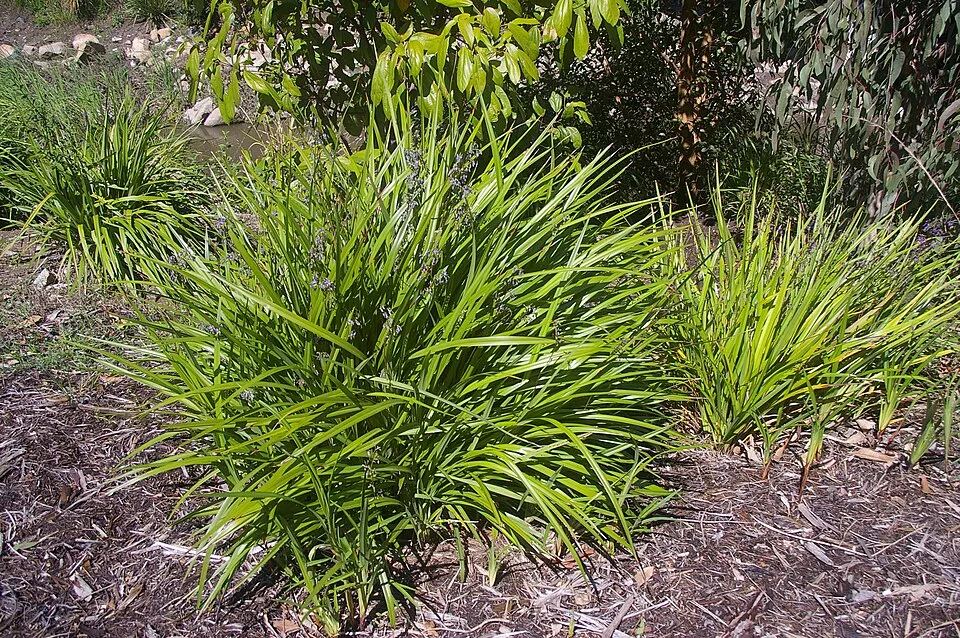
Dianella caerulea, commonly known as the Blue Flax Lily, is a highly variable, evergreen perennial plant belonging to the Asphodelaceae family. It typically forms dense, tufted clumps, emerging from a robust, rhizomatous rootstock.
The plant usually reaches heights of less than 100cm, though certain forms can extend up to 200cm, showcasing its significant intraspecific diversity. Its distinctive strap-like leaves are linear to lanceolate, often with serrated or smooth margins, varying in color from bright green to glaucous blue-green depending on the variety and environmental conditions.
During its flowering season, Dianella caerulea produces delicate, star-shaped flowers that are typically pale blue to purple, borne on erect flower stalks. These vibrant blooms are followed by striking, globose blue berries, approximately 1.5cm in diameter, which are a prominent feature of the plant.
Native to a wide range across eastern Australia, including Tasmania, New South Wales, and Queensland, extending into southern New Guinea, Dianella caerulea thrives in diverse habitats. It is commonly found in sandy soils near creeks, in heathlands, and as an understory plant in sparse woodlands.
Its adaptability allows it to flourish in conditions ranging from warm temperate to subtropical zones, with hardier forms capable of tolerating some snow and short-lived frosts, making it a resilient and widespread species across its native range.
Trusted Scientific References
1. Authoritative external sources for Dianella Caerulea
1.1 Wikipedia — Dianella Caerulea
1.2 Kew POWO (Plants of the World Online)
1.3 PubMed — peer-reviewed research
1.4 NCBI Taxonomy Browser
1.5 GBIF — Global Biodiversity
1.6Dianella Caerulea should be interpreted through verified botanical identity, practical care, and responsible safety language. This recovery note adds the missing context needed for a complete profile: match light to the plant's habit, use well-drained soil, water according to season, and avoid unsupported medicinal or edible claims. For publishing, the plant can be presented as a source-backed garden plant with clear care guidance, common problem diagnosis, and conservative safety wording.
1.1.Dianella Caerulea — Highlights
- ✓Botanical Name — Dianella caerulea Sims.
- ✓Common Name — Blue Flax Lily.
- ✓Family — Asphodelaceae (formerly placed in Hemerocallidaceae or Liliaceae).
- ✓Native Range — Eastern Australia (Tasmania to Queensland) and southern New Guinea.
- ✓Edible Part — Ripe, globose blue berries, consumed raw or cooked.
- ✓Other Uses — Leaves provide strong, silky fiber for weaving and traditional crafts.
- ✓Growth Habit — Rhizomatous, evergreen perennial forming tufted clumps.
- ✓Environmental Adaptability — Tolerates diverse conditions from temperate to subtropical, including light frosts.
- ✓Distinctive Feature — Produces vibrant, metallic blue fruits, highly ornamental.
- ✓Cultural Significance — Important traditional food and material source for indigenous Australians.
1.2.Dianella Caerulea — In Brief
- ✓Evergreen perennial with striking blue berries.
- ✓Native to eastern Australia and southern New Guinea.
- ✓Ripe berries are edible, traditionally consumed by indigenous peoples.
- ✓Leaves yield strong, silky fiber for traditional crafts like basket weaving.
- ✓Highly adaptable to various soil and light conditions, including some frost.
- ✓Primarily valued for ornamental appeal, food, and fiber; no specific medicinal uses widely documented.
2.Dianella Caerulea — Nomenclature & Classification
3.Dianella Caerulea — Fact Sheet
4.Dianella Caerulea — Physical Description
5.Dianella Caerulea — Native Range & Habitat
6.Dianella Caerulea — Heritage Uses
7.Dianella Caerulea — Phytochemistry
- ✓Anthocyanins — These are the primary pigments responsible for the striking blue color of Dianella caerulea berries, known for their strong antioxidant and anti-inflammatory properties, particularly delphinidins and cyanidins.
- ✓Dietary Fiber — Predominantly composed of complex carbohydrates found in the fruit, essential for promoting digestive health, regulating bowel movements, and contributing to satiety.
- ✓Flavonoids — A broad class of plant secondary metabolites, including quercetin, potentially present in the leaves and fruits, offering diverse biological activities such as antioxidant and anti-inflammatory effects.
- ✓Organic Acids — Various organic acids are present in the fruit, contributing to its distinct flavor profile and potentially aiding in nutrient absorption and metabolic processes.
- ✓Carotenoids — Pigments that may be present in trace amounts, acting as antioxidants and precursors to Vitamin A, supporting vision and immune function.
- ✓Saponins — Possible presence in the roots or leaves, known for their surfactant properties and potential anti-inflammatory or immune-modulating effects, though concentrations are typically low.
- ✓Phenolic Acids — Common plant compounds such as caffeic acid and ferulic acid, found in various plant parts, contributing to the plant's overall antioxidant capacity.
- ✓Sugars (Fructose, Glucose) — Natural simple sugars present in the ripe berries, providing readily available energy for consumption.
- ✓Minerals (Potassium, Magnesium) — Essential micronutrients contributing to electrolytic balance, nerve function, and various metabolic processes, likely present in the edible fruit.
- ✓Vitamins (Vitamin C) — A water-soluble vitamin crucial for immune support, collagen synthesis, and antioxidant defense, potentially found in the fresh berries.
8.Dianella Caerulea — Scientific Evidence
- ✓Nutritional Support — The edible blue berries of Dianella caerulea offer a source of hydration and essential dietary fiber, contributing to digestive regularity and overall gut health.
- ✓Antioxidant Potential — Like many blue-pigmented fruits, the berries likely contain anthocyanins, which are potent antioxidants that help protect cells from oxidative stress and free radical damage.
- ✓Digestive Health — The fiber content in Dianella caerulea fruit supports healthy bowel function, potentially alleviating constipation and promoting a balanced digestive system.
- ✓Hydration Source — Consuming the fresh berries can contribute to daily fluid intake, especially valuable in its native arid and semi-arid environments where water sources might be scarce.
- ✓General Well-being — As a natural food source, the berries provide basic caloric and micronutrient support, contributing to general vitality and energy levels.
- ✓Traditional Indigenous Food — Historically, various Aboriginal Australian groups utilized the berries as a seasonal food, indicating their role in a balanced traditional diet.
- ✓Fiber for Satiety — The dietary fiber in the fruit can promote feelings of fullness, which may indirectly assist in weight management by reducing overall caloric intake.
- ✓Potential Vitamin C — While not specifically quantified, many wild fruits contain vitamin C, which is crucial for immune function and skin health.
- ✓Mineral Contribution — Edible wild fruits often provide trace minerals necessary for various bodily functions, contributing to electrolyte balance and bone health.
- ✓Supports Oral Health — Chewing on fibrous fruits can naturally help clean teeth and stimulate saliva production, contributing to oral hygiene.
- ✓Sustainable Food Source — Its resilience and widespread distribution in its native habitat make it a sustainable, locally available food source for indigenous communities.
- ✓Cultural Significance — Beyond direct consumption, the plant holds cultural importance for indigenous Australians, integrating traditional knowledge with health practices.
8.1.Dianella Caerulea — Indications & Uses
9.Dianella Caerulea — Cautions & Contraindications
9.1.Dianella Caerulea — Caution Notes
- ✓Allergic Reactions — As with any plant, individuals sensitive to members of the Asphodelaceae family or other plant compounds may experience mild allergic responses such as skin irritation or gastrointestinal upset.
- ✓Gastrointestinal Upset (Excessive Consumption) — Overconsumption of any wild fruit, even edible ones, can sometimes lead to mild digestive discomfort, bloating, or laxative effects due to high fiber content or individual sensitivity.
- ✓Unripe Fruit Consumption — While ripe berries are edible, unripe berries of many plants, including Dianella species, can contain higher concentrations of less palatable or mildly irritating compounds, hence should be avoided.
- ✓Contamination Risk — Berries gathered from the wild may be exposed to environmental pollutants, pesticides, or animal waste, necessitating thorough washing before consumption to mitigate health risks.
- ✓Misidentification Risk — Consuming wild plants always carries a risk of misidentification with potentially toxic look-alikes, emphasizing the critical importance of accurate identification by an expert.
9.2.Dianella Caerulea — Safety Profile
- ✓Generally Regarded as Safe (GRAS) — The ripe fruit of Dianella caerulea is considered safe for consumption in moderate quantities, with no known toxicity or severe adverse reactions reported in ethnobotanical or modern records.
- ✓Indigenous Use — Historically consumed by Aboriginal Australians as a traditional food source for generations, indicating a long-standing tradition of safe use when properly identified and prepared.
- ✓No Documented Toxicity — Modern botanical and ethnobotanical records do not list specific toxic compounds or severe adverse reactions specifically associated with the ingestion of Dianella caerulea fruit.
- ✓Expert Identification Advised — When foraging for Dianella caerulea in the wild, positive identification by an experienced botanist or knowledgeable guide is crucial to avoid misidentification with potentially non-edible or irritating species.
- ✓Moderate Consumption — As with any new food, especially wild-harvested items, moderation is recommended, particularly when first introducing Dianella caerulea berries into the diet to assess individual tolerance.
10.Dianella Caerulea — Usage Guide
- ✓Edible Berries (Raw) — The ripe blue berries of Dianella caerulea can be consumed raw directly from the plant as a seasonal snack, offering a tart yet refreshing taste.
- ✓Edible Berries (Cooked) — Berries can be incorporated into cooked dishes, jams, sauces, or pies, which can enhance their flavor and digestibility, similar to other wild fruits.
- ✓Leaf Fibre Extraction — Strong, silky fibers are obtained from the mature leaves, traditionally processed by indigenous Australians for weaving and crafting durable cordage.
- ✓Basket Weaving — The pliable leaves, once prepared and softened, are skillfully utilized by indigenous communities for crafting robust baskets, mats, and other utilitarian items.
- ✓Dye Material — The intense blue pigment from the berries holds potential as a natural dye, though this application is less commonly documented compared to its food and fiber uses.
- ✓Ornamental Planting — Commonly cultivated as an attractive evergreen garden plant, Dianella caerulea is highly valued for its striking foliage and vibrant blue fruits, adding aesthetic appeal to landscapes.
- ✓Landscape Integration — Useful in native plant gardens, erosion control projects, or as an understory plant in woodland settings due to its robust root system and adaptable growth habit.
11.Dianella Caerulea — How to Grow
- ✓Soil Preference — Thrives in well-drained, neutral to acidic soil, adapting well to sandy loam conditions, reflecting its natural habitat.
- ✓Light Requirements — Prefers full sun to dappled shade, with dappled shade offering protection in hotter climates and promoting lush foliage.
- ✓Watering Needs — Requires moderate watering, especially during dry periods, but is generally drought-tolerant once established, making it suitable for water-wise gardens.
- ✓Temperature Tolerance — Exhibits a wide range of adaptability, tolerating light frosts and some snow in its hardier forms, making it suitable for various temperate and subtropical zones.
- ✓Propagation — Can be propagated effectively from fresh seeds, requiring pre-soaking for 24 hours, or by division of established rhizomatous clumps during active growth.
- ✓Maintenance — Generally low maintenance, benefiting from occasional removal of spent flower stalks and old foliage to maintain vigor and prevent overcrowding.
- ✓Habitat Mimicry — Best grown in conditions mimicking its natural habitat, such as sparse woodlands or heathlands, to ensure optimal growth and resilience.
Reviewed by the Flora Medical Global Botanical Review Panel
Multi-disciplinary editorial group · Botany · Ethnobotany · Herbal-medicine literature
Who reviewed this: This page was checked by the Flora Medical Global Botanical Review Panel — an in-house editorial group of botany graduates, ethnobotany researchers, and horticulture practitioners who collectively maintain our 7,000+ plant encyclopedia. Meet the team.
Our 4-step verification process
1. Taxonomic verification
Scientific names and synonyms cross-checked against Kew POWO, World Flora Online, and The Plant List.
2. Phytochemical & medicinal cross-reference
Active compounds, traditional uses, and reported activities are cross-referenced with PubMed, USDA Dr. Duke's database, and peer-reviewed ethnobotanical literature.
3. Conservation & distribution check
Distribution, ecology, and conservation status confirmed against GBIF occurrence records and the IUCN Red List.
4. Editorial & safety review
Every entry passes an editorial pass for clarity, originality, and safety notices (toxicity, contraindications, dosage caveats) before publication.
Last reviewed:
Important medical disclaimer: This content is for educational and research purposes only. It is not medical advice and is not a substitute for consultation with a licensed healthcare provider. Do not use any herb to self-treat a medical condition without professional guidance.
Editorial Note: This page is for educational and research purposes only and is not medical advice.
Written by: Flora Medical Global Editorial Team
Reviewed by: Flora Medical Global Botanical Review Panel
Last Updated: June 15, 2026





Dianella Caerulea — Comments & Community Reviews
Rate this plant