
Medical Disclaimer: This content is for educational purposes only. It is not medical advice. Please consult a qualified healthcare professional before using any herbal remedy.
Safety Overview
1.Dianella Tasmanica — At a Glance
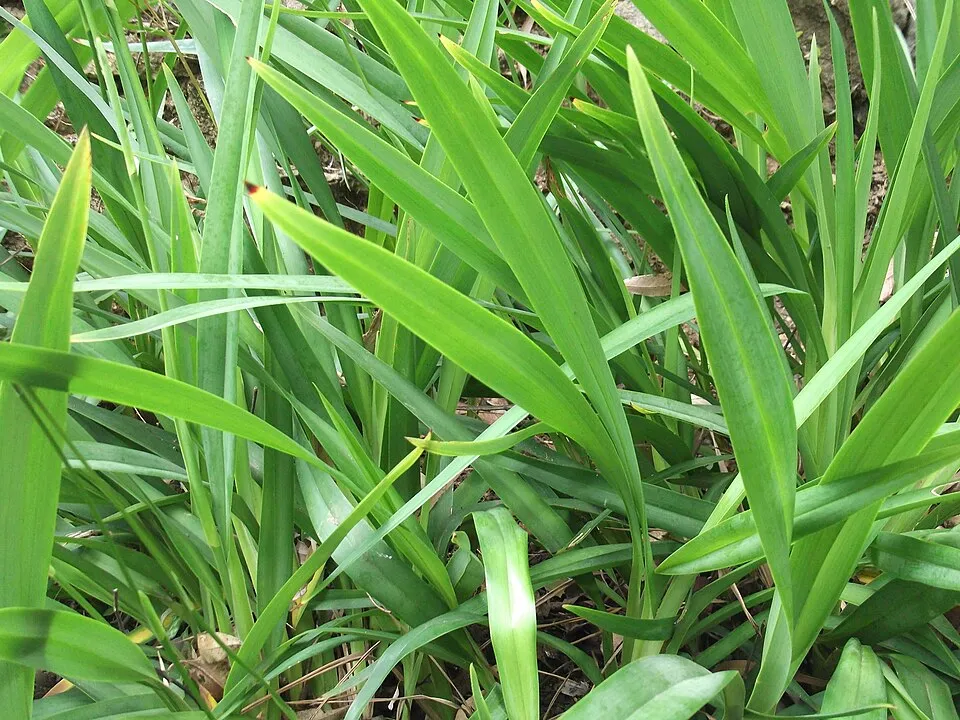
Dianella tasmanica, commonly known as the Tasman Flax-lily or Flax Lily, is a resilient evergreen perennial belonging to the family Phormiaceae. Native to the temperate forests of Australia, particularly Tasmania, Victoria, and New South Wales, this species thrives in woodland understories and along sunny edges. It typically grows to an upright clump, reaching heights of up to 1 meter (3 feet 3 inches) and spreading about 0.5 meters (1 foot 8 inches) wide. The plant features striking, strap-like leaves that are glossy green, often with a subtle blue-green hue, forming a dense basal clump.
These leaves are robust and persistent throughout the year, contributing to its ornamental appeal. During late spring to late summer (May to July in the Northern Hemisphere), Dianella tasmanica produces delicate, star-shaped flowers that are typically blue, sometimes with yellow stamens, borne on tall, slender stalks above the foliage. These flowers are hermaphroditic, containing both male and female organs, and are followed by attractive, iridescent blue berries. While visually appealing, it is important to note that the fruit can cause irritation to the digestive tract if ingested.
This species prefers well-drained, mildly acid to neutral soils and can adapt to conditions ranging from full sun to dappled shade, although it thrives best with some sun exposure. Its robust nature and aesthetic qualities make it a popular choice for ornamental landscaping, particularly in woodland gardens, borders, and as an underplanting.
Trusted Scientific References
1. Authoritative external sources for Dianella Tasmanica
1.1 Wikipedia — Dianella Tasmanica
1.2 Kew POWO (Plants of the World Online)
1.3 PubMed — peer-reviewed research
1.4 NCBI Taxonomy Browser
1.5 GBIF — Global Biodiversity
1.6Dianella Tasmanica should be interpreted through verified botanical identity, practical care, and responsible safety language. This recovery note adds the missing context needed for a complete profile: match light to the plant's habit, use well-drained soil, water according to season, and avoid unsupported medicinal or edible claims. For publishing, the plant can be presented as a source-backed garden plant with clear care guidance, common problem diagnosis, and conservative safety wording.
1.1.Dianella Tasmanica — Distinguishing Points
- ✓Botanical Name — Dianella tasmanica Hook.f.
- ✓Common Names — Tasman Flax-lily, Flax Lily.
- ✓Family — Phormiaceae.
- ✓Native Range — Australia (Tasmania, Victoria, New South Wales).
- ✓Growth Habit — Evergreen perennial, forming clumps up to 1m tall and 0.5m wide.
- ✓Foliage — Glossy green, strap-like leaves.
- ✓Flowers — Blue, star-shaped, blooming from late spring to late summer.
- ✓Fruit — Iridescent blue berries, known to cause digestive irritation if ingested.
- ✓Hardiness — Hardy to USDA zones 8-9.
- ✓Uses — Primarily ornamental, also used for fiber (basketry, cordage).
1.2.Dianella Tasmanica — In Brief
- ✓Tasman Flax-lily (Dianella tasmanica) is an evergreen perennial native to Australia.
- ✓Primarily valued for ornamental landscaping and its strong leaf fibers.
- ✓Features glossy green, strap-like leaves and attractive blue flowers followed by iridescent blue berries.
- ✓The fruit is known to cause digestive tract irritation if ingested.
- ✓Prefers well-drained soil, tolerates full sun to partial shade, and is relatively low maintenance.
- ✓No scientifically validated medicinal uses are widely documented for this species.
2.Dianella Tasmanica — Nomenclature & Classification
3.Dianella Tasmanica — Fact Sheet
4.Dianella Tasmanica — Botanical Features
5.Dianella Tasmanica — Ecological Habitat
6.Dianella Tasmanica — Heritage Uses
7.Dianella Tasmanica — Phytochemistry
- ✓While detailed phytochemical studies specifically on Dianella tasmanica's medicinal compounds are limited, based on general plant biochemistry and its classification, it is hypothesized to contain:
- ✓Flavonoids — Known for antioxidant and potential anti-inflammatory activities, these pigments are common in many plant species and contribute to plant defense and coloration.
- ✓Tannins — Astringent compounds that can bind to proteins, potentially offering protective effects against herbivores and microbes, and are often associated with topical applications.
- ✓Essential Oils — Volatile aromatic compounds that can contribute to the plant's scent and may possess antimicrobial or insect-repellent properties, though specific composition for Dianella tasmanica needs research.
- ✓Saponins — Glycosides that form a soapy lather in water, potentially having hemolytic activity or influencing nutrient absorption, and are found in various monocots.
- ✓Phenolic Acids — A diverse group of compounds with antioxidant and anti-inflammatory potential, contributing to the plant's overall defense mechanisms.
- ✓Anthocyanins — Water-soluble pigments responsible for blue, purple, or red colors in plants, including the berries of Dianella tasmanica, known for their antioxidant properties.
- ✓Steroidal Glycosides — Compounds with a steroidal backbone attached to a sugar molecule, which can have various biological activities in plants and animals.
- ✓Polysaccharides — Complex carbohydrates that can play roles in immune modulation and have mucilaginous properties, contributing to plant structure and energy storage.
- ✓Alkaloids — Nitrogen-containing organic compounds with diverse and often potent pharmacological effects, though their presence and specific types in Dianella tasmanica require investigation.
- ✓Carotenoids — Pigments responsible for yellow, orange, and red colors, acting as antioxidants and playing a role in photosynthesis and light protection.
- ✓Triterpenes — A class of natural products derived from six isoprene units, often found in plant resins and waxes, with various biological activities.
- ✓Glycosides — Compounds composed of a sugar part and a non-sugar part, often involved in plant defense and having diverse physiological effects.
8.Dianella Tasmanica — Pharmacological Findings
- ✓While Dianella tasmanica is primarily valued for its ornamental appeal and fiber production, specific scientifically validated medicinal benefits are not extensively documented. The Plants For A Future (PFAF) database, a respected ethnobotanical resource, indicates no known medicinal uses for this species (Medicinal Rating: 0 of 5). However, based on general botanical knowledge and properties often associated with plant secondary metabolites, potential areas of interest or traditional considerations might include:
- ✓General Antioxidant Activity — Plants often contain compounds like flavonoids and phenolics that may exhibit antioxidant properties, beneficial for cellular health, though not specifically studied in Dianella tasmanica.
- ✓Potential Anti-inflammatory Support — In some traditional contexts, plants with a rich flavonoid content are thought to offer anti-inflammatory effects, which could hypothetically extend to components of Dianella tasmanica.
- ✓Digestive Comfort (Hypothetical) — Historically, certain plant extracts have been used to soothe minor digestive discomforts; however, evidence is lacking for Dianella tasmanica, and its fruit is known to cause irritation.
- ✓Respiratory Soothing (Folkloric) — Some traditional practices utilize plant infusions for respiratory comfort, but this is a general application and not specific to Dianella tasmanica.
- ✓Topical Astringent Qualities — Tannins, often found in plants, possess astringent properties that might theoretically be useful for minor skin irritations, though specific research for this plant is absent.
- ✓Antimicrobial Properties (Investigative) — Essential oils and certain plant compounds can demonstrate antimicrobial effects in vitro, suggesting a potential area for future research into Dianella tasmanica extracts.
- ✓Immune System Modulation (Speculative) — Flavonoids and other phytochemicals are often linked to immune support, a general plant property that could be present but is unconfirmed for this species.
- ✓Stress Adaptation Support — Plants often contain adaptogenic-like compounds that help them cope with environmental stress; these might hypothetically offer similar benefits to organisms, though unstudied here.
- ✓Cellular Protection — The presence of various secondary metabolites might contribute to general cellular protection against oxidative damage, a common theme in plant bioactivity.
- ✓Wound Healing (Traditional Context) — While not documented for Dianella tasmanica, some fiber-producing plants have been traditionally applied externally for minor wound care, though caution is advised.
- ✓Detoxification Pathways (General Plant Role) — Many plants are studied for their ability to support the body's natural detoxification processes, a broad area of potential for any phytochemical-rich species.
- ✓Cardiovascular Health (Exploratory) — Certain plant-derived compounds are known to support cardiovascular function; this remains an unexplored possibility for Dianella tasmanica components.
8.1.Dianella Tasmanica — Therapeutic Indications
9.Dianella Tasmanica — Cautions & Contraindications
9.1.Dianella Tasmanica — Side Effects & Warnings
- ✓Digestive Tract Irritation — Ingestion of the fruit of Dianella tasmanica is known to cause irritation to the digestive tract.
- ✓Allergic Reactions — As with many plants, sensitive individuals may experience allergic reactions, such as skin rashes or respiratory symptoms, upon contact or inhalation.
- ✓Unknown Internal Effects — Due to the lack of scientific studies, the effects of ingesting other parts of the plant are largely unknown and should be avoided.
- ✓Potential Drug Interactions — If any compounds were to be ingested, there is an unknown risk of interaction with medications, due to lack of research.
- ✓Skin Irritation — Direct contact with plant sap or foliage might cause mild skin irritation in some sensitive individuals.
- ✓Toxicity Concerns — Given the known toxicity of the fruit, internal use of any part of Dianella tasmanica is generally advised against without expert guidance.
9.2.Dianella Tasmanica — Safety Profile
- ✓Avoid Internal Consumption — The fruit is known to cause digestive irritation, and other plant parts should also not be ingested due to lack of safety data.
- ✓Pregnancy and Lactation — Not recommended for use by pregnant or breastfeeding individuals due to insufficient safety information.
- ✓Children — Keep out of reach of children, especially the berries, to prevent accidental ingestion and potential digestive upset.
- ✓Pre-existing Conditions — Individuals with digestive sensitivities or other health conditions should strictly avoid any internal use.
- ✓Allergic Sensitivity — Perform a patch test on a small area of skin before extensive topical contact to check for allergic reactions.
- ✓Professional Consultation — Always consult a qualified healthcare professional or medical herbalist before considering any internal or external use of Dianella tasmanica for medicinal purposes.
- ✓External Use Caution — While traditionally used for fiber, exercise caution with any direct skin contact, especially with broken skin, until individual sensitivity is known.
10.Dianella Tasmanica — Preparations & Uses
- ✓While Dianella tasmanica has no known medicinal uses, its 'other uses' are significant, and hypothetical preparations for general plant exploration could include:
- ✓Fiber Extraction — Leaves yield a very strong, silky fiber, traditionally processed for weaving into baskets, mats, or cordage.
- ✓Basketry Material — The tough, pliable leaves are directly used in traditional crafts for making sturdy baskets and other woven items.
- ✓Ornamental Planting — Cultivated widely as a landscape plant for its attractive foliage, blue flowers, and berries, suitable for borders, mass plantings, and woodland gardens.
- ✓Groundcover — Its clumping habit and evergreen foliage make it an effective, low-maintenance groundcover in appropriate settings.
- ✓Infusion (Exploratory) — If ever considered for internal use (with extreme caution and professional guidance), a mild infusion of the leaves might hypothetically be prepared, though its safety and efficacy are unproven.
- ✓Topical Poultice (Caution Advised) — In a purely speculative context, crushed leaves might be applied as a poultice for minor skin irritations, but given the lack of research, this is not recommended.
- ✓Tincture (Research Only) — Extracts could be prepared in alcohol for laboratory research into phytochemical profiles, not for human consumption.
- ✓Decoction (Not Recommended Internally) — For external applications only, a decoction of roots could hypothetically be prepared for use in traditional practices, but again, safety is not established.
11.Dianella Tasmanica — How to Grow
- ✓Soil Preference — Thrives in fertile, well-drained soil enriched with organic matter; tolerates mildly acid to neutral pH levels.
- ✓Light Requirements — Prefers full sun to partial shade; a sunny, sheltered position is ideal, though it can tolerate dappled shade.
- ✓Watering Regimen — Requires regular watering, especially during dry spells, to maintain moist soil conditions but avoids waterlogging.
- ✓Fertilization — Benefits from a balanced fertilization regimen during its active growing season to support robust growth.
- ✓Hardiness Zone — Hardy to USDA zones 8-9 and UK zone 9, tolerant of moderate cold but prefers stable environments.
- ✓Propagation by Seed — Pre-soak seeds for 24 hours in lukewarm water, then sow in spring in gentle heat (around 25°C) in a greenhouse; germination can take 1-3 months.
- ✓Seedling Care — Prick out seedlings into individual pots once large enough to handle and grow on in a greenhouse for at least two years before planting out.
- ✓Division — Established clumps can be divided in spring as plants come into growth; larger divisions can be planted directly, while smaller ones benefit from potting up first.
Reviewed by the Flora Medical Global Botanical Review Panel
Multi-disciplinary editorial group · Botany · Ethnobotany · Herbal-medicine literature
Who reviewed this: This page was checked by the Flora Medical Global Botanical Review Panel — an in-house editorial group of botany graduates, ethnobotany researchers, and horticulture practitioners who collectively maintain our 7,000+ plant encyclopedia. Meet the team.
Our 4-step verification process
1. Taxonomic verification
Scientific names and synonyms cross-checked against Kew POWO, World Flora Online, and The Plant List.
2. Phytochemical & medicinal cross-reference
Active compounds, traditional uses, and reported activities are cross-referenced with PubMed, USDA Dr. Duke's database, and peer-reviewed ethnobotanical literature.
3. Conservation & distribution check
Distribution, ecology, and conservation status confirmed against GBIF occurrence records and the IUCN Red List.
4. Editorial & safety review
Every entry passes an editorial pass for clarity, originality, and safety notices (toxicity, contraindications, dosage caveats) before publication.
Last reviewed:
Important medical disclaimer: This content is for educational and research purposes only. It is not medical advice and is not a substitute for consultation with a licensed healthcare provider. Do not use any herb to self-treat a medical condition without professional guidance.
Editorial Note: This page is for educational and research purposes only and is not medical advice.
Written by: Flora Medical Global Editorial Team
Reviewed by: Flora Medical Global Botanical Review Panel
Last Updated: June 15, 2026





Dianella Tasmanica — Comments & Community Reviews
Rate this plant