

Medical Disclaimer: This content is for educational purposes only. It is not medical advice. Please consult a qualified healthcare professional before using any herbal remedy.
Safety Overview
1.Dianthus Pinks — Introduction & Highlights
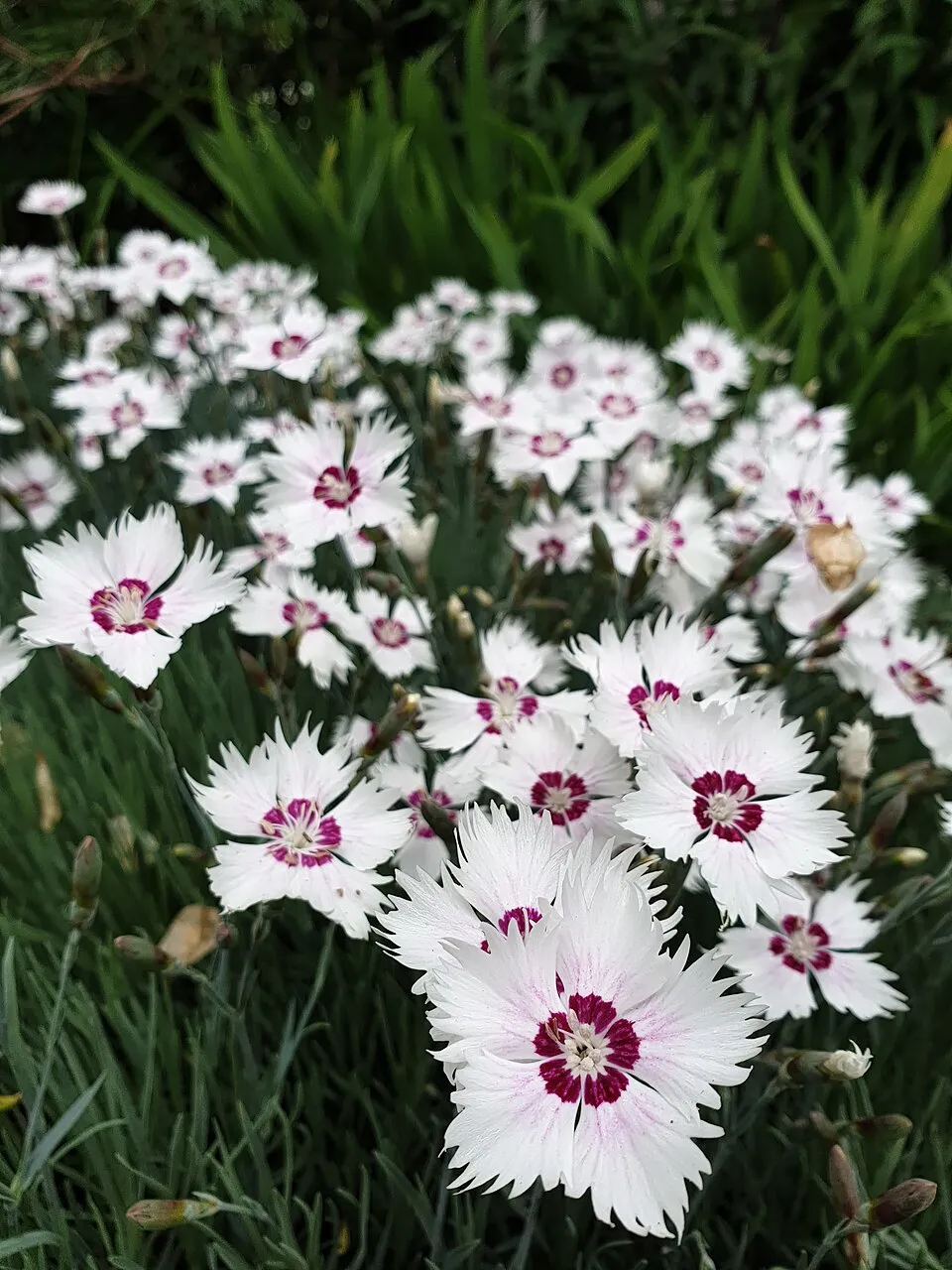
Dianthus plumarius, commonly known as Pinks, Cottage Pink, Feathered Pink, or Garden Pink, is a charming perennial herbaceous plant belonging to the extensive Caryophyllaceae family. This species is characterized by its compact, clumping growth habit, forming dense, evergreen mounds of slender, grey-green leaves that typically reach a height of 20 to 30 centimeters. The linear foliage, often up to 10 cm long, exhibits a soft texture and a distinctive bluish tint.
The most striking feature of Dianthus plumarius is its profusion of fragrant, star-shaped flowers, which emerge from late spring through early summer. These blooms, measuring approximately 3 to 5 cm in diameter, are available in a delightful spectrum of colors including various shades of pink, white, and red, frequently adorned with intricately frilled or serrated petal edges. The characteristic spicy, clove-like scent adds to their appeal.
Native to Europe, Dianthus plumarius thrives in well-drained, neutral to slightly alkaline soils and prefers full sun conditions, which are crucial for encouraging abundant flowering. Its adaptability allows it to tolerate poorer, sandy, or dry soils once established, making it a resilient choice for rock gardens, border fronts, container plantings, and along paths or rock walls. This plant is often found flourishing in wildflower meadows and rocky terrains, demonstrating its hardiness and drought resistance.
Beyond its ornamental value, the Pinks plant plays an ecological role by attracting various pollinators, such as butterflies and bees, thereby supporting local biodiversity. It is sometimes confused with other Dianthus species like Dianthus caryophyllus (carnation) or Dianthus deltoides, but D. plumarius maintains its distinct characteristics.
Trusted Scientific References
1. Authoritative external sources for Dianthus plumarius
1.1 Wikipedia — Dianthus plumarius
1.2 Kew POWO (Plants of the World Online)
1.3 PubMed — peer-reviewed research
1.4 NCBI Taxonomy Browser
1.5 GBIF — Global Biodiversity
1.1.Dianthus Pinks — Key Features
- ✓Botanical Name — Dianthus plumarius
- ✓Common Names — Pinks, Cottage Pink, Feathered Pink, Garden Pink, Scotch Pink
- ✓Family — Caryophyllaceae
- ✓Growth Habit — Compact, evergreen perennial forming dense mounds
- ✓Flower Characteristics — Fragrant, ruffled, and fringed petals in pink, white, and red hues
- ✓Bloom Time — Late spring through early summer
- ✓Soil Preference — Well-drained, neutral to slightly alkaline; tolerates poor soils
- ✓Sun Exposure — Full sun for optimal flowering
- ✓Traditional Uses — Diuretic, antipyretic, antispasmodic, laxative
- ✓Key Constituents — Flavonoids, saponins, phenolic compounds
1.2.Dianthus Pinks — In Brief
- ✓Dianthus plumarius, or Pinks, is a fragrant perennial with distinctive fringed flowers.
- ✓Traditionally used for ailments like kidney stones, UTIs, fever, and menstrual issues.
- ✓Rich in beneficial compounds including flavonoids, saponins, and phenolic acids.
- ✓Valued ornamentally in gardens and culinarily as an edible garnish or flavoring.
- ✓Thrives in well-drained soil and full sun, demonstrating good drought tolerance.
- ✓Generally low toxicity, but caution is advised for pets and during pregnancy; consult a health expert for medicinal use.
2.Dianthus Pinks — Systematic Position
3.Dianthus Pinks — Reference Facts
4.Dianthus Pinks — Plant Morphology
5.Dianthus Pinks — Geographic Distribution
6.Dianthus Pinks — Cultural & Traditional Roles
7.Dianthus Pinks — Bioactive Constituents
- ✓Flavonoids — Key compounds include quercetin and kaempferol derivatives, which are potent antioxidants and contribute significantly to the plant's anti-inflammatory and vasoprotective effects.
- ✓Saponins — Predominantly triterpenoid saponins, these compounds are responsible for the plant's diuretic, expectorant, and potentially anti-inflammatory actions.
- ✓Phenolic Compounds — Such as caffeic acid and ferulic acid, these are strong antioxidants that also contribute to the plant's antimicrobial and anti-inflammatory properties.
- ✓Volatile Oils — Responsible for the characteristic spicy, clove-like fragrance of the flowers; these oils may possess mild antiseptic and carminative qualities.
- ✓Anthocyanins — These water-soluble pigments give the flowers their vibrant pink, red, and white hues and are also recognized for their antioxidant capabilities.
- ✓Coumarins — While less prominent, some coumarin derivatives may be present, potentially contributing to anti-inflammatory or mild anticoagulant activities.
- ✓Tannins — Possessing astringent properties, tannins can be beneficial for mucous membranes and contribute to the plant's traditional digestive uses.
- ✓Sterols — Plant sterols are present and may offer anti-inflammatory and cholesterol-lowering effects, though their specific role in Dianthus plumarius is less studied.
8.Dianthus Pinks — Modern Studies
- ✓Diuretic Action — Traditionally used to promote urine flow, aiding in the management of kidney stones and urinary tract infections by flushing the system.
- ✓Antipyretic Properties — Historically employed to reduce fever, helping to alleviate symptoms associated with various inflammatory conditions.
- ✓Antispasmodic Relief — Utilized to soothe muscle spasms, particularly noted for its traditional use in alleviating dysmenorrhea or menstrual cramps.
- ✓Laxative Effect — In folk medicine, Dianthus plumarius was applied to address constipation, suggesting a mild laxative action to support bowel regularity.
- ✓Antioxidant Support — Rich in flavonoids and phenolic compounds, the plant offers potent antioxidant activity, protecting cells from oxidative stress and free radical damage.
- ✓Anti-inflammatory Potential — The presence of saponins and flavonoids contributes to its anti-inflammatory effects, potentially reducing swelling and pain.
- ✓Antimicrobial Activity — Certain plant constituents may exhibit antimicrobial properties, which could contribute to its traditional use in fighting infections like UTIs.
- ✓Digestive Aid — Beyond its laxative effect, the plant may generally support digestive health, as indicated by its traditional applications.
- ✓Cardiovascular Benefits — Flavonoids found in Dianthus plumarius are known to support vascular health and improve circulation, contributing to overall cardiovascular well-being.
8.1.Dianthus Pinks — Health Applications
9.Dianthus Pinks — Precautions & Warnings
9.1.Dianthus Pinks — Caution Notes
- ✓Allergic Reactions — Sensitive individuals may experience contact dermatitis or other allergic responses upon skin contact or ingestion.
- ✓Gastrointestinal Upset — Ingestion of large quantities, particularly by pets, can lead to mild symptoms such as vomiting, diarrhea, or stomach discomfort.
- ✓Oral Irritation — Raw plant material may cause mild irritation to the mouth and throat if consumed in significant amounts.
- ✓Pregnancy and Lactation — Lack of sufficient safety data advises against medicinal use by pregnant or breastfeeding individuals.
- ✓Drug Interactions — Potential interactions with medications, especially diuretics or blood thinners, are not well-studied; caution is recommended.
- ✓Pet Toxicity — While generally low severity, consumption by domestic animals (cats, dogs, horses) can induce mild gastrointestinal distress.
9.2.Dianthus Pinks — Safety Overview
- ✓Professional Consultation — Always seek advice from a healthcare professional or qualified medical herbalist before using Dianthus plumarius for therapeutic purposes.
- ✓Pregnancy and Lactation — Due to the absence of comprehensive safety research, medicinal use is strongly discouraged for pregnant or breastfeeding women.
- ✓Allergic Sensitivity — Individuals with known allergies to plants within the Caryophyllaceae family should exercise caution and monitor for adverse reactions.
- ✓Pediatric Use — Safety for infants and young children has not been established; therefore, its medicinal use is not recommended for this demographic.
- ✓Dosage Adherence — Strict adherence to recommended dosages for any herbal preparation is crucial to minimize the risk of potential adverse effects.
- ✓Quality Sourcing — Ensure that all plant material is obtained from reputable and verified suppliers to guarantee purity and prevent contamination.
- ✓Pet Precautions — Keep the plant out of reach of pets, as ingestion, although typically mild, can cause gastrointestinal upset.
10.Dianthus Pinks — How to Use
- ✓Herbal Infusion — Dried flowers or aerial parts steeped in hot water to create a traditional tea, commonly used for internal remedies like urinary tract support or fever reduction.
- ✓Decoction Preparation — Tougher plant parts, such as roots, can be gently boiled in water to extract robust compounds for more concentrated medicinal applications.
- ✓Tincture Formulation — Plant material macerated in alcohol to produce a potent liquid extract, offering a longer shelf life and convenient dosage for therapeutic use.
- ✓Culinary Garnish — Fresh petals are widely used as an edible garnish to enhance salads, desserts, and beverages with their attractive appearance and subtle spicy flavor.
- ✓Flavored Syrups and Vinegars — Petals can be infused into simple syrups for unique beverage sweeteners or into vinegars for distinctive salad dressings and culinary accents.
- ✓Candied Flowers — Petals can be coated in sugar and dried to create beautiful, edible decorations for cakes, pastries, and other confections.
- ✓Aromatic Additive — Dried flowers contribute a pleasant, clove-like fragrance to potpourri, sachets, and natural home fragrance blends.
- ✓Topical Poultice — While less documented for D. plumarius specifically, some related species are used topically for skin irritations, suggesting potential for infused oils or poultices.
11.Dianthus Pinks — Growing Guide
- ✓Soil Preference — Requires well-drained, neutral to slightly alkaline soil; tolerates poor, sandy, or dry conditions but flourishes in nutrient-rich environments.
- ✓Sunlight Requirements — Thrives in full sun, needing at least six hours of direct sunlight daily for optimal growth and prolific blooming.
- ✓Watering Regimen — Prefers soil to dry out between waterings; avoid consistently wet or poorly drained conditions to prevent crown rot and fungal diseases.
- ✓Hardiness Zones — Generally hardy in USDA Zones 3-9, with specific hardiness varying slightly by cultivar.
- ✓Maintenance Practices — Deadhead spent flowers regularly to encourage continuous blooming; shearing after the main flush of flowers can rejuvenate the plant.
- ✓Propagation Techniques — Easily propagated by division every 2-3 years in spring, and also readily self-seeds in favorable conditions.
- ✓Pest and Disease Management — Monitor for common pests like slugs, aphids, cutworms, and spider mites; susceptible to fungal rot in excessively moist conditions.
- ✓Landscape Application — Ideal for rock gardens, border fronts, ground cover, container planting, and along paths or garden walls.
Reviewed by the Flora Medical Global Botanical Review Panel
Multi-disciplinary editorial group · Botany · Ethnobotany · Herbal-medicine literature
Who reviewed this: This page was checked by the Flora Medical Global Botanical Review Panel — an in-house editorial group of botany graduates, ethnobotany researchers, and horticulture practitioners who collectively maintain our 7,000+ plant encyclopedia. Meet the team.
Our 4-step verification process
1. Taxonomic verification
Scientific names and synonyms cross-checked against Kew POWO, World Flora Online, and The Plant List.
2. Phytochemical & medicinal cross-reference
Active compounds, traditional uses, and reported activities are cross-referenced with PubMed, USDA Dr. Duke's database, and peer-reviewed ethnobotanical literature.
3. Conservation & distribution check
Distribution, ecology, and conservation status confirmed against GBIF occurrence records and the IUCN Red List.
4. Editorial & safety review
Every entry passes an editorial pass for clarity, originality, and safety notices (toxicity, contraindications, dosage caveats) before publication.
Last reviewed:
Important medical disclaimer: This content is for educational and research purposes only. It is not medical advice and is not a substitute for consultation with a licensed healthcare provider. Do not use any herb to self-treat a medical condition without professional guidance.
Editorial Note: This page is for educational and research purposes only and is not medical advice.
Written by: Flora Medical Global Editorial Team
Reviewed by: Flora Medical Global Botanical Review Panel
Last Updated: June 15, 2026





Dianthus Pinks — Comments & Community Reviews
Rate this plant