
Medical Disclaimer: This content is for educational purposes only. It is not medical advice. Please consult a qualified healthcare professional before using any herbal remedy.
Safety Overview
1.Dianthus Barbatus — Essential Profile
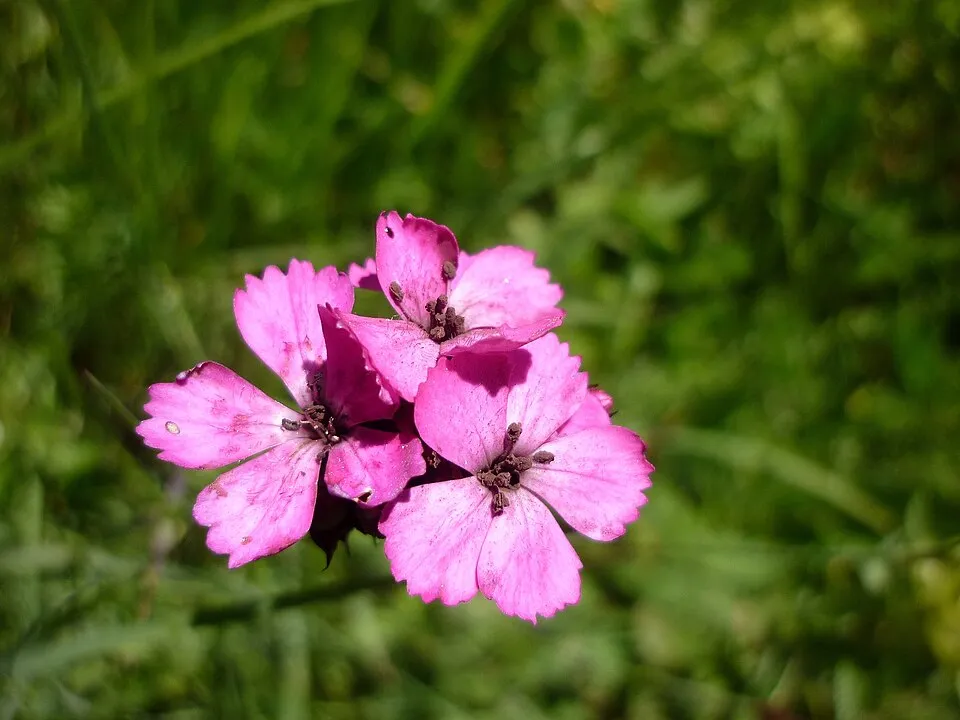
Dianthus barbatus, widely recognized as Sweet William, is a captivating herbaceous plant belonging to the Caryophyllaceae family. This species is celebrated for its dense, vibrant clusters of flowers, which present a stunning palette of pink, red, white, and variegated patterns, often with serrated petal edges.
Typically growing to a height of 13 to 92 cm (5 to 36 inches), Sweet William features distinct green to glaucous blue-green, lanceolate leaves, measuring 4-10 cm long and 1-2 cm broad. Its fragrant blooms, emitting a spicy, clove-like scent, are borne in terminal umbels of up to 30 flowers, making them highly attractive to a diverse range of pollinators, including bees, butterflies, and birds.
Native to the mountainous regions of Southern Europe, stretching from the Pyrenees eastward to the Carpathians and Balkans, D. barbatus also has a disjunct variety found in northeastern China, Korea, and southeastern Russia. It thrives in well-draining, loamy soil with good organic matter content, preferring full sun to partial shade.
The plant exhibits adaptability to various garden conditions, tolerating slightly alkaline to neutral soil pH and demonstrating drought resistance once established. While often cultivated as a biennial, Sweet William can persist as a short-lived perennial, providing a burst of color from late spring through early summer. Its resilience and striking floral display make it a popular choice for ornamental gardens, borders, and naturalistic landscapes, contributing significantly to garden aesthetics and local biodiversity.
Trusted Scientific References
1. Authoritative external sources for Dianthus barbatus
1.1 Wikipedia — Dianthus barbatus
1.2 Kew POWO (Plants of the World Online)
1.3 PubMed — peer-reviewed research
1.4 NCBI Taxonomy Browser
1.5 GBIF — Global Biodiversity
1.6Dianthus Barbatus should be interpreted through verified botanical identity, practical care, and responsible safety language. This recovery note adds the missing context needed for a complete profile: match light to the plant's habit, use well-drained soil, water according to season, and avoid unsupported medicinal or edible claims. For publishing, the plant can be presented as a source-backed garden plant with clear care guidance, common problem diagnosis, and conservative safety wording.
1.1.Dianthus Barbatus — Notable Characteristics
- ✓Vibrant, dense flower — Vibrant, dense flower clusters in diverse colors.
- ✓Distinctive spicy, clove — like fragrance.
- ✓Biennial or short — lived perennial growth habit.
- ✓Highly attractive to — Highly attractive to bees, butterflies, and other pollinators.
- ✓Edible flowers suitable — Edible flowers suitable for culinary garnishes.
- ✓Contains beneficial phytochemicals — flavonoids, saponins, tannins.
- ✓Low — maintenance and adaptable garden plant.
- ✓Native to mountainous — Native to mountainous regions of Southern Europe and parts of Asia.
- ✓Symbolizes gallantry in — Symbolizes gallantry in the language of flowers.
- ✓Excellent for ornamental — Excellent for ornamental borders, cottage gardens, and naturalistic settings.
1.2.Dianthus Barbatus — Concise Overview
- ✓Dianthus barbatus, or Sweet William, is a vibrant, fragrant perennial/biennial.
- ✓Native to Southern Europe and parts of Asia, known for its clustered flowers.
- ✓Rich in phytochemicals like flavonoids, saponins, and tannins.
- ✓Traditionally used for its potential antioxidant, anti-inflammatory, and digestive benefits.
- ✓Popular ornamental plant that attracts pollinators.
- ✓Edible flowers can be used as a culinary garnish.
2.Dianthus Barbatus — Nomenclature & Classification
3.Dianthus Barbatus — Fact Sheet
4.Dianthus Barbatus — Botanical Description
5.Dianthus Barbatus — Ecological Habitat
6.Dianthus Barbatus — Folk Medicine Applications
7.Dianthus Barbatus — Phytochemistry
- ✓Flavonoids — Key compounds include quercetin and kaempferol, recognized for their potent antioxidant, anti-inflammatory, and cardioprotective activities.
- ✓Saponins — Triterpenoid saponins are present, known for their expectorant, hemolytic (dose-dependent), and immune-modulating properties, often contributing to a bitter taste.
- ✓Tannins — Both hydrolyzable and condensed tannins provide astringent qualities, contributing to the plant's antimicrobial and wound-healing potential.
- ✓Phenolic Compounds — Includes phenolic acids such as caffeic acid and ferulic acid, which are significant contributors to the plant's antioxidant and anti-inflammatory profile.
- ✓Alkaloids — A diverse group of nitrogen-containing compounds, typically present in smaller quantities, with potential but unconfirmed pharmacological effects.
- ✓Glycosides — Various glycosides exist, where a sugar molecule is attached to a non-sugar component, often influencing the compound's bioavailability and activity.
- ✓Sterols — Such as beta-sitosterol, which has been investigated for its potential anti-inflammatory and cholesterol-lowering properties.
- ✓Volatile Compounds — Responsible for the plant's characteristic spicy, clove-like fragrance, these compounds may also possess mild antimicrobial or insect-repellent properties.
- ✓Coumarins — A class of compounds that can exhibit anti-inflammatory, anticoagulant, and antimicrobial activities, though their presence and concentration in Sweet William require further study.
8.Dianthus Barbatus — Scientific Evidence
- ✓Antioxidant Support — The presence of flavonoids and phenolic compounds in Sweet William contributes to its antioxidant capacity, helping to neutralize free radicals and protect cells from oxidative stress.
- ✓Anti-inflammatory Properties — Saponins and flavonoids found in Dianthus barbatus are traditionally associated with anti-inflammatory effects, potentially aiding in reducing swelling and discomfort.
- ✓Digestive Aid — Historically, certain Dianthus species have been used to support digestive health, with bitter compounds potentially stimulating digestion and soothing minor gastrointestinal upsets.
- ✓Expectorant Action — Saponins are known for their mucolytic and expectorant properties, which may help thin mucus and ease its expulsion, beneficial for respiratory discomforts like coughs.
- ✓Astringent Effects — Tannins in the plant provide astringent properties, making it traditionally useful for topical applications to minor wounds or skin irritations to promote healing and reduce inflammation.
- ✓Antimicrobial Potential — Various phytochemicals, including tannins and certain alkaloids, may exhibit mild antimicrobial activity, contributing to the plant's traditional use in addressing minor infections.
- ✓Diuretic Activity — Some traditional uses suggest a diuretic effect, potentially assisting the body in expelling excess fluids and supporting kidney function.
- ✓Skin Health Enhancement — The combination of antioxidant and anti-inflammatory compounds can contribute to overall skin health, potentially soothing irritation and promoting a healthy complexion.
- ✓Cardioprotective Potential — Flavonoids are widely studied for their potential benefits to cardiovascular health, including improving circulation and reducing the risk of oxidative damage to the heart.
- ✓Immune System Modulation — Certain plant constituents, such as saponins, may have an immunomodulatory effect, helping to support the body's natural defenses.
8.1.Dianthus Barbatus — Therapeutic Indications
9.Dianthus Barbatus — Cautions & Contraindications
9.1.Dianthus Barbatus — Warnings
- ✓Skin Irritation — Direct contact with the plant sap may cause dermatitis or mild skin irritation in sensitive individuals.
- ✓Gastrointestinal Upset — Ingesting large quantities of Dianthus barbatus, especially raw, might lead to mild stomach upset or nausea.
- ✓Allergic Reactions — Individuals sensitive to pollen or other plant compounds may experience allergic reactions, such as itching or rash.
- ✓Saponin Toxicity — High doses of saponins, though generally low in edible quantities, could theoretically cause hemolytic effects or digestive distress.
- ✓Medication Interactions — Theoretical interactions with medications, particularly blood thinners, due to potential coumarins or saponins, warrant caution.
- ✓Pregnancy and Lactation — Lack of sufficient safety data advises against medicinal use during pregnancy or lactation.
- ✓Children's Consumption — Internal use in children should be avoided due to insufficient safety information.
9.2.Dianthus Barbatus — Toxicity Assessment
- ✓Low Toxicity for Ornamental Use — Generally considered safe for cultivation and handling as an ornamental plant.
- ✓Edible in Moderation — Flowers are safe for culinary use as a garnish in small, moderate quantities.
- ✓Avoid Large Doses Internally — Due to the presence of saponins, large internal doses for medicinal purposes are not recommended without expert guidance.
- ✓Consult Healthcare Professionals — Individuals with underlying health conditions, pregnant/nursing women, or those on medication should consult a doctor before medicinal use.
- ✓Patch Test for Topical Use — Always perform a patch test on a small area of skin before extensive topical application to check for sensitivity.
- ✓Correct Identification is Crucial — Ensure correct identification of Dianthus barbatus to avoid confusion with potentially harmful species.
- ✓No Long-Term Medicinal Studies — Comprehensive long-term safety studies for its medicinal use are lacking, hence caution is advised.
10.Dianthus Barbatus — Usage Guide
- ✓Culinary Garnish — The vibrant petals of Sweet William are edible and can be used as a decorative and flavorful garnish for salads, desserts, and beverages.
- ✓Herbal Infusions — Dried flowers and leaves can be steeped in hot water to create an herbal tea, traditionally used for general wellness or mild digestive support.
- ✓Tinctures — An alcoholic extract can be prepared from the aerial parts of the plant, concentrating its phytochemical compounds for potential internal or external use.
- ✓Topical Compresses — Infusions or decoctions can be applied as a compress to the skin for minor irritations, leveraging its traditional astringent and anti-inflammatory properties.
- ✓Infused Oils — Petals can be infused into carrier oils for use in skincare, potentially offering antioxidant and soothing benefits for topical application.
- ✓Potpourri — The fragrant flowers are excellent for adding a sweet, spicy scent to homemade potpourri mixes.
- ✓Candied Flowers — Sweet William petals can be candied to create beautiful and edible decorations for cakes and other confections.
11.Dianthus Barbatus — How to Grow
- ✓Seed Propagation — Sow Dianthus barbatus seeds in early spring indoors or directly outdoors after the last frost; transplant seedlings when large enough.
- ✓Division — Established clumps can be divided in early spring or fall to create new plants and rejuvenate older ones.
- ✓Cuttings — Softwood cuttings can be taken from non-flowering stems in late spring or early summer for propagation.
- ✓Soil Preference — Thrives in well-drained, fertile, loamy soil with a slightly alkaline to neutral pH (6.5-7.5).
- ✓Light Requirements — Prefers full sun to partial shade, with at least 6 hours of direct sunlight for optimal flowering.
- ✓Watering — Requires moderate watering; allow soil to dry slightly between waterings, as it tolerates drought once established.
- ✓Deadheading — Remove spent flowers to encourage continuous blooming and prevent unwanted self-seeding.
- ✓Pest and Disease Management — Watch for common issues like Fusarium wilt; ensure good air circulation and avoid overwatering.
Reviewed by the Flora Medical Global Botanical Review Panel
Multi-disciplinary editorial group · Botany · Ethnobotany · Herbal-medicine literature
Who reviewed this: This page was checked by the Flora Medical Global Botanical Review Panel — an in-house editorial group of botany graduates, ethnobotany researchers, and horticulture practitioners who collectively maintain our 7,000+ plant encyclopedia. Meet the team.
Our 4-step verification process
1. Taxonomic verification
Scientific names and synonyms cross-checked against Kew POWO, World Flora Online, and The Plant List.
2. Phytochemical & medicinal cross-reference
Active compounds, traditional uses, and reported activities are cross-referenced with PubMed, USDA Dr. Duke's database, and peer-reviewed ethnobotanical literature.
3. Conservation & distribution check
Distribution, ecology, and conservation status confirmed against GBIF occurrence records and the IUCN Red List.
4. Editorial & safety review
Every entry passes an editorial pass for clarity, originality, and safety notices (toxicity, contraindications, dosage caveats) before publication.
Last reviewed:
Important medical disclaimer: This content is for educational and research purposes only. It is not medical advice and is not a substitute for consultation with a licensed healthcare provider. Do not use any herb to self-treat a medical condition without professional guidance.
Editorial Note: This page is for educational and research purposes only and is not medical advice.
Written by: Flora Medical Global Editorial Team
Reviewed by: Flora Medical Global Botanical Review Panel
Last Updated: June 15, 2026





Dianthus Barbatus — Comments & Community Reviews
Rate this plant