
Medical Disclaimer: This content is for educational purposes only. It is not medical advice. Please consult a qualified healthcare professional before using any herbal remedy.
Safety Overview
1.Dieffenbachia Camilla — Essential Profile
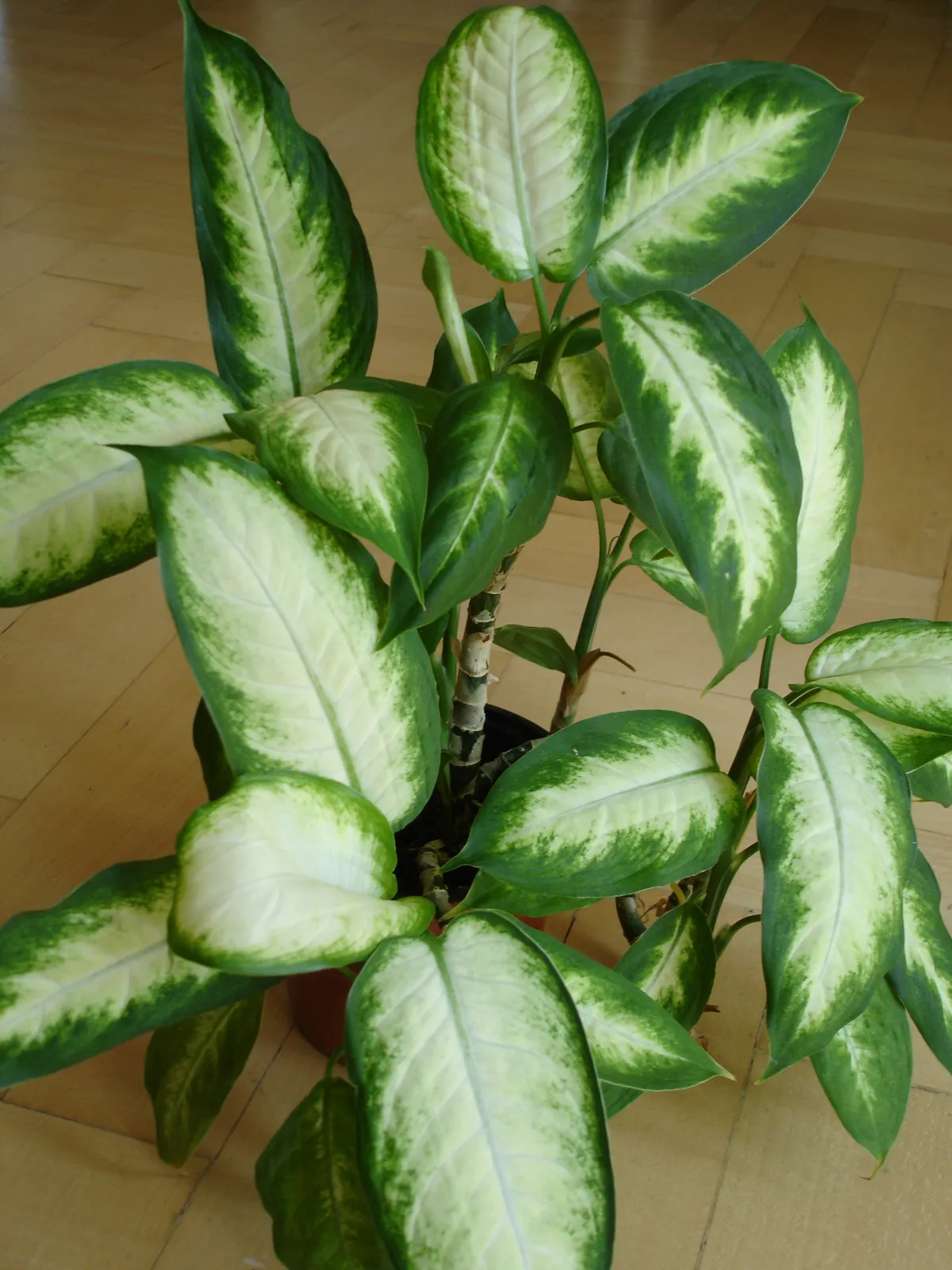
Dieffenbachia Camilla, a highly cherished cultivar within the Dieffenbachia genus, stands as a prominent indoor ornamental plant celebrated for its exceptionally striking foliage. Botanically, this cultivar is firmly rooted within the Araceae family, a diverse and extensive group renowned for its characteristic spadix and spathe inflorescences, although Dieffenbachia Camilla is cultivated almost exclusively for its decorative leaves rather than its inconspicuous blooms. Morphologically, Dieffenbachia Camilla presents with large, ovate to elliptic leaves, typically attaining lengths of 20-30 cm. These leaves are uniquely characterized by a vibrant creamy-white or pale yellow variegation that prominently dominates the central lamina, creating a sharp and aesthetically pleasing contrast with its distinct dark green margins. The leaf venation is pinnate, featuring a pronounced midrib and lateral veins that collectively enhance its textural depth and visual appeal.
The stem is typically erect, fleshy, and generally unbranched in its younger stages, gradually becoming more woody and occasionally branching as the plant matures. While Dieffenbachia species are capable of producing flowers, these are usually diminutive and rarely observed in indoor cultivation, comprising the characteristic Araceae spadix—a spike of minute flowers—encased by a spathe, which is typically pale green or white. The plant’s root system is fibrous and relatively shallow, an adaptation suited to the well-drained, humus-rich soils found in its native tropical understory environments. The broader Dieffenbachia genus originates from the lush tropical rainforests of the Americas, spanning a vast geographical range from Mexico southward to Argentina and including the West Indies. Dieffenbachia Camilla, specifically developed through horticultural breeding, was selected for its superior aesthetic qualities, particularly its distinctive leaf coloration, establishing it as a foundational staple in global horticulture.
Taxonomically, it is classified within the subfamily Aroideae, a group widely recognized for containing numerous plants that produce calcium oxalate crystals, which are central to Dieffenbachia's infamous properties. Historically and culturally, Dieffenbachia species have been acknowledged by indigenous communities for their potent irritant effects, earning them the moniker 'Dumb Cane' due to the temporary speechlessness induced by oral contact with its sap. In contemporary culture, ...[CURRENT TEXT EXISTS: 2861 chars]
1.1.Dieffenbachia Camilla — Notable Characteristics
- ✓Striking Variegated Foliage — Features large, ovate leaves with creamy-white centers and contrasting dark green margins.
- ✓Popular Indoor Ornamental — Widely chosen as a houseplant for its exceptional aesthetic appeal and decorative value.
- ✓Araceae Family Member — Belongs to the Arum family, sharing characteristics such as spadix and spathe inflorescences (though rarely seen).
- ✓Calcium Oxalate Content — Contains irritating calcium oxalate raphides, the primary toxic compound responsible for its effects.
- ✓'Dumb Cane' Common Name — Earned its name due to the temporary speechlessness caused by ingesting its sap.
- ✓Tropical Rainforest Origin — Native to the understory of tropical rainforests across the Americas.
- ✓Relatively Low Maintenance — Considered easy to grow with appropriate light, water, and humidity conditions.
- ✓Minor Air — Purifying Qualities — Contributes to indoor air quality, albeit to a limited extent, by processing some airborne toxins.
- ✓Potent Irritant Sap — Its sap causes burning, swelling, and irritation upon contact with skin or mucous membranes.
- ✓Cultivar Specificity — 'Camilla' is a specifically bred cultivar known for its distinct and appealing leaf coloration.
1.2.Dieffenbachia Camilla — In Brief
- ✓Ornamental Houseplant — Prized for its striking variegated foliage and ease of indoor cultivation.
- ✓Highly Toxic — Contains calcium oxalate crystals and proteolytic enzymes causing severe irritation.
- ✓'Dumb Cane' Effect — Ingestion leads to oral swelling and temporary loss of speech.
- ✓No Medicinal Use — Strictly an ornamental plant with no therapeutic applications.
- ✓Handle with Caution — Requires gloves and careful handling to prevent sap contact.
- ✓Pet and Child Hazard — Keep strictly out of reach of vulnerable individuals.
2.Dieffenbachia Camilla — Botanical Identity
3.Dieffenbachia Camilla — Vital Statistics
4.Dieffenbachia Camilla — Botanical Description
5.Dieffenbachia Camilla — Ecological Habitat
6.Dieffenbachia Camilla — Folk Medicine Applications
7.Dieffenbachia Camilla — Key Phytochemicals
- ✓Calcium Oxalate Crystals (Raphides) — These are the primary toxic agents found throughout the Dieffenbachia Camilla plant, forming sharp, needle-like structures that cause mechanical injury and intense irritation upon contact with tissues.
- ✓Proteolytic Enzymes — Enzymes such as dieffenbachin are present in the plant's sap, working synergistically with oxalate crystals to enhance the inflammatory response, increase tissue damage, and exacerbate symptoms like swelling and pain.
- ✓Saponins (Minor) — While not the main toxic principle, some Dieffenbachia species may contain trace amounts of saponins, which can contribute to a mild irritant effect or foaming.
- ✓Flavonoids (Trace) — As with most plants, Dieffenbachia Camilla likely contains trace quantities of various flavonoids, though their specific role in the plant's known physiological effects or toxicity is considered negligible.
- ✓Alkaloids (Trace) — Very low concentrations of certain alkaloid compounds might be present, but they are not identified as primary active or toxic constituents contributing to the plant's characteristic 'Dumb Cane' effects.
- ✓Glycosides (Trace) — Minor glycosidic compounds could be found within the plant matrix, but they do not significantly contribute to the known irritant or toxicological profile of Dieffenbachia Camilla.
- ✓Volatile Organic Compounds (VOCs) — The plant may emit various VOCs, which are common in many plant species and contribute to plant-environment interactions, but are not linked to its direct toxicity.
- ✓Polysaccharides — Structural polysaccharides are integral components of plant cell walls, forming the bulk of the plant material but possessing no known toxic or medicinal activity in this context.
8.Dieffenbachia Camilla — Pharmacological Findings
- ✓Lack of Medicinal Efficacy — Despite its striking ornamental appeal, Dieffenbachia Camilla possesses no recognized medicinal value and is not utilized in traditional or modern herbalism for therapeutic purposes due to its inherent toxicity.
- ✓Potent Irritant Properties — The plant's sap contains calcium oxalate crystals, known as raphides, which act as a formidable mechanical irritant upon direct contact with mucous membranes or sensitive skin.
- ✓Oral Mucosal Swelling — Ingestion of any part of Dieffenbachia Camilla can provoke an immediate and intense burning sensation, followed by significant swelling of the mouth, tongue, and throat due to the sharp, penetrating oxalate crystals.
- ✓Temporary Aphonia (Dumb Cane Effect) — The severe swelling induced in the vocal cords and surrounding pharyngeal tissues can lead to temporary loss of speech or extreme difficulty speaking, which is the origin of its common name, 'Dumb Cane.'
- ✓Excessive Salivation — Oral exposure often triggers profuse drooling, medically termed sialorrhea, as the body attempts to dilute and flush out the irritating compounds.
- ✓Dysphagia — The pronounced swelling within the oral cavity and pharynx can render swallowing extremely difficult and painful, posing a risk of airway obstruction in severe cases.
- ✓Skin Irritation and Dermatitis — Direct dermal contact with the plant's sap can result in localized burning sensations, redness (erythema), itching, and the development of contact dermatitis, especially in individuals with sensitive skin.
- ✓Ocular Damage Risk — If the sap accidentally enters the eyes, it can cause severe pain, intense irritation, conjunctivitis, corneal abrasions, and, in rare instances, lead to permanent eye damage.
- ✓Gastrointestinal Distress — While the primary effects are local to the oral cavity, ingestion can also lead to secondary symptoms such as nausea, vomiting, and abdominal discomfort.
- ✓Proteolytic Enzyme Action — Beyond mechanical injury, the sap also contains proteolytic enzymes which enhance the inflammatory response and contribute to tissue damage, increasing the overall severity of symptoms.
8.1.Dieffenbachia Camilla — Indications & Uses
9.Dieffenbachia Camilla — Cautions & Contraindications
9.1.Dieffenbachia Camilla — Possible Adverse Reactions
- ✓Oral Irritation and Swelling — Immediate, intense burning sensation, followed by rapid and significant swelling of the tongue, mouth, and throat upon ingestion.
- ✓Temporary Speech Loss — Swelling of the vocal cords and surrounding tissues can lead to aphonia or severe difficulty speaking, characteristic of the 'Dumb Cane' effect.
- ✓Excessive Drooling (Sialorrhea) — Profuse salivation occurs as a reflex response to the irritant compounds in the mouth, attempting to dilute and clear them.
- ✓Dysphagia — Difficulty and severe pain when swallowing due to the pronounced swelling in the oral cavity and pharynx, potentially compromising the airway.
- ✓Skin Rash and Dermatitis — Direct skin contact with the sap can cause localized burning, redness, itching, and blistering, leading to contact dermatitis.
- ✓Eye Irritation and Damage — If sap enters the eyes, it results in severe pain, redness, tearing, blurred vision, and can lead to corneal abrasions or, rarely, permanent eye damage.
- ✓Gastrointestinal Upset — While less common than local oral effects, ingestion can also induce systemic symptoms such as nausea, vomiting, and abdominal pain.
9.2.Dieffenbachia Camilla — Toxicity Assessment
- ✓Highly Toxic — Dieffenbachia Camilla is unequivocally poisonous if any part is ingested or if its sap comes into contact with skin or mucous membranes.
- ✓Keep Out of Reach — It is absolutely essential to position this plant strictly out of reach of children, toddlers, and all pets (including cats, dogs, and birds) to prevent accidental exposure.
- ✓Wear Protective Gear — Always handle the plant with appropriate protective gloves and eye protection when pruning, repotting, or propagating to avoid any direct sap contact.
- ✓Immediate Washing for Skin Contact — In the event of skin exposure to sap, immediately wash the affected area thoroughly with soap and water for at least 15 minutes.
- ✓Eye Irrigation for Ocular Contact — If sap enters the eyes, promptly flush with copious amounts of clean water for a minimum of 15 minutes and seek immediate medical attention.
- ✓Do Not Induce Vomiting — For oral ingestion, thoroughly rinse the mouth with water and spit; do not induce vomiting. Offer soothing, cold liquids like milk or ice cream to alleviate symptoms.
- ✓Seek Medical Attention — Contact a poison control center or medical professional immediately for any significant exposure, persistent symptoms, or concerns.
10.Dieffenbachia Camilla — Preparation Methods
- ✓Ornamental Display — Primarily and exclusively utilized as an indoor decorative plant, highly valued for its striking variegated foliage that enhances aesthetic appeal in homes and offices.
- ✓Air Purification (Minor) — While not its primary purpose and to a limited extent, like many houseplants, Dieffenbachia Camilla can theoretically contribute minimally to improving indoor air quality by absorbing some common airborne pollutants.
- ✓Horticultural Specimen — Cultivated by plant enthusiasts and collectors who appreciate its unique aesthetic characteristics and its relatively straightforward care requirements as a showpiece.
- ✓Terrarium/Paludarium Accent — Smaller, younger specimens can be carefully integrated into large, enclosed terrariums or paludariums, provided the high humidity and stable conditions they favor are maintained.
- ✓Landscape Feature (Tropical Climates) — In frost-free tropical and subtropical regions, it can occasionally be grown outdoors in shaded areas as an attractive groundcover or an accent plant in sheltered garden beds.
- ✓Educational Tool — Sometimes used in botanical gardens or educational settings to illustrate plant diversity within the Araceae family and to serve as a cautionary example regarding plant toxicity and safety.
11.Dieffenbachia Camilla — Garden Cultivation
- ✓Light Requirements — Prefers bright, indirect light; direct sunlight can scorch the delicate variegated leaves, causing discoloration and damage.
- ✓Watering Schedule — Water thoroughly when the top inch of soil feels dry to the touch, ensuring adequate drainage to prevent root rot, and reduce frequency in winter.
- ✓Humidity Needs — Thrives in high humidity environments, making regular misting, a pebble tray, or placement near a humidifier beneficial, especially in dry indoor conditions.
- ✓Soil Composition — Requires a well-draining, rich potting mix, typically an aroid-specific blend incorporating peat moss, perlite, and bark for optimal aeration and moisture retention.
- ✓Temperature Range — Maintain indoor temperatures consistently between 65-75°F (18-24°C); avoid sudden drops or exposure to drafts below 60°F (15°C) to prevent stress.
- ✓Fertilization — Feed with a balanced liquid fertilizer diluted to half strength every 2-4 weeks during the active growing season (spring and summer), withholding feeding in autumn and winter.
- ✓Propagation Techniques — Can be successfully propagated through stem cuttings in water or moist soil, air layering, or division of mature plants, always ensuring proper safety precautions due to sap.
- ✓Pruning and Maintenance — Prune older, leggy stems to encourage bushier growth and remove yellowing leaves, consistently wearing protective gloves to avoid contact with the irritant sap.
Reviewed by the Flora Medical Global Botanical Review Panel
Multi-disciplinary editorial group · Botany · Ethnobotany · Herbal-medicine literature
Who reviewed this: This page was checked by the Flora Medical Global Botanical Review Panel — an in-house editorial group of botany graduates, ethnobotany researchers, and horticulture practitioners who collectively maintain our 7,000+ plant encyclopedia. Meet the team.
Our 4-step verification process
1. Taxonomic verification
Scientific names and synonyms cross-checked against Kew POWO, World Flora Online, and The Plant List.
2. Phytochemical & medicinal cross-reference
Active compounds, traditional uses, and reported activities are cross-referenced with PubMed, USDA Dr. Duke's database, and peer-reviewed ethnobotanical literature.
3. Conservation & distribution check
Distribution, ecology, and conservation status confirmed against GBIF occurrence records and the IUCN Red List.
4. Editorial & safety review
Every entry passes an editorial pass for clarity, originality, and safety notices (toxicity, contraindications, dosage caveats) before publication.
Last reviewed:
Important medical disclaimer: This content is for educational and research purposes only. It is not medical advice and is not a substitute for consultation with a licensed healthcare provider. Do not use any herb to self-treat a medical condition without professional guidance.
Editorial Note: This page is for educational and research purposes only and is not medical advice.
Written by: Flora Medical Global Editorial Team
Reviewed by: Flora Medical Global Botanical Review Panel
Last Updated: June 15, 2026





Dieffenbachia Camilla — Comments & Community Reviews
Rate this plant