

Medical Disclaimer: This content is for educational purposes only. It is not medical advice. Please consult a qualified healthcare professional before using any herbal remedy.
Safety Overview
1.Dietes Grandiflora — Overview
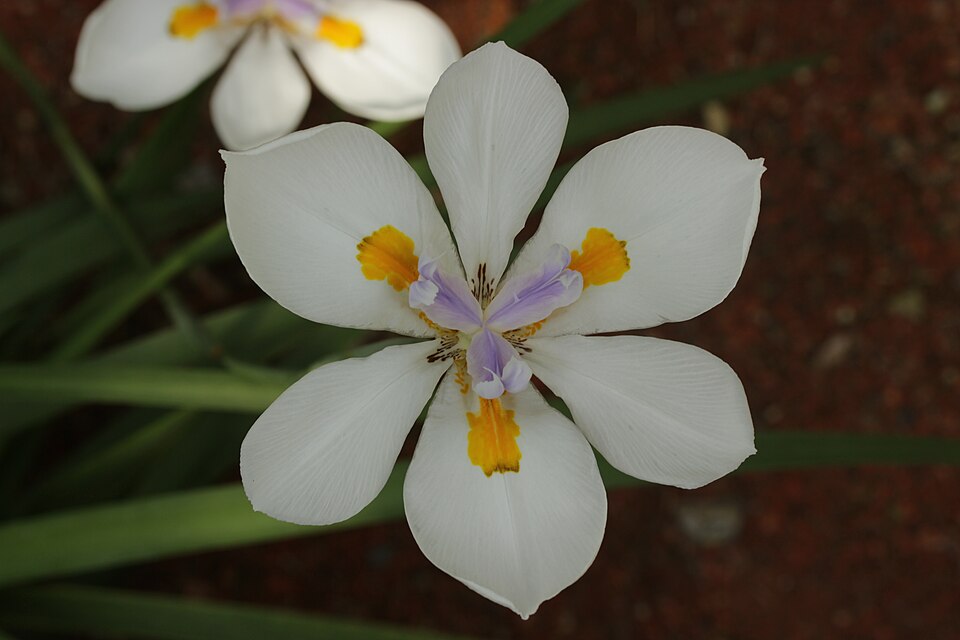
Dietes grandiflora, commonly known as the Large Wild Iris, Fortnight Lily, African Iris, or Fairy Iris, is a striking rhizomatous perennial belonging to the Iridaceae family. This species typically forms large clumps, reaching heights of up to 5 feet, with erect, slender stems that hold its elegant flowers aloft. Its foliage consists of rigid, sword-shaped, dark green leaves arranged in a distinctive fan shape, providing year-round visual interest.
The blossoms are particularly notable, measuring up to four inches in diameter, featuring large white tepals marked with vibrant yellow nectar guides and violet central segments, often accompanied by subtle dark markings at the base of the outer tepals. These exquisite flowers bloom abundantly throughout the summer in its native Southern Hemisphere, though individual blooms are ephemeral, lasting only a couple of days. Following successful pollination, the plant produces 5 cm long green capsules that eventually split open to disperse very dark brown seeds.
Native to the eastern coastal regions of South Africa, specifically the southern and eastern capes and southern Kwazulu-Natal, Dietes grandiflora thrives naturally at forest margins or in the shelter of taller shrubs on exposed, sea-facing slopes. It demonstrates remarkable adaptability, flourishing in a range of conditions from dappled shade to full sun, where it flowers most profusely, and tolerating well-drained to moderate soils.
The plant is celebrated for its drought and frost hardiness, making it a popular choice for low-maintenance landscaping and xeriscaping in USDA Hardiness Zones 8-9. Taxonomically, its genus name, Dietes, signifies 'having two relatives,' while grandiflora aptly means 'large flower,' reflecting its prominent floral display.
Trusted Scientific References
1. Authoritative external sources for Dietes Grandiflora
1.1 Wikipedia — Dietes Grandiflora
1.2 Kew POWO (Plants of the World Online)
1.3 PubMed — peer-reviewed research
1.4 NCBI Taxonomy Browser
1.5 GBIF — Global Biodiversity
1.1.Dietes Grandiflora — Defining Traits
- ✓Botanical Name — Dietes grandiflora
- ✓Common Names — Large Wild Iris, Fortnight Lily, African Iris, Fairy Iris
- ✓Family — Iridaceae (Iris Family)
- ✓Origin — Eastern coastal regions of South Africa
- ✓Growth Habit — Rhizomatous perennial, forming large clumps up to 5 feet tall
- ✓Flowers — White with yellow and violet markings, approximately 4 inches in diameter, short-lived but profuse
- ✓Foliage — Dark green, rigid, sword-shaped leaves arranged in a fan
- ✓Hardiness — USDA Zones 8-9; notable for drought and frost tolerance
- ✓Sun Exposure — Thrives in full sun to partial shade, with best flowering in full sun
- ✓Landscape Use — Highly valued for ornamental planting, borders, mass plantings, and xeriscaping
1.2.Dietes Grandiflora — At-a-Glance Summary
- ✓Dietes grandiflora is an ornamental perennial known as Large Wild Iris or Fortnight Lily.
- ✓Features striking white, yellow, and violet flowers on sword-shaped leaves.
- ✓Native to South Africa, thriving in full sun to partial shade and well-drained soil.
- ✓Drought and frost hardy, popular for low-maintenance landscaping and xeriscaping.
- ✓Primarily cultivated for beautification; no documented medicinal uses.
- ✓Can be invasive in some non-native environments, requiring responsible planting.
2.Dietes Grandiflora — Scientific Profile
3.Dietes Grandiflora — Reference Facts
4.Dietes Grandiflora — Morphological Account
5.Dietes Grandiflora — Habitat & Distribution
6.Dietes Grandiflora — Cultural & Traditional Roles
7.Dietes Grandiflora — Bioactive Constituents
- ✓Flavonoids — These phenolic compounds are common in plants, including the Iridaceae family, known for their antioxidant and potential anti-inflammatory properties, contributing to flower pigmentation.
- ✓Iridoids — A class of monoterpenoids that can act as defensive compounds, often imparting a bitter taste; while not specifically studied in Dietes grandiflora, they are characteristic of many Iris family members.
- ✓Anthocyanins — These water-soluble pigments are responsible for the violet hues observed in the central segments of the flower, possessing antioxidant activity.
- ✓Triterpenoids — Diverse group of compounds, some of which may have anti-inflammatory or cytotoxic potential, found across various plant parts.
- ✓Saponins — Glycosides that can form a stable foam in water, with some members of related species exhibiting surfactant or emulsifying properties.
- ✓Polysaccharides — Complex carbohydrates that form structural components of the plant and, in other species, can have immunomodulatory effects.
- ✓Volatile Organic Compounds (VOCs) — Compounds that contribute to the subtle scent of the flowers and may play a role in attracting pollinators or defense against herbivores.
- ✓Fatty Acids — Essential components of plant cell membranes and energy storage, present in seeds and other lipid-rich tissues.
8.Dietes Grandiflora — Modern Studies
- ✓Primary Ornamental Use — Dietes grandiflora is predominantly cultivated for its ornamental value in gardens and landscapes, rather than for medicinal purposes.
- ✓Lack of Documented Medicinal Uses — There are currently no widely documented traditional or modern medicinal uses specifically attributed to Dietes grandiflora in reputable ethnobotanical or pharmacological literature.
- ✓Potential for Phytochemical Research — As a member of the Iridaceae family, Dietes grandiflora may contain various phytochemicals, such as flavonoids or iridoids, which in other species of the family have exhibited antioxidant or anti-inflammatory properties; however, specific research on this plant is limited.
- ✓Ecological Benefit — While not directly medicinal for humans, its abundant flowering attracts a variety of pollinators like bees and butterflies, contributing to ecosystem health and biodiversity.
- ✓Air Quality Improvement (General Plant Property) — Like many plants, Dietes grandiflora contributes to local air quality by absorbing carbon dioxide and releasing oxygen, a general benefit of plant presence.
- ✓Stress Reduction (Horticultural Therapy) — Engaging with ornamental plants like Dietes grandiflora through gardening can offer therapeutic benefits, promoting mental well-being and stress reduction, though this is an indirect benefit.
8.1.Dietes Grandiflora — Indications & Uses
9.Dietes Grandiflora — Risk Profile
9.1.Dietes Grandiflora — Warnings
- ✓Environmental Weed Potential — In certain non-native regions, particularly parts of Australia, Dietes grandiflora can become invasive, outcompeting native flora.
- ✓Rapid Spread — Under favorable conditions, the rhizomatous clumps can multiply rapidly, potentially crowding out other desired plants if not managed.
- ✓Mild Skin Irritation — While not widely documented for Dietes grandiflora, some members of the Iridaceae family can cause mild skin irritation upon prolonged contact with sap.
- ✓Allergic Reactions — As with many flowering plants, pollen or plant components could potentially trigger allergic responses in highly sensitive individuals.
- ✓Potential Toxicity to Pets — Although specific toxicity data for Dietes grandiflora is limited, many plants in the Iris family are considered mildly toxic if ingested by pets, potentially causing gastrointestinal upset.
- ✓Overcrowding Issues — If left undivided for many years, dense clumps can lead to reduced flowering and overall plant vigor.
9.2.Dietes Grandiflora — Clinical Safety Notes
- ✓Ornamental Use Only — Dietes grandiflora is primarily an ornamental plant; internal consumption or use as a medicinal herb is not recommended due to a lack of safety and efficacy data.
- ✓Environmental Responsibility — Exercise caution when planting in areas where it is designated as an environmental weed to prevent its spread into natural ecosystems.
- ✓Handling Precautions — Individuals with sensitive skin should wear gloves when handling the plant, especially during division or pruning, to avoid potential mild irritation from sap.
- ✓Pet and Livestock Awareness — Keep the plant away from pets and livestock, as ingestion of plant material from the Iridaceae family may cause mild digestive upset.
- ✓Allergic Sensitivities — People with known plant allergies should be mindful during blooming periods, as pollen or plant parts might trigger allergic reactions.
- ✓Non-Invasive Management — Regular division and containment strategies should be employed in gardens to prevent unintended spread, especially in regions prone to invasive species.
10.Dietes Grandiflora — Application Forms
- ✓Ornamental Landscaping — Plant in mass groupings for dramatic visual impact in garden beds, borders, or along pathways.
- ✓Specimen Planting — Utilize as an elegant focal point in a garden due to its striking sword-like foliage and unique flowers.
- ✓Xeriscaping Applications — Incorporate into water-wise garden designs, leveraging its excellent drought tolerance once established.
- ✓Erosion Control — Plant on slopes or embankments where its robust, clumping root system can help stabilize soil and prevent erosion.
- ✓Container Gardening — Grow in large pots or containers on patios, balconies, or as movable accents, especially in colder climates where it can be protected.
- ✓Pollinator Gardens — Include in gardens aimed at attracting beneficial insects like bees and butterflies, supporting local biodiversity.
- ✓Roadside and Commercial Beautification — Frequently used in public spaces for its hardiness, low maintenance, and aesthetic appeal.
- ✓Cut Flower Displays — While individual flowers are short-lived, the continuous bloom cycle allows for harvesting fresh flowers for indoor arrangements.
11.Dietes Grandiflora — Growing Guide
- ✓Site Selection — Choose a location with full sun to partial shade; full sun promotes the most profuse flowering.
- ✓Soil Preparation — Ensure well-drained soil with moderate fertility; Dietes grandiflora is adaptable but dislikes waterlogged conditions.
- ✓Planting — Plant rhizomes or young plants in spring or autumn, spacing them adequately to allow for their clumping growth habit.
- ✓Watering — Water regularly until established, then the plant becomes drought-tolerant, requiring only moderate watering during prolonged dry spells.
- ✓Fertilization — Light fertilization in spring with a balanced slow-release fertilizer can encourage vigorous growth and flowering.
- ✓Pruning — Remove spent flower stalks to maintain tidiness and encourage continuous blooming; dead or damaged leaves can be trimmed to the base.
- ✓Propagation — Easily propagated by dividing the rhizomatous clumps in early spring or by sowing seeds collected from mature capsules.
- ✓Pest and Disease Management — Generally robust, but monitor for common garden pests like aphids or slugs and address any fungal issues in overly damp conditions.
Reviewed by the Flora Medical Global Botanical Review Panel
Multi-disciplinary editorial group · Botany · Ethnobotany · Herbal-medicine literature
Who reviewed this: This page was checked by the Flora Medical Global Botanical Review Panel — an in-house editorial group of botany graduates, ethnobotany researchers, and horticulture practitioners who collectively maintain our 7,000+ plant encyclopedia. Meet the team.
Our 4-step verification process
1. Taxonomic verification
Scientific names and synonyms cross-checked against Kew POWO, World Flora Online, and The Plant List.
2. Phytochemical & medicinal cross-reference
Active compounds, traditional uses, and reported activities are cross-referenced with PubMed, USDA Dr. Duke's database, and peer-reviewed ethnobotanical literature.
3. Conservation & distribution check
Distribution, ecology, and conservation status confirmed against GBIF occurrence records and the IUCN Red List.
4. Editorial & safety review
Every entry passes an editorial pass for clarity, originality, and safety notices (toxicity, contraindications, dosage caveats) before publication.
Last reviewed:
Important medical disclaimer: This content is for educational and research purposes only. It is not medical advice and is not a substitute for consultation with a licensed healthcare provider. Do not use any herb to self-treat a medical condition without professional guidance.
Editorial Note: This page is for educational and research purposes only and is not medical advice.
Written by: Flora Medical Global Editorial Team
Reviewed by: Flora Medical Global Botanical Review Panel
Last Updated: June 15, 2026





Dietes Grandiflora — Comments & Community Reviews
Rate this plant