
Medical Disclaimer: This content is for educational purposes only. It is not medical advice. Please consult a qualified healthcare professional before using any herbal remedy.
Safety Overview
1.Digitalis Lutea — Overview
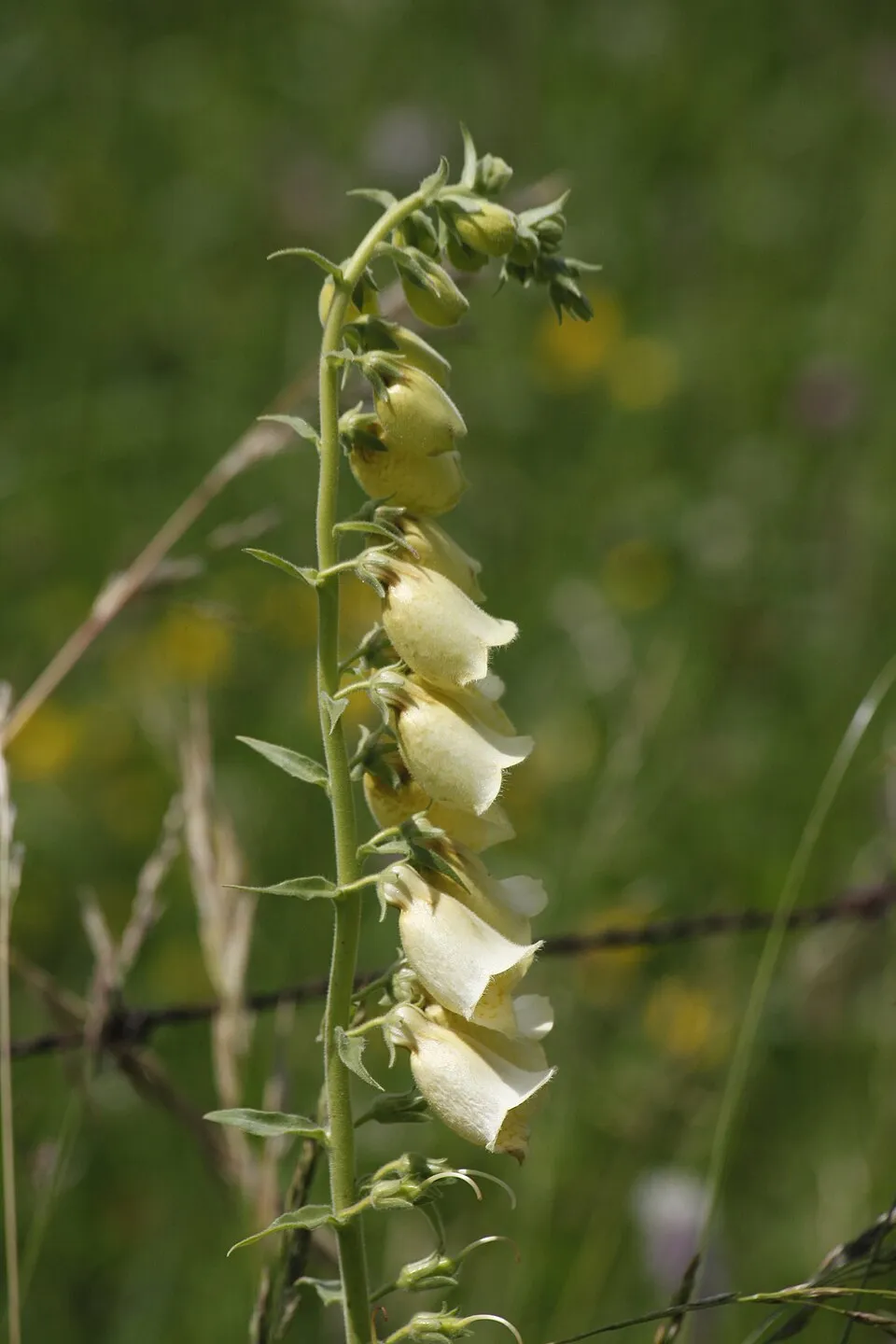
Digitalis lutea, commonly known as the straw foxglove or yellow foxglove, is an elegant herbaceous species typically functioning as a biennial or short-lived perennial within the Plantaginaceae family, a taxonomic reassignment from its former placement in the Scrophulariaceae. This resilient plant initiates its life cycle by forming a robust basal rosette of leaves in its inaugural year.
In its second year, it produces an impressive, unbranched flowering stalk that can ascend to heights of 90 to 120 centimeters, occasionally exceeding this under ideal growing conditions. Its root system is fibrous and moderately spreading, providing stable anchorage in various substrates.
The leaves are a distinctive feature: elongated and narrowly lanceolate, tapering gracefully to a pointed apex, and often reaching lengths of up to 30 centimeters. They possess a soft, subtly velvety texture attributed to a fine indumentum of hairs, and their margins are typically entire or delicately serrated. These vibrant green basal leaves establish an attractive mound before the emergence of the erect, robust, and smooth flowering stem.
This stem, often displaying strong green coloration with occasional purplish tinges, supports a striking raceme of pale yellow, bell-shaped flowers. These tubular blooms, measuring 2 to 3 centimeters, unfurl profusely from late spring through early summer (typically May to July), revealing delicate, often speckled markings of a deeper yellow or brownish hue within the corolla, which serve as crucial nectar guides for pollinators.
Native to Western and Central Europe, Digitalis lutea’s natural range spans from the Iberian Peninsula across France, Germany, and into parts of Eastern Europe. It demonstrates remarkable adaptability, thriving in a diverse array of habitats including sun-dappled woodland edges, open clearings, rocky slopes, meadows, and uncultivated fields, particularly favoring siliceous soils.
This adaptability allows it to flourish in conditions ranging from semi-shade to full sun, provided the soil retains adequate moisture.
Trusted Scientific References
1. Authoritative external sources for Digitalis lutea
1.1 Wikipedia — Digitalis lutea
1.2 Kew POWO (Plants of the World Online)
1.3 PubMed — peer-reviewed research
1.4 NCBI Taxonomy Browser
1.5 GBIF — Global Biodiversity
1.1.Digitalis Lutea — Defining Traits
- ✓Species Name — Digitalis lutea (Straw Foxglove or Yellow Foxglove).
- ✓Botanical Family — Plantaginaceae (formerly Scrophulariaceae).
- ✓Life Cycle — Herbaceous biennial or short-lived perennial.
- ✓Flower Color — Pale yellow, bell-shaped with inner speckles.
- ✓Primary Active Compounds — Cardiac glycosides (cardenolides).
- ✓Medicinal Action — Cardiotonic, diuretic, stimulant, tonic (with extreme caution).
- ✓Toxicity Level — Highly poisonous; all plant parts are toxic.
- ✓Native Range — Western and Central Europe.
- ✓Habitat — Woodland edges, clearings, rocky slopes, meadows.
- ✓Growth Habit — Erect flowering stalk up to 120 cm, basal rosette.
1.2.Digitalis Lutea — In Brief
- ✓Potent Cardiotonic — Contains cardiac glycosides affecting heart function.
- ✓Highly Toxic — All parts are poisonous; never self-administer.
- ✓Natural Diuretic — Aids in reducing fluid retention and blood pressure.
- ✓Less Cumulative Risk — Compared to other foxgloves, its effects are less cumulative.
- ✓European Native — Found in woodlands and clearings across Western and Central Europe.
- ✓Ornamental Appeal — Appreciated for its elegant yellow bell-shaped flowers.
2.Digitalis Lutea — Systematic Position
3.Digitalis Lutea — Quick Facts
4.Digitalis Lutea — Plant Morphology
5.Digitalis Lutea — Where It Grows
6.Digitalis Lutea — Cultural & Traditional Roles
7.Digitalis Lutea — Active Compounds
- ✓Cardiac Glycosides (Cardenolides) — These are the primary active compounds, including derivatives like digitoxin, gitoxin, gitaloxin, and various luteosides. They exert a powerful influence on myocardial contractility and electrical activity.
- ✓Flavonoids — Present in Digitalis lutea, these compounds contribute to antioxidant activity and may offer protective effects on vascular health, although their specific cardiac role here is secondary to glycosides.
- ✓Saponins — While less prominent than cardiac glycosides, saponins may be present, potentially contributing to diuretic or expectorant properties, though their concentration is generally low.
- ✓Anthraquinones — Small amounts of anthraquinones might be found, which can have mild laxative or coloring properties, but are not primary active constituents for Digitalis' medicinal use.
- ✓Phytosterols — Plant sterols are common in botanical matter, potentially contributing to membrane stability and general plant health, with minor impact on medicinal efficacy.
- ✓Organic Acids — Various organic acids are present, playing roles in plant metabolism and potentially influencing the bioavailability of other compounds.
- ✓Mineral Salts — The plant accumulates various essential mineral salts from the soil, which are vital for its growth and physiological functions, though not directly therapeutic in this context.
- ✓Luteosides — Specific to Digitalis lutea, these cardiac glycosides are noted for their more rapid metabolism and excretion compared to purpurea glycosides, contributing to the plant's distinct safety profile.
8.Digitalis Lutea — Research Insights
- ✓Cardiotonic Action — Digitalis lutea contains cardiac glycosides that enhance the contractile force of the heart muscle, improving the heart's pumping efficiency.
- ✓Heart Rate Regulation — The compounds in yellow foxglove can help to slow and steady an abnormally rapid heart rate, contributing to improved cardiac rhythm.
- ✓Diuretic Effect — It acts as a potent diuretic, stimulating the kidneys to increase urine flow, which helps to reduce overall blood volume and alleviate edema associated with heart conditions.
- ✓Blood Pressure Reduction — By promoting diuresis and reducing blood volume, Digitalis lutea can contribute to a modest lowering of elevated blood pressure, easing the workload on the heart.
- ✓Less Cumulative Toxicity — Compared to Digitalis purpurea, the cardiac glycosides in Digitalis lutea are more readily metabolized and excreted from the body, leading to a reduced risk of cumulative toxicity.
- ✓Support for Weakened Heart — Traditionally and in some herbal practices, it has been used to support a weakened or failing heart, helping to restore more effective circulation.
- ✓Tonic Properties — The plant is considered to have tonic effects on the cardiovascular system when used in appropriate, minute doses under strict supervision.
- ✓Potential for Standardized Extracts — Its distinct chemical profile offers potential for the development of standardized medicinal extracts with a more favorable safety margin than other Digitalis species.
8.1.Digitalis Lutea — Therapeutic Indications
9.Digitalis Lutea — Adverse Effects
9.1.Digitalis Lutea — Possible Adverse Reactions
- ✓Cardiac Arrhythmias — Overdosing can lead to severe and potentially fatal heart rhythm disturbances, including bradycardia or tachycardia.
- ✓Gastrointestinal Distress — Common side effects include nausea, vomiting, diarrhea, and abdominal pain due to irritation of the digestive tract.
- ✓Neurological Symptoms — Patients may experience headaches, dizziness, fatigue, confusion, disorientation, and even hallucinations.
- ✓Visual Disturbances — Blurred vision, altered color perception (yellow or green halos), and photophobia are characteristic signs of digitalis toxicity.
- ✓Electrolyte Imbalance — Can exacerbate or cause potassium imbalance, which further increases the risk of cardiac toxicity.
- ✓Lethargy and Weakness — General malaise, muscle weakness, and profound fatigue are often reported with toxic doses.
- ✓Fatal Overdose — Ingestion of excessive amounts of Digitalis lutea, like other Digitalis species, can be lethal.
9.2.Digitalis Lutea — Risk Assessment
- ✓Extreme Caution Required — Digitalis lutea is highly poisonous; all parts of the plant contain potent cardiac glycosides and should never be self-administered.
- ✓Professional Guidance is Mandatory — Medicinal use is only permissible under the direct and continuous supervision of a qualified medical practitioner.
- ✓Less Cumulative Toxicity — Its cardiac glycosides are metabolized and excreted more rapidly than those of Digitalis purpurea, potentially offering a slightly safer profile, but toxicity remains significant.
- ✓Contraindicated in Pregnancy and Lactation — The potent compounds can harm the fetus or infant; therefore, use is strictly prohibited during pregnancy and breastfeeding.
- ✓Avoid in Children — Due to its extreme toxicity, Digitalis lutea should never be used on children.
- ✓Drug Interactions — Can interact dangerously with other cardiac medications, diuretics, corticosteroids, and drugs affecting electrolyte balance.
- ✓Symptoms of Toxicity — Be aware of symptoms such as nausea, vomiting, visual disturbances, and changes in heart rate, and seek immediate medical attention if exposure is suspected.
10.Digitalis Lutea — How to Use
- ✓Professional Supervision — Due to its potent toxicity, any medicinal use of Digitalis lutea must be strictly supervised by a qualified and experienced medical herbalist or practitioner.
- ✓Leaf Harvesting — The leaves, particularly from plants in their second year of growth, are harvested during the summer months when the cardiac glycoside concentration is optimal.
- ✓Drying Process — Harvested leaves are carefully dried for preservation, typically in a cool, well-ventilated area away from direct sunlight to maintain their medicinal integrity.
- ✓Standardized Extracts — Modern medicinal applications often involve highly standardized extracts to ensure precise dosing and minimize the risk of toxicity.
- ✓Tinctures — In controlled settings, highly diluted tinctures may be prepared, but these require expert formulation and extreme caution in administration.
- ✓Infusions (Extremely Rare/Dangerous) — While historically some infusions might have been attempted, preparing an infusion at home is strongly discouraged due to the narrow therapeutic window and high risk of overdose.
- ✓Micro-dosing — Given its potency, only extremely small, precise doses would ever be considered, far below what could be safely self-prepared.
- ✓External Application (Limited) — Historically, poultices were sometimes used, but internal use is the primary medicinal context, always with extreme caution.
11.Digitalis Lutea — Propagation & Care
- ✓Soil Preference — Thrives in ordinary garden soil, particularly if it is rich in organic matter, but also tolerates dry soils once established.
- ✓Light Requirements — Prefers semi-shade conditions, but can succeed in full sun if the soil is consistently kept moist.
- ✓Drought Tolerance — Once established, Digitalis lutea exhibits good drought tolerance, making it suitable for dry garden environments.
- ✓Pest Resistance — Members of the Digitalis genus, including the yellow foxglove, are generally not troubled by browsing deer or rabbits.
- ✓Companion Planting — Considered a beneficial companion plant, known to stimulate the growth of nearby plants and improve the storage quality of root crops grown in proximity.
- ✓Propagation from Seed — Seeds should be surface-sown in early spring within a cold frame; germination typically occurs in 2-4 weeks at around 20°C.
- ✓Transplanting Seedlings — Once seedlings are large enough to handle, prick them out into individual pots before planting them out into their final positions in the summer.
Reviewed by the Flora Medical Global Botanical Review Panel
Multi-disciplinary editorial group · Botany · Ethnobotany · Herbal-medicine literature
Who reviewed this: This page was checked by the Flora Medical Global Botanical Review Panel — an in-house editorial group of botany graduates, ethnobotany researchers, and horticulture practitioners who collectively maintain our 7,000+ plant encyclopedia. Meet the team.
Our 4-step verification process
1. Taxonomic verification
Scientific names and synonyms cross-checked against Kew POWO, World Flora Online, and The Plant List.
2. Phytochemical & medicinal cross-reference
Active compounds, traditional uses, and reported activities are cross-referenced with PubMed, USDA Dr. Duke's database, and peer-reviewed ethnobotanical literature.
3. Conservation & distribution check
Distribution, ecology, and conservation status confirmed against GBIF occurrence records and the IUCN Red List.
4. Editorial & safety review
Every entry passes an editorial pass for clarity, originality, and safety notices (toxicity, contraindications, dosage caveats) before publication.
Last reviewed:
Important medical disclaimer: This content is for educational and research purposes only. It is not medical advice and is not a substitute for consultation with a licensed healthcare provider. Do not use any herb to self-treat a medical condition without professional guidance.
Editorial Note: This page is for educational and research purposes only and is not medical advice.
Written by: Flora Medical Global Editorial Team
Reviewed by: Flora Medical Global Botanical Review Panel
Last Updated: June 15, 2026





Digitalis Lutea — Comments & Community Reviews
Rate this plant