
Medical Disclaimer: This content is for educational purposes only. It is not medical advice. Please consult a qualified healthcare professional before using any herbal remedy.
Safety Overview
1.Dimorphotheca — Plant Snapshot
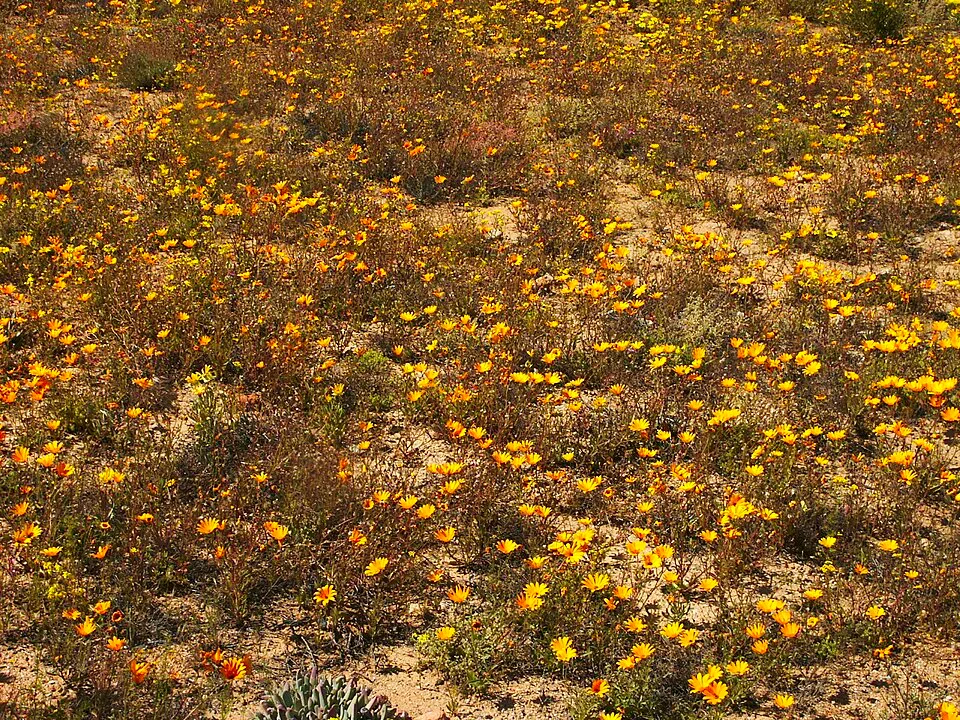
Dimorphotheca sinuata, commonly known as the African daisy or Cape Marigold, is a captivating annual herbaceous plant belonging to the Asteraceae family. Native to the arid and semi-arid regions of South Africa, particularly the Namaqualand desert, it has naturalized in various parts of the world, including California, Arizona, and Oregon in the United States. This species typically grows in a rosette formation, producing slender, spoon-shaped leaves with shallowly lobed or sinuate margins, which are often light green and can reach up to 3 inches in length.
The plant's most striking feature is its abundant, daisy-like capitula (flower heads) borne on long, graceful stems that elevate them above the foliage. These vibrant flowers, measuring 2-2.5 inches in diameter, display a spectacular palette of colors including bright yellow, orange, and occasionally white or pink, often with a contrasting central disc. A unique characteristic is their heliotropic nature, opening fully in direct sunlight and closing at night or on cloudy days.
Dimorphotheca sinuata is well-adapted to challenging conditions, thriving in full sun and well-drained, sandy or loamy soils, demonstrating remarkable drought tolerance. Its flowering season spans from spring through summer, providing a continuous display of color and acting as a strong attractant for various pollinators like bees and butterflies, thereby significantly contributing to local biodiversity in garden and natural settings.
Trusted Scientific References
1. Authoritative external sources for Dimorphotheca sinuata
1.1 Wikipedia — Dimorphotheca sinuata
1.2 Kew POWO (Plants of the World Online)
1.3 PubMed — peer-reviewed research
1.4 NCBI Taxonomy Browser
1.5 GBIF — Global Biodiversity
1.6Dimorphotheca should be interpreted through verified botanical identity, practical care, and responsible safety language. This recovery note adds the missing context needed for a complete profile: match light to the plant's habit, use well-drained soil, water according to season, and avoid unsupported medicinal or edible claims. For publishing, the plant can be presented as a source-backed garden plant with clear care guidance, common problem diagnosis, and conservative safety wording.
1.1.Dimorphotheca — Standout Qualities
- ✓Vibrant, daisy — like flowers in yellow, orange, white, or pink.
- ✓Heliotropic blooms that — Heliotropic blooms that close at night and on cloudy days.
- ✓Excellent drought tolerance, — Excellent drought tolerance, ideal for xeriscaping.
- ✓Attracts essential pollinators — Attracts essential pollinators like bees and butterflies.
- ✓Annual plant with — Annual plant with a long blooming season from spring to summer.
- ✓Low maintenance requirements, — Low maintenance requirements, suitable for beginner gardeners.
- ✓Thrives in full sun and well — drained, sandy or loamy soils.
- ✓Readily self — seeds, often returning year after year.
- ✓Native to South — Native to South Africa, naturalized in parts of the US.
- ✓Used extensively in — Used extensively in rock gardens, borders, and containers.
1.2.Dimorphotheca — Quick Summary
- ✓African daisy, a vibrant annual from South Africa, known for striking flowers.
- ✓Primarily ornamental, valued for aesthetic appeal and attracting pollinators.
- ✓Drought-tolerant and thrives in full sun and well-drained soils.
- ✓Contains flavonoids, phenolic acids, and carotenoids, typical of Asteraceae.
- ✓Easy to cultivate, self-seeds readily, and requires low maintenance.
- ✓Not documented for traditional medicinal uses; focus on ecological and well-being benefits.
2.Dimorphotheca — Taxonomic Classification
3.Dimorphotheca — Botanical Stats
4.Dimorphotheca — Plant Morphology
5.Dimorphotheca — Habitat & Distribution
6.Dimorphotheca — Historical Applications
7.Dimorphotheca — Secondary Metabolites
- ✓The phytochemical profile of Dimorphotheca sinuata, while not extensively studied for medicinal applications, reveals several classes of compounds typical of the Asteraceae family, contributing to its vibrant pigmentation and ecological interactions.
- ✓Flavonoids — These polyphenolic compounds, such as quercetin and kaempferol derivatives, are responsible for some of the flower coloration and possess general antioxidant and anti-inflammatory properties, often contributing to plant defense mechanisms.
- ✓Phenolic Acids — Including compounds like caffeic acid and p-coumaric acid, these are also potent antioxidants that help protect the plant from oxidative stress and may contribute to its resilience in harsh environments.
- ✓Essential Oils — Present in trace amounts, these volatile aromatic compounds are responsible for subtle fragrances and may play a role in attracting pollinators or deterring herbivores, often containing monoterpenes and sesquiterpenes.
- ✓Carotenoids — These pigments, particularly prominent in the yellow and orange varieties, are responsible for the striking colors of the flowers and are known for their antioxidant activity, such as beta-carotene.
- ✓Triterpenes — These diverse compounds are part of the plant's structural and defensive chemistry, potentially influencing membrane stability and offering protective roles against pathogens.
- ✓Phytosterols — Plant sterols like beta-sitosterol are common lipid components in cell membranes, crucial for plant growth and development, and may have subtle biological activities.
8.Dimorphotheca — Modern Studies
- ✓While Dimorphotheca sinuata is primarily celebrated for its ornamental appeal and ecological contributions rather than direct medicinal applications, its presence in a garden offers several well-being and environmental benefits. However, it is important to note that traditional medicinal uses specific to this plant are not widely documented, nor are direct therapeutic claims supported by extensive research.
- ✓Aesthetic Enhancement — The vibrant, daisy-like flowers of Dimorphotheca sinuata provide significant visual appeal, contributing to a sense of beauty and tranquility in outdoor spaces, which can positively impact mood and reduce stress.
- ✓Support for Pollinators — As a rich source of nectar and pollen, the African daisy actively attracts a diverse range of pollinators, including bees and butterflies, which is crucial for maintaining ecosystem health and supporting agricultural productivity.
- ✓Drought Tolerance — Its natural ability to thrive in dry, sandy soils with minimal water makes it an excellent choice for sustainable gardening, reducing water consumption and promoting resilient landscapes.
- ✓Biodiversity Promotion — By attracting pollinators, Dimorphotheca sinuata helps foster local biodiversity, creating a more robust and interconnected natural environment.
- ✓Low Maintenance Gardening — Its ease of cultivation and ability to reseed naturally reduce the need for intensive care, making gardening more accessible and enjoyable, which can be a form of therapeutic activity.
- ✓Potential for Bioactive Compounds — While not used medicinally, the presence of flavonoids and phenolic acids suggests potential antioxidant and anti-inflammatory properties that, if isolated and studied, might hold pharmacological interest. However, these are general properties of compound classes and not specific claims for Dimorphotheca sinuata's medicinal use.
8.1.Dimorphotheca — Indications & Uses
9.Dimorphotheca — Adverse Effects
9.1.Dimorphotheca — Warnings
- ✓While generally considered safe for ornamental use, some considerations exist regarding Dimorphotheca sinuata.
- ✓Allergic Reactions — Contact with plant sap or pollen may cause mild skin irritation or allergic reactions in sensitive individuals, similar to other Asteraceae members.
- ✓Ingestion Toxicity — Although not definitively classified as highly toxic, ingestion of large quantities by pets or small children could potentially cause mild gastrointestinal upset.
- ✓Invasive Potential — In certain regions, particularly those with similar climates to its native South Africa, Dimorphotheca sinuata can self-seed aggressively and may naturalize, potentially outcompeting native flora.
- ✓Pollen Allergies — The abundant pollen produced by its daisy-like flowers may trigger seasonal allergies in susceptible individuals.
9.2.Dimorphotheca — Safety Profile
- ✓Dimorphotheca sinuata is largely considered safe for horticultural purposes, but general precautions are advisable.
- ✓Handling Precautions — Wear gloves when handling the plant, especially if you have sensitive skin or known allergies to plants in the Asteraceae family, to prevent potential contact dermatitis.
- ✓Pet and Child Safety — Advise against ingestion by pets and small children. While not severely toxic, consumption could lead to mild discomfort.
- ✓Environmental Management — Monitor its spread in garden settings, particularly in regions where it has shown potential for invasiveness, to prevent ecological disruption.
- ✓Allergen Awareness — Individuals prone to pollen allergies should be aware that the plant produces significant pollen during its blooming season.
- ✓Non-Medicinal Use — Emphasize that this plant is cultivated for ornamental and ecological benefits and should not be used for self-medication or internal consumption.
- ✓Pest and Disease Resistance — Generally robust, minimal use of pesticides is needed, contributing to a safer garden environment.
10.Dimorphotheca — How to Use
- ✓Dimorphotheca sinuata is primarily utilized for its aesthetic qualities in landscaping and gardening, offering vibrant color and ecological benefits.
- ✓Ornamental Bedding Plant — Plant in mass groupings in garden beds for a spectacular display of continuous color from spring to summer.
- ✓Rock Gardens — Its drought tolerance and preference for well-drained soils make it an excellent choice for rock gardens, adding bright splashes of color to arid landscapes.
- ✓Container Planting — Suitable for growing in pots and containers on patios, balconies, or window boxes, bringing vibrant color to smaller spaces.
- ✓Borders and Edging — Use as a cheerful border plant along pathways or garden edges to define spaces and add visual appeal.
- ✓Pollinator Gardens — Integrate into pollinator-friendly gardens to attract bees, butterflies, and other beneficial insects, enhancing garden biodiversity.
- ✓Xeriscaping — An ideal species for water-wise landscaping designs due to its low water requirements once established.
- ✓Cut Flowers — The attractive blooms can be harvested for fresh cut flower arrangements, bringing their cheerful disposition indoors.
11.Dimorphotheca — Growing Guide
- ✓Seed Starting — Sow Dimorphotheca sinuata seeds indoors 6-8 weeks before the last expected frost, or directly outdoors in spring after all danger of frost has passed.
- ✓Sunlight Requirements — Select a location that receives full sun, meaning at least 6 or more hours of direct sunlight daily, for optimal blooming and plant health.
- ✓Soil Preferences — Ensure well-drained soil; sandy or loamy compositions are ideal, as the plant is tolerant of poor, nutrient-deficient conditions.
- ✓Watering Regimen — Water seedlings regularly to establish them; once mature, Dimorphotheca sinuata is highly drought-tolerant and requires infrequent watering.
- ✓Fertilization — Generally, fertilization is not necessary. If growth seems slow, a low-nitrogen, high-phosphorus fertilizer can be applied sparingly to encourage more abundant flowering.
- ✓Deadheading for Continuous Bloom — Regularly remove faded or spent flowers (deadhead) to promote the production of new blooms throughout the growing season.
- ✓Self-Seeding — Allow some flowers to go to seed if natural reseeding for subsequent years is desired; this plant readily self-sows in favorable conditions.
Reviewed by the Flora Medical Global Botanical Review Panel
Multi-disciplinary editorial group · Botany · Ethnobotany · Herbal-medicine literature
Who reviewed this: This page was checked by the Flora Medical Global Botanical Review Panel — an in-house editorial group of botany graduates, ethnobotany researchers, and horticulture practitioners who collectively maintain our 7,000+ plant encyclopedia. Meet the team.
Our 4-step verification process
1. Taxonomic verification
Scientific names and synonyms cross-checked against Kew POWO, World Flora Online, and The Plant List.
2. Phytochemical & medicinal cross-reference
Active compounds, traditional uses, and reported activities are cross-referenced with PubMed, USDA Dr. Duke's database, and peer-reviewed ethnobotanical literature.
3. Conservation & distribution check
Distribution, ecology, and conservation status confirmed against GBIF occurrence records and the IUCN Red List.
4. Editorial & safety review
Every entry passes an editorial pass for clarity, originality, and safety notices (toxicity, contraindications, dosage caveats) before publication.
Last reviewed:
Important medical disclaimer: This content is for educational and research purposes only. It is not medical advice and is not a substitute for consultation with a licensed healthcare provider. Do not use any herb to self-treat a medical condition without professional guidance.
Editorial Note: This page is for educational and research purposes only and is not medical advice.
Written by: Flora Medical Global Editorial Team
Reviewed by: Flora Medical Global Botanical Review Panel
Last Updated: June 15, 2026





Dimorphotheca — Comments & Community Reviews
Rate this plant