
Medical Disclaimer: This content is for educational purposes only. It is not medical advice. Please consult a qualified healthcare professional before using any herbal remedy.
Safety Overview
1.Dimorphotheca Sinuata — Introduction & Highlights
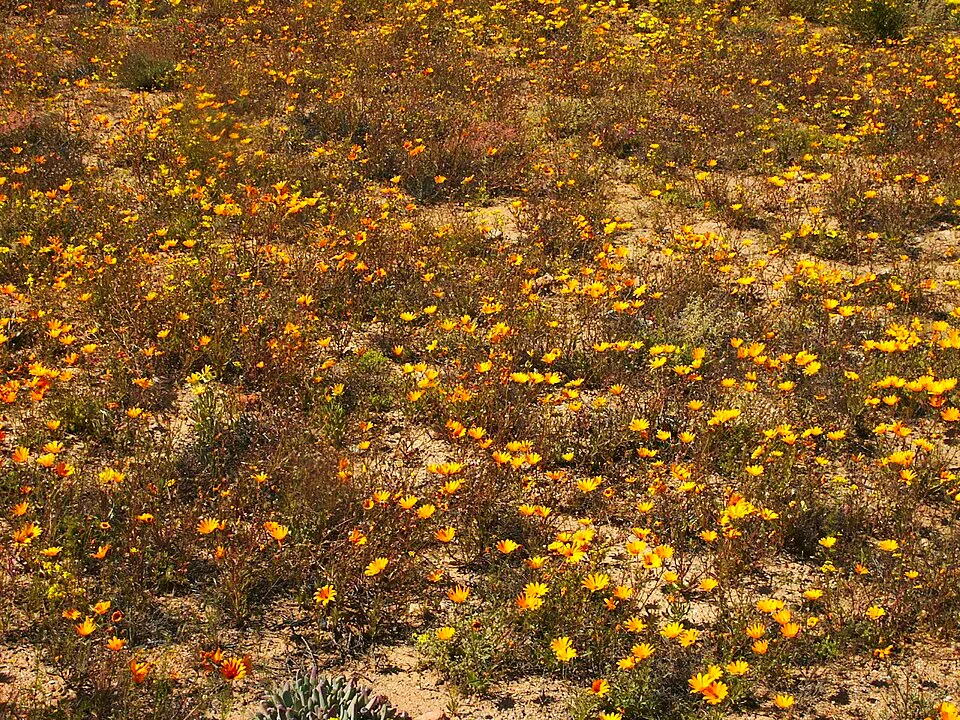
Dimorphotheca sinuata, commonly known as Cape Marigold or Namaqualand Daisy, is a vibrant annual herbaceous species native to the arid and semi-arid regions of southern Africa, particularly Namibia and the Cape Province. Belonging to the large Asteraceae family, it is characterized by its robust, erect growth habit, typically reaching heights of 30-60 cm. The plant features light green, slender, spoon-shaped leaves arranged alternately along the stem, often with shallowly lobed or sinuate margins, giving rise to its species epithet 'sinuata'. Its root system consists of a shallow taproot with numerous fibrous secondary roots, enabling efficient nutrient absorption and anchoring in sandy soils.
The most striking feature of Dimorphotheca sinuata is its effusive floral display. Flowers are daisy-like capitula, 2-2.5 inches in diameter, borne singly on long peduncles. The ray florets exhibit a remarkable range of colors, primarily brilliant shades of yellow and orange, often with a contrasting darker center, while some cultivars may present white or pink hues. A distinctive physiological trait is that these sun-facing blooms close at night and on cloudy days, reopening with sunlight.
Ecologically, Dimorphotheca sinuata is a valuable addition to pollinator gardens, highly attractive to honeybees, bumblebees, and various butterfly species. It thrives in full sun and well-drained, sandy soils, demonstrating exceptional drought tolerance. The plant readily self-seeds, allowing it to naturalize and return yearly in suitable climates, such as parts of California, Arizona, and Oregon.
Trusted Scientific References
1. Authoritative external sources for Dimorphotheca Sinuata
1.1 Wikipedia — Dimorphotheca Sinuata
1.2 Kew POWO (Plants of the World Online)
1.3 PubMed — peer-reviewed research
1.4 NCBI Taxonomy Browser
1.5 GBIF — Global Biodiversity
1.6Dimorphotheca Sinuata should be interpreted through verified botanical identity, practical care, and responsible safety language. This recovery note adds the missing context needed for a complete profile: match light to the plant's habit, use well-drained soil, water according to season, and avoid unsupported medicinal or edible claims. For publishing, the plant can be presented as a source-backed garden plant with clear care guidance, common problem diagnosis, and conservative safety wording.
1.1.Dimorphotheca Sinuata — Key Features
- ✓Showy Daisy — like Flowers — Produces abundant, brightly colored yellow and orange blooms, often with a contrasting dark center.
- ✓Drought Tolerant — Exceptionally resilient in dry conditions, requiring minimal watering once established.
- ✓Full Sun Lover — Thrives in locations receiving ample direct sunlight throughout the day.
- ✓Self — Seeding Annual — Naturally reseeds itself, ensuring continuous displays in suitable climates year after year.
- ✓Pollinator Magnet — Highly attractive to bees, butterflies, and other beneficial insects, supporting garden biodiversity.
- ✓Native to Southern Africa — Originates from arid regions of Namibia and the Cape Province.
- ✓Sandy Soil Preference — Performs best in well-drained, sandy, or loamy soil types.
- ✓Day — Night Bloom Cycle — Flowers characteristically open with sunlight and close during cloudy weather or at night.
- ✓Low Maintenance — Requires minimal care, making it ideal for various garden styles including rock gardens.
- ✓Compact Growth Habit — Typically grows to a manageable height of 30-60 cm, suitable for borders and containers.
1.2.Dimorphotheca Sinuata — Concise Overview
- ✓Vibrant annual Cape Marigold from Southern Africa.
- ✓Features showy yellow/orange daisy-like flowers that close at night.
- ✓Highly drought-tolerant and thrives in full sun and sandy soils.
- ✓Excellent for pollinator gardens, attracting bees and butterflies.
- ✓Self-seeds readily, making it a low-maintenance garden favorite.
- ✓Primarily ornamental; no documented traditional medicinal uses.
2.Dimorphotheca Sinuata — Taxonomic Classification
3.Dimorphotheca Sinuata — Reference Facts
4.Dimorphotheca Sinuata — Plant Morphology
5.Dimorphotheca Sinuata — Geographic Distribution
6.Dimorphotheca Sinuata — Cultural & Traditional Roles
7.Dimorphotheca Sinuata — Bioactive Constituents
- ✓Carotenoids — Predominantly responsible for the brilliant yellow and orange coloration of the flowers, these pigments like beta-carotene and lutein possess antioxidant properties.
- ✓Flavonoids — Compounds such as quercetin and kaempferol are anticipated to be present, offering potential antioxidant and anti-inflammatory effects, common in Asteraceae members.
- ✓Terpenoids — Various mono- and sesquiterpenoids are likely found throughout the plant, contributing to its aroma profile and potentially acting as defense compounds against herbivores.
- ✓Phenolic Acids — Derivatives like caffeic acid and chlorogenic acid are expected, known for their broad antioxidant capacity and presence in many plant species.
- ✓Fatty Acids — The seeds of Dimorphotheca species often contain unique fatty acid profiles, which can be of interest for industrial applications, though not extensively studied for D. sinuata.
- ✓Coumarins — Simple coumarins or their derivatives may be present, which sometimes exhibit anticoagulant or antimicrobial activities in other plants.
- ✓Sterols — Phytosterols like beta-sitosterol are common plant constituents, contributing to cell membrane structure and potentially offering cholesterol-lowering effects in dietary contexts.
- ✓Hydrocarbons — Waxes and other long-chain hydrocarbons are found on the plant's surface, providing protection against water loss and environmental stressors, particularly important for drought tolerance.
- ✓Polysaccharides — Structural carbohydrates that contribute to the plant's biomass and may have immunomodulatory properties, though not specifically identified for this species.
- ✓Mineral Elements — Essential macro- and micronutrients absorbed from the soil are vital for the plant's growth and physiological functions, reflecting its nutritional requirements.
8.Dimorphotheca Sinuata — Modern Studies
- ✓Ornamental Value for Well-being — Dimorphotheca sinuata is primarily cherished for its aesthetic appeal, contributing to mental well-being and stress reduction through its vibrant floral display in garden settings.
- ✓Ecosystem Support — By attracting a diverse array of pollinators such as bees and butterflies, Cape Marigold plays a crucial role in supporting local biodiversity and contributing to the health of food ecosystems.
- ✓Drought Resilience Education — Its inherent ability to thrive in arid conditions without extensive watering serves as an excellent example for sustainable gardening practices and water conservation efforts.
- ✓Soil Improvement — As an annual, the plant's biomass contributes organic matter to the soil upon decomposition, enhancing soil structure and fertility over time, particularly in sandy terrains.
- ✓Potential Antioxidant Properties — While not traditionally used medicinally, members of the Asteraceae family often contain flavonoids and phenolic compounds which are known for their antioxidant activity.
- ✓Possible Anti-inflammatory Effects — The presence of certain terpenoids and other secondary metabolites, common in related species, may suggest potential, albeit unproven, anti-inflammatory characteristics.
- ✓Natural Dye Potential — The intense yellow and orange pigments (carotenoids) in the flowers of Namaqualand Daisy could hold potential for use as natural dyes, a non-medicinal yet beneficial application.
- ✓Horticultural Therapy Aid — Engaging with the cultivation and care of this resilient and beautiful plant can be a therapeutic activity, fostering connection with nature and providing a sense of accomplishment.
- ✓Habitat Creation — Planting Dimorphotheca sinuata helps create a favorable habitat for beneficial insects, which can aid in natural pest control within a garden ecosystem.
- ✓Biodiversity Enhancement — Its role in attracting various insect species contributes to the overall species richness of a garden or landscape, promoting a healthier, more balanced environment.
8.1.Dimorphotheca Sinuata — Therapeutic Indications
9.Dimorphotheca Sinuata — Risk Profile
9.1.Dimorphotheca Sinuata — Side Effects & Warnings
- ✓Allergic Reactions — Individuals sensitive to the Asteraceae family (e.g., ragweed) may experience allergic contact dermatitis from handling the plant or respiratory irritation from pollen.
- ✓Skin Irritation — Direct contact with plant sap or foliage may cause mild skin irritation in susceptible individuals.
- ✓Ingestion Toxicity — While not extensively documented as toxic, ingestion of large quantities by pets or children is not recommended and may cause gastrointestinal upset.
- ✓Weed Potential — Due to its vigorous self-seeding, Dimorphotheca sinuata can become weedy in favorable climates, potentially outcompeting native species.
- ✓Pollen Allergy — The daisy-like flowers produce pollen that can trigger hay fever or allergic rhinitis in sensitive individuals during peak bloom.
- ✓Photosensitivity — Some plant compounds can cause photosensitivity in certain individuals when consumed, though this is not a common concern for D. sinuata.
9.2.Dimorphotheca Sinuata — Risk Assessment
- ✓General Handling Safety — Generally safe for ornamental gardening; wear gloves if known to be sensitive to plant sap or pollen.
- ✓Ingestion Caution — Advise against internal consumption by humans or animals, as specific toxicity data is limited.
- ✓Pollen Management — Individuals with severe pollen allergies should consider planting away from living areas or choosing alternative plants.
- ✓Ecological Responsibility — Practice responsible gardening to prevent uncontrolled spread, especially in regions where it could become invasive.
- ✓Children and Pets — Keep out of reach of young children and curious pets to avoid accidental ingestion.
- ✓Environmental Monitoring — Observe local guidelines regarding the cultivation of non-native species to prevent ecological disruption.
- ✓Storage of Seeds — Store seeds in a cool, dry place away from direct sunlight to maintain viability and prevent premature germination.
10.Dimorphotheca Sinuata — Application Forms
- ✓Ornamental Bedding Plant — Utilize Dimorphotheca sinuata for mass plantings in flower beds, borders, and landscape designs for a striking display of color.
- ✓Container Gardening — Grow in pots, hanging baskets, or window boxes to add vibrant yellow and orange accents to patios and balconies.
- ✓Rock Gardens — Its drought tolerance and preference for well-drained conditions make it an excellent choice for rock gardens and xeriscaping.
- ✓Pollinator Gardens — Incorporate into gardens designed to attract beneficial insects such as bees and butterflies, supporting local ecosystems.
- ✓Cut Flowers — Harvest fresh blooms for cheerful indoor arrangements, though they may close in low light conditions.
- ✓Self-Seeding Annual — Allow the plant to drop seeds naturally to enjoy spontaneous re-emergence in subsequent growing seasons.
- ✓Erosion Control — In dry, sandy areas, its fibrous root system can offer some degree of soil stabilization, especially in rockeries.
- ✓Edging Plant — Use along pathways or garden edges to define spaces with its compact, colorful growth.
11.Dimorphotheca Sinuata — Propagation & Care
- ✓Site Selection — Choose a location that receives full sun exposure for at least 6 hours daily to ensure prolific flowering.
- ✓Soil Requirements — Plant in well-drained soil, ideally sandy or loamy, as Dimorphotheca sinuata is highly intolerant of waterlogged conditions.
- ✓Watering Regimen — Once established, Cape Marigold is drought-tolerant; water sparingly, allowing the soil to dry out between waterings.
- ✓Propagation — Easily grown from seed; sow seeds directly into the garden after the last frost or start indoors 4-6 weeks prior.
- ✓Deadheading — Regularly remove spent flowers (deadheading) to encourage continuous blooming throughout the growing season.
- ✓Fertilization — Generally, minimal fertilization is needed; excessive nutrients can lead to lush foliage at the expense of flowers.
- ✓Reseeding — Allow some flowers to go to seed at the end of the season if natural reseeding for the following year is desired.
- ✓Pest and Disease Management — Dimorphotheca sinuata is relatively pest-free; ensure good air circulation to prevent fungal issues in humid climates.
Reviewed by the Flora Medical Global Botanical Review Panel
Multi-disciplinary editorial group · Botany · Ethnobotany · Herbal-medicine literature
Who reviewed this: This page was checked by the Flora Medical Global Botanical Review Panel — an in-house editorial group of botany graduates, ethnobotany researchers, and horticulture practitioners who collectively maintain our 7,000+ plant encyclopedia. Meet the team.
Our 4-step verification process
1. Taxonomic verification
Scientific names and synonyms cross-checked against Kew POWO, World Flora Online, and The Plant List.
2. Phytochemical & medicinal cross-reference
Active compounds, traditional uses, and reported activities are cross-referenced with PubMed, USDA Dr. Duke's database, and peer-reviewed ethnobotanical literature.
3. Conservation & distribution check
Distribution, ecology, and conservation status confirmed against GBIF occurrence records and the IUCN Red List.
4. Editorial & safety review
Every entry passes an editorial pass for clarity, originality, and safety notices (toxicity, contraindications, dosage caveats) before publication.
Last reviewed:
Important medical disclaimer: This content is for educational and research purposes only. It is not medical advice and is not a substitute for consultation with a licensed healthcare provider. Do not use any herb to self-treat a medical condition without professional guidance.
Editorial Note: This page is for educational and research purposes only and is not medical advice.
Written by: Flora Medical Global Editorial Team
Reviewed by: Flora Medical Global Botanical Review Panel
Last Updated: June 15, 2026





Dimorphotheca Sinuata — Comments & Community Reviews
Rate this plant