
Medical Disclaimer: This content is for educational purposes only. It is not medical advice. Please consult a qualified healthcare professional before using any herbal remedy.
Safety Overview
1.Dionaea — Overview
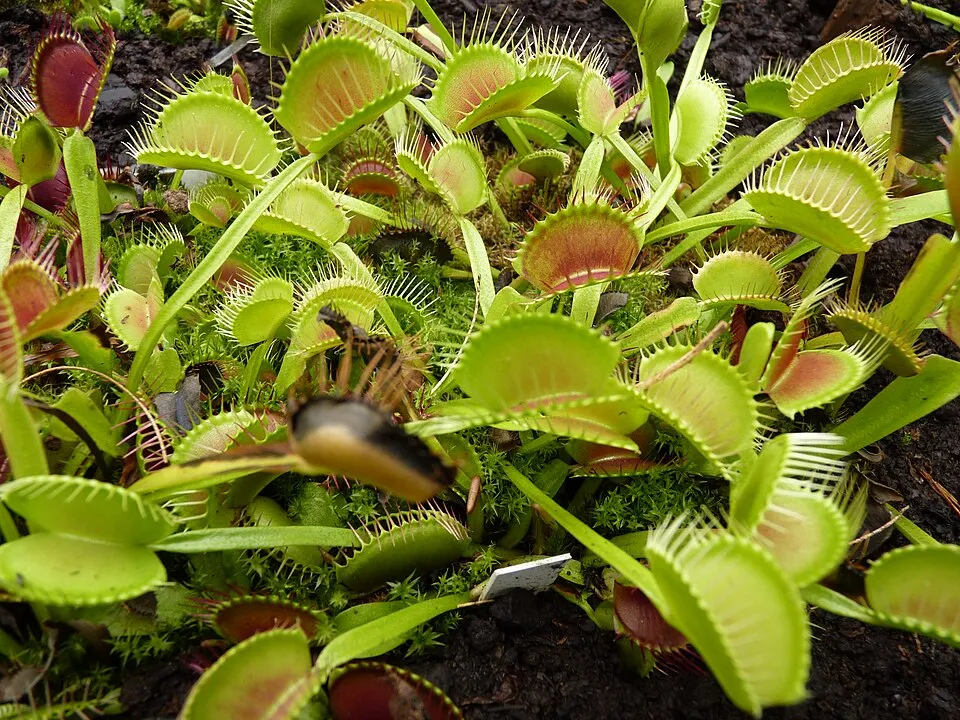
Dionaea muscipula, universally recognized as the Venus flytrap, is an extraordinary carnivorous perennial herb celebrated for its uniquely adapted leaves. Growing typically to a modest height of approximately 15 cm (6 inches), its most distinctive feature is its bivalved traps, which are modified leaf blades. Each lobe, capable of expanding to about 2-3 cm (0.8-1.2 inches) across, is fringed with stiff, tooth-like cilia designed to interlock and secure trapped insects.
Within these lobes are delicate trigger hairs, which, when touched twice in quick succession, initiate the rapid closure of the trap. The leaves generally present a vibrant green hue, often developing striking reddish tints along their inner margins and edges when exposed to ample sunlight, indicating robust photosynthetic activity. During its blooming period, typically observed in spring, Dionaea muscipula produces slender, erect flowering stalks that can ascend 30-40 cm (12-16 inches) above the foliage, culminating in clusters of small, delicate white flowers.
This remarkable plant thrives in specific ecological niches: sunny, nutrient-poor wetlands, particularly the subtropical bog environments of the southeastern United States, with its primary natural range concentrated in North and South Carolina. As a member of the Droseraceae family, the Venus flytrap is highly specialized, preferring highly acidic, sandy soils that ensure excellent drainage, a critical adaptation to its nutrient-deficient native habitat.
Trusted Scientific References
1. Authoritative external sources for Dionaea muscipula garden
1.1 Wikipedia — Dionaea muscipula garden
1.2 Kew POWO (Plants of the World Online)
1.3 PubMed — peer-reviewed research
1.4 NCBI Taxonomy Browser
1.5 GBIF — Global Biodiversity
1.6Dionaea should be interpreted through verified botanical identity, practical care, and responsible safety language. This recovery note adds the missing context needed for a complete profile: match light to the plant's habit, use well-drained soil, water according to season, and avoid unsupported medicinal or edible claims. For publishing, the plant can be presented as a source-backed garden plant with clear care guidance, common problem diagnosis, and conservative safety wording.
1.1.Dionaea — Standout Qualities
- ✓Active Carnivorous Traps — Distinctive bivalved leaves that rapidly snap shut to capture insect prey.
- ✓Trigger Hair Mechanism — Internal sensory hairs that initiate trap closure upon repeated stimulation.
- ✓Native to Southeastern US — Endemic to the boggy wetlands of North and South Carolina.
- ✓Nutrient — Poor Soil Adaptation — Utilizes carnivory to supplement nutrient intake in its natural habitat.
- ✓Produces Digestive Enzymes — Secretes proteases, chitinases, and lipases to break down insects.
- ✓Contains Bioactive Naphthoquinones — Presence of plumbagin, a compound with studied biological activities in other plants.
- ✓Ornamental and Educational Value — Highly prized by horticulturists and educators for its unique biology.
- ✓Conservation Status — Listed as vulnerable or endangered due to habitat destruction and illegal poaching.
- ✓White Flowering Stalks — Bears delicate white flowers on tall stalks during its blooming season.
- ✓Requires Specific Growing Conditions — Thrives in acidic, moist, well-drained soil and high humidity.
1.2.Dionaea — Snapshot Summary
- ✓Iconic carnivorous plant, Dionaea muscipula, native to southeastern US bogs.
- ✓Features unique snap-traps for insect capture, adapting to nutrient-poor soils.
- ✓Contains digestive enzymes, naphthoquinones (like plumbagin), and flavonoids.
- ✓Limited traditional medicinal uses, with no significant modern clinical evidence for human therapeutic benefits.
- ✓Primarily valued for botanical study, ornamental cultivation, and ecological significance.
- ✓Requires specific care, including distilled water and bright light, and is a species of conservation concern.
2.Dionaea — Taxonomic Classification
3.Dionaea — Quick Facts
4.Dionaea — Plant Morphology
5.Dionaea — Geographic Distribution
6.Dionaea — Cultural & Traditional Roles
7.Dionaea — Active Compounds
- ✓Naphthoquinones — Primarily plumbagin, a bioactive compound known for its potential antimicrobial, anti-cancer, and anti-inflammatory activities in various plant species, though its specific therapeutic role in Dionaea muscipula requires further clinical investigation.
- ✓Proteolytic Enzymes — A diverse group of enzymes, including aspartic proteases, that are crucial for breaking down proteins from captured insects into absorbable amino acids, aiding in the plant's nutrient acquisition.
- ✓Chitinases — Enzymes specialized in hydrolyzing chitin, the primary component of insect exoskeletons, facilitating the complete digestion of prey.
- ✓Phosphatases — Enzymes involved in the breakdown of phosphate-containing compounds, enabling the plant to absorb essential phosphorus from its prey in nutrient-poor soils.
- ✓Flavonoids — A broad class of phenolic compounds, such as quercetin derivatives, known for their antioxidant properties, which help protect the plant cells from oxidative stress.
- ✓Organic Acids — Various organic acids, including formic acid, are present in the digestive fluid of the traps, contributing to the acidic environment necessary for optimal enzyme activity and breakdown of prey.
- ✓Mucilage — While more prominent in related genera like Drosera, Dionaea also produces some mucilaginous substances, which may assist in insect capture and provide protective qualities.
- ✓Lipases — Enzymes responsible for breaking down lipids (fats) from insect prey, further contributing to the plant's comprehensive digestive capabilities.
- ✓Amylases — Enzymes that catalyze the hydrolysis of starches into sugars, indicating a broad enzymatic repertoire for nutrient extraction from various components of its insect diet.
8.Dionaea — What Research Suggests
- ✓Enzyme Activity — The plant produces various enzymes, including proteases, chitinases, and phosphatases, which are essential for digesting insect prey, theoretically explored for their potential in digestive aid research.
- ✓Antioxidant Potential — Contains naphthoquinones like plumbagin and various flavonoids, which in preliminary in vitro studies, suggest a capacity for antioxidant activity, potentially neutralizing free radicals.
- ✓Antimicrobial Properties — Plumbagin, a key naphthoquinone found in Dionaea muscipula, has demonstrated antimicrobial effects in studies on other plant species, offering theoretical implications for combating certain pathogens.
- ✓Anti-inflammatory Effects — Certain phytochemicals present in the Venus flytrap may possess anti-inflammatory properties, a subject of ongoing botanical interest, though not clinically validated for human use.
- ✓Traditional Skin Remedies — Historically, some indigenous cultures have utilized grounded parts of Dionaea muscipula topically for minor skin irritations and insect bites, though this practice is not widespread or scientifically proven.
- ✓Immunomodulatory Interest — While direct evidence is scarce, other carnivorous plants in the Droseraceae family have been investigated for compounds that might influence immune responses, suggesting a potential area for future research.
- ✓Detoxification Support — The plant's enzymatic machinery and secondary metabolites are theoretically capable of interacting with various compounds, hinting at a potential role in detoxification research.
- ✓Wound Healing Potential — Traditional applications for minor skin issues suggest a potential, albeit unverified, role in supporting the natural healing process for small cuts or abrasions.
- ✓Ecological Bioindicator — While not a direct medicinal benefit, its sensitivity to habitat degradation makes it a bioindicator of wetland health, indirectly benefiting human well-being through ecosystem preservation.
8.1.Dionaea — Therapeutic Indications
9.Dionaea — Precautions & Warnings
9.1.Dionaea — Side Effects & Warnings
- ✓Skin Irritation — Direct contact with plant sap or extracts may potentially cause minor skin irritation or allergic reactions in sensitive individuals.
- ✓Allergic Reactions — As with any plant material, there is a risk of allergic response, manifesting as itching, redness, or swelling upon contact or ingestion.
- ✓Digestive Upset — Ingestion, which is not recommended, could lead to gastrointestinal discomfort due to the plant's enzymes and secondary metabolites.
- ✓Toxicity Concerns — While generally considered non-toxic in small, incidental exposures, concentrated extracts of plumbagin could theoretically pose toxicity risks if ingested in significant amounts.
- ✓Environmental Impact — Unregulated or excessive harvesting from the wild can severely impact its population, contributing to its vulnerable conservation status.
- ✓Interaction with Medications — Due to a lack of clinical research, potential interactions with prescription medications are unknown and should be considered a risk.
9.2.Dionaea — Safety Overview
- ✓Not for Internal Consumption — Dionaea muscipula is not recommended for internal consumption due to insufficient scientific data regarding its safety and efficacy in humans.
- ✓Pregnancy and Lactation — Pregnant or nursing individuals should avoid any use of Dionaea muscipula, given the absence of safety research.
- ✓Pediatric Use — Not advised for use in children, as specific dosage and safety parameters have not been established for this demographic.
- ✓Allergic Sensitivity — Individuals with known plant allergies should exercise caution and perform a patch test before any topical application.
- ✓Topical Use Precaution — While some traditional topical uses exist, a patch test on a small skin area is recommended to check for adverse reactions before wider application.
- ✓Endangered Species — Responsible sourcing and ethical considerations are paramount; wild harvesting is strongly discouraged due to its vulnerable conservation status.
- ✓Professional Consultation — Always consult a qualified healthcare professional before considering any traditional or experimental use of this plant.
10.Dionaea — Application Forms
- ✓Traditional Topical Poultice — Historically, indigenous cultures have prepared crushed or ground plant material for external application as a poultice on minor skin irritations or insect bites, though clinical evidence is lacking.
- ✓Research Extracts — Aqueous or ethanolic extracts of Dionaea muscipula are prepared in laboratory settings for phytochemical analysis and in vitro studies of its enzymatic and secondary metabolite activities.
- ✓Enzyme Isolation — Specific enzymes like proteases and chitinases can be isolated from the trap fluid for biochemical research, exploring their properties and potential industrial applications.
- ✓Botanical Specimen — Primarily cultivated and appreciated as a unique botanical specimen in educational institutions, botanical gardens, and by hobbyists for its fascinating carnivorous nature.
- ✓Educational Demonstrations — Used widely in classrooms and science centers to illustrate plant adaptations, predatory mechanisms, and ecological roles within wetland ecosystems.
- ✓Ornamental Cultivation — Grown by enthusiasts as an ornamental plant in specialized bog gardens, terrariums, or sunny windowsills, requiring precise environmental conditions.
11.Dionaea — Propagation & Care
- ✓Optimal Lighting — Requires at least 4-6 hours of direct sunlight daily; bright, unfiltered light is crucial for robust growth and vibrant trap coloration.
- ✓Substrate Requirements — Plant in nutrient-poor, acidic soil mix, typically a blend of sphagnum peat moss and perlite or horticultural sand (1:1 ratio), avoiding standard potting soil.
- ✓Watering Regime — Use only distilled water, rainwater, or reverse osmosis water; keep the soil consistently moist, often by sitting the pot in a tray of water.
- ✓Humidity Control — Prefers high humidity levels, ideally above 50%, which can be maintained by grouping plants or using a humidity tray.
- ✓Temperature and Dormancy — Thrives in temperatures between 20-35°C (68-95°F) during growing season, requiring a cool dormancy period (0-10°C / 32-50°F) for 3-5 months in winter.
- ✓Feeding Practices — If grown indoors, supplement its diet with live insects (e.g., crickets, mealworms) once every 1-2 weeks; avoid overfeeding or feeding non-insect items.
- ✓Potting Material — Utilize plastic pots with drainage holes, as terracotta can leach minerals into the acidic substrate, harming the plant.
- ✓Propagation Techniques — Can be propagated through seed, rhizome division, or leaf cuttings, with leaf cuttings being a common method for home growers.
Reviewed by the Flora Medical Global Botanical Review Panel
Multi-disciplinary editorial group · Botany · Ethnobotany · Herbal-medicine literature
Who reviewed this: This page was checked by the Flora Medical Global Botanical Review Panel — an in-house editorial group of botany graduates, ethnobotany researchers, and horticulture practitioners who collectively maintain our 7,000+ plant encyclopedia. Meet the team.
Our 4-step verification process
1. Taxonomic verification
Scientific names and synonyms cross-checked against Kew POWO, World Flora Online, and The Plant List.
2. Phytochemical & medicinal cross-reference
Active compounds, traditional uses, and reported activities are cross-referenced with PubMed, USDA Dr. Duke's database, and peer-reviewed ethnobotanical literature.
3. Conservation & distribution check
Distribution, ecology, and conservation status confirmed against GBIF occurrence records and the IUCN Red List.
4. Editorial & safety review
Every entry passes an editorial pass for clarity, originality, and safety notices (toxicity, contraindications, dosage caveats) before publication.
Last reviewed:
Important medical disclaimer: This content is for educational and research purposes only. It is not medical advice and is not a substitute for consultation with a licensed healthcare provider. Do not use any herb to self-treat a medical condition without professional guidance.
Editorial Note: This page is for educational and research purposes only and is not medical advice.
Written by: Flora Medical Global Editorial Team
Reviewed by: Flora Medical Global Botanical Review Panel
Last Updated: June 15, 2026





Dionaea — Comments & Community Reviews
Rate this plant